Can You Recycle Laundry Detergent Bottles – Is It Safe?
You can safely recycle laundry detergent bottles if you rinse and dry them thoroughly to avoid contamination and meet recycling standards. Caps are recyclable, but discard squirt tops and pumps unless using specialized programs like TerraCycle, which accept all parts.
Proper rinsing reduces equipment damage and improves recycling quality, supporting environmental benefits like energy savings and waste reduction. Understanding these steps and options helps you contribute effectively to sustainable waste management and environmental protection.
Key Takeaways
- Laundry detergent bottles are recyclable if completely empty, rinsed, and dried to avoid contamination and rejection by curbside programs.
- Residual detergent can damage recycling equipment and reduce recycling quality, so thorough rinsing is essential for safety and efficiency.
- Caps are recyclable with bottles, but squirt tops and pump dispensers should be discarded or sent to specialized programs like TerraCycle.
- Proper rinsing and recycling support environmental safety by reducing plastic waste and greenhouse gas emissions.
- Using leftover water for rinsing and following local recycling guidelines ensures safe and responsible recycling of detergent bottles.
Can You Properly Recycle Laundry Detergent Bottles?
How can you guarantee laundry detergent bottles are properly recycled? You must make sure the bottles are completely empty, rinsed, and dried before placing them in the recycling bin. Many curbside recycling programs reject containers with residual detergent, so thorough rinsing is essential.
Include the caps when recycling, as they’re accepted, but discard squirt tops and pump dispensers, which aren’t recyclable through typical channels.
Participating in specialized programs like TerraCycle’s Tide Free Recycling Program can further support proper recycling of all bottle components.
Recycling one ton of plastic, including detergent bottles, saves approximately 16 barrels of oil, underscoring the significant environmental benefits of correct recycling practices.
Which Parts of Detergent Bottles Are Recyclable?
Understanding which parts of laundry detergent bottles are recyclable is essential for effective waste management. Typically, the main container and caps are recyclable if empty and rinsed clean, reducing contamination in the recycling stream.
Properly preparing these components guarantees they can be processed without compromising material quality.
However, pump dispensers and squirt tops are generally not accepted in curbside recycling due to their mixed materials and design, which complicate sorting and recycling.
To address these challenges, programs like TerraCycle offer specialized recycling options for all detergent bottle components, including those that local programs reject.
Why You Should Rinse Laundry Detergent Bottles Before Recycling
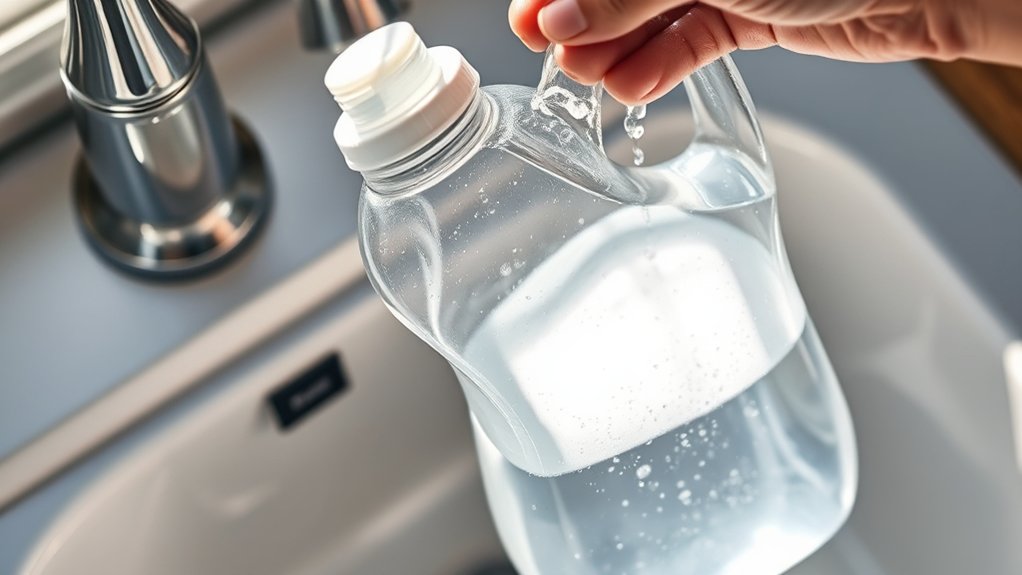
You should rinse laundry detergent bottles before recycling because it helps reduce contamination.
When leftover detergent is still inside, it can lower the quality of the materials being recycled.
Plus, any residual detergent might cause chemical reactions that can damage recycling equipment, which ends up increasing costs.
So, by giving those bottles a good rinse, you’re actually helping improve the whole recycling process.
And on top of that, you’re supporting environmental conservation by cutting down the need to produce new plastic.
It’s a small step that makes a big difference!
Importance Of Rinsing
Although rinsing laundry detergent bottles might seem like a minor step, it plays an essential role in maintaining the integrity of the recycling process. When you rinse, you remove contaminants that can cause contamination, which often leads to entire batches being rejected.
Residual detergent interferes with recycling machinery, reducing efficiency and increasing waste. Using water to rinse guarantees clean containers enter the recycling stream, making the process more effective and enhancing the likelihood that materials will be successfully reused.
Moreover, rinsing aligns with eco-friendly resource management by minimizing odor and deterring pests, which supports hygienic recycling practices.
Ultimately, this simple action improves recycling outcomes, conserves resources, and reduces unnecessary waste, showing how small efforts contribute greatly to effective recycling systems.
Environmental Impact Considerations
Because residual detergent can disrupt recycling processes, rinsing laundry detergent bottles before recycling greatly reduces contamination and improves material recovery.
When you rinse bottles, you guarantee clean recyclables enter waste management systems, enhancing recycling efficiency and lowering processing costs.
Residual soap can cause plastic pollution by contaminating recycling streams, increasing the risk of plastics escaping into oceans.
Proper rinsing supports sustainable practices by reducing the need for new plastic production, which consumes up to 66% more energy than recycled plastic.
By committing to rinse, you actively contribute to energy efficiency and long-term sustainability, preventing plastics from ending up in landfills or natural environments.
This small step considerably lessens environmental impact, making recycling more effective and supporting a circular economy.
How to Prepare Detergent Jugs for Curbside Pickup
You’ll want to rinse and dry your detergent jug thoroughly. This helps prevent contamination and keeps moisture from causing issues during recycling.
Also, don’t forget to remove the caps and pumps. These parts are usually made from different materials, so they need to be processed separately.
Rinsing and Drying
Rinse your laundry detergent bottles thoroughly to remove any residual soap. This is essential for acceptance in curbside recycling programs and prevents contamination of other recyclables.
Proper rinsing and drying prepare containers effectively, reducing plastic waste and supporting recycling efforts.
Follow these guidelines to optimize cleaning and minimize wastewater:
- Use leftover water from household tasks to rinse, conserving water resources.
- Store rinsed containers upside-down to drain all remaining liquid.
- Allow bottles to dry completely to prevent leaks during transport.
- Adhere to local recycling guidelines to guarantee compliance and improve recycling rates.
- Avoid leaving any residual soap, which can contaminate other recyclables and disrupt processing.
Removing Caps and Pumps
Removing caps and pumps from laundry detergent bottles is an essential step for preparing them for curbside recycling. You should remove and discard pumps and spouts since they are not recyclable through curbside programs. However, caps are generally recyclable and should stay with the empty, rinsed bottles to avoid contamination.
Always follow your local guidelines, as rules may differ by municipality. Storing detergent bottles upside-down before recycling guarantees they drain completely, minimizing residue. This preparation helps maintain the quality of recyclable materials and supports efficient processing.
| Component | Action |
|---|---|
| Detergent bottles | Empty & rinse |
| Caps | Keep & recycle |
| Pumps | Remove & discard |
| Local guidelines | Follow strictly |
Can’t Recycle Detergent Bottles Locally? Here’s Help
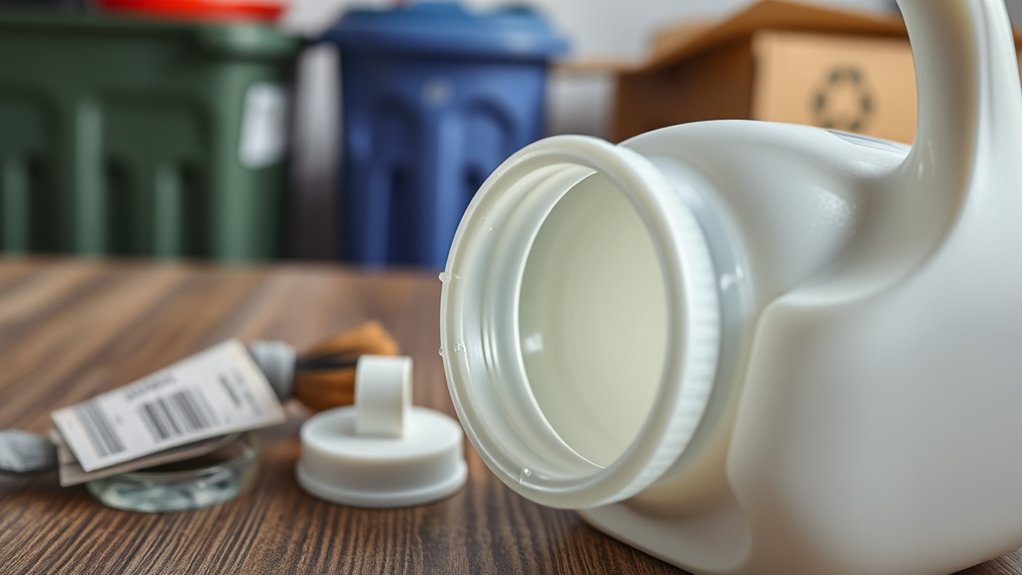
Although local recycling programs may not accept laundry detergent bottles, you can still manage their disposal responsibly by using the Tide Free Recycling Program through TerraCycle. This initiative targets hard-to-recycle items, offering an effective solution for detergent bottles and related materials.
To participate, make sure your bottles are empty and rinsed to avoid leaks during shipping.
Key aspects include:
- Free sign-up with TerraCycle for easy participation
- Acceptance of detergent bottles, caps, and flexible packaging
- Promotion of thorough recycling for detergent-related plastic waste
- Environmental benefits like saving 16 barrels of oil per ton of recycled plastic
- Contribution to reducing plastic waste despite local program limitations
How to Recycle Detergent Bottles With Terracycle
If you want to recycle detergent bottles through TerraCycle, start by ensuring each bottle is completely empty and dry to prevent contamination during shipping. Rinse out any residual product thoroughly, as leftover detergent can compromise the recycling process.
Next, collect all accepted components, including caps and flexible packaging, since TerraCycle recycles multiple parts to enhance material recovery.
Collect all accepted parts like caps and flexible packaging to maximize recycling efficiency with TerraCycle.
Sign up on TerraCycle’s website for the Tide Free Recycling Program to obtain specific instructions and shipping labels tailored for your laundry detergent bottles.
Following these steps helps you participate effectively in a circular economy by returning materials to the supply chain.
How to Reduce Waste With Laundry Detergent Bottles
When you rinse and recycle laundry detergent bottles properly, you greatly reduce plastic waste that otherwise lingers in landfills for centuries.
To effectively reduce waste with detergent bottles, focus on these key actions:
Rinse bottles upside-down to remove residual soap, which makes recycling easier.
Use established recycling programs like TerraCycle to support the circular economy.
Engage your community to raise awareness and improve recycling rates.
Recycling detergent bottles lowers energy consumption by up to 66%.
And remember, recycling one ton of plastic saves about 16 barrels of oil, helping to curb plastic pollution.
Environmental Benefits of Recycling Laundry Detergent Containers
Since recycling laundry detergent containers saves about 16 barrels of oil per ton of plastic, it plays an essential role in reducing fossil fuel dependence. You can greatly cut greenhouse gas emissions because producing recycled plastic uses up to 66% less energy than new plastic manufacturing.
By recycling detergent containers, you also help reduce plastic waste in landfills and oceans, promoting a sustainable environment. The energy-saving benefits are clear: one recycled bottle can power a light bulb for six hours.
Here’s a quick overview of key environmental benefits:
| Benefit | Impact |
|---|---|
| Oil Savings | 16 barrels per ton of plastic recycled |
| Energy Reduction | Up to 66% less energy used |
| Waste Reduction | Less plastic in landfills and oceans |
| Greenhouse Gas Emissions | Great decrease |
Recycling detergent containers supports plastic recycling and sustainability efforts.
Frequently Asked Questions
Can Detergent Bottle Caps Be Recycled Separately?
Yes, you can recycle detergent bottle caps separately if you make sure they’re clean and empty. Many recycling programs accept caps because they’re made from similar plastics as the bottles.
However, you need to rinse both the bottle and cap to avoid contamination.
Keep in mind, spouts and pump tops usually aren’t recyclable due to different materials.
Recycling caps properly helps reduce plastic waste and improves recycling efficiency.
Are Biodegradable Detergent Bottles Recyclable?
You want to recycle, but biodegradable detergent bottles often aren’t recyclable through standard systems. They’re designed to break down differently, so many facilities don’t accept them.
You should check your local guidelines carefully because some areas have special programs or composting options.
If you want to minimize waste, choose brands with clear recycling instructions or participate in specialized programs like TerraCycle, ensuring your efforts truly reduce environmental impact.
How Long Does It Take for Detergent Bottles to Decompose?
Detergent bottles typically take hundreds of years to decompose, often around 400 years or more. Their dense, stable plastic structure resists natural breakdown, causing prolonged environmental persistence.
You should know this slow decomposition contributes to plastic pollution and microplastic formation, which harms ecosystems.
Properly recycling these bottles can greatly reduce their environmental impact by diverting them from landfills and enabling material reuse, promoting more sustainable waste management practices.
Can Recycled Detergent Bottles Be Reused for Food Storage?
Recycled detergent bottles aren’t fit for food storage; they’re a Pandora’s box of potential contamination. You shouldn’t reuse them because residues from cleaning agents can linger and pose health risks.
The FDA doesn’t approve these containers for food use, and many recycling programs stress this safety concern.
To protect yourself, always choose containers designed specifically for food storage. This ensures compliance with health standards and helps you avoid unnecessary exposure to harmful chemicals.
Do Recycling Centers Accept Detergent Pods Packaging?
Most recycling centers don’t accept detergent pod packaging because it’s made from composite plastics that complicate recycling.
You’ll likely find it rejected in curbside programs due to contamination risks and processing challenges.
However, some specialized programs, like TerraCycle, do accept these materials.
To recycle responsibly, you should check local guidelines and explore these specialized options rather than disposing of pods with regular recyclables.
This helps reduce plastic pollution.
Conclusion
Recycling laundry detergent bottles is like giving a second life to a trusted tool, turning what’s once discarded into something useful again. By rinsing and sorting properly, you guarantee these containers don’t become environmental burdens but valuable resources.
Even if local options are limited, programs like Terracycle offer a pathway. Your small, informed actions ripple out, reducing waste and conserving materials. This proves that responsible recycling isn’t just safe, it’s essential for a sustainable future.