Are Laundry Sheets Good – Here’s the Truth
Laundry detergent sheets offer great convenience since they’re lightweight and pre-measured, but their cleaning power often falls short, especially in cold water or on tough stains. They contain chemicals like sodium lauryl sulfate and polyvinyl alcohol (PVA), which can cause skin irritation and raise environmental concerns due to limited biodegradability and potential microplastic pollution.
While convenient, laundry sheets don’t match the effectiveness or eco-friendliness of traditional detergents. If you want a clearer picture, there’s more to reflect on.
Key Takeaways
- Laundry detergent sheets are convenient and lightweight but often deliver mediocre to poor cleaning results, especially in cold water cycles.
- Their chemical ingredients like sodium lauryl sulfate (SLS) can cause skin irritation and pose environmental risks.
- Polyvinyl alcohol (PVA) in sheets dissolves in water but has limited biodegradability, potentially leaving microplastic residues.
- Laundry sheets struggle with heavy stains and odors, often requiring multiple wash cycles for acceptable cleanliness.
- Despite eco-friendly marketing, laundry sheets have environmental drawbacks due to chemical content, overseas production, and limited biodegradability.
How Do Laundry Detergent Sheets Actually Work?
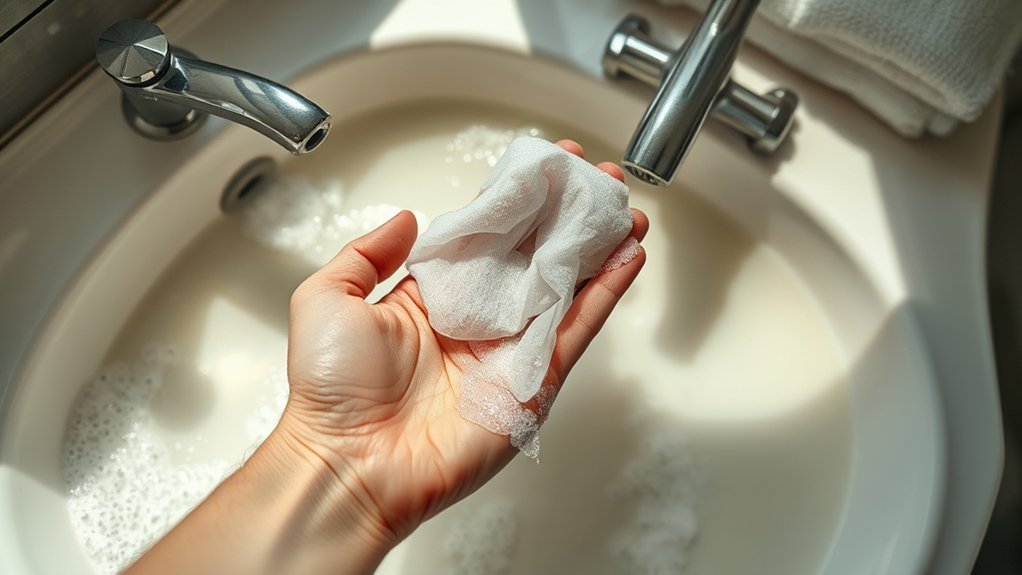
How do laundry detergent sheets actually work when you toss them in the wash? Laundry detergent sheets are concentrated, pre-measured detergents designed to dissolve quickly upon contact with water.
When you add a sheet to your washing machine, its combination of resin and dissolvable paper breaks down, releasing cleaning agents to target dirt and stains.
Adding a sheet releases cleaning agents as its resin and dissolvable paper break down in water.
These sheets are lightweight and easy to store, thanks to their thin, paper-like form. You might wonder how laundry detergent sheets actually work compared to traditional detergents.
They rely on ingredients like sodium lauryl sulfate (SLS) to clean, though SLS can cause skin irritation and environmental concerns.
Furthermore, some sheets use polyvinyl alcohol (PVA) as a water-soluble film, but its biodegradability in natural conditions varies, influencing environmental impact.
Do Laundry Detergent Sheets Clean Clothes Effectively?
You might notice that laundry detergent sheets don’t always clean as well as traditional liquids or pods. This is especially true in cold water, where their effectiveness tends to drop.
They often have a harder time getting rid of stubborn odors and heavy stains, so sometimes you might need to run an extra wash cycle.
Getting a feel for how these sheets work in different situations can really help you figure out if they’re the right choice for your laundry needs.
Cleaning Performance Comparison
Although laundry detergent sheets offer convenience and eco-friendly appeal, they often deliver mediocre to poor cleaning results. This is especially true in cold water cycles, where their effectiveness significantly drops.
When comparing cleaning performance, liquid and pod detergents consistently outperform these sheets, even at their worst. Laundry sheets show minimal improvement in warm water, which limits their versatility across washing conditions.
They also struggle with odor removal, particularly food smells, which challenges their reliability for everyday laundry. You might find yourself running multiple cycles to get satisfactory results, which diminishes the convenience these sheets promise.
While eco-friendly laundry options are important, you should weigh the cleaning performance of detergent sheets carefully before choosing them over more traditional detergents.
Effectiveness In Different Waters
When washing clothes in cold water, laundry detergent sheets tend to deliver subpar cleaning results compared to traditional liquid detergents. Their effectiveness in cold water is noticeably limited, often leaving stains untreated and requiring multiple wash cycles.
In warm water, laundry sheets perform slightly better but still don’t match the cleaning power of liquids or pods.
Here’s what you should know:
- Cold water cycles often yield mediocre results with detergent sheets.
- Warm water improves effectiveness only marginally.
- Multiple washes may be necessary for satisfactory cleaning.
If you rely on cold water to save energy, detergent sheets mightn’t meet your expectations. Their convenience doesn’t fully compensate for the reduced cleaning performance, especially when dealing with tougher stains or odors in cooler wash settings.
Odor Removal Capabilities
Beyond general cleaning effectiveness, odor removal is another important factor to evaluate when gauging laundry detergent sheets.
Performance testing reveals that these sheets often deliver mediocre to poor odor removal, especially against stubborn food smells.
Compared to even the lowest-rated liquid or pod detergents, their ability to eliminate odors is significantly weaker, particularly in cold water cycles.
While some users find them adequate for light cleaning, many report dissatisfaction with persistent odors and heavy-duty stains.
Remarkably, Earth Breeze, a leading brand, has received positive feedback for removing strange washing machine odors, although results vary by user.
What Chemicals Are in Laundry Detergent Sheets?
What exactly goes into laundry detergent sheets? These sheets typically combine several chemicals designed for effective cleaning but with varying environmental impact. You’ll often find:
- Sodium lauryl sulfate (SLS), a surfactant that cleans well but irritates skin and harms aquatic life.
- Polyvinyl alcohol (PVA), a synthetic polymer acting as the sheet’s base, which may persist in water systems.
- Undisclosed “fragrances” that mask chemical odors but aren’t fully revealed by manufacturers.
Some sheets also include enzymes and additional surfactants to enhance stain removal. This might concern those sensitive to chemicals.
Understanding these ingredients helps you weigh detergent sheets’ cleaning power against their potential environmental impact, especially regarding biodegradability and water pollution.
When choosing detergent sheets, consider how these chemicals align with your priorities on sustainability and safety.
What Are the Health Risks of Laundry Detergent Sheets?
Although laundry detergent sheets offer convenience, you should be aware of their potential health risks. Many contain sodium lauryl sulfate (SLS), a known skin irritant that can cause problems with prolonged exposure.
The fragrances used often include undisclosed chemicals, as manufacturers aren’t required to reveal their full composition. This may increase your risk of allergic reactions or sensitivities.
These synthetic fragrances and other harsh chemicals add to the health risks you face when using these products.
Furthermore, the environmental impact of ingredients like SLS raises concerns. Water contamination from aquatic toxicity can indirectly affect human health.
The lack of transparency about ingredient safety and possible toxic components further complicates evaluating the true health risks of laundry detergent sheets.
Are Laundry Detergent Sheets Environmentally Friendly?
Concerns about the health risks of laundry detergent sheets naturally lead to questions about their environmental impact. While detergent strips are marketed as eco-friendly, several factors complicate this claim.
Many sheets are produced overseas, increasing transportation emissions. Furthermore, sheets often contain polyvinyl alcohol (PVA), a synthetic polymer that’s biodegradable only under specific microbial conditions. Current sewage systems struggle to break down PVA efficiently, potentially leaving microplastic residues.
Key environmental considerations include:
- Overseas manufacturing raising carbon footprints
- PVA’s limited biodegradability in real-world conditions
- Possible increased water use due to less effective cleaning
You should weigh these aspects carefully when evaluating the true eco-friendliness of laundry detergent sheets.
Is PVA Plastic? What Does That Mean for Laundry Sheets?
You might be surprised to learn that PVA, the main ingredient in many laundry sheets, is actually a type of plastic because of its chemical makeup.
But here’s the thing—it’s water-soluble and can break down naturally under certain conditions.
That said, in real-world environments, this breakdown can be pretty slow and sometimes incomplete.
PVA Chemical Composition
When you handle laundry sheets, understanding their main component, polyvinyl alcohol (PVA), is essential for evaluating their environmental impact.
PVA is a water-soluble synthetic polymer often marketed as plastic-free due to its solubility, but it’s technically classified as a plastic because of its synthetic polymer base. This classification raises questions about the true environmental benefits of laundry sheets.
Key points about PVA’s chemical composition include:
PVA dissolves in water, which facilitates its use in laundry sheets, but this doesn’t guarantee it’s fully biodegradable. Its breakdown depends on specific microbes and environmental conditions not always present in typical sewage systems.
Also, small PVA particles can escape filtration, leading to environmental persistence despite its water-soluble nature.
Understanding these factors helps you critically assess laundry sheets’ eco-friendly claims.
Biodegradability Challenges Explained
Although PVA is water-soluble and often labeled as biodegradable, its classification as a plastic polymer complicates its environmental profile.
As a polyvinyl compound, PVA requires specific microbes to break it down, which aren’t always present in natural or sewage environments. This creates biodegradability challenges since standard wastewater systems often can’t effectively degrade PVA, leading to potential accumulation.
While PVA can decompose under ideal conditions, the process is inconsistent and may take an indeterminate amount of time.
You might assume laundry sheets containing PVA are eco-friendly, but the reality is more complex. Understanding these limitations helps you assess whether these products truly align with your environmental values, highlighting the need for more sustainable alternatives beyond polyvinyl-based materials.
Environmental Impact Concerns
Since PVA is a synthetic polymer classified as plastic, its use in laundry sheets raises important environmental questions.
You should know that while PVA is water-soluble and biodegradable under specific conditions, typical sewage systems often can’t break it down effectively. This limitation can lead to environmental accumulation despite claims of biodegradability.
Key concerns include that PVA requires specialized microbes to degrade, which may be absent in natural settings.
Also, current filtration systems may not fully capture PVA particles, allowing traces to enter waterways.
Plus, the distinction between water-solubility and true biodegradability means PVA can persist in the environment longer than expected.
Understanding these factors helps you weigh the environmental impact of laundry sheets containing PVA and consider their long-term effects on ecosystems.
How Does PVA in Laundry Detergent Sheets Break Down?
Because PVA (polyvinyl alcohol) is a water-soluble synthetic polymer, it can dissolve during the laundry process.
But its complete breakdown depends on the presence of specific microbes capable of biodegrading it.
When these microbes act on PVA, they convert it into carbon dioxide and water, showing its biodegradable nature.
However, this process varies in duration and effectiveness depending on environmental conditions.
The breakdown of PVA depends greatly on the surrounding environmental conditions and microbial activity.
You should know that while PVA is biodegradable, it doesn’t always break down easily in natural or typical sewage systems, which often lack the necessary microbial populations.
As a result, small PVA particles from laundry sheets can escape filtration, raising concerns about their persistence in ecosystems.
Understanding this helps you evaluate the environmental implications of using laundry detergent sheets containing PVA.
Why Alternative Detergents Clean Better Than Laundry Sheets
When you compare cleaning effectiveness, alternative detergents like liquid natural formulas consistently outperform laundry sheets, especially in cold water cycles where sheets often fall short.
Liquid laundry detergent contains powerful surfactants and enzymes that tackle a broader range of stains and odors than laundry sheets can manage.
You’ll also find that liquid formulas can be tailored for specific stain removal and fabric care needs, unlike the standardized composition of sheets.
Key reasons alternative detergents clean better include:
- Enhanced stain removal capabilities due to specialized enzymes
- Superior odor elimination through targeted surfactants
- Higher satisfaction from fewer repeat wash cycles
While laundry sheets offer convenience, their cleaning performance is generally mediocre compared to liquid detergents, especially in challenging conditions.
How to Pick the Right Laundry Detergent for You
How do you choose the best laundry detergent for your specific needs? Start by evaluating your laundry habits. Consider load size, fabric types, and common stains. This helps determine whether sheets, liquids, or pods suit you best.
Next, check for eco-friendliness by selecting products free from harmful chemicals like sodium lauryl sulfate (SLS). Also, look for minimal packaging to reduce environmental impact.
Evaluate cleaning performance through user reviews and tests. Make sure the detergent effectively removes odors and stains at your preferred water temperature.
Convenience matters too. Sheets save space, while liquids may handle heavy-duty cleaning better.
Finally, opt for brands transparent about ingredients, especially fragrances, to avoid allergens and toxins. By weighing these factors, you can pick a detergent that balances effectiveness, eco-friendliness, and personal preferences.
Frequently Asked Questions
Can Laundry Sheets Be Used in All Types of Washing Machines?
Yes, you can use laundry sheets in all types of washing machines, including standard and high-efficiency (HE) models.
They dissolve well in both cold and hot water, making them adaptable to various wash settings.
Just make certain to follow the manufacturer’s guidelines on load size for the best cleaning results.
While they work well generally, you might want to test them on heavily soiled clothes first to verify they meet your cleaning needs.
Do Laundry Sheets Cause Any Damage to Fabrics Over Time?
Imagine your favorite shirt gradually losing its vibrant color and soft texture. Yes, laundry sheets can cause fabric damage over time, especially those with harsh surfactants like sodium lauryl sulfate.
They might leave residues that attract dirt or cause wear, especially if washed in cold water.
Some sheets’ fragrances and incomplete dissolution of polyvinyl alcohol can also fade colors or roughen fabric texture, so it’s wise to monitor your clothes closely.
How Should Laundry Sheets Be Stored to Maintain Effectiveness?
You should store laundry sheets in a cool, dry place away from direct sunlight to keep them effective.
Keep them in their original packaging or an airtight container to prevent moisture exposure. Moisture can cause clumping or premature dissolving.
Avoid humid areas like bathrooms and steer clear of strong odors that sheets might absorb.
Also, regularly check expiration dates to guarantee the sheets perform at their best during use.
Are Laundry Sheets Safe for People With Sensitive Skin?
Laundry sheets can pose risks if you have sensitive skin, mainly because many contain sodium lauryl sulfate (SLS), a known irritant.
Fragrances in some sheets might also trigger allergic reactions since their ingredients aren’t always clear.
To protect your skin, you should carefully check labels and consider fragrance-free, hypoallergenic options like Hey Sunday.
These alternatives often clean effectively without causing irritation, making them safer choices for sensitive skin.
Can Laundry Sheets Help Reduce Water Usage in Laundry?
Think of laundry sheets like a telegram from the past, quick and minimal. Yes, they can reduce water use by being lightweight and needing less packaging.
That means less water in transport too.
But if your clothes need multiple washes or warmer water to get clean, you might end up using more water overall.
Conclusion
Laundry detergent sheets offer convenience and reduce plastic waste, but they may not clean as thoroughly as traditional detergents, especially with heavy stains. While their PVA component breaks down in water, some environmental concerns remain.
If you prioritize eco-friendliness and ease, sheets can work well for light loads. However, for deep cleaning, you might find liquid or powder detergents more effective.
Ultimately, choosing the right detergent depends on your specific needs and values.