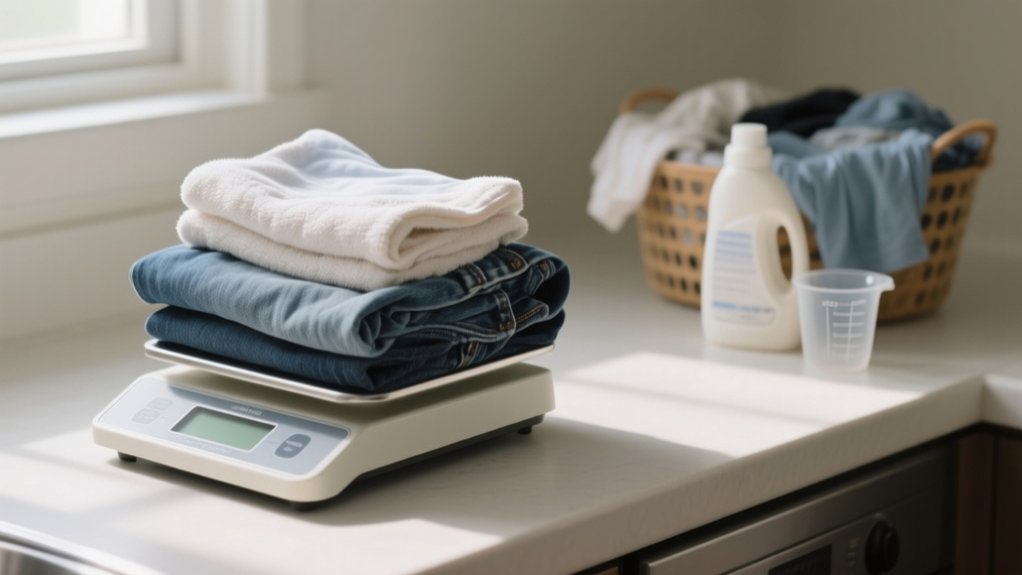
How Much Does A Load Of Laundry Weigh – Numbers to Know
A typical laundry load weighs between 6 and 15 pounds, depending on items and machine size. Small loads top out around 5 to 6 pounds, while medium loads sit near 8 to 10 pounds. Think a few t-shirts and jeans.
Overloading beyond your washer’s capacity, usually 8 to 16 pounds for standard machines, reduces cleaning effectiveness and strains your appliance. Knowing exact weights helps you optimize loads and prevent damage.
Keep going to uncover smart strategies for sorting, weighing, and protecting your laundry investments.
Key Takeaways
- A small laundry load weighs up to 5-6 pounds, suitable for one person’s daily clothing.
- A medium load typically ranges from 6 to 10 pounds, representing about half a week’s laundry.
- Large loads weigh between 11 and 15 pounds, covering a full week’s clothing needs.
- Extra-large loads span 15 to 22 pounds, designed for family-sized laundry.
- Common items like jeans (1.5 pounds) and towels (1 pound each) significantly affect total load weight.
Typical Laundry Load Weight Ranges

A typical laundry load falls within specific weight ranges that can help you estimate how much your washing machine will handle. A small laundry load usually weighs up to 5-6 pounds, representing a day’s clothes for one person.
Estimating laundry load weights helps you avoid overloading your washing machine and manage daily clothing needs efficiently.
A medium load weighs around 6 pounds, while a large load averages about 11 pounds.
Knowing these ranges matters because the weight helps you avoid overloading or underloading your machine. The average load of laundry for an individual per week typically totals 15-20 pounds, so planning multiple medium loads is practical.
For households, especially families, understanding these weight distinctions is essential to managing laundry cycles efficiently. It ensures ideal washing performance and fabric care without risking damage from excessive weight.
Common Laundry Items and Their Laundry Weights
Understanding the weight of common laundry items helps you better estimate your load and avoid overloading your machine.
For instance, a standard cotton t-shirt weighs between 5 to 8 ounces, while a pair of jeans tips the scale at over 1.5 pounds, greatly impacting your load of dirty clothes.
Bath towels weigh about 1 pound each, and bed sheets add nearly 2 pounds depending on material.
When you combine these common laundry items, they quickly add up, influencing the total weight of a typical load of laundry.
Keep in mind, wet clothes weigh more due to water absorption, affecting the handling and efficiency of your washing machine.
Knowing these weights helps you manage the average American’s laundry routine effectively.
Load Size Categories Explained by Laundry Weight
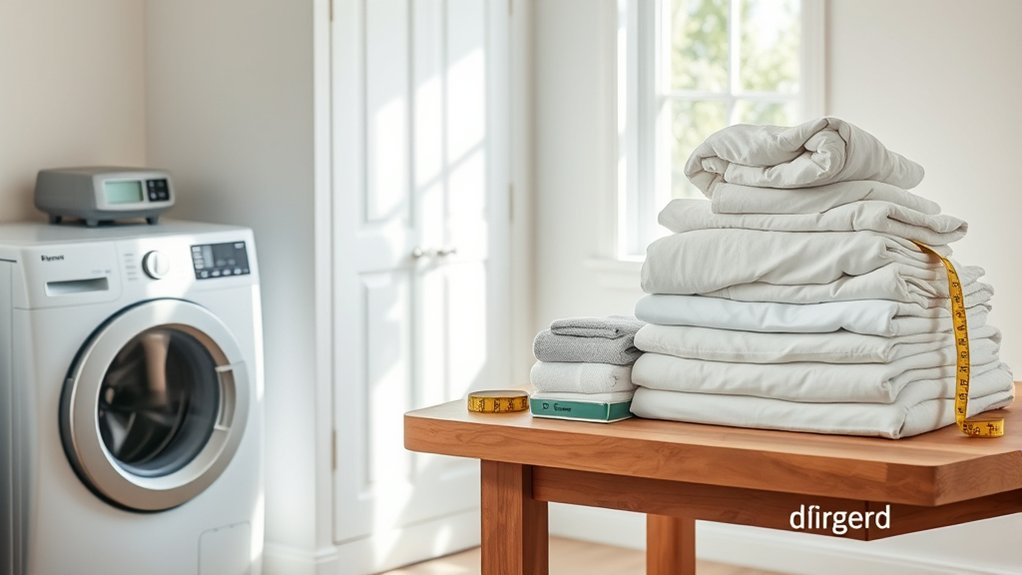
You’ll find that laundry loads fall into four main weight categories, each tailored to different amounts of clothing and washing needs.
The load size categories start with a small load, weighing up to 5-6 pounds, perfect for a day or two of clothes for one person.
Medium loads range from 7-10 pounds, roughly half a week’s worth of laundry.
Large loads weigh between 12-15 pounds, covering a full week’s clothes for an individual.
Finally, extra-large loads span 15-22 pounds, suitable for family laundry accumulated over a week.
Understanding these categories helps you avoid overloading, which can reduce cleaning efficiency and strain your washer.
Avoid overloading your washer to maintain cleaning effectiveness and prevent unnecessary wear on your machine.
Sticking to recommended weights guarantees ideal wash performance and extends your machine’s lifespan.
How Washer Capacity Limits Load Weight
Although it might be tempting to cram every piece of laundry into one cycle, your washer’s capacity strictly limits how much weight you can load without compromising performance.
Washer capacity varies: compact models hold up to 6 pounds, standard washers handle 8 to 16 pounds, and large-capacity machines manage 16 to 25 pounds. Understanding the average weight of your laundry items helps you gauge an appropriate load size.
For instance, a medium load in a standard washer fills the drum about halfway, aligning with ideal weight limits.
Overloading reduces cleaning effectiveness because clothes need room to tumble freely for proper agitation and rinsing.
Staying within your washer’s rated capacity guarantees efficient cycles and protects your machine from damage caused by excessive load weight.
How to Estimate Your Laundry Load Weight at Home
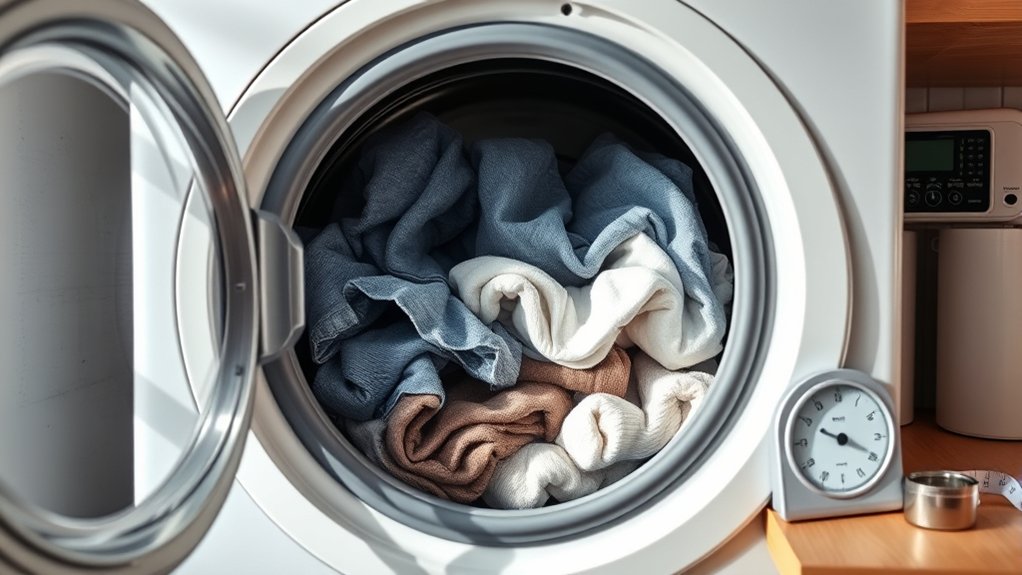
You can estimate your laundry load weight by adding up the weights of common items like jeans, towels, and t-shirts. Each of these has a typical weight range, so it’s pretty straightforward.
If you want to be more precise, using a household scale is a handy way to measure smaller loads or even individual pieces.
This method helps make sure you don’t overload your washer, and it’s also great if you need to budget by weight.
Common Item Weights
Understanding the weight of common laundry items is key to accurately estimating your load size at home.
For example, a typical pair of jeans weighs around 1.5 pounds, making it one of the heavier pieces in your laundry basket.
Bath towels typically weigh about 1 pound each, so multiple towels can quickly add up.
Cotton t-shirts weigh between 5 to 8 ounces, contributing less to the total weight.
Bed sheets, depending on material, can weigh nearly 2 pounds.
Knowing these common item weights helps you gauge how much your average load of laundry weighs more precisely.
Using Household Scales
When estimating your laundry load weight at home, using a household scale offers a straightforward and accurate method. You can weigh individual items before adding them to the washer, then total the weights to find your load’s overall weight.
Keep in mind, wet laundry weighs more due to water absorption, which impacts the total weight considerably. Accurately knowing your laundry’s weight helps you budget for services charged by the pound and avoid overloading your machine.
| Item | Typical Weight (lbs) | Notes |
|---|---|---|
| Pair of Jeans | 1.5+ | Heavier due to denim |
| Bath Towel | 1.0 | Absorbs water, gains weight |
| Cotton T-shirt | 0.3 – 0.5 | Light, easy to weigh |
Signs You’re Overloading Your Washer
Three clear signs indicate you might be overloading your washer: clothes that come out still dirty, persistent odors or detergent residue, and excessive noise during the spin cycle.
When your washer exceeds its recommended capacity, typically 6 to 18 pounds, cleaning effectiveness drops.
If your laundry load surpasses a medium load, usually about a full arm load, it strains the machine.
Dirty clothes after washing signal that garments aren’t tumbling freely, which is a key sign of an overloaded washer.
Detergent may not rinse out properly, leaving residues and odors.
Furthermore, excessive noise during spinning suggests the washer struggles under the weight.
To avoid these issues, make sure your load matches the washer’s capacity, maintaining peak cleaning performance and preventing damage.
Why Laundry Weight Matters for Pay-By-The-Pound Services
You want to get a good estimate of your laundry weight to avoid any surprise charges with pay-by-the-pound services.
When you know exactly how much your laundry weighs, it’s easier to compare prices and figure out the best deal.
This way, you’re only paying for what you actually send in, no more, no less.
Accurate Weight Estimation
Because many laundry services charge by the pound, accurately estimating the weight of your load directly impacts your budget and service efficiency.
To know HOW MUCH IS A LOAD, consider that a medium or regular load typically weighs between 6 to 15 pounds.
Understanding how much your dirty clothes weigh helps you avoid unexpected costs and guarantees you purchase the right amount of detergent.
When planning laundry per year, accurate weight estimation allows for better budgeting and service scheduling.
For example, cotton t-shirts weigh 5 to 8 ounces, while jeans exceed 1.5 pounds, affecting total weight.
Tracking the weight of your laundry regularly guarantees you stay within expected ranges, making pay-by-the-pound services more predictable and efficient for you.
Transparent Pricing Benefits
Anyone using pay-by-the-pound laundry services benefits from transparent pricing that links cost directly to the weight of their laundry.
When you understand how much a load of laundry weighs, typically between 6 to 15 pounds, you can anticipate expenses accurately.
Transparent pricing eliminates hidden fees, letting you budget clearly for each laundry service. By knowing item weights, like towels at 2 lbs and jeans at 1.5 lbs, you gain control over your laundry management.
Weight-based pricing also offers flexibility, enabling you to handle larger loads without worrying about machine limits.
This model encourages efficient laundry management and informed decisions, ensuring you pay precisely for what you use.
Transparent pricing in weight-based laundry services ultimately saves you money and simplifies your laundry routine.
Tips to Optimize Load Size and Protect Your Washer and Clothes
When optimizing your laundry load size, aiming for a medium load of about 6 pounds or roughly half full is key to ensuring effective cleaning and preventing strain on your washer.
To optimize load size, avoid overfilling the washer drum beyond three-quarters full, especially with extra-large loads that can weigh around 21 pounds.
Overloading reduces tumbling action, which results in poorly cleaned clothing items and potential machine damage.
Sort clothes by fabric type and soil level, washing heavy items like towels separately to maintain efficiency.
Regularly check for signs like lingering odors or detergent residue, which indicate your load of laundry weighs too much.
Frequently Asked Questions
How Does Fabric Type Affect Laundry Drying Time?
Fabric type directly affects your laundry drying time because heavier fabrics like towels and blankets hold more moisture, making them take longer to dry.
Cotton absorbs more water, so it can extend drying by 30-40% compared to synthetic blends.
Delicates need lower heat, also increasing drying duration.
When you mix fabric types, heavier items trap moisture around lighter ones, causing uneven drying and longer overall cycles.
Choose loads wisely to save time.
What Is the Average Water Usage per Laundry Load?
You know what they say: “A penny saved is a penny earned.”
On average, you’ll use about 14 gallons of water per load with a high-efficiency washer, which is roughly 33% less than a regular one that consumes around 20 gallons.
Front-loading HE washers usually use less water than top-loaders.
Adjusting water levels based on load size and fabric type lets you save water without compromising cleaning effectiveness.
How Often Should Washing Machine Maintenance Be Performed?
You should perform washing machine maintenance at least every six months to keep it running efficiently.
Check hoses for wear every few months and replace any damaged ones to avoid leaks.
Clean the drum monthly to prevent detergent buildup and mold.
Don’t forget to clean the lint or drain pump filter every three months to avoid clogs.
For thorough inspection, schedule a professional service annually to catch hidden issues early.
Can Overloading Affect Detergent Effectiveness?
Think of your washing machine as a busy chef trying to season a giant stew. If the pot’s too crowded, the flavors won’t blend evenly.
Yes, overloading your washer dilutes detergent effectiveness because clothes clump, blocking proper agitation and detergent distribution.
You’ll notice lingering odors and residue.
To keep detergent working well, load the machine just right, allowing enough space for thorough cleaning and ensuring your clothes come out fresh every time.
What Are Common Signs of Detergent Residue on Clothes?
You’ll notice detergent residue when your clothes have a white, powdery film or feel sticky and greasy.
If your laundry smells musty or unpleasant, that’s another sign detergent and soil haven’t rinsed out properly.
Visible streaks or blotches often indicate buildup, especially if you overload the washer.
Pay attention if you or your family experience skin irritation or allergies after wearing freshly washed clothes.
It means residue remains on the fabric.
Conclusion
Knowing your laundry load weight is like packing a suitcase. You want it just right to avoid strain or damage. By understanding typical weights and washer limits, you can accurately estimate your loads.
This helps prevent overloading and extends your machine’s life. This practical approach not only protects your clothes but also saves money, especially if you pay by the pound. Keep these details in mind to optimize every wash efficiently and effectively.