What Is Considered A Large Load Of Laundry – Meaning & More
A large load of laundry fills about three-quarters of your washer tub and weighs around 11 pounds, roughly 6-7 shirts or 8 towels. You want enough space for clothes to move freely, ensuring a thorough clean without overloading and straining your machine.
Overpacking can leave detergent residue and cause damage. Properly loading and balancing big loads improves efficiency. Keep an eye out for signs your load’s too heavy, and explore tips for handling bulky items and adjusting settings for the best results.
Key Takeaways
- A large laundry load fills about three-quarters of the washer tub and weighs around 11 pounds.
- It typically includes 6-7 permanent press shirts or 8 towels with 6 washcloths.
- Clothes should have enough space to tumble freely for effective cleaning and avoid overloading.
- Overloading signs include detergent residue, dirty clothes, lingering odors, and unusual washer noises.
- Bulky items like blankets should be washed separately to prevent machine strain and ensure proper cleaning.
Characteristics Of A Large Laundry Load
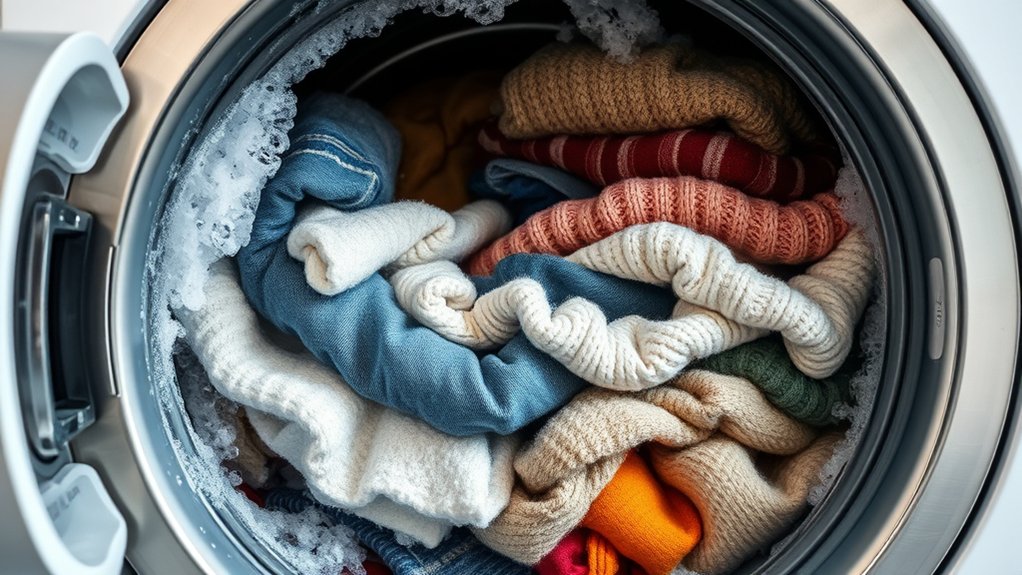
A large load of laundry usually fills about three-quarters of your washer tub, weighing around 11 pounds. This translates to roughly 6-7 permanent press shirts or 8 bath towels with 6 washcloths.
When using a top loading washer, you need to confirm clothes stay at or below the agitator for effective cleaning. The washer’s capacity plays a key role here; a large load shouldn’t exceed three-quarters of it, allowing proper agitation and circulation.
Ensure clothes remain at or below the agitator to promote effective cleaning and proper washer circulation.
Comparing this to a medium load, which fills about half the tub, you’ll see why overloading can harm results. If the load’s too big, clothes won’t move freely, leaving dirt and detergent residue behind.
Understanding these characteristics helps you optimize washing efficiency and care for your fabrics.
How Washing Machine Capacity Affects Large Load Size
Your washing machine’s capacity plays a big role in how much laundry you can wash at once.
Basically, the size of the drum sets the limit on how much you can fit inside.
If you stuff it too full, your clothes won’t have enough room to move around properly, which means they mightn’t get as clean as you’d like.
So, it’s a good idea to know your machine’s specs.
That way, you can avoid overloading and make sure every load comes out just right.
Capacity Determines Load Weight
Three-quarters full is the ideal drum capacity to classify a laundry load as large, typically weighing around 11 pounds. The capacity of your washing machine directly influences what qualifies as a large load.
Standard top-load washers hold between 3.1 and 4 cubic feet, while front-load models range from 4.2 to 5 cubic feet. A large load should fill the drum from halfway to three-quarters full and require both arms to carry.
When you understand your washer’s capacity, you can better estimate load weight and optimize detergent use.
Avoid overloading, as it compromises cleaning efficiency and can damage your machine.
Drum Size Limits
Knowing how much laundry your washer can handle helps you avoid overloading. Overloading hampers cleaning performance and risks damaging the machine. The drum size directly affects what counts as a large load.
Standard top-loaders have drums ranging from 3.1 to 4 cubic feet, while front-loaders range from 4.2 to 5 cubic feet. A large load typically fills about three-quarters of the drum, weighing around 11 pounds in a high-efficiency washer.
To guarantee effective washing, your large load shouldn’t exceed the machine’s capacity or fill the drum completely. Clothes need space to tumble freely for proper agitation and detergent circulation.
Always leave room in the drum to avoid mechanical issues and ensure ideal cleaning results, balancing the load without reaching the full load limit.
Measuring Large Loads With The Armload Method
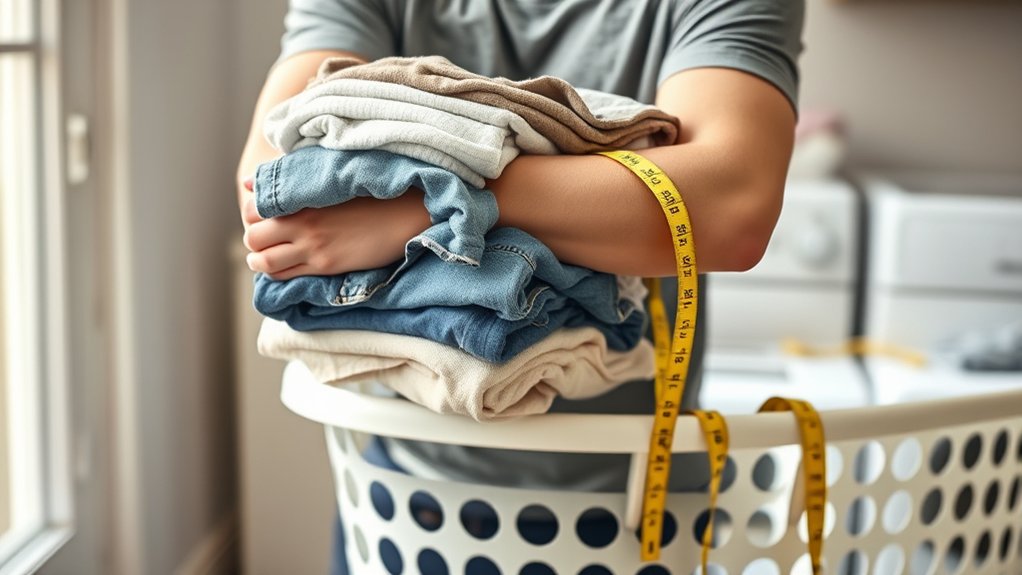
Two arms are usually needed to carry a large load of laundry, which fills the washer drum from halfway to three-quarters full. Using the armload method, you can easily measure a large load by evaluating if you can comfortably carry the laundry bundle with both arms.
This practical approach corresponds to about 11 pounds in a high-efficiency washer. When loading your washer drum, make certain the clothes have enough room to tumble freely. This space is essential for effective cleaning, allowing water and detergent to circulate properly.
Avoid packing too tightly; overloading prevents proper agitation, reducing cleaning performance.
How To Properly Load A Large Laundry Load
After measuring your large load with the armload method, the next step is to load your washer properly to maintain washing efficiency. A large load typically fills about three-quarters of the washer tub. Make certain to leave enough space for clothes to tumble freely. Use the palm trick by fitting your hand between the laundry and drum wall.
For balanced load size, include items like 6-7 permanent press shirts or 8 towels with 6 washcloths. Always check your washer’s capacity to avoid mechanical issues and guarantee effective cleaning.
| Load Item | Quantity |
|---|---|
| Permanent Press Shirts | 6-7 |
| Bath Towels | 8 |
| Washcloths | 6 |
| Load Weight | ~11 pounds (HE) |
How To Avoid Overloading A Large Laundry Load
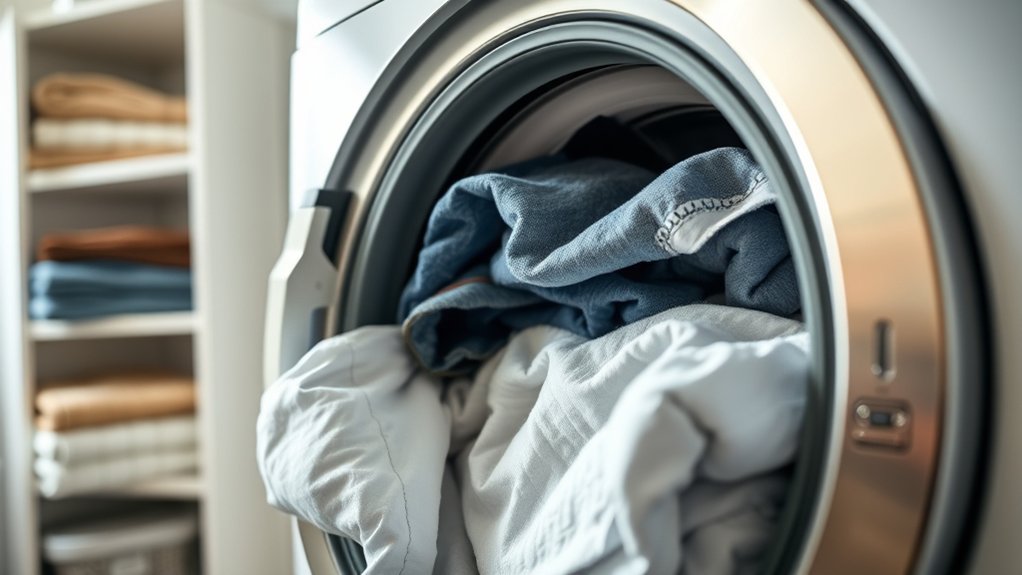
Although it might be tempting to pack your washer to the brim, you should avoid overloading by filling the drum no more than three-quarters full. This guarantees there’s enough space for clothes to tumble freely, preventing poor washing results.
To gauge proper load sizes, use the “palm trick”: check if your hand fits comfortably between the laundry and the drum wall.
Also, weigh your laundry; a large laundry load typically weighs around 11 pounds.
Overloading can cause detergent residue and dirty clothes, signaling insufficient cleaning. To avoid this, sort laundry by fabric types and colors, optimizing each load size.
Adjusting Detergent And Settings For Large Loads
When you tackle a large laundry load, adjusting detergent and settings is essential to guarantee your clothes come out clean and fresh. For a large load, increase detergent usage following the manufacturer’s guidelines, often filling the cap to a higher line.
Select a wash cycle designed for heavy or bulky loads to ascertain thorough cleaning. If your machine lacks load sensing, manually adjust water levels to cover all clothes properly.
| Factor | Recommendation |
|---|---|
| Detergent Usage | Use more detergent, fill cap higher |
| Wash Cycle | Choose longer or heavy-duty cycle |
| Water Levels | Confirm water covers entire load |
Proper adjustments prevent residue buildup and confirm your large load washes effectively every time.
Washing Bulky Items In Large Loads
If you want to wash bulky items like blankets or comforters effectively, using a front-load washer with at least 4.2 cubic feet of capacity is essential to allow proper agitation.
Bulky items require a large load size, typically around 11 pounds or about three-quarters of your washer’s drum capacity. Ensuring enough space for these items to tumble freely prevents matting and soap residue buildup.
Overloading your washer beyond its wash capacity can cause mechanical problems and reduce cleaning effectiveness.
Always check the care labels on bulky items for machine washability and temperature guidelines.
Signs Your Large Load Is Too Big And How To Fix It
If your clothes come out still dirty, smelling bad, or with detergent residue, it might mean your load is too big.
When everything is packed tightly with no room to move, the washer just can’t clean properly.
So, what can you do?
Try taking out some clothes or washing bulky items separately.
This way, you’ll get much better results and your laundry will come out fresh and clean.
Overload Warning Signs
Although it might seem convenient to cram as many clothes as possible into your washing machine, overloading it can lead to several problems.
When the drum is too full, over three-quarters capacity, your clothes won’t tumble freely, which affects cleaning quality.
Knowing the right load size helps prevent these issues. Here are key signs your load is too full:
- Clothes come out dirty or with detergent residue.
- Persistent odors linger even after washing.
- The washer experiences unusual noises or strain.
Exceeding the average large load weight of around 11 pounds can cause these signs and wear down your machine.
Watch for these overload warning signs to keep your laundry effective and your washer in good shape.
Corrective Loading Tips
When your large load shows signs like detergent residue, lingering odors, or unclean clothes, it’s a clear indication that the load is too big and needs adjustment. Use these corrective loading tips to improve your wash results.
First, check your washer capacity and verify the load fills about three-quarters of the drum, roughly 11 pounds. If you can’t fit your hand comfortably between clothes and the drum, reduce the load size.
Divide your laundry into smaller loads, around 6 pounds each, to promote ideal washing performance. Always consult your washer’s guidelines, as capacities differ.
Proper loading lets clothes tumble freely, allowing detergent and water to circulate effectively. This prevents residue and odors while guaranteeing thorough cleaning every time.
Tips For Efficient Large Load Laundry Care
Since a large load fills about three-quarters of the washer tub and weighs around 11 pounds, you need to balance your laundry carefully to prevent excessive vibration and machine wear.
When handling a large load in your washer and dryer, make sure there’s enough room for clothes to tumble freely. Overpacking reduces cleaning efficiency and stresses your machine.
Follow these tips for efficient laundry care:
- Distribute items evenly to maintain balance and avoid mechanical issues.
- Use the right detergent amount, increasing it slightly for large loads without causing residue.
- Wash bulky items like blankets separately to protect washing quality and machine performance.
Frequently Asked Questions
How Does Water Temperature Affect Cleaning Large Laundry Loads?
Water temperature affects cleaning large laundry loads by influencing stain removal and fabric care.
You’ll get the best heavy soil removal with hot water (130°F+). But warm water (90°F–110°F) balances cleaning and protects fabrics from shrinking or fading.
Cold water saves energy and preserves colors but mightn’t clean heavily soiled items well.
Choosing the right temperature guarantees your detergent works effectively and your clothes come out clean without damage.
Can Large Laundry Loads Cause Damage to Delicate Fabrics?
Think of delicate fabrics as dancers needing space to move gracefully. Yes, large laundry loads can damage them by crowding the washer, causing excessive friction and stretching.
When you overload your machine, those delicate items can’t tumble freely, leading to snags or wear.
To protect your silks and laces, wash them separately or in smaller loads. This careful approach helps preserve their beauty and extend their lifespan.
What Is the Best Drying Method for Large Laundry Loads?
The best drying method for large laundry loads is using a high-capacity dryer with enough space for good air circulation.
Separate bulky items like towels into smaller loads to avoid clumping.
Use dryer balls to improve airflow and reduce drying time.
Choose a higher heat setting cautiously, monitoring to prevent shrinking or damage.
Always follow fabric care labels to keep your clothes safe and guarantee thorough drying every time.
How Often Should Large Laundry Loads Be Washed to Maintain Fabric Quality?
You should wash large laundry loads every 1 to 2 weeks to keep fabric quality intact.
Waiting longer lets dirt and odors build up, which can degrade fibers and reduce elasticity.
To avoid damage, don’t overload your washer and separate bulky items like towels.
Regular washing helps maintain freshness and extends your clothes’ lifespan.
Stick to this schedule for the best balance between cleanliness and fabric care.
Are There Eco-Friendly Detergents Suited for Large Laundry Loads?
Yes, you’ll find eco-friendly detergents designed for large laundry loads.
These detergents are often concentrated, so you use less per load, reducing waste and environmental impact.
Look for formulas labeled for high-efficiency (HE) machines to avoid excess suds and guarantee thorough cleaning.
Certifications like EPA’s Safer Choice or USDA Organic help you pick truly eco-friendly options.
Using these detergents keeps your fabrics gentle and your skin irritation-free.
Conclusion
When tackling a large load of laundry, you’re embracing a bit of a balancing act. By understanding your machine’s capacity and loading thoughtfully, you’re setting yourself up for success without overstepping boundaries.
Adjusting detergent and settings keeps everything running smoothly, while knowing the signs of an overambitious load helps you course-correct. With these gentle nudges, your laundry routine will flow effortlessly, turning what could be a chore into a seamless, efficient task you can breeze through.