How Much Water Does A Load Of Laundry Use – Quick Facts
You use between 7 and over 19 gallons of water per laundry load depending on your washer’s efficiency, cycle, and load size. Standard washers consume over 19 gallons, while high-efficiency front-load models use as little as 7 gallons.
Quick or express cycles reduce water use, whereas heavy-duty cycles require more. Using full loads and HE detergent further cuts waste. Understanding these factors helps you save water effectively. Explore how different practices and machines impact your overall consumption.
Key Takeaways
- Standard washers use over 19 gallons of water per load, while high-efficiency washers use as little as 7 gallons.
- ENERGY STAR certified machines average about 14 gallons of water per load.
- The average American household does around 300 laundry loads annually.
- Water use varies by cycle type, with quick cycles using the least and heavy-duty cycles using the most.
- High-efficiency washers adjust water based on load size and soil level, optimizing water use effectively.
Average Water Use Per Load
A single load of laundry can use anywhere from 7 to over 19 gallons of water, depending on the washing machine you choose. The average water use per load varies greatly: standard washers typically consume more than 19 gallons, while high-efficiency washers use as little as 7 gallons.
ENERGY STAR certified machines average around 14 gallons per load, striking a balance between efficiency and cleaning performance. Given that the average American household washes about 300 loads annually, selecting a washer with lower water use can lead to substantial savings.
High-efficiency washers reduce water consumption by approximately 6 gallons per load compared to standard models, saving over 2,000 gallons yearly.
Keep in mind, water use also depends on load size, cycle selection, and washer model.
Which Washing Machines Use the Least Water?
You’ll find that front-load high-efficiency washers use as little as 7 gallons per load. That makes them the most water-efficient choice out there.
High-efficiency top-load models do pretty well, too, usually using around 13 gallons per load.
When you compare these to standard washers, which often use 19 gallons or more, the difference is pretty clear.
You can save a significant amount of water by choosing one of the more efficient models.
Front-Load Efficiency
Although many washing machines consume large amounts of water, front-load washers stand out for their efficiency. They use as little as 7 to 13 gallons per load compared to 19 gallons or more in standard top-loaders.
You’ll find that front-load washers achieve superior water efficiency through their tumbling action, which cleans clothes effectively with less water.
ENERGY STAR certified models further enhance savings by reducing both water and energy use.
Consider these key points:
- Front-load washers use about 6 gallons less water per load than standard top-loaders.
- High-efficiency front-loaders average around 13 gallons per load.
- Tumbling action increases fabric friction, requiring less water.
- ENERGY STAR models optimize both water and energy consumption, lowering utility costs and environmental impact.
Choosing a front-load washer means smarter water use and energy savings.
High-Efficiency Top-Load
When comparing water usage among washing machines, high-efficiency (HE) top-load washers stand out by using about 13 gallons of water per load. This is considerably less than standard top-loaders that consume 19 gallons or more.
These HE models often include auto-sensing technology, which detects load size and adjusts water volume accordingly. This helps optimize efficiency.
Their advanced wash action relies on clothes rubbing against each other rather than agitation with large water volumes. That way, they maintain cleaning performance while reducing water consumption.
Using HE detergents, designed for low-suds in minimal water, further enhances this efficiency.
Why Front-Load Washers Use Less Water
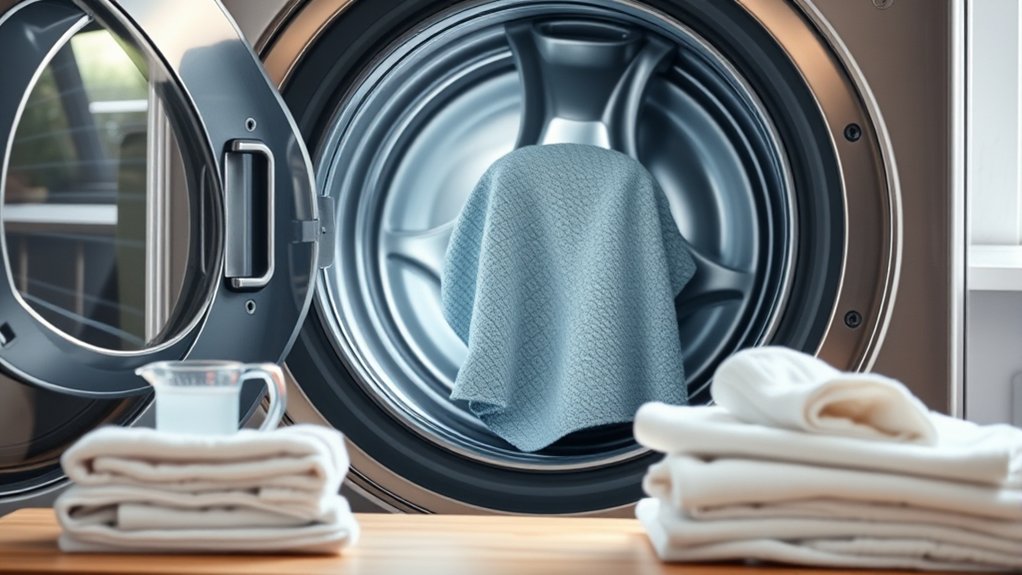
Because front-load washers use a tumbling motion rather than filling the drum completely, they typically consume as little as 7 gallons of water per load. That’s significantly less than the over 19 gallons used by standard top-load machines.
This efficient water usage comes from their design and functionality, which also boost energy efficiency.
Their innovative design enhances water efficiency while simultaneously reducing energy consumption.
Consider these key factors:
- Tumbling action relies on gravity, cleaning clothes without submerging them fully.
- Auto-sensors adjust water levels precisely to match the load size.
- Reduced water volume lowers detergent requirements, which helps preserve fabrics.
- ENERGY STAR certified models save over 2,000 gallons annually compared to traditional washers.
How Wash Cycles Affect Water Consumption
You’ll notice that quick or express cycles use the least amount of water.
On the other hand, heavy-duty and deep water options tend to use a lot more because they fill the tub completely.
Load size also matters quite a bit—larger loads need more water, especially during rinse cycles like Extra Rinse, which can bump up water use even more.
The good news is that newer washers are pretty smart about this. They optimize water use across different cycles, making sure to balance efficiency with getting your clothes really clean.
Cycle Types Water Use
Different wash cycles greatly impact the amount of water your laundry consumes. Understanding cycle types can help you optimize water usage effectively.
For example:
- Standard cycles use about 19 gallons per load, while high-efficiency (HE) cycles reduce this to as low as 7 gallons.
- Quick or Express cycles minimize water by partially filling the drum, cutting water use further.
- Bulky Item and Deep Water Wash cycles fill the entire tub, considerably increasing water consumption.
- Soil level settings adjust water volume based on how dirty your clothes are, conserving water on lightly soiled loads.
Load Size Impact
One key factor influencing water use in laundry is load size, as larger loads demand more water to guarantee thorough cleaning, while smaller loads consume less.
For example, a standard top-loading washing machine uses about 19 gallons per load, but this can vary depending on the load size and cycle selected.
High-efficiency washers reduce water usage considerably, with HE front-load washers using as little as 7 gallons per load.
When you increase the load size, the washing machine uses more water to make sure all items are cleaned properly.
Conversely, smaller loads require less water, making load size a critical variable in managing water consumption.
Understanding how load size affects water usage helps you optimize your washing habits to save water effectively.
Rinse Settings Effects
Although rinse settings might seem like a minor detail, they’ve a considerable impact on water consumption during laundry cycles.
Understanding how rinse settings and soil level settings affect water use can help you optimize efficiency.
Standard spray rinses use less water than deep fill rinses, reducing water consumption considerably. Extra rinse options engage deep fill rinses, increasing water use, especially for larger or heavily soiled loads.
Soil level settings adjust water volume during rinse cycles, tailoring consumption to the actual dirtiness of your laundry.
Quick or express cycles generally use less water, while bulky item cycles fill the tub completely, raising water consumption.
Choosing appropriate rinse settings based on soil level optimizes water use without compromising cleanliness.
How Load Size and Soil Affect Water Use
Water usage in laundry varies considerably based on load size and soil level, directly influencing efficiency and consumption. When you increase load size, washers require more water to clean effectively. Standard machines use about 19 gallons per load, while high-efficiency washers adjust water usage to as low as 7 gallons.
Furthermore, soil level settings play an essential role. Heavily soiled loads demand extra water due to increased rinsing cycles, raising overall consumption. Selecting appropriate soil level settings optimizes water use by matching water volume to dirtiness.
Quick cycles use less water than Heavy Duty, which fills the entire tub for larger, dirtier loads.
How Detergent Affects Washer Water Use
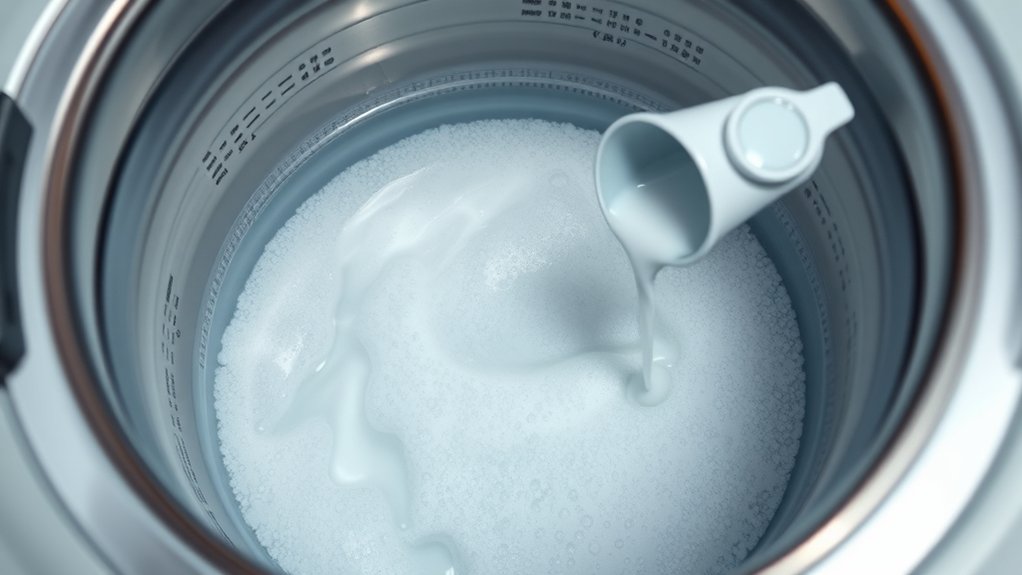
Because detergents directly impact washer performance, choosing the right type and amount is essential for managing water use.
Using HE detergents in HE washers supports water-efficient washing by functioning well with reduced water levels, often as low as 7 gallons per load.
Excess detergent, especially non-HE types, creates suds that prolong cycles and increase water use.
To optimize detergent use:
- Select HE detergents designed for low-water washers.
- Avoid overusing detergent to prevent excess suds and longer cycles.
- Use precise dispensing tools, like Swash’s Precision Pour Cap, for accurate amounts.
- Follow manufacturer guidelines to guarantee effective cleaning without extra rinses.
These steps maximize cleaning efficiency, reduce water consumption, and maintain washer performance.
Adjust Washer Settings to Cut Water Use
Choosing the right detergent sets the stage for efficient water use, but you can further reduce consumption by adjusting your washer settings. Selecting cycles like Quick or Express can cut water usage considerably compared to standard cycles.
Efficient washers often include soil level options, letting you tailor water usage to how dirty your clothes are, optimizing efficiency. Many models feature auto-sensing technology that measures load size and adjusts water levels to prevent waste.
Moreover, using rinse and spin settings for lightly soiled items conserves water by avoiding full wash cycles. Pre-treating heavily soiled garments also reduces the need for multiple washes, lowering overall water consumption.
Smart Tips to Save Water in Laundry
While upgrading to a high-efficiency washing machine can cut water use dramatically, from over 19 gallons to as little as 7 gallons per load, you can also save water by optimizing your laundry habits.
Improving water efficiency goes beyond equipment choice; your usage patterns matter.
Optimizing how you use your washing machine is just as important as choosing efficient equipment.
- Always wash full loads to maximize water per cycle, reducing frequency and total water use.
- Select quick or express cycles on your HE washing machine for lightly soiled clothes to minimize water consumption.
- Use rinse and spin settings for items needing freshening rather than full washes.
- Pre-treat heavily soiled garments to avoid extra wash cycles, ensuring effective cleaning with less water.
Implementing these strategies alongside an HE washing machine enhances water efficiency and lowers environmental impact.
Frequently Asked Questions
Can Laundry Water Be Recycled for Other Household Uses?
Yes, you can recycle laundry water, often called graywater, for non-potable household uses like irrigation, toilet flushing, and car washing.
By collecting and treating this water, you reduce overall consumption.
You’ll need to use biodegradable detergents to avoid chemical contamination.
Implementing a graywater system can save you up to 20,000 gallons annually.
Some regions even offer incentives, making it a smart, sustainable choice for water conservation.
How Does Water Temperature Impact Water Usage in Laundry?
Water temperature itself doesn’t considerably change the amount of water used per load; your machine typically uses the same volume regardless of hot or cold settings.
However, choosing hot water increases energy consumption for heating.
Some machines adjust water levels based on temperature and load, optimizing usage.
Using cold water can reduce the need for extra rinses, indirectly saving water, especially with delicate or brightly colored fabrics that require gentler cycles.
What Is the Environmental Impact of Detergent Chemicals in Wastewater?
You mightn’t realize it, but detergent chemicals quietly disrupt aquatic harmony when they enter wastewater.
These substances, including phosphates and volatile organic compounds, can trigger algal blooms and reduce oxygen levels, harming aquatic life.
The EPA notes household cleaners contribute about 15% of indoor VOC emissions.
Choosing biodegradable detergents reduces these effects by breaking down faster, lessening pollution, and protecting both water ecosystems and human health with data-backed benefits.
Are There Specific Fabrics That Require Less Water to Wash?
Yes, you’ll find synthetics like polyester and nylon need less water because they repel moisture and dry fast.
Delicate fabrics such as silk and lace also use less water since gentle cycles prevent damage.
Lightweight materials like microfiber clean efficiently with lower water levels, especially in high-efficiency washers.
Activewear, often washed cold, further reduces water use.
How Often Should Washing Machines Be Maintained to Ensure Water Efficiency?
You should maintain your washing machine every six months to guarantee maximum water efficiency.
Regularly cleaning the lint filter after each load and running a monthly clean-out cycle improves water flow.
Inspect hoses and water inlet valves for wear or leaks, replacing them as needed.
Following manufacturer guidelines and scheduling annual professional servicing helps identify hidden issues, preventing excess water use and prolonging your machine’s efficient performance.
Conclusion
By understanding how each laundry factor, from machine type to load size, impacts water use, you hold the key to turning the tide on waste. Like a well-tuned engine, your washer can run efficiently, conserving precious resources with every cycle.
Adjusting settings and choosing front-loaders aren’t just small tweaks; they’re strategic moves in a data-driven battle to save water. Harness these insights, and you’ll transform laundry day into a powerful act of sustainability.