Can You Mix Vinegar And Laundry Detergent – Safety & Facts
You shouldn’t mix vinegar directly with laundry detergent because the acidity breaks down detergent’s cleaning agents. This reduces their effectiveness and can potentially harm fabrics and your washing machine.
Using both together can cause residue buildup, unpleasant odors, and fabric damage over time. Instead, add vinegar separately during the rinse cycle to avoid these issues.
Vinegar also shouldn’t be combined with bleach or ammonia for safety reasons. If you want to improve laundry results safely, there’s more to contemplate about usage and alternatives.
Key Takeaways
- Mixing vinegar directly with laundry detergent reduces cleaning effectiveness and may cause residue buildup in the washing machine.
- Vinegar’s acidity disrupts detergent’s pH balance, weakening stain removal and potentially damaging fabrics over time.
- Use vinegar separately during the rinse cycle to safely remove odors without interfering with detergent performance.
- Avoid mixing vinegar with bleach or ammonia, as it produces dangerous fumes.
- Consider alternatives like baking soda or oxygen bleach for enhanced cleaning without risks.
Risks of Mixing Vinegar and Laundry Detergent
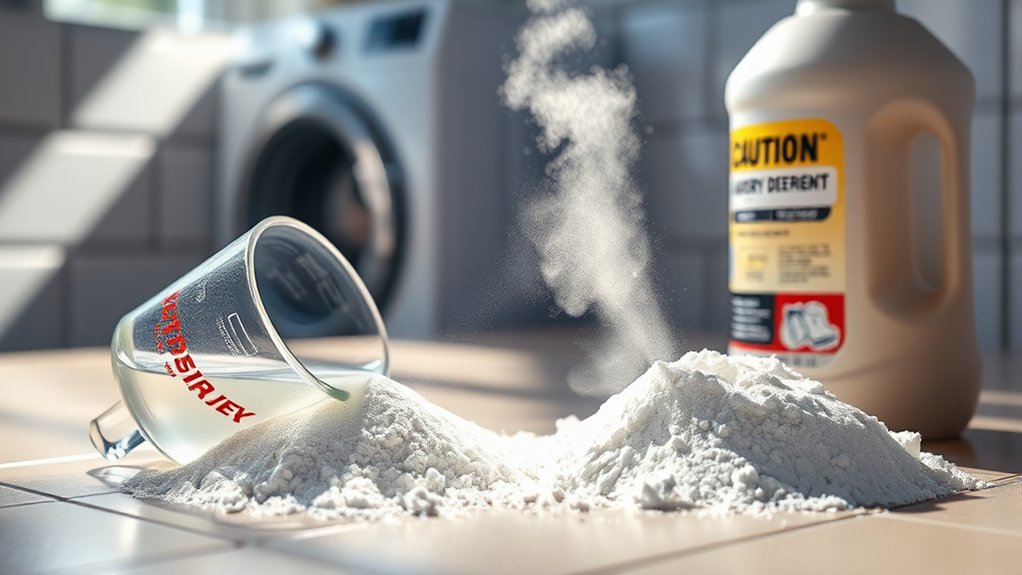
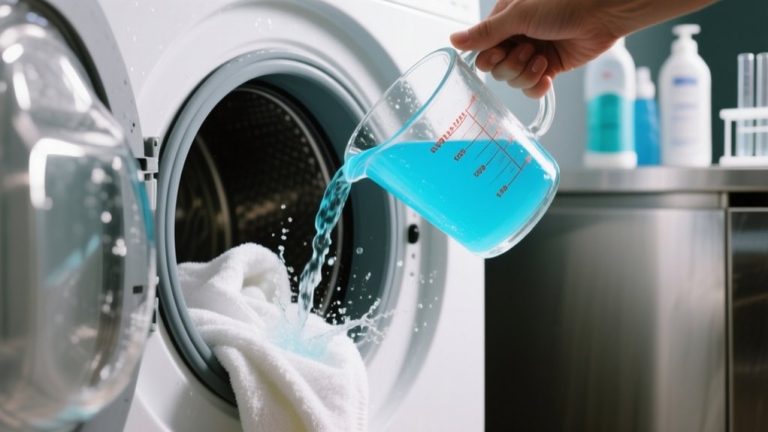
Although vinegar is often praised for its natural cleaning properties, mixing it directly with laundry detergent can reduce the effectiveness of both. When you mix vinegar with laundry detergents, vinegar’s acidity can break down detergent components, leading to ineffective stain removal and diminished cleaning performance.
Mixing vinegar with laundry detergent can weaken cleaning power by breaking down detergent components.
This chemical interaction may particularly affect high-performance detergents, causing them to lose their cleaning power.
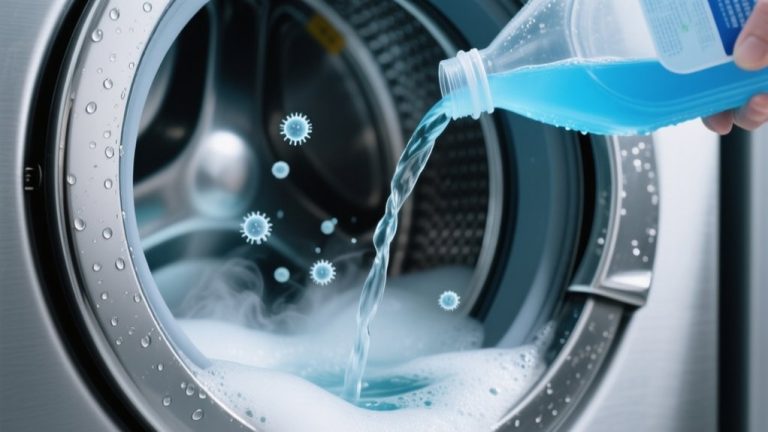
Moreover, mixing vinegar in the wash cycle can cause detergent residue buildup inside your washing machine, which might result in unpleasant odors and mechanical issues over time.
To avoid these risks, it’s best to use vinegar separately, ideally during the rinse cycle. This way, you maintain the detergent’s efficiency while benefiting from vinegar’s cleaning qualities without compromising your laundry results.
Vinegar’s Effect on Detergent and Fabrics
Understanding how vinegar interacts with both laundry detergent and fabrics can help you make better choices for your washing routine. Vinegar’s acidic nature disrupts the pH balance when mixed with alkaline laundry detergent, reducing cleaning effectiveness and stain removal.
Furthermore, vinegar’s acidity can weaken cellulose fibers in cotton and linen, risking fabric damage over time. Always check fabric care labels, as vinegar may cause discoloration or harm elastic components.
Using vinegar alongside detergent may also lead to residue buildup in your washing machine, affecting its performance.
| Aspect | Vinegar’s Effect | Consideration |
|---|---|---|
| Cleaning Effectiveness | Reduced due to pH imbalance | Avoid mixing during wash cycle |
| Fabric Safety | Weakens cellulose fibers | Check fabric care labels |
| Machine Impact | Possible residue buildup | Use separately to prolong life |
Which Vinegar Types Work Best for Laundry
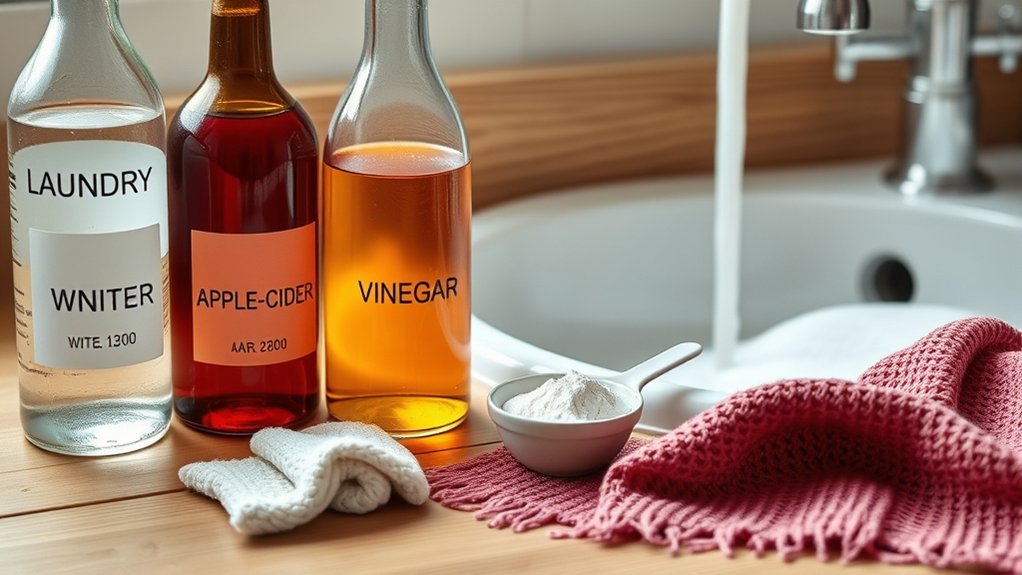
When it comes to choosing vinegar for laundry, you’ll want something that cleans well without harming your clothes. Distilled white vinegar is usually your best bet because it won’t stain or leave any odors behind.
Other types, like apple cider or balsamic vinegar, might cause some unwanted effects, so it’s a good idea to think about their properties before using them.
That way, you can keep your laundry fresh and your fabrics safe.
Ideal Vinegar Selection
Since vinegar plays an essential role in laundry, choosing the right type matters for both effectiveness and fabric safety. Distilled white vinegar is your best bet because of its clear color, mild scent, and strong acidic nature. This delivers excellent stain removal and odor neutralization.
It works well alongside laundry detergent and even as a natural fabric softener. To guarantee the best results, consider these points:
- Use distilled white vinegar with about 6% acidity for safe, effective cleaning.
- Avoid balsamic vinegar since its dark color can stain fabrics.
- Apple cider vinegar may leave behind a scent and is less effective.
- White wine and malt vinegars offer limited cleaning benefits and require caution.
Sticking to distilled white vinegar helps protect your fabrics while maximizing cleaning power.
Vinegar Varieties Comparison
Which vinegar should you choose to get the best results in your laundry?
In a vinegar varieties comparison, distilled white vinegar stands out as the safest and most effective option. Its high acidity and neutral color make it ideal for removing stains and odors without damaging fabrics or interfering with laundry detergent.
Apple cider vinegar, while natural, can leave an unwanted scent and isn’t as effective.
Avoid balsamic vinegar due to its strong color and flavor, which can stain clothes. White wine vinegar and malt vinegar also fall short in cleaning power and aren’t recommended for laundry.
Furthermore, cleaning vinegar, with its higher acidity, is too harsh and may damage fabrics or your washing machine.
Stick to distilled white vinegar for safe, effective laundry results.
How to Use Vinegar Safely in Laundry
When you’re using vinegar in your laundry, it’s best to add it during the rinse cycle. This helps make sure it doesn’t interfere with how well your detergent works.
You’ll want to choose distilled white vinegar—it’s the safest option. Before you go all in, try testing it on a small, hidden part of your fabric to make sure the colors won’t fade or run.
One important thing to remember: never mix vinegar with bleach or ammonia. That combination can create harmful fumes.
Also, try to use vinegar only occasionally in your wash cycles so you don’t accidentally damage your washing machine over time.
Vinegar Use Precautions
Although vinegar can boost your laundry’s freshness, you need to use it carefully to avoid damaging fabrics or reducing cleaning effectiveness.
Vinegar’s acidic nature can neutralize laundry detergent if mixed directly. So follow these precautions to keep safety and fabric care in check:
- Add vinegar only during the rinse cycle, using the fabric softener dispenser or directly into the drum. Never add it with detergent.
- Test vinegar on a small, hidden fabric area to check for discoloration or damage, especially on delicate fabrics.
- Avoid vinegar on silk, wool, or other delicate fabrics because its acidity can weaken fibers and alter colors.
- Never mix vinegar with bleach or ammonia to prevent harmful toxic gases.
These steps guarantee you use vinegar safely without compromising your laundry results.
Application Timing Tips
To use vinegar safely in your laundry, timing its addition correctly is key. Always add vinegar during the rinse cycle to prevent it from neutralizing your laundry detergent’s cleaning power.
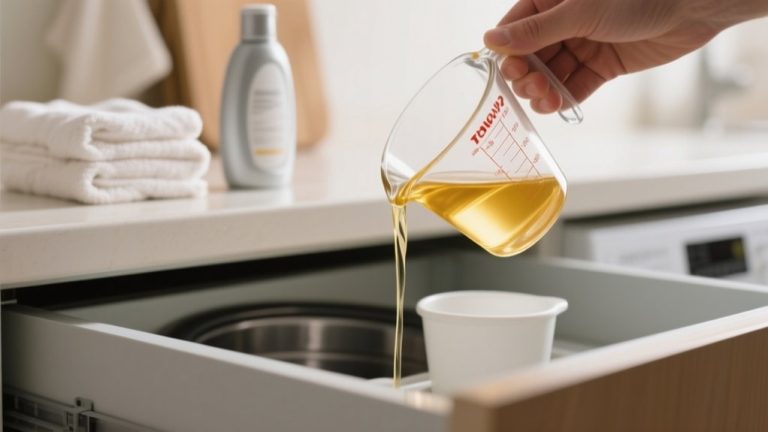
Pour vinegar into the fabric softener dispenser or directly into the washing machine basin for best results. Use about ½ to 1 cup per load to achieve odor elimination and fabric softening.
Avoid applying vinegar on delicate fabrics or garments with elastic, as it may cause damage.
| Step | Action |
|---|---|
| 1 | Start washing with detergent only |
| 2 | Wait for rinse cycle to begin |
| 3 | Add vinegar via fabric softener |
| 4 | Avoid mixing with bleach |
| 5 | Test on fabric before full use |
Fabric Compatibility Guide
Since vinegar’s acidity can affect certain materials, you should carefully assess fabric compatibility before adding it to your laundry.
Vinegar works well with common fabrics like cotton, polyester, and nylon but can damage delicate fabrics such as silk and wool.
To guarantee safety and maintain colorfastness, always test vinegar on a hidden fabric spot first.
Keep in mind, using vinegar alongside laundry detergent may reduce cleaning effectiveness.
Follow these guidelines for fabric compatibility:
- Avoid vinegar on delicate fabrics due to the acidity of vinegar.
- Test colorfastness on a small, inconspicuous area before use.
- Use caution or avoid vinegar on elastic fabrics, as it can break down elasticity.
- Never mix vinegar with bleach or ammonia to prevent toxic fumes.
This approach keeps your laundry safe and effective.
How Vinegar Affects Your Washing Machine
When you mix vinegar directly with laundry detergent, you risk neutralizing the detergent’s cleaning power and reducing wash effectiveness.
Vinegar’s acidic nature can interfere with detergent’s suds formation, which washing machines rely on for thorough cleaning.
Vinegar’s acidity can disrupt detergent suds, essential for your washing machine’s effective cleaning.
Over time, this acidic environment may corrode rubber seals and other components inside your machine, increasing the chance of leaks and costly maintenance issues.
Furthermore, leftover vinegar residues can cause unpleasant odors if not properly flushed out.
To avoid these problems, it’s best to use vinegar separately during the rinse cycle rather than combining it with laundry detergent in the wash cycle.
This approach helps preserve cleaning effectiveness while protecting your washing machine’s parts and maintaining peak performance.
Alternatives to Vinegar for Better Laundry Results
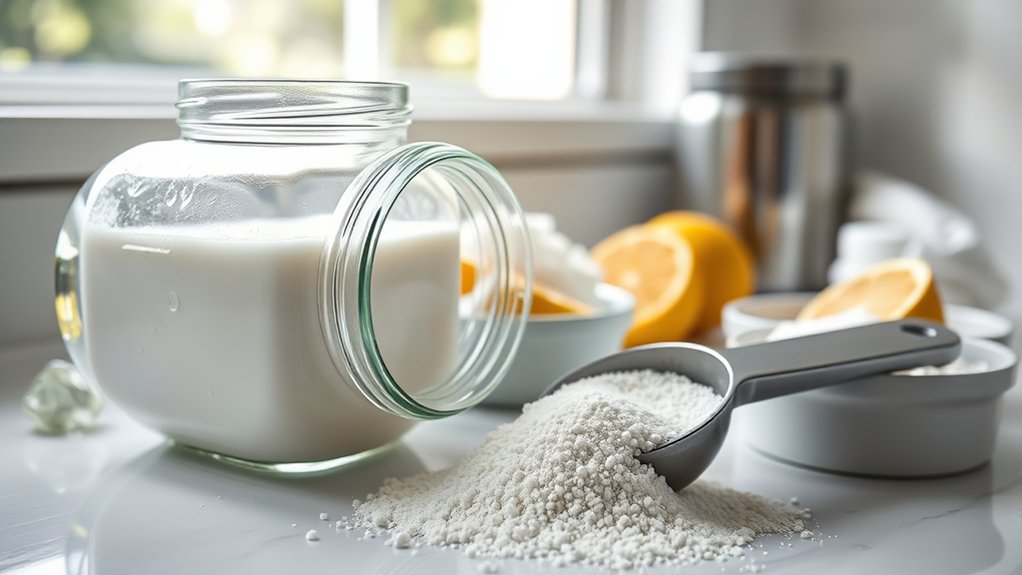
If you’re looking to enhance your laundry results without risking damage to your washing machine, several alternatives to vinegar can help. These options work well with your laundry detergent to tackle stains and odors safely.
1. Baking Soda
Neutralizes odors and pre-treats stains gently without acidity.
2. Oxygen Bleach
Whitens and cleans fabrics, especially effective against mold and mildew. It’s safer for colors too.
3. Hydrogen Peroxide
Brightens whites and disinfects fabrics as a milder alternative to chlorine bleach.
4. Borax and Washing Soda
Both soften water and boost stain removal. Washing soda provides a high-pH environment that complements detergent without interference.
Using these alternatives helps you maintain fabric quality and washing machine health while improving your laundry results.
Combining Vinegar With Other Laundry Products: What’s Safe?
Although vinegar offers benefits like odor removal and fabric softening, you shouldn’t mix it directly with laundry detergent or bleach. Mixing vinegar with laundry detergent reduces their cleaning power by affecting detergent action and pH levels.
For safety reasons, never combine vinegar with bleach, as toxic gases form. Instead, add vinegar separately during the rinse cycle, ideally through the fabric softener dispenser, to eliminate odors and soften fabrics effectively.
| Product Combination | Safety Status |
|---|---|
| Vinegar + Laundry Detergent | Not recommended |
| Vinegar + Bleach | Dangerous |
| Vinegar via Softener Dispenser | Safe |
| Vinegar + Detergent (separate cycles) | Safe |
Use vinegar wisely to preserve your washing machine and get the best results.
Frequently Asked Questions
Can Vinegar Help Remove Pet Odors From Clothes?
Yes, vinegar can help remove pet odors from clothes. You should add ½ to 1 cup of distilled white vinegar during the rinse cycle to neutralize smells effectively.
For tougher odors, soak the clothes in a vinegar-water solution before washing.
Just be cautious and test a small fabric area first to guarantee vinegar won’t damage or discolor your clothes.
This method deodorizes naturally without harsh chemicals.
Does Vinegar Soften Towels as Effectively as Fabric Softener?
When Sarah swapped fabric softener for vinegar, she noticed her towels felt just as soft but without the heavy scent.
Vinegar does soften towels effectively by breaking down detergent residues and reducing static cling.
However, it won’t leave the same fragrance or silky feel as commercial softeners.
Use about ½ cup during the rinse cycle, but avoid vinegar on towels with elastic, as it can weaken them over time.
Is It Safe to Use Vinegar in Cold Water Laundry Cycles?
Yes, it’s safe to use vinegar in cold water laundry cycles. You can add it during the rinse cycle to help dissolve detergent residues, reduce odors, and soften fabrics without harming them.
Just make sure not to mix vinegar directly with your detergent, as their cleaning powers can cancel out.
Using vinegar this way also helps maintain bright colors and prevents static cling, making your laundry fresher and cleaner.
Can Vinegar Prevent Colors From Fading in Clothes?
Yes, vinegar can help prevent colors from fading by stabilizing dye and adjusting wash water’s pH.
But you shouldn’t rely on it for all fabrics because its effectiveness varies with different dyes.
You should always test vinegar on a hidden spot first, as overuse might weaken fibers like cotton or linen, causing damage over time.
Use it cautiously to maintain your clothes’ color without risking harm.
How Does Vinegar Affect the Lifespan of Washing Machine Seals?
Vinegar affects your washing machine seals like acid on a delicate flower. It weakens them over time.
When you use vinegar regularly, its acidity can degrade and corrode the rubber seals, causing them to wear out faster.
This leads to leaks and costly repairs. To protect your machine’s lifespan, it’s best not to expose the seals to vinegar frequently.
Staying cautious helps you avoid premature damage and maintain your washer’s efficiency.
Conclusion
Don’t mix vinegar and laundry detergent like it’s a magic potion. Doing so can wreck your fabrics and your washing machine! Vinegar’s acidity can neutralize detergents, making your laundry less clean and potentially damaging clothes.
Stick to using vinegar separately and safely to avoid disaster. Remember, even a tiny misstep can turn your laundry routine upside down.
Play it smart, follow the guidelines, and keep your clothes and machine in top shape!