How To Use Vinegar In Laundry For Odor – Do It Right
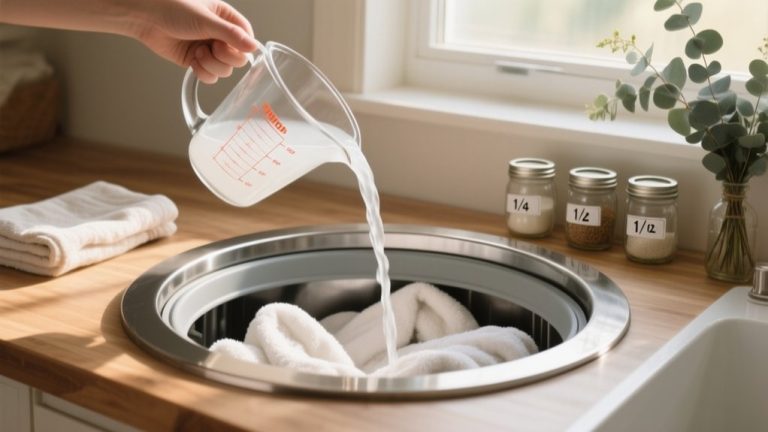
To freshen laundry odors, add ½ to 1 cup of white vinegar during the rinse cycle. Use the softener compartment in front-loaders or pour directly into top-loaders.
Vinegar’s acetic acid neutralizes smells, breaks down residue, and softens fabrics without harsh chemicals. For tough odors, pre-soak clothes in a vinegar-water mix before washing.
Avoid mixing vinegar with bleach or detergent to protect fabrics. Following these steps keeps your clothes fresh and bright. Explore more tips to maximize vinegar’s laundry benefits.
Key Takeaways
- Add ½ to 1 cup of white distilled vinegar during the rinse cycle to neutralize odors and remove detergent residue.
- For tough odors, pre-soak clothes in a mixture of 1 cup vinegar and warm water for 30 minutes before washing.
- Avoid mixing vinegar with bleach or adding it during the main wash cycle to prevent harmful reactions and ineffective cleaning.
- Use vinegar as a natural fabric softener to reduce static cling, brighten fabrics, and maintain freshness.
- Run a monthly hot wash cycle with 1 cup vinegar in an empty machine to remove buildup and prevent musty odors.
Why Vinegar Neutralizes Odors in Laundry
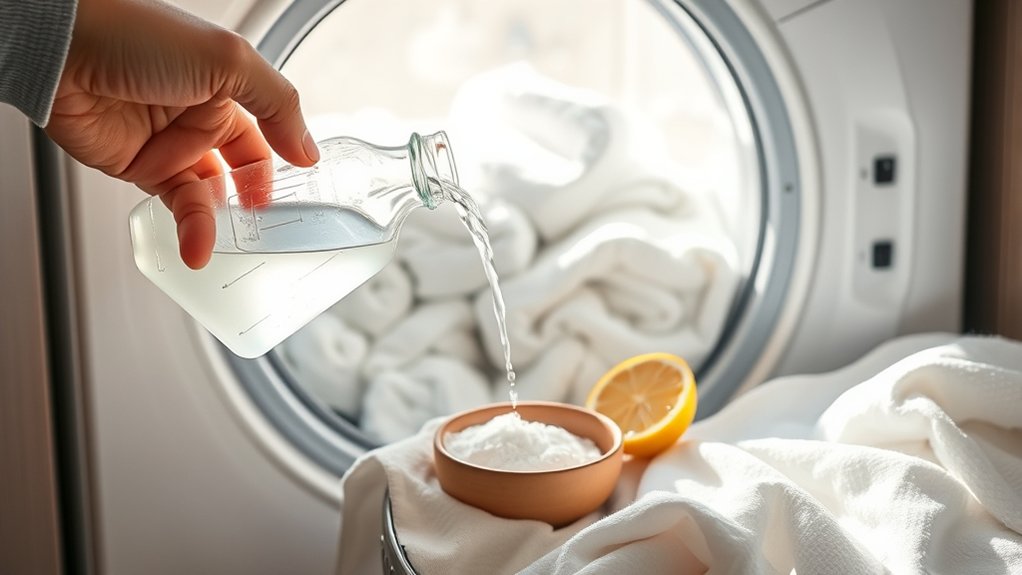
Because vinegar contains acetic acid, it effectively binds to and neutralizes the odor-causing molecules in your laundry. This natural deodorizer breaks down sweat and body oils that cause stubborn odors, leaving your clothes fresher.
Vinegar also helps reduce detergent residue, which can trap odors and cause musty smells. By cutting through this buildup, vinegar improves fabric breathability and promotes lasting freshness.
Its mild acidic nature gently brightens whites and colors, enhancing that clean scent you want.
While vinegar works best during the rinse cycle, its odor-neutralizing power makes it a simple, chemical-free solution to keep your laundry smelling great.
Using vinegar means you won’t have to worry about lingering odors or harsh chemicals in your clothes.
How to Add Vinegar During the Rinse Cycle
To get the most out of vinegar’s odor-neutralizing and softening benefits, you’ll want to add it during the rinse cycle of your laundry. Adding vinegar at this stage helps remove detergent residue, boosts odor removal, and improves cleaning performance without interfering with your laundry detergent.
Add vinegar during the rinse cycle to enhance odor removal, soften fabrics, and eliminate detergent residue effectively.
Here’s how to do it right:
- For front-loading machines, pour a cup of vinegar into the fabric softener compartment to release it during the rinse cycle.
- In top-loading washers, add vinegar directly into the drum once the detergent cycle finishes and the rinse cycle starts.
- For tough odors, pre-soaking clothes in a vinegar and water solution before washing enhances results.
Avoid mixing vinegar with laundry detergent or bleach to maintain safe, effective cleaning.
How Much Vinegar to Use for Different Loads and Odors
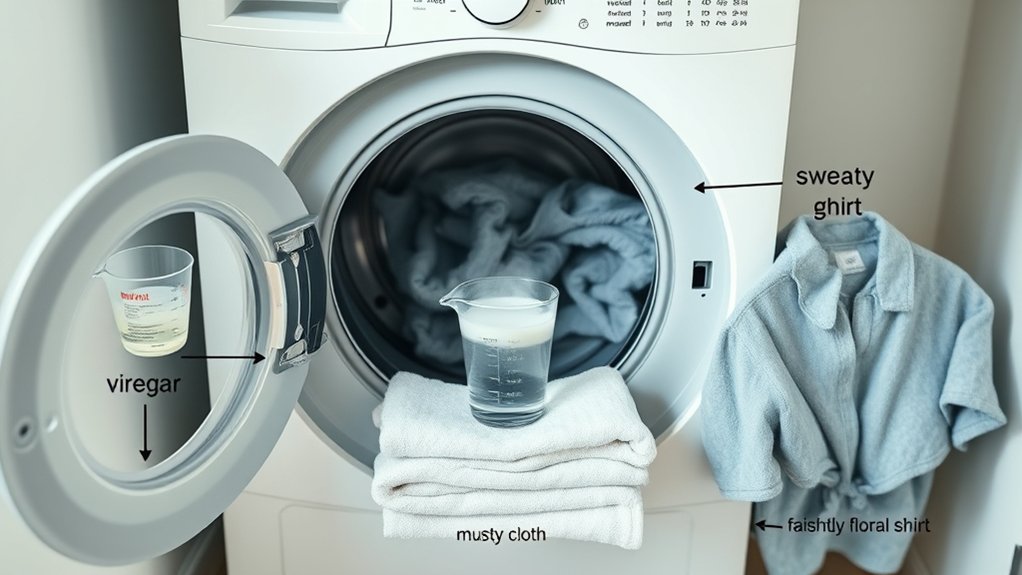
You’ll want to use about 1/2 cup of white distilled vinegar for a standard load. This amount freshens clothes without overpowering scents.
Now, if you’re dealing with larger loads or extra-smelly laundry, go ahead and bump it up to 1 cup. That way, it cuts through odors more effectively.
Just make sure to add the vinegar during the rinse cycle. This helps keep your fabrics soft and odor-free without risking any damage.
Easy, right?
Vinegar Amount Guidelines
Adding the right amount of vinegar to your laundry depends on the load size and odor strength. Using white distilled vinegar during the rinse cycle guarantees effective odor removal without affecting your detergent’s performance.
Follow these amount guidelines for clean clothes every time:
- For standard loads, add ½ cup of vinegar during the rinse cycle to neutralize odors.
- Increase to 1 cup for larger or tougher-smelling loads to boost odor removal.
- For stubborn odors, pre-soak garments in a mixture of 1 cup vinegar and warm water for 30 minutes before washing.
Avoid adding vinegar during the main wash or exceeding these amounts, as it can hinder rinsing and leave a lingering smell.
Stick to these simple steps for fresh, odor-free laundry every time.
Adjusting For Odor Levels
Knowing how much vinegar to use can make all the difference in tackling different odor levels in your laundry. For light odors from daily wear, add 1/4 cup of vinegar during the rinse cycle to refresh fabrics gently.
Mild odors require 1/2 cup, which effectively neutralizes odors without compromising fabric care.
Larger or stronger-smelling loads benefit from 1 cup of vinegar in the rinse cycle, boosting cleaning power.
When dealing with heavily soiled or very smelly items, pre-soak them in a mixture of 1 cup vinegar and warm water for 30 minutes before washing.
Using Vinegar as a Natural Fabric Softener
Although many commercial fabric softeners promise softness, vinegar offers a natural and effective alternative. It breaks down detergent residues and mineral deposits, leaving your clothes fluffier and more comfortable.
To use vinegar as a natural fabric softener, add 1/2 cup of distilled white vinegar during the rinse cycle. This simple step helps:
- Reduce static cling, making clothes easier to handle
- Maintain the brightness of fabrics while preventing fading
- Suit sensitive skin thanks to its gentle, eco-friendly nature
Vinegar is also cost-effective and safe for most fabrics, so you can enjoy softer laundry without harsh chemicals or strong fragrances.
Using vinegar regularly not only softens your clothes but also supports an environmentally friendly laundry routine.
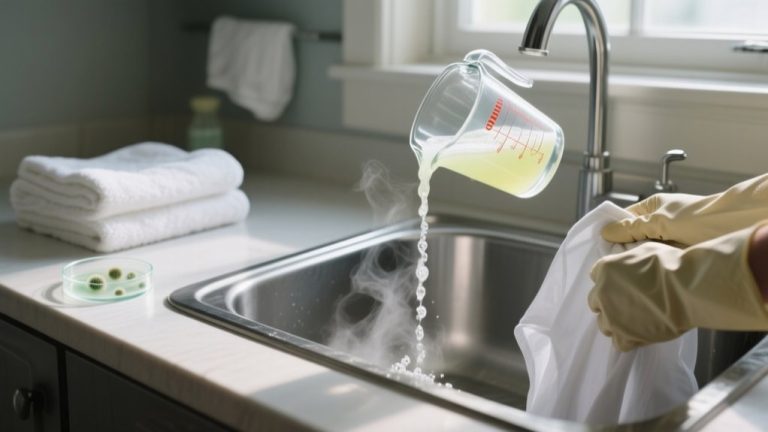
Pre-Soaking Clothes With Vinegar to Remove Stubborn Smells
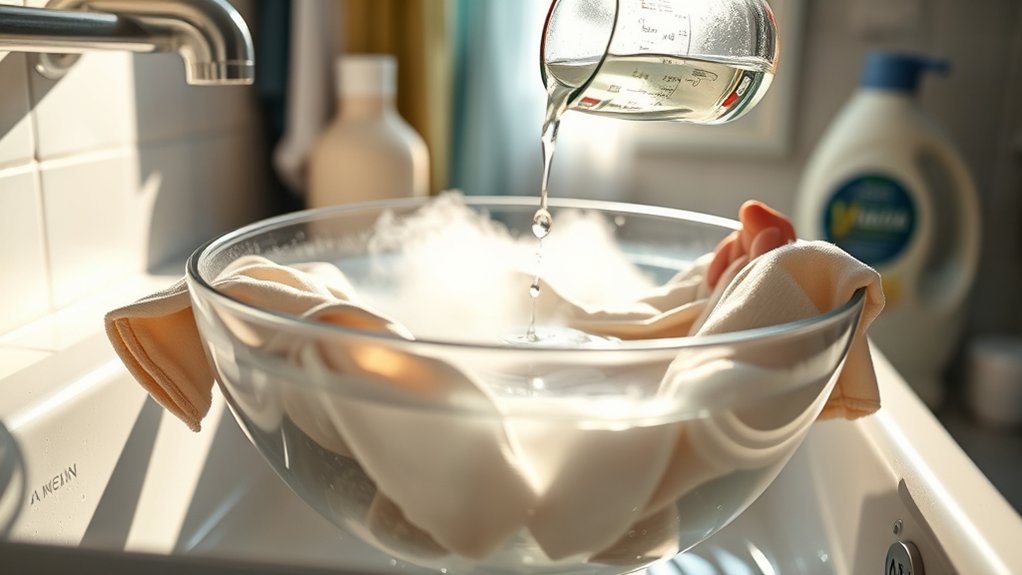
If you’re dealing with stubborn smells, here’s a simple trick: mix one cup of white distilled vinegar with warm water.
Then, soak your clothes for about 30 minutes. This works because the acetic acid in vinegar helps neutralize odors like sweat and mildew pretty effectively.
Once you’ve soaked your clothes, make sure to rinse them thoroughly.
This step is important to get rid of any leftover vinegar scent before you toss them into your regular wash cycle. Easy, right?
Vinegar Soak Concentration
When you face stubborn odors in your clothes, a vinegar soak can be a simple yet powerful solution. For an effective vinegar soak, mix 1 cup of white vinegar with warm water in a basin. The acetic acid in vinegar helps neutralize odors and break down residues from sweat or mildew.
Keep these tips in mind: Use about 1 cup of white vinegar per basin of warm water for the right concentration.
Avoid soaking delicate fabrics like silk or rayon; always check care labels first. After soaking, rinse thoroughly to remove any lingering vinegar smell and guarantee freshness.
This method targets stubborn odors while being gentle enough for most fabrics, making it a practical addition to your laundry routine.
Soaking Duration Guidelines
Once you’ve prepared your vinegar soak with the right concentration, the next step is deciding how long to leave your clothes immersed.
Generally, soaking garments in a solution of 1 cup of white distilled vinegar mixed with warm water for about 30 minutes effectively neutralizes stubborn odors.
If your clothes are heavily soiled or the odors persist, extend the soaking duration to 1 hour to boost vinegar’s odor-fighting power.
Be cautious with delicate fabrics like silk or rayon, as vinegar’s acidity can damage them.
After soaking, always rinse your garments thoroughly to remove any vinegar residue. This helps maintain the fabric’s feel.
Regularly using this vinegar soak method keeps items like gym wear and towels fresh by tackling persistent odors before washing.
Handling After Soak
After soaking your clothes in a vinegar solution, it’s important to rinse them thoroughly to eliminate any lingering vinegar smell and keep your garments fresh. Proper rinsing enhances vinegar’s effectiveness at removing odor without leaving a sour scent.
Remember, vinegar works best as a pre-soak, so follow up with your regular detergent during the wash cycle. Avoid using vinegar on delicate fabrics like silk or rayon acetate, as it can cause damage or discoloration.
When handling clothes after the soak:
- Rinse clothes well to remove vinegar residue.
- Wring out excess water to prevent dilution during washing.
- Let clothes dry normally; the vinegar smell fades during the drying process.
This routine guarantees your clothes stay fresh and odor-free without compromising fabric quality.
Common Vinegar Laundry Mistakes to Avoid (Including Mixing With Bleach)
Although vinegar offers many benefits in laundry, you must avoid common mistakes to keep your clothes safe and fresh.
Never mix vinegar with bleach, as this creates toxic chlorine gas that’s hazardous.
Always add vinegar during the rinse cycle, not with laundry detergent, to neutralize odors without affecting cleaning performance. Stick to ½ to 1 cup per load.
Too much vinegar can cause strong odors or harm fabrics.
Check fabric care labels carefully before using vinegar, especially on delicate fabrics like silk and rayon acetate, since vinegar may damage them.
Avoid applying vinegar directly on stains without guidance, as it might worsen some stains or harm fibers.
Following these tips helps you safely harness vinegar’s odor-fighting power without risking your clothes or health.
How to Safely Use Vinegar and Baking Soda Together in Laundry
To get the most out of vinegar in your laundry routine, you can pair it with baking soda, but you have to use them carefully. Mixing them directly neutralizes their cleaning properties, so always apply them separately.
Use baking soda during the wash cycle to lift odors and stains naturally. Then, add vinegar in the rinse cycle to soften fabrics and remove lingering smells without affecting baking soda’s action.
Here’s how to safely combine them:
- Add about 1/2 cup of baking soda in the wash cycle.
- Pour 1/2 to 1 cup of vinegar during the rinse cycle.
- Always check fabric care labels to avoid damage.
Following these steps preserves their effectiveness and keeps your laundry fresh and well cared for.
Keeping Your Washing Machine Fresh With Vinegar
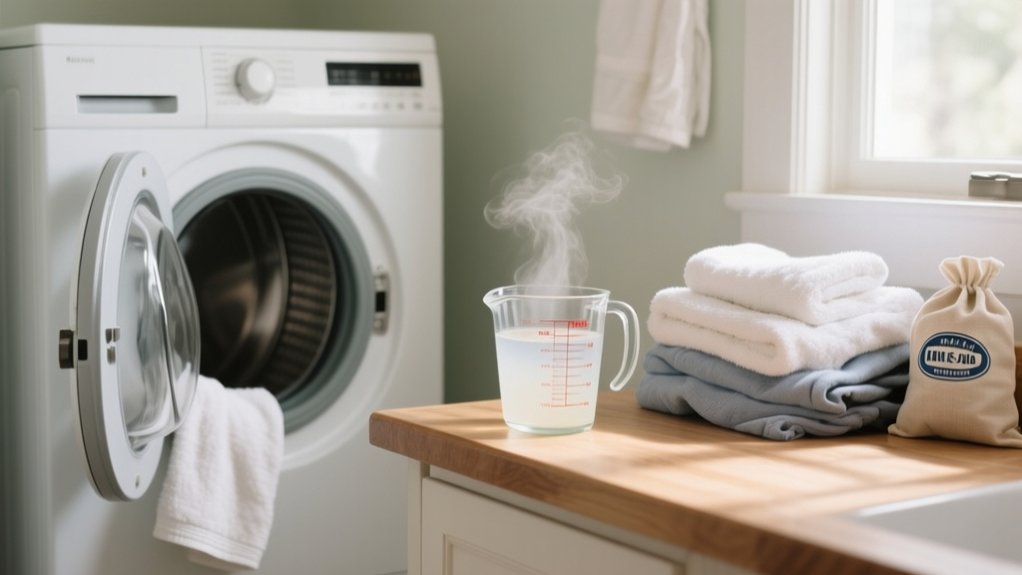
You can keep your washing machine fresh by running a hot cycle with a cup of white vinegar. This helps break down detergent residue and gets rid of odors.
Vinegar’s natural acidity works great to remove buildup that causes those unpleasant smells, so your machine ends up smelling clean.
If you make this a regular monthly thing, it prevents mildew from forming and makes sure your laundry comes out fresher every time.
It’s a simple trick that really makes a difference!
Vinegar Cleaning Benefits
When you regularly add vinegar to your washing routine, you’ll keep your machine running fresh and odor-free.
Vinegar enhances detergent cleaning power, helping remove grime and buildup that cause unpleasant odors in both clothes and your washer. It naturally neutralizes odors from sweat and mildew, preventing mold and bacteria growth.
For effective cleaning, try these tips:
- Run an empty cycle with 1-2 cups of vinegar to break down grime and freshen your machine’s interior.
- Add vinegar during the rinse cycle to remove lingering odors without harsh chemicals.
- Combine vinegar with baking soda for extra odor removal and deeper cleaning.
Using vinegar not only keeps your washing machine fresh but also guarantees your clothes come out smelling clean and revitalized every time.
Removal Of Residue
A small amount of white vinegar goes a long way in removing detergent residue and mineral buildup inside your washing machine.
Using vinegar regularly helps break down detergent buildup that causes residue and odors in both your laundry and machine.
For effective cleaning and maintenance, run an empty cycle with 1-2 cups of vinegar at least once a month.
This dissolves mineral deposits and soap scum, keeping the drum and hoses fresh and efficient.
Adding vinegar during the rinse cycle also helps flush away leftover detergent, preventing smells from lingering.
After using vinegar, always run a rinse cycle to avoid any vinegary odors.
With this simple routine, you’ll keep your washing machine clean, odor-free, and working smoothly for longer.
Freshening Machine Odors
Although washing machines clean your clothes, they can develop musty odors over time, especially if moisture lingers inside. To keep your washing machine fresh and free of buildup, vinegar is a simple, effective solution for deodorization.
Incorporate these steps for ongoing freshening: Add 1 cup of white distilled vinegar to the drum and run a hot empty cycle monthly to eliminate musty smell and mildew buildup.
Clean detergent dispensers and rubber seals with a vinegar-water solution to remove soap scum and prevent odor retention.
Leave the washing machine door ajar after use to allow air circulation and reduce moisture buildup that causes odors.
Using vinegar this way helps maintain a clean, odor-free washing machine, ensuring your laundry stays fresh every time.
Tips for Drying and Storing Clothes After Vinegar Treatment
Since vinegar can leave a slight scent on your clothes initially, it’s important to dry them properly to let that freshness shine through.
After vinegar treatment, hang your clothes outside in fresh air when possible. Sunlight helps eliminate odors effectively.
If you use a dryer, choose a low heat setting to protect fabric while ensuring thorough drying.
When storing your laundry, make sure garments are completely dry to prevent mildew development. Store them in a well-ventilated area to avoid moisture buildup, which can cause odors to return.
Proper drying and storing after vinegar treatment not only keeps your clothes fresh but also extends their lifespan by preventing mildew and maintaining softness.
When Vinegar Isn’t Enough: Other Odor-Fighting Laundry Solutions
When vinegar doesn’t completely banish tough odors, you can boost your laundry routine with a few other effective solutions. For heavily soiled or stubbornly smelly clothes, pretreat fabric with a baking soda and water paste, letting it sit for 30 minutes before washing.
Some odors like grease or gasoline might need ammonia or an odor-fighting detergent designed for odor removal.
Also, don’t forget your washing machine. Running a vinegar cleaning cycle prevents mildew buildup that can cause odors.
Try these tips for better odor control:
Use enzyme-based detergents for heavily soiled fabrics to break down bacteria and sweat.
Hang clothes outside or use a steamer to release persistent odors.
Pretreat garments with baking soda paste before washing.
This way, you’ll get fresher clothes even when vinegar falls short.
Frequently Asked Questions
Can Vinegar Damage Delicate Fabrics or Colors?
Yes, vinegar can damage delicate fabrics like silk and rayon acetate because of its acidity.
It might also cause colors to fade, especially if you use it often or on bright fabrics.
To protect your clothes, test vinegar on a hidden spot first and dilute it with water to reduce risk.
Avoid overusing it on stretchy materials like spandex, and always follow the care labels to keep your garments safe.
Does Vinegar Remove Mold or Mildew Stains From Clothes?
Yes, vinegar does remove mold and mildew stains from clothes.
You can pre-soak your garments in a solution of one cup of vinegar and warm water for about 30 minutes before washing.
Adding vinegar to the rinse cycle also helps eliminate any lingering mold odors.
Just make sure to treat moldy clothes quickly, because the longer the stains sit, the harder they become to remove.
How Does Vinegar Affect Synthetic Versus Natural Fibers?
Vinegar gently softens and neutralizes odors in natural fibers like cotton and linen without causing damage, so you can use it confidently.
With synthetic fibers like polyester or nylon, be cautious. Vinegar’s acidity might wear them down if you use it too often.
To protect delicate synthetics, dilute the vinegar and test a small, hidden spot first. This way, you’ll freshen your clothes safely without risking fabric damage.
Can Vinegar Be Used in Both Front-Load and Top-Load Washers?
Yes, you can use vinegar in both front-load and top-load washers.
For front-loaders, pour it into the fabric softener compartment during the rinse cycle.
With top-loaders, add vinegar directly into the drum after the detergent’s mixed in.
Stick to about half a cup, but you can use up to a cup for larger or smellier loads.
Just don’t mix vinegar with detergent or bleach to keep things safe.
Is It Safe to Use Vinegar in Cold Water Washes?
Using vinegar in cold water washes is a safe bet you shouldn’t overlook. It works like a charm to neutralize odors and break down detergent residue even at low temperatures.
Just add half to one cup during the rinse cycle, and you’ll boost freshness and softness without harming your clothes.
Plus, vinegar helps protect colors better than harsher chemicals. Just steer clear of delicate fabrics like silk or rayon acetate.
Conclusion
Using vinegar in your laundry is a simple, natural way to keep clothes smelling fresh. Did you know 85% of people find vinegar effective for odor removal? Just add it during the rinse cycle or pre-soak stubborn smells.
It also softens fabric and keeps your washer clean. Remember to balance vinegar with proper drying and storage for best results. When vinegar alone isn’t enough, you can always explore other odor-fighting options.
Give it a try—you’ll notice the difference!