What Is Laundry Detergent Made Of – Straight Answer
Laundry detergent combines surfactants that break down oils and dirt, enzymes targeting specific stains like protein and fats, and builders or chelators that soften hard water by sequestering metals. Optical brighteners enhance fabric whiteness by reflecting blue light, while additives stabilize the formula and add fragrance.
Liquid and powder detergents differ in composition and performance, and formulations may avoid soap to prevent scum in hard water. Exploring how these ingredients interact reveals why detergents clean effectively and protect fabrics.
Key Takeaways
- Laundry detergents contain surfactants that reduce water tension to lift and suspend dirt and oils from fabrics.
- Enzymes like protease, lipase, and amylase break down protein, fat, and starch stains for enhanced cleaning.
- Builders and chelators soften hard water by binding calcium, magnesium, and metal ions, improving detergent effectiveness.
- Optical brighteners absorb UV light and emit blue light to make fabrics appear whiter but do not remove stains.
- Additives include fragrances, stabilizers, preservatives, and pH adjusters to improve scent, product stability, and cleaning performance.
Key Ingredients in Laundry Detergents and Their Functions
Although laundry detergents vary widely in formulation, their effectiveness hinges on a set of key ingredients, each serving a specific function.
Surfactants act as primary cleaning agents by reducing water’s surface tension, enabling the breakdown and removal of dirt and oils; common examples include sodium alkylbenzene sulfonate and sodium lauryl sulfate (SLS).
Enzymes such as protease and lipase target specific stains by catalyzing the breakdown of proteins and fats, respectively, enhancing stain removal efficiency.
Chelators like tetrasodium EDTA bind metal ions found in hard water, preventing mineral deposits and maintaining surfactant performance.
Optical brighteners absorb ultraviolet light and re-emit it as visible blue light, coating fabric fibers to improve whiteness and brightness.
Their effect diminishes with repeated washing, so they’re not a permanent fix.
How Surfactants Clean Laundry Detergents Work
Surfactants play a central role in how laundry detergents clean by possessing both hydrophilic and hydrophobic ends. This dual affinity enables surfactants to penetrate fabric fibers, attaching their hydrophobic tails to oils and dirt while their hydrophilic heads remain attracted to water. As a result, they effectively lift and suspend contaminants in the wash water.
Common surfactants like sodium alkylbenzene sulfonate and sodium lauryl sulfate reduce water’s surface tension, which enhances the overall cleaning power of laundry detergents.
Plus, surfactants in cleaning products work together with chelators to neutralize metal ions in hard water, preventing interference with detergent action.
This mechanism greatly improves the efficacy of cleaning products, making surfactants indispensable agents in laundry detergents’ stain removal and fabric care processes.
The Role of Enzymes in Removing Stains From Laundry
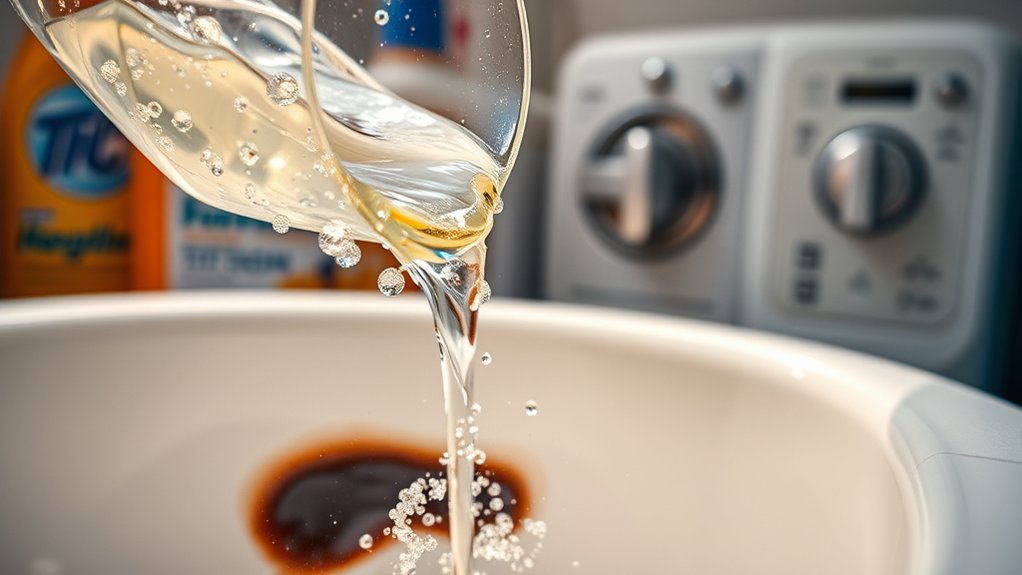
You’ll come across three main enzymes in detergents: protease, amylase, and lipase. Each one targets a specific type of stain—protease works on protein stains, amylase handles starch, and lipase deals with fat.
For example, protease breaks down protein-based stains like blood. Meanwhile, lipase is great for tackling grease, and amylase takes care of starch residues.
Knowing how these enzymes work can really help you get the best results when removing stains, thanks to their targeted biochemical action.
Enzyme Types Explained
When tackling stubborn stains, enzymes play an essential role by breaking down complex molecules into smaller, removable fragments.
In detergents, specific enzymes target distinct stain types: protease degrades protein-based stains like blood, amylase hydrolyzes starches, lipase breaks down fats, and mannanase addresses food additives.
This enzymatic action enhances cleaning efficiency, allowing detergents to remove stains effectively at lower temperatures.
You’ll find most laundry detergents contain a blend of these enzymes to cover a broad spectrum of stains across various fabrics.
For peak performance, detergents maintain pH and temperature conditions that stabilize enzyme activity during washing.
Targeted Stain Breakdown
Although stains vary widely in composition, enzymes in laundry detergents target specific molecules to break them down efficiently. You rely on enzymes like protease and lipase for precise stain removal, enhancing cleaning power even in cold water.
Protease breaks down protein-based stains such as blood and grass, while lipase targets fats and greasy residues. Amylase addresses carbohydrate stains from foods like pasta.
Here’s how enzymes improve stain removal:
- Protease hydrolyzes protein stains, weakening their structure.
- Lipase catalyzes the breakdown of lipid molecules.
- Amylase decomposes starch molecules into simpler sugars.
- Enzymatic action boosts detergent effectiveness by up to 50%, especially at lower temperatures.
This targeted approach guarantees thorough removal of complex stains, optimizing detergent performance.
Builders and Chelators in Laundry Detergents: Why They Matter
How do builders and chelators enhance laundry detergent performance?
Builders, such as phosphates and zeolites, soften hard water by sequestering calcium and magnesium ions. This prevents mineral deposits on fabrics.
Chelators like EDTA specifically bind metal ions in hard water, which otherwise interfere with surfactants’ cleaning action and cause soap scum formation. By controlling these ions, builders and chelators maximize surfactant efficiency, promoting superior stain removal and fabric care.
Modern detergents often replace phosphates with biodegradable builders to reduce environmental impact without sacrificing performance.
Furthermore, chelator effectiveness depends on water pH, so precise formulation adjustments are needed for varied water conditions.
Together, builders and chelators play a critical, technical role in maintaining detergent efficacy, ensuring that surfactants function efficiently in challenging hard water scenarios.
How Optical Brighteners Enhance Fabric Whiteness
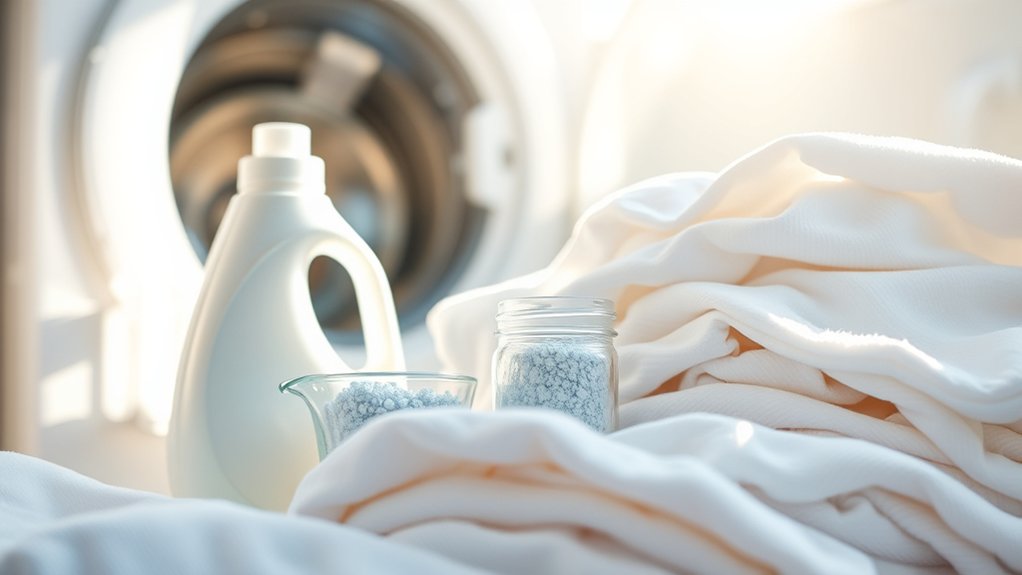
You’ll find that optical brighteners soak up ultraviolet light and then re-emit it as visible blue light. This process helps make fabric look whiter by masking any yellowing that might be there.
Basically, these compounds coat the fibers and boost the reflection of blue wavelengths, which gives the fabric a brighter, fresher appearance.
That said, how well this effect lasts really depends on a couple of things. For one, it’s all about how durable the brighteners are through multiple wash cycles.
Plus, the way they interact with different detergent formulas can make a big difference in how your fabrics look over time.
Mechanism of Optical Brighteners
Two key actions define the mechanism of optical brighteners in enhancing fabric whiteness: absorption of ultraviolet (UV) light and emission of visible blue light. These synthetic compounds, incorporated into detergents, coat fabric fibers to amplify light reflection. This counteracts yellowing and dullness without affecting cleaning properties.
Here’s how they operate:
- Optical brighteners absorb UV light invisible to the human eye.
- They re-emit this energy as visible blue light.
- This blue emission offsets natural fabric yellowness, enhancing perceived whiteness.
- Over repeated wash cycles, these compounds degrade, reducing brightness and requiring reapplication.
While optical brighteners don’t contribute to soil removal, their integration in detergents, especially for cold-water washing, optimizes fabric brightness through this photoluminescent mechanism.
Visual Effects on Fabrics
Although optical brighteners don’t remove stains, they greatly enhance fabric whiteness by absorbing ultraviolet light and re-emitting it as visible blue light. This fluorescence increases the visual perception of cleanliness by masking yellowing and dullness on fabric fibers.
Optical brighteners coat these fibers, boosting their reflectivity and making fabrics appear brighter without chemically altering them. However, their effect diminishes as they wash off during laundering.
While effective for aesthetic enhancement, optical brighteners raise environmental concerns due to their non-biodegradable nature and potential to cause allergic reactions in sensitive individuals.
Understanding these visual effects helps you appreciate the role optical brighteners play in laundry detergents, balancing fabric appearance improvement against ecological and health considerations.
Durability and Washing Impact
Optical brighteners boost fabric whiteness by coating fibers and reflecting blue light, effectively masking yellowing and dullness. You should know their durability is limited, as repeated exposure to wash water gradually wears them off.
Here’s what impacts their performance:
- Optical brighteners absorb UV light and re-emit it as visible blue light, enhancing whiteness.
- Their coating effect creates an optical illusion, not actual stain removal.
- Exposure to chemicals like chlorine bleach breaks down their structure, reducing effectiveness.
- Continuous laundering diminishes brightness, so you’ll need to use detergents with optical brighteners regularly to maintain it.
While these agents improve visual fabric appeal, they don’t remove stains or clean fibers.
Understanding their durability and interaction with wash water helps you manage fabric brightness effectively.
Additives That Improve Fragrance and Detergent Stability
While you might focus on cleaning agents when choosing a detergent, additives that enhance fragrance and stability play an essential role in the product’s performance and user experience. Fragrance compounds, often synthetic and petroleum-derived, provide appealing scents but may cause skin irritation.
Stabilizers like sodium sulfate maintain detergent consistency, ensuring active ingredients stay evenly dispersed. Preservatives, such as Sharomix 705, inhibit microbial growth, extending shelf life without compromising safety. pH adjusters optimize cleaning efficiency and preserve ingredient integrity.
| Additive Type | Function |
|---|---|
| Fragrance Compounds | Impart scent, may cause irritation |
| Stabilizers | Maintain consistency and dispersion |
| Preservatives | Prevent microbial growth |
| Optical Brighteners | Enhance fabric appearance |
| pH Adjusters | Optimize cleaning and stability |
Powder vs. Liquid Laundry Detergent Ingredients Compared
Two main types of laundry detergents, powder and liquid, differ considerably in their ingredient composition and performance characteristics. You’ll notice these key distinctions:
- Powdered laundry detergents rely on washing soda, surfactants, and enzymes. They’re effective in dry form for stain removal and cleaning.
- Liquid detergents contain higher surfactant concentrations and solvents that help dissolve stains better, especially in cold water.
- Powdered detergents may leave chalky residues if not fully dissolved. Liquid detergents dissolve more readily, so they reduce fabric residue.
- Liquid detergents perform better in hard water because of their formulation. Powdered detergents, on the other hand, are generally more cost-efficient.
Understanding these differences helps you pick the best detergent based on your water conditions, cleaning needs, and fabric care.
Why Some Laundry Detergents Use Soap and Others Don’t?
Because soap naturally lifts dirt and oils from fabrics, some laundry detergents include it as a surfactant. However, you’ll find others omit soap to prevent soap scum buildup, especially in hard water areas where mineral reactions reduce cleaning efficiency.
Soap reacts with calcium and magnesium ions in hard water, forming insoluble residues that trap dirt and stiffen fabrics. To get around this, non-soap detergents use synthetic surfactants like sodium lauryl sulfate (SLS) and coco betaine. These keep cleaning effective without forming scum.
These formulations work better in hard water by avoiding mineral interactions that mess with detergent action.
Plus, non-soap detergents can be made to reduce allergens and skip strong synthetic fragrances often found in soap-based products, which makes for a nicer user experience and better fabric care.
How pH and Preservatives Keep Laundry Detergents Stable
To keep your laundry detergent stable and fresh, it’s important to maintain a pH above 9. This helps stop microbial growth and keeps the detergent working well over time.
You can also add broad-spectrum preservatives like Sharomix 705. These preservatives give extra protection to your formula without making the process more complicated.
When it comes to adjusting the pH, using potassium hydroxide is a safe bet. It prevents saponification, especially since there are no oils in the mix.
pH Role In Preservation
Although preserving laundry detergent stability involves multiple factors, maintaining an alkaline pH above 9 plays a pivotal role by inhibiting microbial growth effectively.
You can enhance detergent longevity by controlling pH and using preservatives strategically. Here’s why this matters:
- Alkaline pH, achieved with agents like potassium hydroxide, suppresses microbial growth that degrades detergents.
- Proper pH optimizes surfactant performance, improving soil and oil removal.
- Balanced pH reduces reliance on chemical preservatives, minimizing potential irritants.
- Preservatives complement pH control by targeting residual microbial contamination, ensuring product integrity.
Preservative Options Overview
When formulating laundry detergents, selecting the right preservatives is vital to prevent microbial contamination that compromises product stability and performance. You’ll find broad-spectrum preservatives like Sharomix 705 effective at inhibiting microbial growth, especially in European formulations.
Alongside preservatives, pH adjustments play a critical role. Maintaining detergent pH above 9, often via potassium hydroxide, suppresses microbial proliferation and preserves ingredient integrity.
This dual approach guarantees cleaning efficacy remains consistent over time. Low pH can degrade active components, reducing detergent performance.
Consequently, you must balance preservatives with precise pH adjustments to extend shelf life and maintain product safety. By integrating these strategies, you’ll effectively control microbial growth and protect detergent formulations, optimizing both stability and cleaning power throughout the product’s lifespan.
pH Adjustment Safety
Preservatives like Sharomix 705 help control microbial growth, but maintaining the right pH level plays an essential role in stabilizing laundry detergent formulations.
You rely on precise pH adjustment to guarantee detergent stability and performance. Here’s why it matters:
- Raising pH above 9 using potassium hydroxide or sodium hydroxide inhibits microbial growth effectively.
- Proper pH guarantees surfactants remain soluble and active, optimizing cleaning power.
- Small amounts of sodium hydroxide raise pH safely without triggering saponification reactions.
- Balanced pH extends detergent shelf life by stabilizing all ingredients.
What Makes a Laundry Detergent Effective for Sensitive Skin?
Because sensitive skin reacts easily to harsh chemicals, effective laundry detergents avoid synthetic fragrances, dyes, and optical brighteners that can cause irritation. You’ll find fragrance-free formulations specifically designed to minimize allergic responses.
These detergents use mild surfactants like coco glucoside or decyl glucoside, which clean efficiently without compromising skin integrity. Furthermore, no dyes or optical brighteners are included, reducing potential irritants.
The formulas maintain pH-balanced properties, typically neutral or slightly alkaline, to preserve skin barrier function and prevent inflammation. Many also exclude enzymes, which can provoke reactions, relying on gentler stain removal methods.
Frequently Asked Questions
How Should Laundry Detergent Be Stored to Maintain Its Effectiveness?
You should store laundry detergent in a cool, dry place away from direct sunlight to preserve its active ingredients.
Keep the container tightly sealed to prevent moisture exposure, which can cause clumping and reduce cleaning power.
Avoid extreme temperatures, like those in garages or basements, as fluctuations can degrade the formulation.
For powdered detergent, use airtight containers to maintain potency.
Also, regularly check liquid detergent expiration dates to guarantee peak effectiveness.
Are Laundry Detergents Safe for Septic Systems?
Think of your septic system like a delicate aquarium ecosystem. Not all detergents are safe; harsh surfactants and enzymes can disrupt bacterial balance, causing system failure.
You should use biodegradable, phosphate-free, septic-safe detergents, preferably HE formulas in recommended amounts. These minimize harm by breaking down easily and reducing suds.
Even then, regular septic maintenance is vital to guarantee peak function and longevity.
Use the right detergent, and your septic system will thrive.
Can Laundry Detergent Cause Allergies or Skin Irritation?
Yes, laundry detergent can cause allergies or skin irritation. If you have sensitive skin, ingredients like synthetic fragrances, dyes, diethanolamines, and optical brighteners can trigger rashes, itching, or redness.
Up to 30% of people show sensitivity to these chemicals.
To minimize reactions, you should opt for hypoallergenic, fragrance-free, and dye-free detergents. This switch reduces exposure to irritants and considerably lowers the risk of allergic responses.
How Environmentally Friendly Are Common Laundry Detergent Ingredients?
Common laundry detergent ingredients aren’t very environmentally friendly. You’ll find phosphates causing eutrophication, surfactants like LAS degrading slowly and harming aquatic life, and synthetic optical brighteners toxic to fish.
Fragrances and diethanolamines persist in ecosystems, while EDTA doesn’t biodegrade and can remobilize heavy metals.
If you want a greener choice, seek biodegradable, phosphate-free formulas with minimal synthetic additives to reduce ecological impact and protect aquatic environments.
What Is the Shelf Life of Unopened Laundry Detergent?
Unopened liquid laundry detergent typically lasts 6 to 12 months, while powdered detergent can remain effective up to 2 years if stored properly.
You should keep detergent in a cool, dry place, away from sunlight and extreme temperatures to maintain its chemical stability.
Although it may not spoil outright, its cleaning efficacy diminishes over time due to ingredient degradation and separation, even before the manufacturer’s “best by” date.
Conclusion
You hold a complex formula in your hands. Surfactants break bonds like skilled locksmiths, enzymes target stains with precision, and builders soften water’s grip. Optical brighteners act as light’s artists, painting fabrics anew, while pH and preservatives stand guard to ensure stability.
Whether powder or liquid, soap or synthetic, each ingredient plays a crucial role. Understanding this molecular dance empowers you to choose the right detergent and transform your laundry into a symphony of clean and care.