Can You Use Dish Soap As Laundry Detergent – Safety & Facts
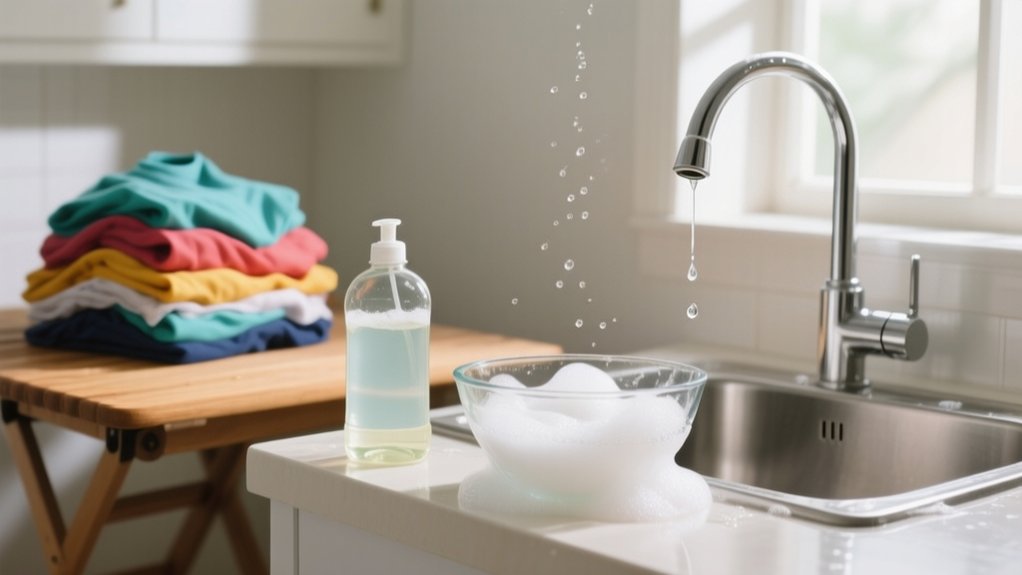
You can use dish soap as a laundry detergent substitute in emergencies, but only in small amounts, usually 1 to 3 teaspoons per load, to avoid excessive suds that could harm your washer.
Dish soap effectively removes grease but lacks enzymes for tougher stains and may leave residue that irritates skin or damages fabrics over time. It’s safest for occasional use on small loads and certain fabrics.
Keep in mind, understanding these precautions helps you maintain your clothes and machine better.
Key Takeaways
- Dish soap can clean lightly soiled clothes but lacks enzymes for effective stain removal like laundry detergent.
- Using more than 1 tablespoon per load risks excessive suds that may damage washing machines, especially HE models.
- Apply dish soap to a dry cloth before washing and limit quantity to prevent residue buildup and fabric irritation.
- Regular use of dish soap may weaken fabrics, cause color fading, and trap dirt due to leftover residue.
- Dish soap is a temporary alternative for small loads, but laundry detergent is recommended for optimal cleaning and machine care.
How Dish Soap Cleans Laundry: Ingredients and Action
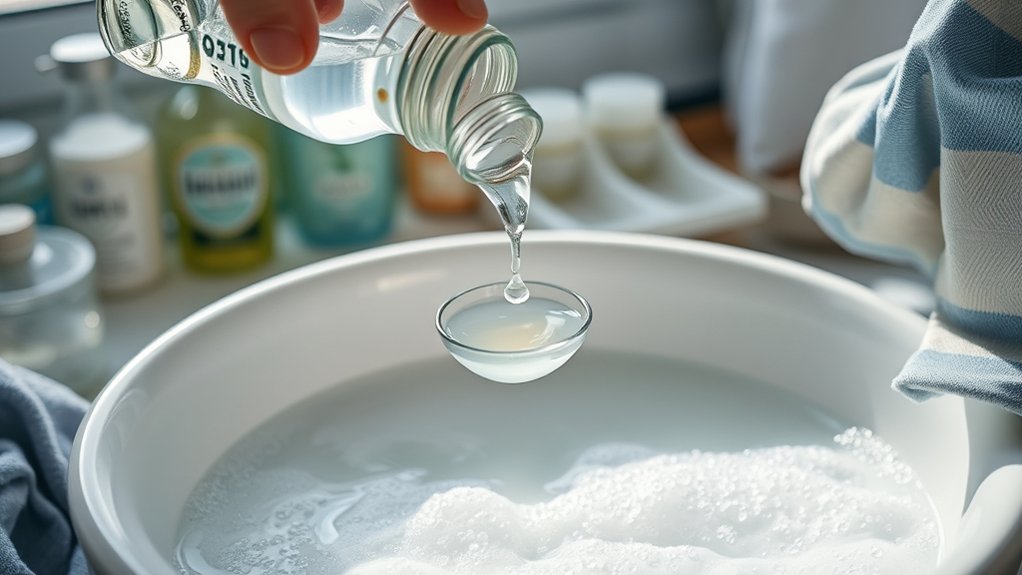
Dish soap cleans laundry by using surfactants, like sodium lauryl sulfate, that lower water’s surface tension and lift dirt, grease, and grime from fabrics.
Dish soaps contain ingredients that emulsify stains, making it easier to rinse away dirt during washing.
Dish soaps have ingredients that emulsify stains, helping to lift and rinse away dirt effectively.
When you use small amounts of dish soap, it can be effective for stain removal on lightly soiled clothes or small loads.
However, unlike laundry detergents, dish soaps typically lack enzymes specifically designed for common laundry stains, which limits their overall stain removal power.
Furthermore, dish soaps often include fragrances and dyes that might irritate sensitive skin.
While dish soap can help clean laundry occasionally, it’s important to use it cautiously and sparingly to avoid issues like excess suds or potential skin reactions.
Can Dish Soap Replace Laundry Detergent Safely?
While dish soap can remove some stains and clean lightly soiled clothes, it isn’t formulated to replace laundry detergent safely for regular use.
Using dish soap regularly can create excessive suds, potentially damaging your washing machine, especially if it’s a high-efficiency (HE) model.
Dish soap also lacks the enzymes found in laundry detergent that target common fabric stains, so it won’t clean as effectively.
Furthermore, residue from dish soap may build up on clothes, attracting dirt and irritating sensitive skin.
If you must use dish soap occasionally, limit the amount to 1 teaspoon to 1 tablespoon per load, and avoid HE machines.
Always check your washing machine’s manual before using dish soap as a laundry detergent substitute to prevent any damage.
What Laundry Experts Say About Dish Soap Use
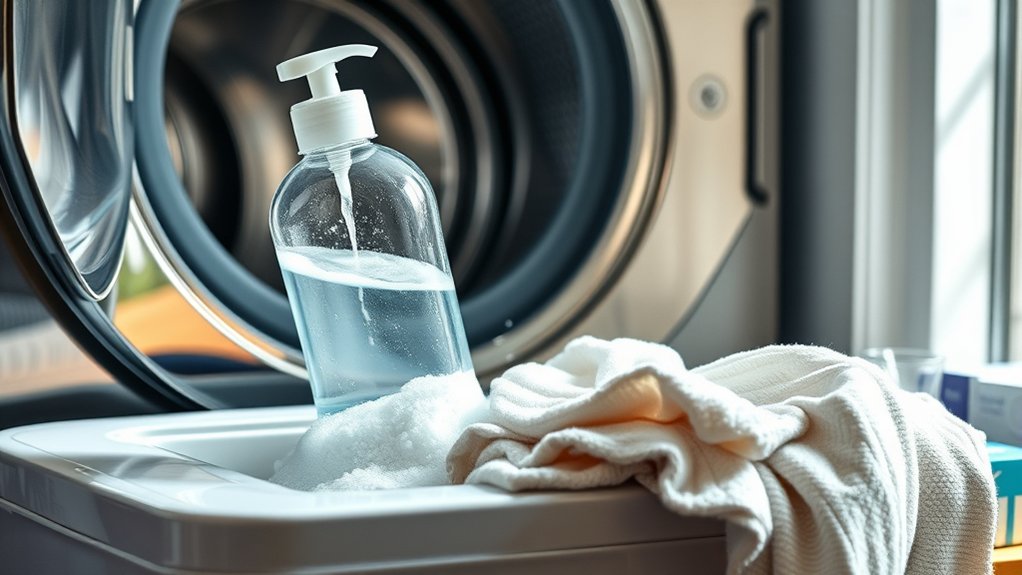
Although you might be tempted to use dish soap for laundry, experts strongly advise against it because the excessive suds can harm your washing machine’s components.
Dish soap lacks the enzymes that laundry detergents contain to effectively break down common stains, making it less effective overall.
Dish soap misses key enzymes found in laundry detergents, reducing its stain-fighting power significantly.
While some people report success using small amounts of dish soap on tough stains, experts recommend avoiding this practice except in emergencies.
Washing machine manufacturers often warn that dish soap can cause damage to pumps and drains due to sudsy overflow.
To protect your machine and guarantee proper cleaning, experts recommend sticking to products specifically designed for laundry.
If you must use dish soap, use only very small amounts and always follow your machine’s manufacturer guidelines carefully.
Risks of Using Dish Soap in Washers
You really shouldn’t use dish soap in your washing machine. It creates way too many suds, and those suds can overflow, potentially damaging the pumps or drains.
This problem gets even worse if you have a high-efficiency (HE) washer. Most manufacturers actually warn against using dish soap because it’s not made for laundry machines and can lead to some pretty costly repairs down the line.
Suds Overflow Risks
Because dish soap creates excessive suds not designed for washing machines, using it in your washer can cause sudsy overflow that damages key components like pumps and drains.
Dish soaps produce more bubbles than laundry detergents, leading to excessive suds that your machine can’t handle, especially in High Efficiency (HE) washers.
These machines use less water and rely on detergents formulated to minimize sudsing. Suds overflow can flood your washer’s interior and even leak onto your floor, posing a mess and risking appliance malfunction.
Additionally, the suds can trap dirt and residue, reducing cleaning effectiveness.
To avoid these issues, it’s best not to use dish soap in your washer.
Stick to detergents designed for laundry to protect your machine and guarantee proper cleaning without suds overflow.
Potential Machine Damage
When you use dish soap in your washing machine, it can create excessive suds that overwhelm the appliance’s pumps and drains. This increases the risk of mechanical damage.
Using Dawn dish soap, for example, isn’t designed for laundry and can produce more suds than your machine can handle.
This excess suds can cause clogging or damage to water pumps and drainage systems. It can also lead to soap scum buildup, which creates maintenance issues.
Malfunctions are common, especially in high-efficiency (HE) washers that are sensitive to even small amounts of suds. Plus, using dish soap can reduce your machine’s efficiency and potentially shorten its lifespan.
Manufacturers advise against using dish soap because the potential machine damage isn’t worth the risk.
To protect your washer, stick to detergents made for laundry. This ensures the right balance of cleaning power without risking suds that can harm your appliance.
How Much Dish Soap Should You Use in Your Washer?
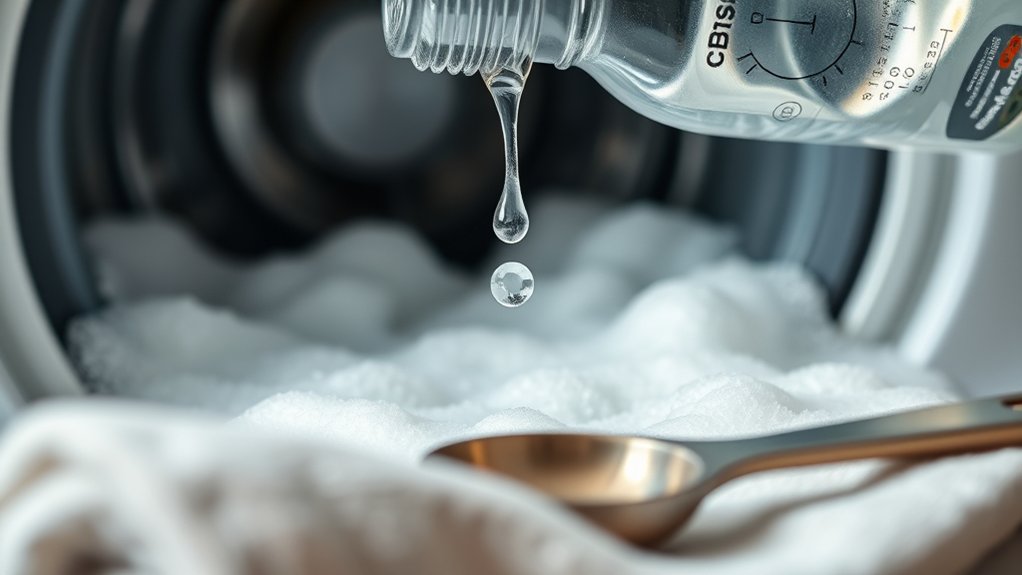
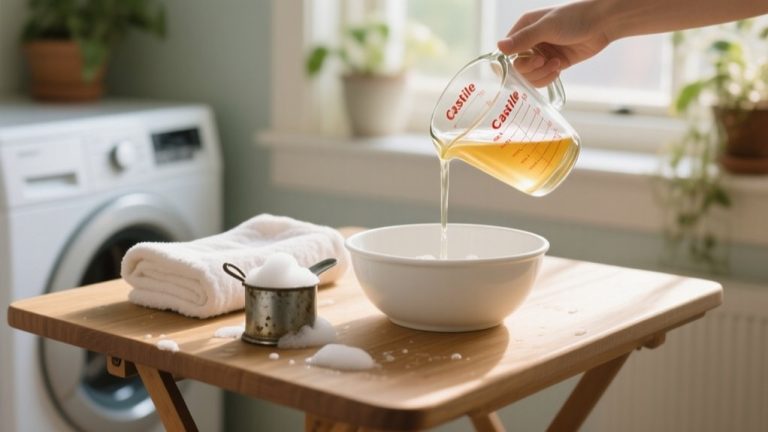
How much dish soap should you use in your washer to clean clothes effectively without causing damage? For small loads, use 1 teaspoon of dish soap; medium loads require 2 teaspoons, and large loads up to 3 teaspoons.
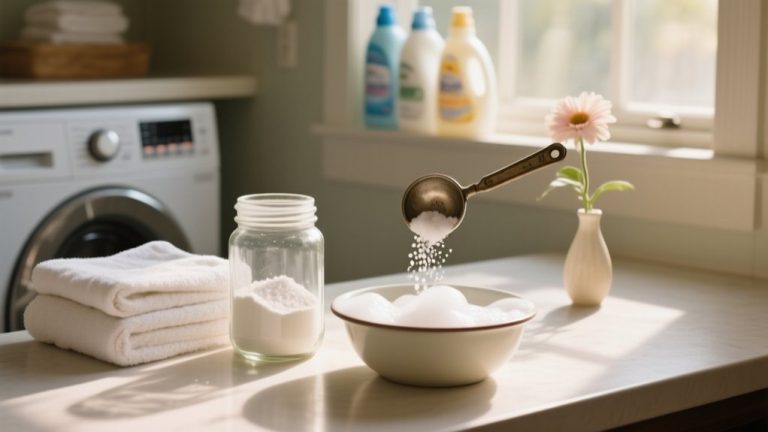
Measuring carefully is essential. Using more than a tablespoon can create excessive suds that may overflow and damage your machine. To control suds better, apply dish soap to a dry cloth before adding it to the wash.
Remember, dish soap alone lacks enzymes for thorough stain removal, so combining it with regular laundry detergent yields better results.
Always check your washing machine’s manual to verify using dish soap won’t void your warranty or harm your appliance.
Following these guidelines helps you use dish soap safely and effectively in laundry.
Which Fabrics Are Sensitive to Dish Soap?
You’ll want to be careful when using dish soap on delicate fabrics like silk, wool, rayon, and acetate.
It can strip away natural oils and cause damage to the fibers or even fade the colors. These materials might lose their shape or their shine when exposed to the harsh ingredients in dish soap.
So, it’s always a good idea to check the care label before you use anything on them.
That way, you can avoid any unintended damage and keep your garments looking great.
Delicate Fabric Reactions
Although dish soap can effectively remove grease and stains, it can also damage certain delicate fabrics if you’re not careful. Delicate fabrics like silk and lace may suffer discoloration or fiber weakening when exposed to dish soap.
Wool and cashmere can lose their natural oils, causing shrinkage and a loss of softness. Synthetic fabrics might tolerate dish soap better but can still accumulate residue, dulling their appearance. Fabrics with special finishes, such as water repellents, may lose their protective properties.
To protect your delicate fabrics, keep these points in mind:
- Avoid using dish soap on silk, lace, wool, and cashmere.
- Test a small hidden area before full application.
- Use mild detergent alternatives for softness preservation.
- Rinse thoroughly to prevent discoloration and residue buildup.
Potential Fiber Damage
When you use dish soap on certain fabrics, you risk weakening their fibers, especially delicate ones like silk and wool. This can lead to tears or long-term damage.
These materials are particularly sensitive to dish soap’s harshness, so avoid its use to protect your clothes and sensitive skin from irritation.
Synthetic fabrics like polyester may lose vibrancy and dull with repeated dish soap washing.
Natural fibers such as cotton and linen might soften but can also trap dirt if residue remains.
Dish soap lacks enzymes needed for protein-based stains, making it less effective and potentially harmful over time.
Always check care labels before using dish soap to prevent potential fiber damage and keep your garments safe.
Color Fading Risks
Because dish soap contains strong surfactants, it can cause color fading in many fabrics, especially delicate ones like silk and wool that react sensitively to harsh chemicals.
You should be cautious when using dish soap to tackle grease stains on colored clothing, as repeated exposure may dull vibrancy or create uneven fading.
Certain synthetics like polyester and nylon also face color fading risks due to their dye methods.
To protect your garments, pay attention to the amounts of dish soap you apply and always test a hidden area first.
- Silk and wool are highly sensitive to dish soap’s surfactants
- Dark-colored fabrics risk uneven discoloration
- Polyester and nylon may fade with dish soap use
- Use minimal amounts to reduce color fading risks
How Dish Soap Can Harm Your Clothes Over Time
If you rely on dish soap for your laundry regularly, you might unintentionally weaken your clothes over time. Dish soap lacks the enzymes found in laundry detergents that break down stains effectively.
Also, it can leave behind soap residue that attracts dirt and bacteria, causing odors and dinginess. Over time, the surfactants in dish soap may damage or discolor certain fabrics.
Here’s a clear comparison of dish soap’s effects versus laundry detergents:
| Issue | Dish Soap Effect | Laundry Detergents Effect |
|---|---|---|
| Fabric Strength | Weakens fibers | Maintains fiber integrity |
| Stain Removal | Ineffective | Contains enzymes for stains |
| Soap Residue | Leaves residue, attracts dirt | Rinses clean |
| Fabric Damage | Possible discoloration | Safer for most fabrics |
| Machine Impact | Soap scum buildup possible | Designed to protect machines |
Use dish soap cautiously to avoid long-term harm.
When to Use Dish Soap for Emergency Laundry
Though dish soap isn’t ideal for regular laundry use because it can weaken fabrics and leave residue, it can be a practical short-term solution in certain situations.
You might use dish soap when you run out of laundry detergent or need to tackle a small load with stubborn grease stains.
To do this safely, follow these laundry tips: Use only 1 to 3 teaspoons of dish soap per load to prevent excessive suds.
Avoid adding dish soap directly to the detergent dispenser; apply it to a dry rag instead.
Combine dish soap with a cup of vinegar to boost cleaning and reduce odors.
Limit this method to emergencies or small loads to avoid buildup in fabrics and machines.
Use dish soap cautiously and only as a temporary fix.
Why Laundry Detergent Is Still the Better Choice
While dish soap can serve as a temporary fix, laundry detergent remains the better choice for cleaning your clothes effectively and safely.
Laundry detergent contains specific surfactants and enzymes formulated to break down a wide range of stains and dirt, which dish soap lacks. This guarantees superior cleaning performance without creating excessive suds that might damage your washing machine.
Moreover, laundry detergent is designed to prevent residue and soap scum buildup on fabrics, helping your clothes stay fresh and clean.
Many detergents also include fabric softeners and additives that improve the scent and feel of your laundry.
For maintaining both garment quality and washing machine longevity, sticking with laundry detergent is the safest and most reliable option, while dish soap should only be used in emergencies.
Frequently Asked Questions
Can Dish Soap Remove Tough Odors From Clothes?
Yes, dish soap can remove tough odors from clothes because it breaks down grease and grime effectively.
You should use only a small amount to avoid excessive suds that might interfere with washing.
Pairing it with vinegar can boost odor removal and soften fabric.
However, dish soap isn’t a long-term replacement for laundry detergent since it lacks enzymes designed specifically for deep odor elimination in fabrics.
Use it sparingly and cautiously.
Is Dish Soap Effective in Cold Water Washing?
You might find dish soap somewhat helpful in cold water washing, especially for cutting grease and oil stains.
It’s not a miracle worker though, and may struggle with other stains or heavy soils.
Use only small amounts to avoid excess suds that could harm your machine.
To boost cleaning power, adding a cup of vinegar helps soften fabrics and brighten clothes.
Keep in mind, specialized detergents usually perform better overall.
Can Dish Soap Cause Colors to Fade Faster?
Yes, dish soap can cause colors to fade faster. Its harsh surfactants may strip dyes from fabrics, especially if you use it often or in large amounts.
Dish soaps don’t have enzymes that protect colors like laundry detergents do, so they can accelerate fading, particularly on bright or dark clothes.
To keep your fabrics vibrant, avoid regular use of dish soap for laundry and stick to products designed for washing clothes.
Are There Eco-Friendly Dish Soaps Safe for Laundry?
Think of eco-friendly dish soaps as gentle gardeners. They nurture your clothes without harsh chemicals.
Yes, you can use these soaps for laundry since they’re biodegradable, hypoallergenic, and often made with plant-based surfactants.
However, you should still use them cautiously in small amounts to avoid residue buildup or fabric damage.
Always check the label to confirm they’re safe for laundry, especially if you have sensitive skin or septic systems.
Can Using Dish Soap Affect Washing Machine Warranty?
Yes, using dish soap can affect your washing machine warranty. Most manufacturers specify using only laundry detergents.
So if dish soap causes damage or excessive suds, your warranty might be voided.
You could face costly repairs not covered under warranty if the machine’s manual advises against dish soap.
Always follow your washer’s guidelines to avoid disputes and protect your warranty rights.
Conclusion
While dish soap might seem like a quick fix in a laundry pinch, much like Icarus reaching for the sun, it’s wise to remember its limits. Though it can clean in emergencies, relying on it regularly risks damaging fabrics and your washer.
Laundry detergent, designed specifically for your clothes, remains the safer, more effective choice. So, keep dish soap for dishes and trust laundry detergent to keep your clothes shining without unintended consequences.