Do You Have To Separate Laundry – Fact Check
Yes, you do have to separate your laundry to protect your clothes and keep them looking their best. Sorting by color prevents bleeding and fading, especially for whites and brights. Separating fabrics helps avoid stretching or damage.
Sorting by soil level ensures proper cleaning too. Even washing in cold water won’t stop all dye transfer, so sorting remains important. When you explore proper laundry habits, you’ll find how to keep your wardrobe fresh and lasting longer.
Why You Should Separate Your Laundry
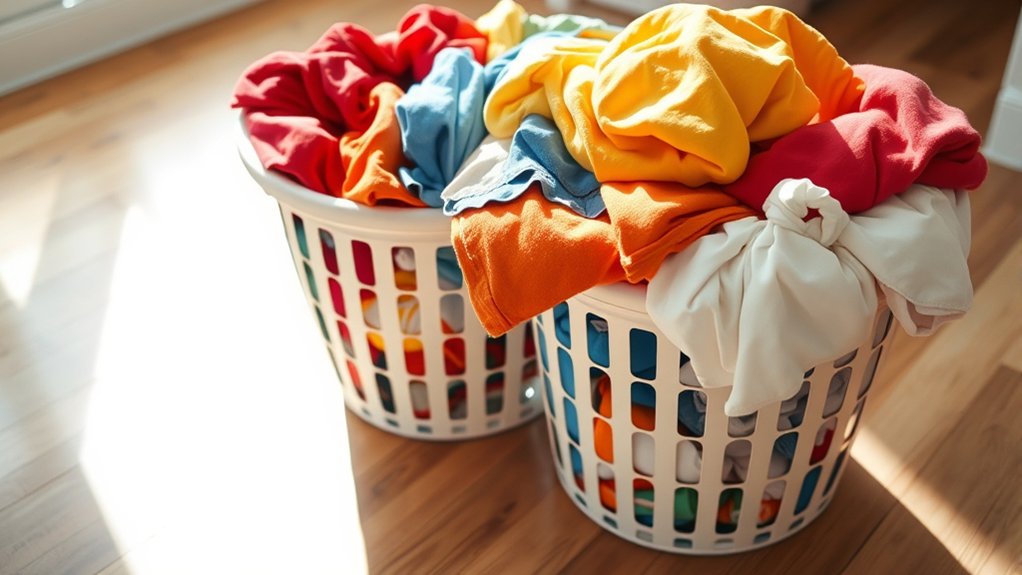
Why should you separate your laundry before washing? Separating laundry prevents dyes from darker clothes from bleeding onto lighter fabrics, keeping your whites bright and colors true.
Separating laundry stops dye transfer, keeping your whites bright and colors vibrant.
You also want to sort by fabric type and soil level because delicate items need gentle cycles, while heavily soiled clothes require stronger washes.
Washing whites and darks separately reduces dye transfer, preserving both. Plus, separating clothes based on care labels and fabric characteristics helps optimize cleaning efficiency, ensuring each garment gets the right treatment.
This simple step protects your clothes from stretching, tearing, or fading caused by incompatible fabrics or stains, ultimately extending their lifespan.
Taking a few moments to sort your laundry properly saves you time, money, and frustration in the long run. It’s definitely worth the effort!
How Color Sorting Prevents Damage and Fading
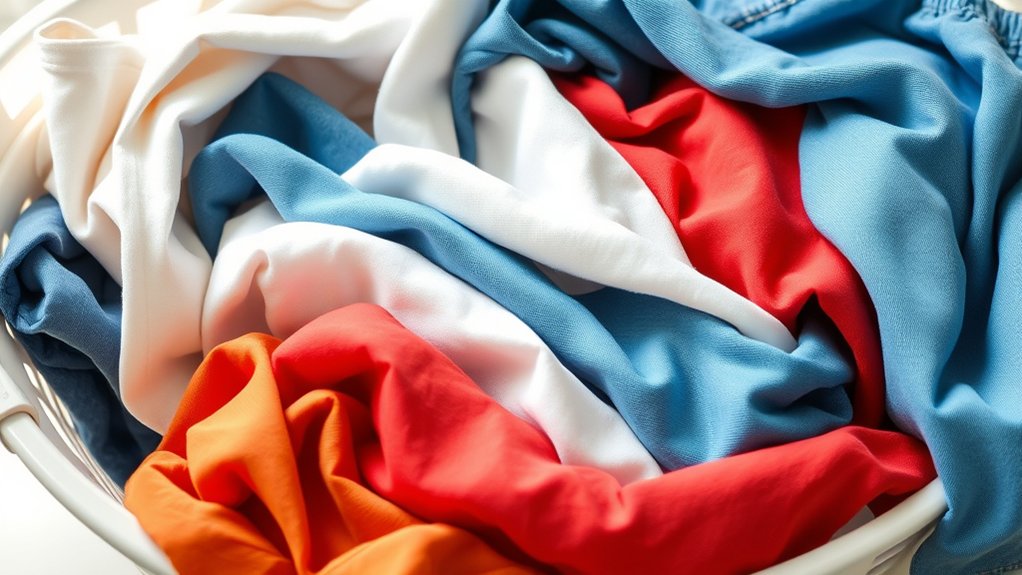
You’ll want to sort your laundry by color to avoid color bleeding that can stain lighter fabrics. Keeping darks and brights separate really helps maintain the original brightness of all your clothes.
And don’t forget about new garments—they’re especially likely to release excess dye during the first few washes. So, it’s a good idea to be extra careful with those!
Color Bleeding Risks
How can sorting your laundry by color protect your clothes from damage and fading? When you separate your laundry, you reduce the risk of dye transfer, which can discolor and stain lighter fabrics. Even though modern dyes are more colorfast, mixing dark and light clothes can still lead to unexpected bleeding.
This is especially true if you wash whites with colors at high temperatures. To avoid these risks, you should pre-wash new dark clothes separately to remove excess dye. Washing whites and light colors at lower temperatures also helps minimize bleeding.
It’s a good idea to keep dark and bright colors apart from whites to preserve their original appearance. Sorting your laundry might take a little extra time, but it really pays off in protecting your favorite clothes.
Give it a try and see the difference!
Maintaining Fabric Brightness
Besides preventing color bleeding, sorting your laundry by color plays a key role in maintaining the brightness and vibrancy of your fabrics. When you wash whites separately from colored items, you preserve their original brightness and avoid unwanted discoloration.
Keeping dark and bright colors apart from lighter fabrics also helps maintain their fresh appearance longer. Color sorting reduces the risk of dye bleeding, especially in warm or hot water, which can dull fabric colors over time.
Sorting New Garments
Why should you separate new garments from the rest of your laundry? New clothes often have excess or unstable dyes that can bleed during the first few washes. Washing them separately helps prevent this dye transfer and protects your other clothes from unwanted stains.
It also keeps the vibrant colors of your new items looking fresh by reducing color fading. So, it’s a good habit to wash new dark or brightly colored garments separately until you’re sure they won’t bleed.
Try not to mix new items with whites or light-colored clothes to avoid staining. And if you have heavily dyed clothes, handle them with extra care during their first few washes.
This will help extend their lifespan and keep them looking great.
When and Why You Should Sort by Fabric Type
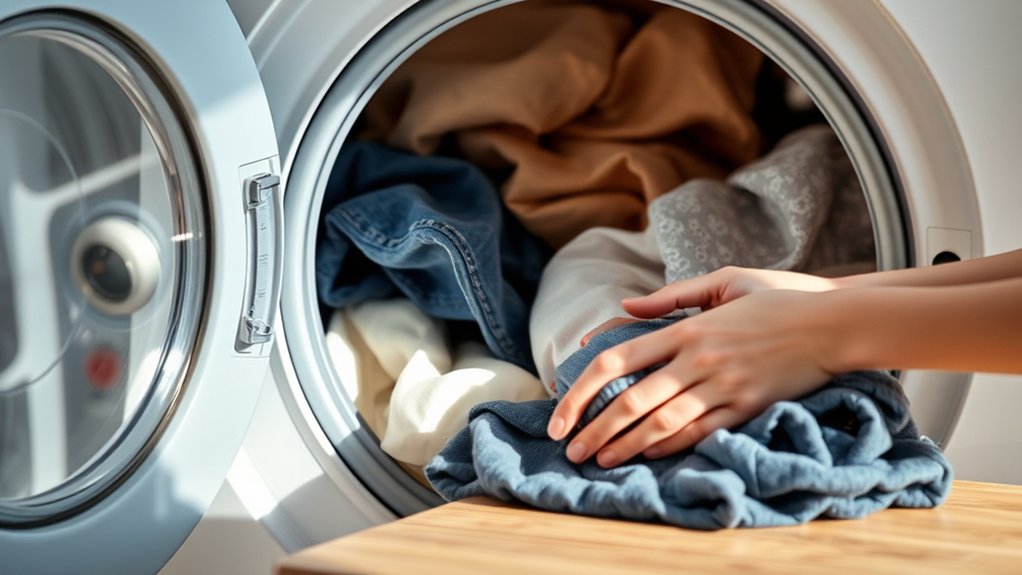
You should sort laundry by fabric type to protect delicate items and keep heavier fabrics from damaging lighter ones. It’s all about making sure your clothes last longer and look better.
Different materials need specific water temperatures and detergents to stay in good shape, so sorting helps you give each fabric the right care.
Plus, when you sort properly, you can avoid common problems like shrinkage, stretching, and lint transfer.
This simple step can really extend the life of your clothes, saving you time and money in the long run.
Fabric Care Importance
When should you separate your laundry by fabric type? You should do it every time to protect your clothes and keep them looking their best. Different fabrics need specific washing conditions to avoid damage.
For example, delicate fabrics like silk need gentle cycles and mesh bags, while heavier fabrics like denim require hotter water and longer cycles. Sorting also prevents abrasion and pilling caused by incompatible materials rubbing together.
Here’s why fabric care matters:
It ensures each fabric gets the right water temperature and washing cycle. It prevents damage such as tearing, stretching, or pilling. It extends the lifespan of your garments, keeping them fresh and new longer.
Separating by fabric type is a simple step that saves your clothes. It’s easy to do and really makes a difference in how your clothes look and feel over time.
Sorting By Material
Caring for different fabrics means recognizing their unique needs during washing, which is where sorting by material becomes important. When you separate delicate fabrics from heavier ones like towels and denim, you prevent damage such as stretching, tearing, or abrasion.
You’ll also want to wash synthetic fabrics separately from natural fibers to avoid pilling and maintain their integrity.
Different materials often require specific water temperatures and cycle settings, so sorting guarantees each fabric gets the right treatment. By doing this, you not only protect your clothes during each wash but also extend their lifespan.
This helps keep them looking and feeling better longer.
Sorting by fabric type is a simple, practical step that safeguards your wardrobe and improves cleaning results. It’s a small habit that makes a big difference in how your clothes hold up over time.
Give it a try and see how much better your laundry routine can be!
Do You Need to Sort Laundry When Washing in Cold Water?
Although washing clothes in cold water reduces the chance of colors bleeding, it’s still wise to sort your laundry by color, especially if you’re dealing with new or heavily dyed garments. Cold water minimizes dye transfer but doesn’t eliminate it entirely. So mixing colors can risk dulling whites or light fabrics.
Sorting also helps maintain fabric brightness and prevents unexpected color runs.
To get the best results when washing in cold water, consider sorting by:
- Color groups to protect whites and lights from dark dyes
- Fabric types, ensuring delicate items receive gentle treatment
- Soil levels, so heavily soiled garments get proper cleaning without damaging lighter loads
Sorting helps you keep clothes looking fresh and clean, even with cold water washing.
How to Separate Laundry Properly Step-by-Step
Since proper sorting sets the foundation for effective washing, you’ll want to start by checking each garment’s care label to determine the right water temperature and wash cycle.
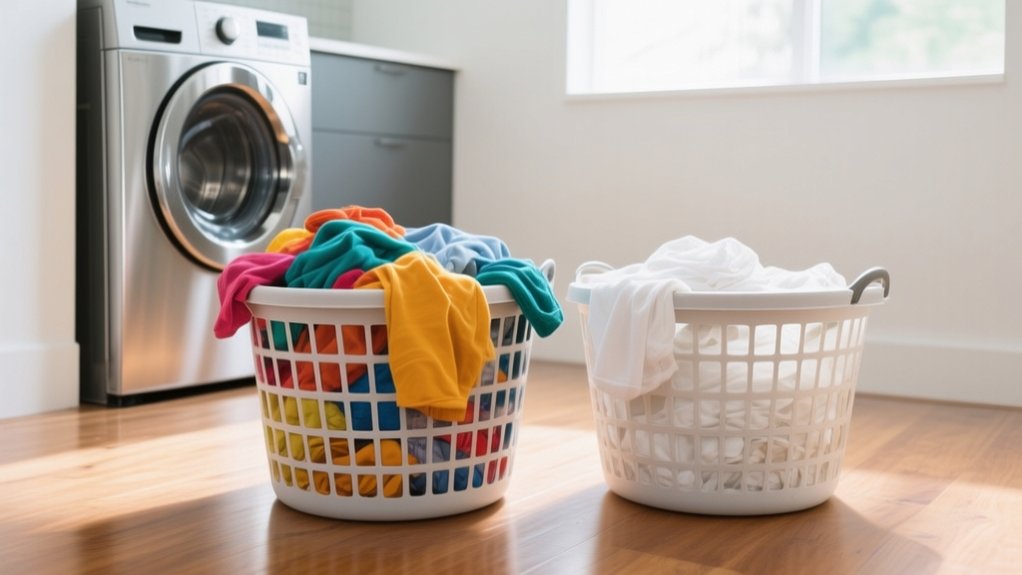
Next, separate your laundry by color: whites, lights, and darks. This helps avoid dye transfer and keeps your clothes looking fresh.
Then, sort by fabric type, like delicates or heavy-duty items, to protect them. Using mesh laundry bags for delicate pieces is a great way to prevent damage.
Finally, pre-treat stains and heavily soiled items before washing. This step really helps get your clothes cleaner.
| Step | Action |
|---|---|
| 1. Check Labels | Identify washing instructions |
| 2. Sort by Color | Whites, lights, darks |
| 3. Sort by Fabric | Delicates, heavy-duty, athletic wear |
| 4. Pre-treat & Protect | Use mesh bags and treat stains |
What Happens If You Don’t Separate Laundry Correctly
If you don’t separate your laundry correctly, you risk color transfer that can turn your whites dingy or stain them with darker dyes. Mixing fabrics can also cause damage. Delicates might tear or stretch when washed with heavier items.
Plus, if you wash heavily soiled clothes with cleaner ones, dirt and oils can spread, leaving everything less fresh.
Here’s what you can expect if you skip sorting:
- Color bleeding onto lighter fabrics, ruining their appearance
- Fabric damage from inappropriate washing cycles or mixed textures
- Reduced garment lifespan due to improper water temperature and treatment
Drying Whites and Colors Safely
How can you keep your whites bright and your colors vibrant during drying? Start by drying whites and colors separately to prevent dye transfer. Whites can usually handle higher heat settings, which helps them dry faster and stay bright.
For colored clothes, choose lower heat or delicate cycles to avoid fading. If you have delicate or brightly colored items, consider line drying or air drying to protect the fabric from heat damage.
Using color-catching sheets in the dryer is a smart move; they absorb loose dyes and reduce color bleeding onto whites.
Proper sorting before drying not only preserves your garments’ original appearance but also extends their lifespan. This saves you money and keeps your wardrobe looking fresh. It’s a simple step that makes a big difference!
Frequently Asked Questions
Can Separating Laundry Save Energy and Water?
Yes, separating laundry saves energy and water by letting you wash similar fabrics and colors together. You can use appropriate cycles and avoid rewashing. This way, you optimize water use and reduce the heat needed.
It also prevents damage to your clothes, which cuts overall consumption. So, it’s a simple step that really makes a difference in saving resources. Give it a try next time you do laundry!
Does Sorting Laundry Affect Detergent Effectiveness?
You know what they say, “A stitch in time saves nine.” Sorting laundry boosts detergent effectiveness by matching detergents to fabrics, preventing dye transfer, and avoiding dilution.
This way, your clothes come out cleaner and last longer. It’s a simple step that really makes a difference. Give it a try next time you do laundry!
How Often Should You Clean Your Washing Machine?
You should clean your washing machine at least once a month. Run an empty hot water cycle with vinegar or cleaner.
And don’t forget to wipe the door seal and detergent dispenser. This helps prevent mold and buildup from forming. It’s an easy step that makes a big difference!
Can You Mix Laundry With Different Types of Stains?
You can’t just toss every stained item together like a wild tornado. Pre-treat heavy stains and separate them from clean clothes to avoid spreading.
Sorting by fabric and color keeps your laundry safe and spotless every time. It’s all about keeping things organized so stains don’t get a chance to mess up your whole load.
Treat stains right, and your clothes will thank you!
Is It Necessary to Separate Laundry for Handwashing?
Yes, you should separate laundry for handwashing to avoid color bleeding, protect delicate fabrics, and prevent damage. Separating whites, darks, and heavily soiled items keeps your clothes clean, vibrant, and long-lasting.
It really makes a difference when you take a little extra time to sort your laundry. This way, you’re helping your clothes stay in great shape for longer. Plus, it just makes the whole washing process easier and more effective.
Conclusion
Think of your laundry like a garden. Each type of clothing is a different plant needing its own care. By separating colors and fabrics, you prevent fading and damage, keeping everything vibrant and fresh.
Even with cold water, sorting matters to protect your clothes. Follow the step-by-step process to make laundry day smoother and safer. Skip this, and your wardrobe might wilt prematurely.
So, treat your clothes right, and they’ll bloom longer.