How To Whiten Laundry Without Bleach – Easy Guide
You can whiten your laundry without bleach by using baking soda to boost detergent and break down oils. White vinegar helps remove residue and soften fabrics, while lemon juice naturally brightens clothes, especially when combined with sunlight.
Oxygen-based whiteners provide a gentle yet effective alternative too. Pre-treat stains with these natural solutions and wash whites separately with proper cycles.
These simple steps keep your clothes bright and fresh without harsh chemicals. For more practical tips, keep exploring effective methods.
Key Takeaways
- Use baking soda to boost detergent effectiveness, break down oils, and keep whites bright without harsh chemicals.
- Add white vinegar during the rinse cycle to remove detergent residue, soften fabrics, and naturally brighten clothes.
- Soak clothes in lemon juice and warm water, then dry in sunlight to enhance natural whitening and deodorizing effects.
- Incorporate oxygen-based whiteners like OxyBoost for safe, effective stain removal and brightening without chlorine bleach.
- Wash whites separately in hot water, pre-treat stains with natural pastes, and dry in direct sunlight for optimal brightness.
How to Whiten Clothes Without Bleach: A Step-by-Step Guide
Although bleach is a common whitening agent, you can effectively brighten your clothes without it by using simple, safe alternatives. Start by adding half a cup of baking soda to your wash cycle; it boosts your detergent’s power and whitens fabrics gently.
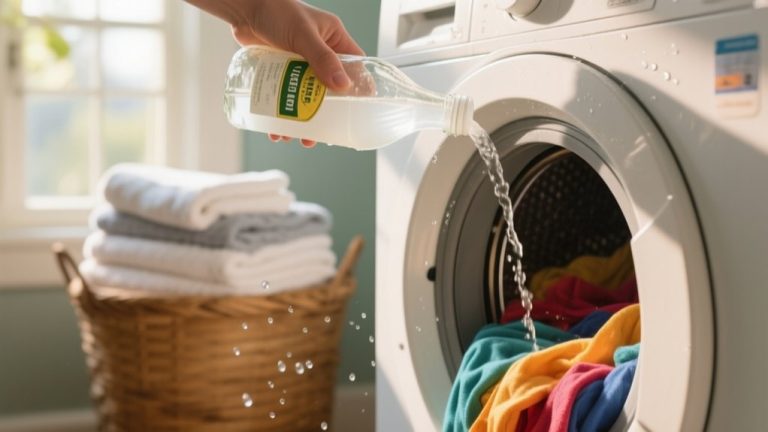
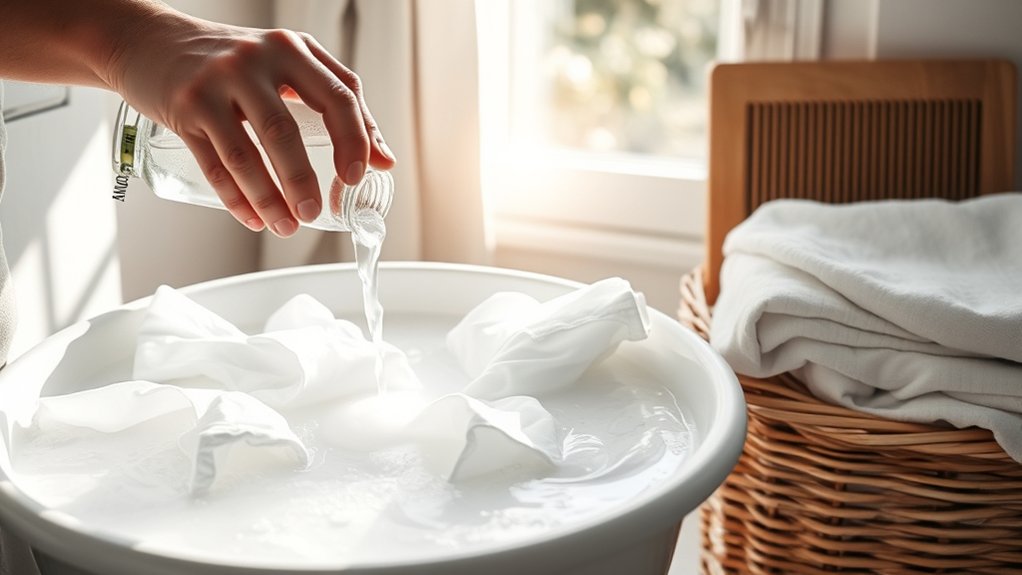
During the rinse cycle, pour in white vinegar to dissolve detergent buildup and enhance brightness naturally. For stubborn stains, soak your whites in warm water mixed with lemon juice before washing.
Consider using oxygen-based whiteners like Truly Free Home OxyBoost, which safely lift stains without damaging fabric fibers.
Finally, take advantage of sunlight exposure by line drying your clothes outside. Sunlight acts as a natural bleaching agent, gradually enhancing whiteness while freshening your laundry.
These steps guarantee clean, bright clothes without harsh chemicals.
Why You Should Avoid Bleach When Whitening Clothes
When you choose bleach to whiten your clothes, you risk weakening fabric fibers and causing premature wear, especially in delicate materials like cotton and linen.
Bleach’s harsh chemicals can be too aggressive, leading to unexpected yellowing instead of bright whitening.
You should avoid bleach because:
- It weakens fabric, making clothes brittle and prone to tears.
- Chlorine bleach can cause yellowing when reacting with sweat and body oils, resulting in discoloration.
- Harsh chemicals release harmful fumes, posing health and environmental risks.
Instead, opt for safer alternatives that whiten effectively without damaging your fabrics or the planet.
Choosing gentler methods preserves your clothes’ longevity while maintaining their brightness.
How Baking Soda Whitens Laundry Effectively
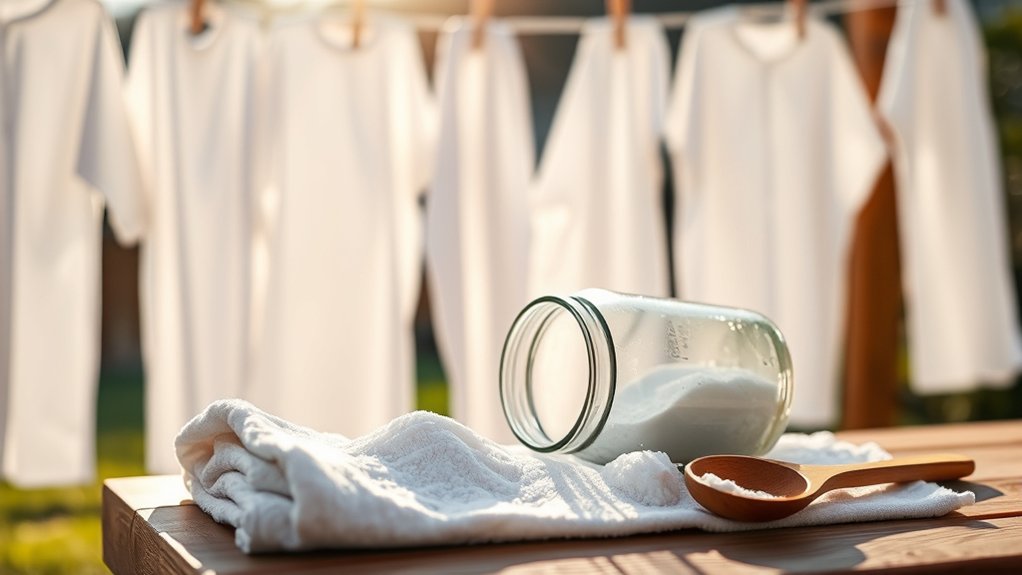
Three key actions make baking soda a powerful whitener for your laundry: it breaks down oils, lifts residues, and boosts detergent effectiveness. When you add half a cup of baking soda to your wash, it enhances your detergent’s cleaning power. This helps to brighten whites and remove stains efficiently.
For stubborn spots, apply a paste of baking soda and water directly on the stain for immediate results. Baking soda also prevents detergent buildup, keeping your whites consistently bright without harsh chemicals.
| Action | Benefit |
|---|---|
| Breaks down oils | Removes greasy stains |
| Lifts residues | Prevents dullness |
| Boosts detergent | Enhances overall cleaning |
Use baking soda regularly to keep your whites bright and fresh.
How White Vinegar Brightens Whites Safely
You can boost your whites by adding white vinegar during the rinse cycle. It helps remove detergent residue and mineral buildup really effectively.
What’s great is that it naturally softens fabrics without using any harsh chemicals. This keeps the fibers strong and even reduces static.
On top of that, vinegar actually enhances your detergent’s cleaning power, making your laundry brighter and fresher every time.
It’s a simple trick that really works!
Vinegar Removes Residue
Although many commercial laundry additives promise brighter whites, white vinegar offers a simple and effective alternative by dissolving detergent residue that dulls fabrics.
When you use vinegar in your laundry, you can:
- Remove residue from detergent buildup and hard water minerals, which often cause graying or yellowing.
- Whiten clothes without harsh chemicals by neutralizing leftover soap during the rinse cycle, enhancing brightening whites naturally.
- Act as a natural fabric softener, reducing buildup from fabric softener products and maintaining fabric integrity over time.
Adding a cup of white vinegar during the rinse cycle guarantees your whites stay bright and fresh.
This economical, eco-friendly solution helps you maintain your laundry’s brightness safely, without relying on bleach or expensive additives.
Softens Fabric Naturally
Beyond removing residue, white vinegar plays an essential role in softening fabrics naturally, which helps your whites look brighter and feel softer.
Adding half a cup of white vinegar during the rinse cycle softens fabrics by dissolving mineral buildup from hard water and breaking down detergent residue.
This process prevents dullness and yellowing without harsh chemicals. Plus, white vinegar acts as a natural deodorizer, neutralizing odors trapped in fibers.
As an eco-friendly alternative, it protects fabric integrity while enhancing softness safely.
Enhances Detergent Effectiveness
When you add white vinegar to your rinse cycle, it enhances your detergent’s effectiveness by breaking down soap and mineral residues that dull your whites.
White vinegar acts as a natural agent to dissolve detergent buildup and mineral deposits, which often cause graying and stiffness. This simple addition can greatly enhance brightness while keeping fabrics fresh smelling.
Here’s how it helps:
- Dissolves detergent buildup, ensuring your whites come out cleaner and brighter.
- Breaks down mineral deposits from hard water that contribute to fabric dullness.
- Neutralizes odors, leaving your laundry fresh smelling without harsh chemicals.
Regular use of white vinegar in the rinse cycle helps prolong fabric life by maintaining brightness and preventing residue accumulation.
It’s an easy, safe way to boost your detergent’s power.
Using Lemon Juice as a Natural Whitening Booster
You can naturally brighten your laundry by using lemon juice. It’s all thanks to the citric acid in lemon juice that helps lift stains and whiten fabric.
Here’s an easy way to do it: just soak your clothes in a mix of one cup of lemon juice and a gallon of warm water for about an hour before washing.
And if you really want to get the best results, dry your clothes in the sunlight. Not only does it boost the whitening effect, but it also leaves your clothes smelling fresh and clean.
Lemon Juice Benefits
Lemon juice offers several powerful benefits as a natural whitening booster for your laundry. As a natural bleaching agent, it works effectively to brighten whites without harsh chemicals.
Here’s why you should consider lemon juice in your cleaning solution:
- Brightening Whites: The citric acid in lemon juice breaks down stains and yellowing, making your whites look fresh and clean after you soak them in warm water for about an hour.
- Deodorizes Fabrics: Lemon juice neutralizes odors, leaving your laundry smelling fresh by neutralizing odors trapped in fabrics.
- Enhances Cleaning: When combined with baking soda, lemon juice creates a potent natural cleaning solution that boosts whitening power while being gentle on fabrics.
Using lemon juice is a practical, eco-friendly way to keep your laundry bright and fresh.
Application Techniques
Three effective techniques can maximize the whitening power of lemon juice in your laundry routine.
First, mix one cup of lemon juice with a gallon of warm water and soak your white laundry for at least an hour. This soak uses the citric acid to break down stains and boost whitening.
Second, for stubborn stains, create a paste combining lemon juice and baking soda. Apply this directly to the stains before washing to lift discolorations effectively.
Finally, after washing, dry your clothes in direct sunlight. Sunlight’s UV rays enhance lemon juice’s whitening effect naturally, brightening fabrics without harsh chemicals.
How to Use Oxygen-Based Whiteners (Like OxyBoost) at Home
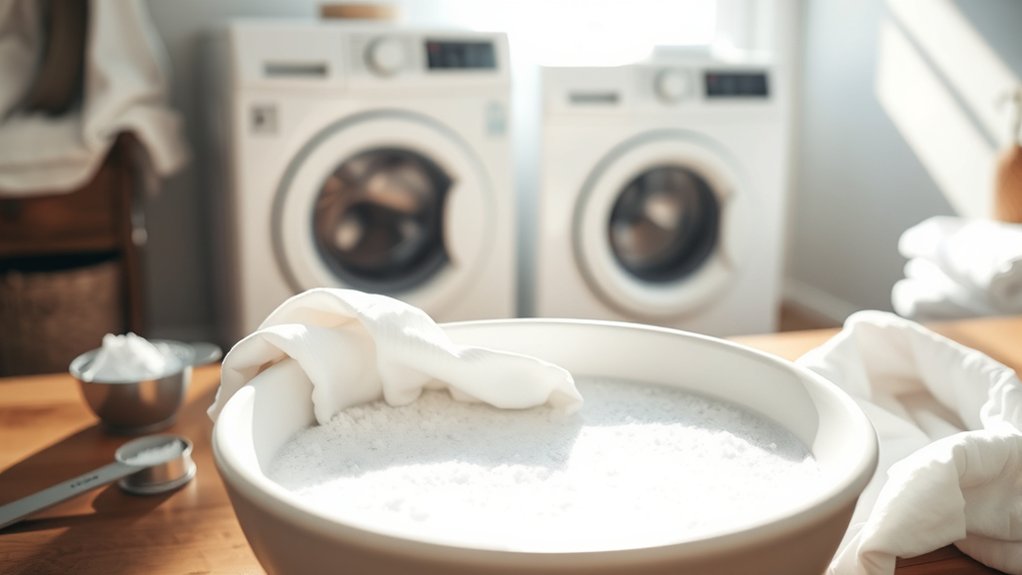
Although chlorine bleach is a common whitening agent, oxygen-based whiteners like OxyBoost offer a safer and equally effective alternative for brightening your laundry.
These non-toxic products lift stains and brighten fabrics without harsh chemicals. That makes them ideal for regular laundry care.
Here’s how to use OxyBoost effectively at home:
- Add one scoop of OxyBoost to high-efficiency washers or two scoops for standard machines during the wash cycle to maximize stain removal.
- For heavily dingy fabrics, soak them in a hot water solution with OxyBoost for several hours to enhance whitening.
- Use oxygen-based whiteners regularly to help eliminate detergent residue and mineral buildup. This maintains your whites’ brightness over time.
This method keeps your clothes bright and fabric-safe without chlorine bleach’s risks.
How Sunlight Naturally Whitens Clothes
When you hang your whites outside in direct sunlight, ultraviolet (UV) rays naturally break down organic stains and brighten fabrics without using harsh chemicals.
Sunlight acts as a powerful natural bleaching agent, enhancing the whitening of your clothes by up to 30%.
Besides brightening, UV rays disinfect fabrics by killing bacteria and allergens, promoting cleaner, healthier laundry.
Sunlight also neutralizes odors, restoring freshness to your garments.
For the best results, dry your clothes during peak sunlight hours between 10 a.m. and 2 p.m., allowing several hours of exposure.
This method is practical and chemical-free, making it an ideal choice for whitening fabrics while keeping them fresh and disinfected naturally.
Pre-Treating Stains Without Bleach: A Step-by-Step Guide
Sunlight does an excellent job brightening your clothes, but stubborn stains often need extra attention before washing. When pre-treating stains without bleach, natural solutions like baking soda, vinegar, and lemon juice work wonders.
- For general stains, mix 1 tablespoon of baking soda with water to form a paste. Apply it to the stain and leave it for about an hour.
- Soak the stained area in equal parts vinegar and water for 30 minutes to lift tough marks.
- Apply lemon juice directly to the stain, then let it sit in sunlight to naturally brighten the fabric.
For oily stains, add a few drops of dish soap, then rinse with cool water to avoid setting the stain before laundering.
Always rinse pre-treated fabrics with cool water to maximize stain removal.
Best Washing Practices to Keep Whites Bright
To keep your whites bright, it’s best to wash them separately from colored clothes. This way, you avoid any dye transfer that can make your whites look dull.
Also, make sure to use the right amount of detergent. Using too much can cause buildup, which over time can actually make your fabrics look less fresh.
Proper Detergent Usage
Although it might seem simple, using the right amount and type of detergent plays a crucial role in keeping your whites bright. Proper detergent usage prevents detergent residue buildup that dulls fabrics.
To maximize whiteness, follow these tips:
- Use a laundry detergent formulated for whites with optical brighteners; these enhance brightness without harsh chemicals.
- Always wash whites separately from colored items to avoid dye transfer, which causes discoloration.
- Choose hot water cycles to dissolve dirt and oils effectively, and add white vinegar during the rinse to remove detergent residue and keep fabrics fresh.
Separate Laundry Loads
A key step in keeping your whites bright is washing them separately from colored laundry. By separating laundry loads, you prevent dye transfer that dulls white clothes and causes discoloration.
Use hot water in your washing machine, as it dissolves detergent residue better and enhances stain removal, helping maintain brightness. Avoid overloading the machine to guarantee proper rinsing, which is essential for removing buildup that can make whites look dingy.
Pre-soaking whites in a baking soda solution before washing can lift stubborn stains and refresh fabrics.
Moreover, regularly clean your washing machine drum to prevent mineral deposits and detergent residue from redepositing on your whites.
Following these practices will keep your white clothes looking fresh and bright without bleach.
Long-Term Tips to Keep White Clothes Bright Without Bleach
Five simple habits can help you keep your white clothes bright without relying on bleach.
To maintain brightness, wash whites in cold water regularly after each wear to prevent stains from setting. Pre-treat stains immediately with a baking soda and water paste for effective removal.
Wash whites in cold water after each wear and pre-treat stains with baking soda for lasting brightness.
Use white vinegar in the rinse cycle to dissolve detergent residue and naturally brighten fabrics. Incorporate sunlight drying to lighten and freshen whites while reducing odors.
Here are three key tips:
- Pre-treat stains quickly with baking soda to avoid permanent marks.
- Add white vinegar during the rinse cycle to maintain brightness and dissolve residue.
- Dry whites in sunlight to naturally bleach and freshen fabrics without harsh chemicals.
These habits extend your whites’ vibrancy and lifespan without bleach.
Frequently Asked Questions
Can Whitening Laundry Without Bleach Damage Delicate Fabrics?
No, whitening laundry without bleach usually won’t damage your delicate fabrics.
Gentle alternatives like baking soda, white vinegar, and oxygen-based whiteners help brighten clothes without weakening fibers or causing yellow stains.
You can even use sunlight to naturally whiten your laundry safely.
Just avoid harsh chemicals and pre-treat stains carefully.
How Often Should I Whiten My Clothes Without Bleach?
You don’t need to whiten your clothes daily unless you enjoy turning laundry into a full-time hobby. Aim to whiten your whites after every wash to keep them bright and fresh.
For heavily dingy items, soak them monthly in a baking soda solution. This schedule balances effectiveness with practicality, ensuring your clothes stay vibrant without overdoing it or stressing delicate fabrics.
Consistency beats obsession every time.
Are There Any Commercial Products Safe for Whitening Without Bleach?
Yes, you can use commercial products like Truly Free Home OxyBoost, OxiClean, and Seventh Generation’s oxygen bleach alternatives.
These use sodium percarbonate or sodium carbonate to whiten safely without harsh chemicals. They’re effective at lifting stains while being gentle on fabrics and eco-friendly.
You’ll also find many eco-conscious detergents with natural whitening agents that brighten your laundry without the risks of traditional bleach.
Can I Whiten Colored Clothes Without Bleach Safely?
Yes, you can safely whiten colored clothes without bleach. By blending baking soda’s brightening boost with white vinegar’s vivid rinse, you’ll revive vibrant hues without harm.
Lemon juice soaking softly brightens fabrics, while sunlight’s subtle shine naturally refreshes colors.
Just use hydrogen peroxide cautiously, as it may risk discoloration.
These practical, proven methods protect your garments, preserving their palette while promoting pristine, polished results every wash.
Does Water Temperature Affect Bleaching Alternatives’ Effectiveness?
Yes, water temperature greatly affects the effectiveness of bleaching alternatives. You’ll get better whitening results when you use warm or hot water because heat activates stain-lifting agents like baking soda, vinegar, and oxygen-based whiteners.
Cold water doesn’t fully activate these substances, reducing their ability to break down oils and residues.
For brighter whites, soak your laundry in hot water with a whitening solution before washing on a hot cycle.
Conclusion
Think of whitening your clothes as nurturing a garden without harsh chemicals. You let nature do the work. Baking soda, vinegar, lemon juice, and sunlight are your loyal allies, gently restoring brightness with every wash.
By pre-treating stains and adopting smart laundry habits, you keep your whites glowing like fresh snow. Embrace these simple, natural steps and watch your wardrobe shine brilliantly. No bleach needed, just pure, practical care.