When To Add Vinegar To Laundry – Here’s When
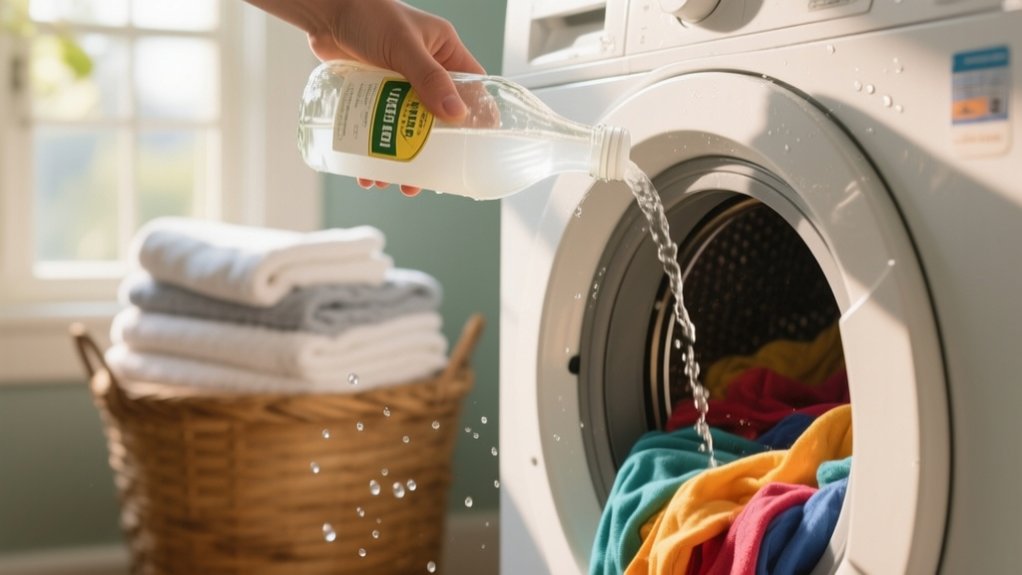
You should add vinegar to your laundry during the rinse cycle to soften fabrics, remove odors, and prevent detergent buildup without leaving residue. Use ½ cup for regular loads, up to 1 cup for larger or smelly ones.
Pour vinegar into the fabric softener compartment if you have a front-loader, or directly into the drum for a top-loader. Avoid mixing vinegar with detergent or bleach to keep your laundry fresh and safe.
Keep exploring to discover stain removal tips and fabric care advice.
Key Takeaways
- Add vinegar during the rinse cycle to prevent detergent buildup and maintain fabric freshness.
- Use 1/2 cup vinegar for standard loads, increasing to 1 cup for larger or smelly laundry.
- Pre-soak heavily soiled or odor-prone clothes in a vinegar-water solution for 30 minutes before washing.
- Avoid adding vinegar with detergent or bleach to prevent harmful chemical reactions.
- Do not use vinegar on delicate, elastic, or color-sensitive fabrics without testing first to avoid damage.
Why And When To Add Vinegar In Your Laundry Cycle
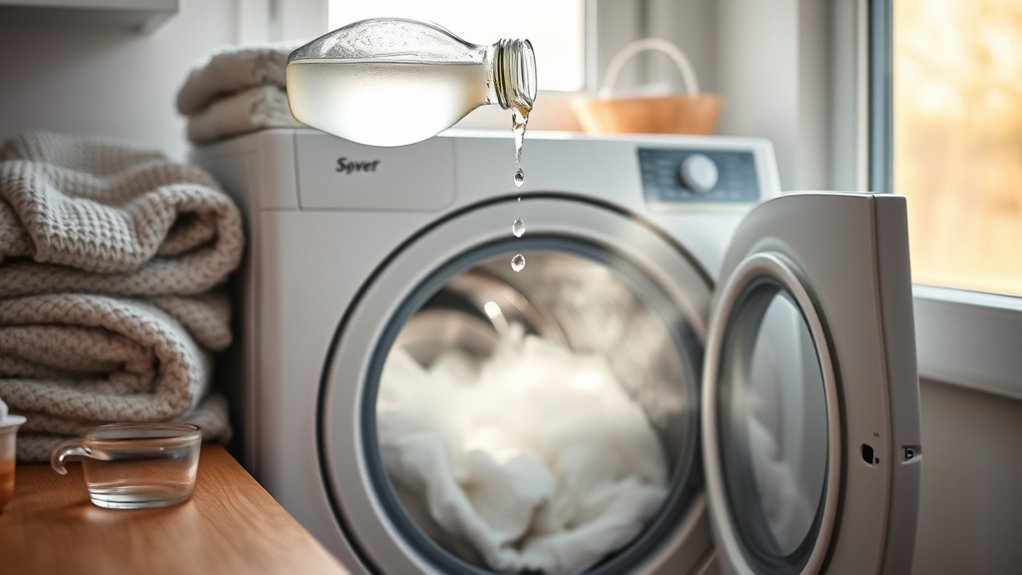
Although you might be tempted to add vinegar during the main wash, you should wait until the rinse cycle to pour in 1/2 to 1 cup. Adding vinegar at this stage helps neutralize detergent residues left on your clothes, preventing buildup that can cause stiffness or skin irritation.
Add vinegar during the rinse cycle to neutralize detergent residues and keep clothes soft and irritation-free.
You can add vinegar in the fabric softener compartment for front-loaders or directly into the drum for top-loaders.
Vinegar also works wonders on stains and odors, especially if you pre-soak smelly items in a mixture of vinegar and warm water before washing.
Avoid mixing vinegar with detergent during the main wash, as this can reduce detergent effectiveness.
Using vinegar correctly keeps your laundry fresh, soft, and free of unwanted residues and odors.
How Much Vinegar To Use Per Laundry Load
Using the right amount of vinegar can make a big difference in your laundry results. For standard laundry loads, use 1/2 cup of white distilled vinegar during the rinse cycle to effectively neutralize odors and reduce detergent residue.
If you’re dealing with larger or especially smelly loads, you can increase the vinegar to up to 1 cup. Always add vinegar during the rinse cycle, not with the detergent in the main wash, for the best effect.
In front-loading machines, pour vinegar into the fabric softener compartment; for top-loaders, add it directly to the tub.
Avoid using more than the recommended amounts, as excess vinegar can interfere with rinsing and may damage your fabrics. This simple step helps keep your laundry fresh and residue-free.
Pre-Soak Laundry With Vinegar To Remove Odors
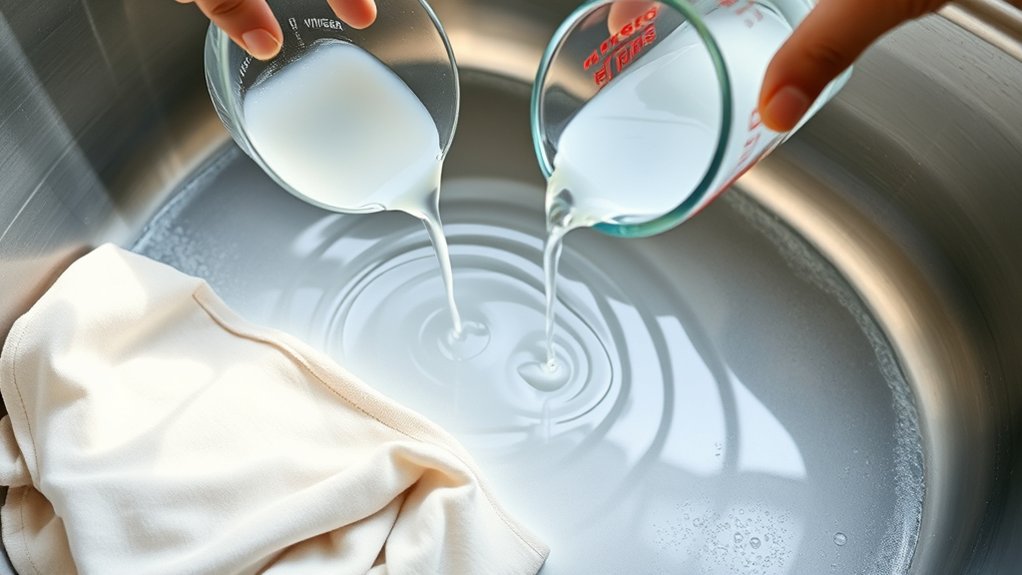
Besides adding vinegar during the rinse cycle, you can also pre-soak your laundry to tackle stubborn odors more effectively. Pre-soaking laundry in a solution of 1 cup white vinegar and warm water for 30 minutes neutralizes sweat and mildew smells.
Hot water boosts vinegar’s ability to remove odors and break down detergent buildup. Repeat soaking for really smelly items, adjusting vinegar amount as needed. Always rinse well after soaking; the vinegar smell fades during drying, leaving clothes fresh.
| Load Size | Vinegar Amount | Soak Time |
|---|---|---|
| Small | ½ cup | 30 minutes |
| Medium | 1 cup | 30 minutes |
| Large or Stubborn Odors | Up to 1 cup | 30-60 minutes |
Pre-soaking with white vinegar guarantees fresher, cleaner laundry.
Soften Fabrics By Adding Vinegar In The Rinse Cycle
Boost your laundry’s softness by adding white distilled vinegar during the rinse cycle. Vinegar naturally softens fabrics by breaking down mineral deposits and leftover detergent that can make clothes stiff.
To soften fabrics effectively, pour ½ to 1 cup of vinegar into the rinse cycle. This simple step neutralizes detergent residue, enhancing the fluffiness and feel of your clothes without using chemical softeners.
Add ½ to 1 cup of vinegar in the rinse cycle for softer, fluffier clothes without chemicals.
Plus, the vinegar’s scent disappears during drying, leaving your laundry fresh. Incorporating vinegar as a cleaning solution in the rinse cycle also helps maintain fabric longevity by preventing buildup that causes stiffness.
Using vinegar this way is a practical, eco-friendly method to keep your clothes soft and comfortable wash after wash.
Use Vinegar To Remove Sweat And Deodorant Stains From Laundry
If you notice sweat or deodorant stains on your clothes, soaking them in a mixture of vinegar and warm water can make a big difference.
Use one cup of vinegar per soaking batch and let your clothes sit for about 30 minutes before washing.
Vinegar’s acetic acid breaks down sweat stains and deodorant residues, neutralizing odors and lifting stubborn marks.
For tougher stains, try applying a baking soda paste after soaking to boost vinegar’s cleaning power.
Always test the solution on a small fabric area first to avoid damage.
This simple laundry hack not only removes stains but also helps eliminate residual soap and odors when added during the rinse cycle.
Using vinegar this way is an effective, easy method to keep your laundry fresh and clean.
How Vinegar Helps Brighten And Whiten Clothes
You can brighten and whiten your clothes by adding vinegar. It works by breaking down detergent buildup and gently lifting stains without using harsh chemicals.
The mild acidity in vinegar helps keep your fabric colors looking fresh while removing residues that make clothes look dull.
For the best results, try using vinegar in the rinse cycle or soaking heavily soiled items before washing.
Just be sure to follow safe usage guidelines to protect your fabrics.
Vinegar’s Whitening Mechanism
Many factors contribute to vinegar’s ability to brighten and whiten clothes, with its acetic acid playing a central role. Vinegar breaks down detergent residues and mineral deposits that dull fabrics, restoring their natural brightness.
It also neutralizes alkaline residues from detergent, balancing fabric pH and preventing yellowing. You can soak stained clothes in a vinegar-water solution before washing to lift stains and boost whitening.
Regular vinegar use in the rinse cycle keeps clothes looking fresh without harsh chemicals.
| Action | Effect |
|---|---|
| Breaks down detergent | Removes residue for brighter fabrics |
| Neutralizes pH | Prevents yellowing and dullness |
| Mild bleaching | Revives whites and maintains color vibrancy |
Enhancing Fabric Brightness
Although detergent helps clean your clothes, it can leave behind residue that dulls fabric colors and whites over time. Vinegar is a simple solution to restore fabric brightness by breaking down this detergent buildup.
The mild acetic acid in vinegar acts as a natural whitener, brightening white clothes without harsh chemicals and preventing fading in colored fabrics. Adding ½ to 1 cup of white distilled vinegar during the rinse cycle neutralizes leftover detergent, enhancing your clothes’ overall appearance.
Regular use of vinegar not only revives dull fabrics but also keeps your laundry fresher and more vibrant. Incorporating vinegar into your laundry routine is an easy, cost-effective way to maintain fabric brightness and extend the life of both white and colored clothes.
Safe Use Guidelines
To get the best results from vinegar in your laundry, it’s important to follow safe use guidelines. Using vinegar during the rinse cycle helps remove detergent residue, which might otherwise cause dullness.
Add 1/2 to 1 cup of vinegar per load to brighten and whiten clothes effectively without harsh chemicals. Vinegar’s mild acetic acid breaks down stains and neutralizes odors, especially when combined with hot water.
However, avoid pouring vinegar directly onto fabrics to prevent damage. Always dilute it in the rinse water.
While vinegar might seem like a strong cleaner, it’s gentle enough for regular use and helps maintain fabric brightness without fading colors.
Following these tips guarantees safe, effective cleaning while prolonging your clothes’ life and vibrancy.
Which Fabrics Should You Avoid Using Vinegar On?
You should avoid using vinegar on delicate fabrics like silk and rayon acetate because the acidity can weaken their fibers and alter their appearance.
It’s best to be cautious with elastic materials such as spandex, too, since vinegar might damage their stretchiness.
Also, try to steer clear of brightly colored or pH-sensitive fabrics to prevent any unwanted color changes.
Delicate Fabrics To Avoid
Since vinegar has a low pH, you should avoid using it on delicate fabrics like silk, rayon acetate, and spandex. It can weaken fibers and cause color changes or degradation.
These sensitive fabrics require special care, so it’s best to steer clear of vinegar to prevent damage.
You should also be cautious with cellulose-based fabrics such as cotton and linen, which can suffer harm over time.
Always check care labels before adding vinegar to your laundry, as manufacturers provide essential guidance for safe cleaning.
If you must use vinegar, dilute it and limit its use.
But with delicate fabrics, it’s safest to avoid using vinegar altogether.
Prioritizing fabric care helps keep your clothes looking their best longer.
Elastic And Spandex Risks
Although vinegar can freshen many fabrics, it poses risks to elastic materials like spandex. Vinegar’s acidity can weaken elastic fibers, causing loss of shape and elasticity over time.
To protect your clothes, keep these tips in mind:
- Check care labels carefully before using vinegar on any fabric, especially sensitive fabrics.
- Avoid vinegar on spandex and other elastic fibers to prevent damage.
- Use diluted vinegar sparingly if you must, but be cautious with synthetic blends.
- Remember that some natural fibers, like silk and rayon acetate, are also sensitive and should be treated with care.
Color-Sensitive Material Caution
When dealing with color-sensitive fabrics, you need to be extra cautious about using vinegar in your laundry.
Vinegar can alter colors on pH-sensitive fabrics like silk and rayon acetate, causing fading or discoloration.
Avoid adding vinegar to dark or bright colors as it may lead to bleeding or dulling of the hues.
Moreover, stay clear of wool and cashmere. Vinegar can weaken these protein-based fibers, damaging them over time.
To protect your garments, always test vinegar on a hidden area first to verify it won’t harm the fabric.
Don’t forget to check the care label before using vinegar, especially on delicate or vibrant fabrics.
Being mindful helps you maintain your clothes’ color and integrity safely.
Using Vinegar Safely In Front- And Top-Loading Machines
Using vinegar safely in both front- and top-loading machines requires knowing when and where to add it during the wash cycle.
To get the best results without damaging your fabrics or machine, follow these tips:
Follow these simple tips to protect your fabrics and washing machine while using vinegar safely.
- For front-loading machines, add a cup of white vinegar to the fabric softener compartment during the rinse cycle.
- In top-loading machines, pour vinegar directly into the wash drum at the start of the rinse cycle.
- Always use white distilled vinegar with about 5% acetic acid to prevent staining.
- Avoid mixing vinegar with detergent or bleach, as this can reduce cleaning efficiency and cause harmful reactions.
Don’t Mix Vinegar With Detergent Or Bleach
You shouldn’t mix vinegar with detergent or bleach because it can cause harmful chemical reactions and reduce cleaning power.
Instead, try using vinegar during the rinse cycle, separate from the detergent. This way, you avoid those risks and still get fresh-smelling laundry.
Just remember to follow these simple guidelines to keep your wash both effective and safe.
Chemical Reactions Risk
Although vinegar is a versatile laundry aid, mixing it with detergent or bleach can cause problems. You need to be aware of the chemical reactions that happen when these substances combine.
- Vinegar and bleach create toxic chlorine gas, posing serious health risks if inhaled.
- Vinegar can neutralize the active ingredients in your detergent, making it less effective.
- Mixing vinegar with detergent might reduce cleaning power, so avoid adding them together.
- Use vinegar only during the rinse cycle to prevent unwanted chemical reactions.
Always follow manufacturer instructions to protect your fabrics and washing machine. Avoid combining vinegar with bleach or detergent to keep your laundry safe and effective.
Reduced Cleaning Effectiveness
Since vinegar neutralizes the alkaline properties essential for detergents to clean effectively, mixing the two can markedly reduce your laundry’s cleanliness.
When you combine vinegar and water with laundry detergents in the same wash cycle, you cause reduced cleaning effectiveness because the vinegar counteracts the detergent’s ability to break down dirt and grime.
To avoid this, add vinegar only during the rinse cycle, after the detergent has done its job. Using about 1/2 to 1 cup of vinegar in the rinse cycle helps deodorize and soften fabrics without interfering with cleaning.
Also, never mix vinegar with bleach, as this creates harmful fumes.
Safe Vinegar Usage
To keep your laundry routine effective and safe, it’s important to use vinegar correctly. Vinegar is safe to use when added during the rinse cycle. It enhances rinsing without reducing detergent power.
To get the best results and avoid mixing vinegar with incompatible substances, follow these guidelines:
- Add vinegar during the rinse cycle only. Avoid mixing it directly with detergent.
- Never combine vinegar with chlorine bleach because this produces harmful fumes.
- For front-load washers, pour vinegar into the fabric softener compartment. For top-loaders, add it during the rinse.
- Use ½ to 1 cup of vinegar per load to prevent fabric or machine damage.
How To Remove Vinegar Smell From Laundry
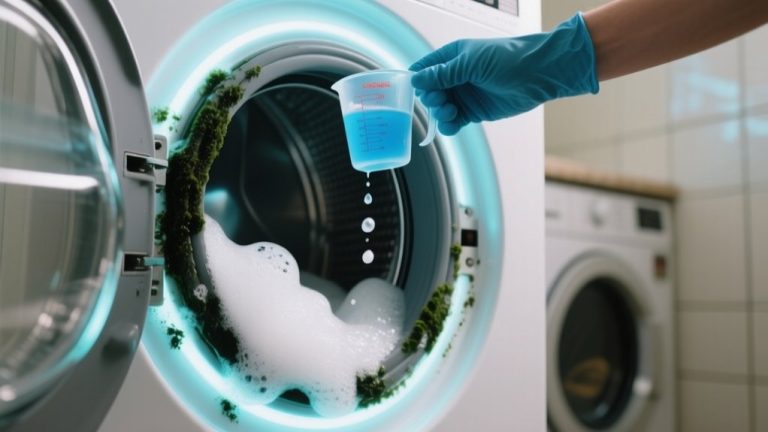
If you notice a vinegar smell lingering on your laundry, running an extra rinse cycle with plain water can help wash away the odor. This additional rinse cycle removes most of the vinegar smell, making your clothes fresher.
To further neutralize the scent, add a bit of baking soda during the rinse.
After washing, drying your clothes outside in fresh air helps dissipate any remaining vinegar smell more effectively than a dryer.
If you prefer machine drying, using fabric softener or dryer sheets can mask residual odors.
Should the vinegar scent persist, simply run a second wash with a small amount of detergent to fully remove it.
These steps guarantee your laundry stays clean and free from any unwanted vinegar smell.
Frequently Asked Questions
Can Vinegar Damage Washing Machine Parts Over Time?
Yes, vinegar can damage washing machine parts over time if you use it excessively. Its acidity may corrode metal components, especially in older machines, and cause rubber seals and hoses to degrade, leading to leaks.
To protect your machine, use vinegar sparingly. Add it during the rinse cycle only, and never mix it with detergent.
This way, you’ll enjoy its benefits without risking costly repairs or reducing your washer’s lifespan.
Is It Safe to Use Vinegar With Fabric Softeners?
You might think mixing vinegar with fabric softeners is a smart combo, but it’s not safe. When you use them together, vinegar can neutralize the softener’s effects, leaving your clothes less soft and smelling off.
Instead, pick one: either vinegar as a natural softener or commercial fabric softeners.
If you want to use vinegar, add it separately during the rinse cycle for the best results without any issues.
Will Vinegar Remove Mold or Mildew From Clothes?
Yes, vinegar can remove mold or mildew from your clothes. Soak the affected garments in a mixture of one cup vinegar and warm water for about 30 minutes before washing. The acetic acid helps inhibit mold growth and neutralizes odors.
Adding half a cup of vinegar during the rinse cycle further freshens your laundry.
Just be sure to check care labels, as vinegar may weaken some fabrics.
Can Vinegar Help With Color Fading in Clothes?
Yes, vinegar can help with color fading in clothes. When you add half a cup during the rinse cycle, it stabilizes dyes by neutralizing alkaline detergent residues, keeping colors vibrant longer.
Just don’t overuse it, since too much vinegar might weaken fabric fibers.
Always check your garment’s care label first to avoid damaging sensitive dyes. Using vinegar correctly can be a simple, effective way to maintain your clothes’ brightness.
Does Vinegar Affect the Lifespan of Elastic or Spandex Fabrics?
Yes, vinegar can affect the lifespan of elastic or spandex fabrics. Its acidity can weaken elastic fibers over time, causing them to lose stretch and durability.
To protect your clothes, don’t use vinegar regularly on spandex-heavy items. Instead, dilute it and limit its use to occasional rinses.
This way, you’ll maintain elasticity without sacrificing the benefits vinegar offers in laundry care.
Conclusion
Adding vinegar to your laundry can boost freshness and softness when used correctly. For example, Sarah added half a cup of vinegar during the rinse cycle to soften her workout clothes and remove stubborn odors.
Just remember not to mix it with detergent or bleach, and avoid delicate fabrics like silk. By timing it right and using the right amount, you’ll get cleaner, fresher clothes without any vinegar smell lingering behind.