Where To Put Laundry Pods – Buying Guide
You should place laundry pods directly in the empty drum of your washing machine for the best results. For front-loaders, put the pod at the back. For top-loaders, fill the water first, then add the pod.
Avoid using the detergent drawer because it can cause pods to burst prematurely. Use the right number of pods based on load size, and don’t overload to prevent residue.
Following these steps guarantees maximum cleaning. Explore further for tips on storage, load sizes, and machine types.
Key Takeaways
- Place laundry pods directly in the empty washer drum before adding clothes for optimal dissolution.
- Avoid using the detergent drawer to prevent pods from bursting prematurely.
- Load clothes on top of the pod and position pods at the back for front-loaders or after filling water for top-loaders.
- Use the correct number of pods based on load size: 1 pod for small, 2 for standard, and 3 for large loads.
- Store pods in a cool, dry place, resealing the container tightly to maintain freshness and efficacy.
Where To Put Laundry Pods In Front-Loading Machines
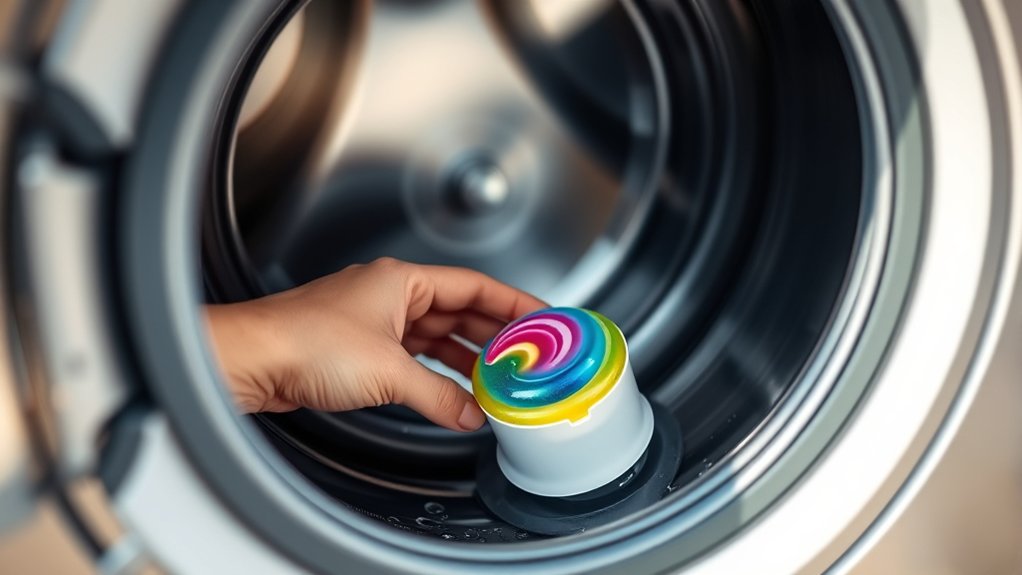
Wondering where to put laundry pods in your front-loading machine? You should place Tide PODS® directly into the empty drum rather than the detergent drawer to guarantee they dissolve properly.
After adding the pod, load your laundry on top to maintain effectiveness throughout the wash cycle.
Be careful not to overload the machine. Use the handshake trick to gauge your load size and allow the pod to dissolve fully.
Front-loading machines use a tumbling motion that helps the pod break down efficiently, so selecting the right wash cycle for your fabric type is essential.
Always seal the pod container tightly after use and store it in a cool, dry place to preserve its integrity and performance for future loads.
Where To Put Laundry Pods In Top-Loading Machines
Just like with front-loading machines, placing laundry pods correctly in top-loading washers guarantees they dissolve fully and clean effectively. For ideal dissolution, place the pods directly at the bottom of the empty drum before adding your laundry.
Avoid using the detergent dispenser because pods are designed to dissolve directly in water, not be dispensed automatically.
- Place laundry pods in the empty drum’s bottom for best results.
- Use two pods for standard loads (6-10 pounds) and adjust based on load size to prevent residue buildup.
- Avoid overloading to guarantee proper water circulation, which helps pods dissolve completely.
- Choose the appropriate wash cycle for your fabric to maximize cleaning effectiveness.
Following these steps helps you get the most from your laundry pods in a top-loading machine.
Why You Should Avoid Using The Detergent Drawer For Laundry Pods
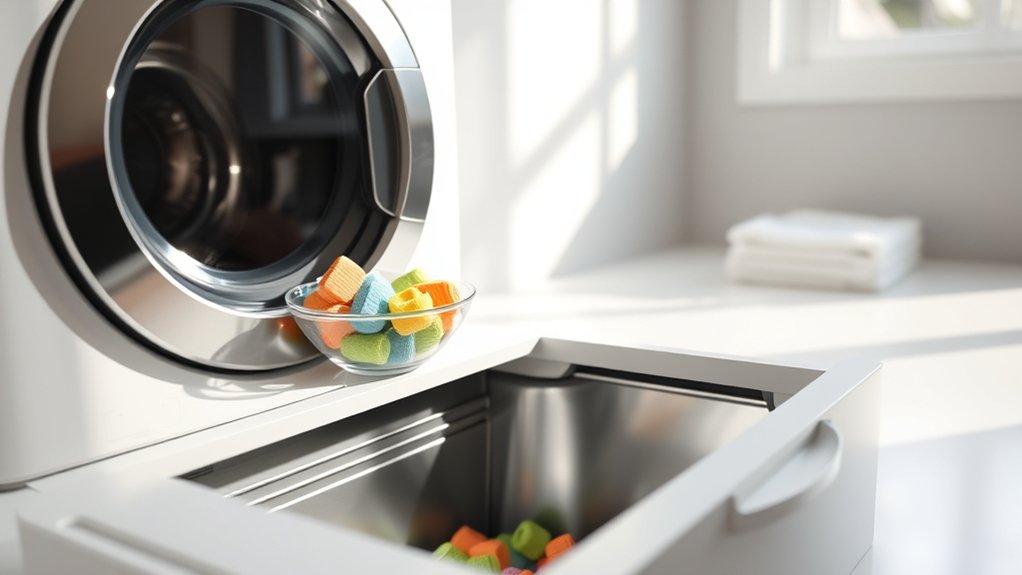
Although it might seem convenient, placing laundry pods in the detergent drawer can cause more harm than good. Laundry pods are designed to dissolve directly in water during the wash cycle, and placing them in the detergent drawer can prevent proper dissolution.
Exposure to moisture in the drawer may cause pods to burst prematurely, leaving detergent residue on clothes and reducing effective cleaning. Furthermore, overstuffing the detergent drawer with pods can lead to clogs, which negatively impact your washing machine’s performance and longevity.
Instead, place pods directly in the drum, where they’re fully submerged and can move freely. This guarantees better distribution and maximizes cleaning efficiency, helping you get the best results from your laundry pods and maintaining your washing machine’s ideal function.
How Many Laundry Pods To Use Per Load
Using the right number of laundry pods per load is essential to getting clean clothes without wasting detergent or damaging your washing machine.
Knowing how many laundry pods to use guarantees effective cleaning and avoids residue on clothes caused by overusing pods. Since pods contain concentrated detergent, precise dosing is key for peak cleaning performance.
Follow these guidelines:
- For small loads (under 6 pounds), use 1 pod.
- For standard loads (6-10 pounds), use 2 pods.
- For large loads (over 11 pounds), use 3 pods.
- Avoid adding extra pods beyond recommendations to prevent buildup and residue.
How Overloading Affects Laundry Pod Dissolving And Cleaning
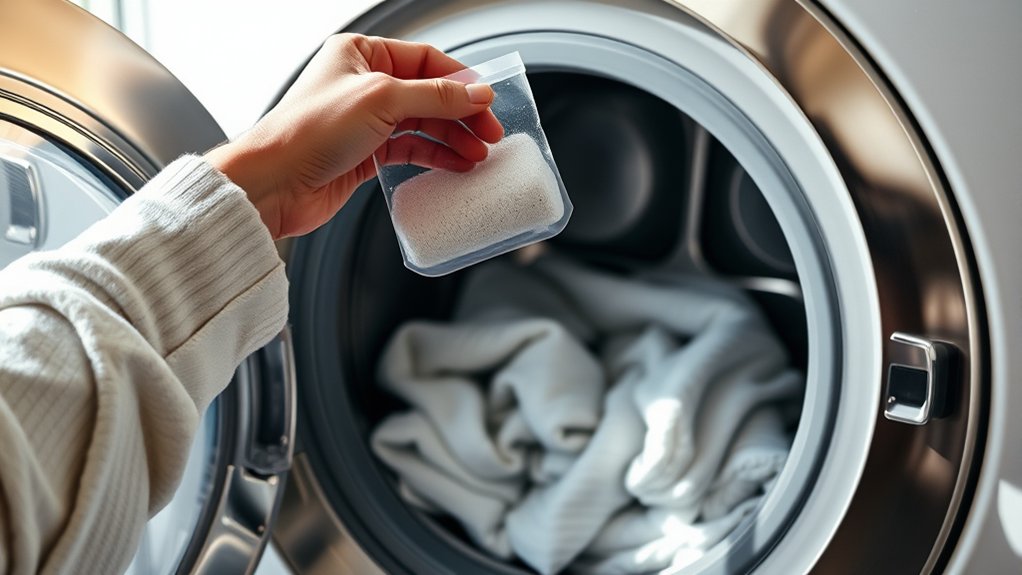
When you overload your washing machine, laundry pods mightn’t fully dissolve. This can leave detergent residue on your clothes and inside the drum.
That happens because crowded loads limit water circulation, which stops the pods from releasing their cleaning agents properly.
Pod Dissolving Challenges
If you overload your washing machine, you’ll restrict water flow and prevent laundry pods from dissolving completely. This often leaves detergent residue on your clothes.
Overloading reduces circulation inside the drum, which stops pods from fully dissolving and spreading detergent evenly.
To avoid these pod dissolving challenges, keep these points in mind:
- Don’t exceed the recommended load size to make sure pods stay submerged and dissolve efficiently.
- Place laundry pods directly in the drum for better water contact and circulation.
- Avoid cramming clothes, since limited movement keeps pods from releasing detergent effectively.
- Use the correct number of pods per load to maintain cleaning power and prevent detergent residue.
Following these steps helps you get the most from your laundry pods and washing machine.
Impact On Cleaning Quality
Although laundry pods offer convenience, overloading your washing machine can seriously undermine their effectiveness. When you overload the washer beyond its capacity, water circulation suffers, preventing laundry pods from achieving proper dissolution.
This incomplete dissolving leaves residues on clothes and reduces cleaning effectiveness. To maintain peak cleaning, you need to use the right number of pods based on load size and avoid detergent buildup inside the machine.
Ensuring a balanced load with enough space for water movement allows the detergent to penetrate fabrics properly, improving stain removal. By avoiding overloading, you promote thorough pod dissolution and prevent residues on clothes, ensuring your laundry pods deliver the best results every wash.
Machine Overload Consequences
Since overloading your washing machine restricts water circulation, laundry pods often fail to dissolve completely. This leaves detergent residues on your clothes and inside the machine.
Overloading also impacts cleaning performance by limiting proper movement and water penetration, which are essential for ideal cleaning.
To avoid undissolved detergent and guarantee an effective wash cycle, consider these points:
- Follow recommended load sizes: 1 pod for small loads, 2 for standard, 3 for large.
- Avoid excessive load sizes that hinder water circulation.
- Allow enough space for proper movement within the drum.
- Monitor detergent residues and adjust loads accordingly.
Tips To Prevent Laundry Pod Residue And Stains
Three simple steps can help you prevent laundry pod residue and stains, ensuring your clothes come out clean every time.
First, always place laundry pods in the empty washer drum before adding clothes. This lets them dissolve properly without obstruction.
Second, avoid overloading the washer. Overloading prevents pods from dispersing fully, which increases pod residue on fabrics.
Third, use the right number of pods based on load size: one for small loads, two for standard loads, and three for larger loads.
Running a full wash cycle is also essential since a shorter cycle mightn’t give pods enough time to dissolve completely.
Following these steps will enhance dissolution, minimize residue, and keep your laundry fresh and spotless.
Can Laundry Pods Dissolve Properly In Cold Water?
While you might worry that cold water could prevent laundry pods from dissolving fully, they actually work well at temperatures as low as 60°F.
To guarantee peak performance, focus on these key points:
To guarantee peak laundry results, focus on key tips for proper pod placement and wash settings.
- Place laundry pods directly in the washer drum, not on top of clothes, for proper placement and complete detergent dissolution.
- Avoid overloading your machine, as restricted water circulation can hinder pods from fully dissolving.
- Use a wash cycle long enough to allow pods to dissolve completely in cold water.
- Remember, although cold water saves energy, warm water can enhance dissolution in colder months.
How To Store Laundry Pods To Keep Them Fresh And Effective
To keep your laundry pods fresh and effective, store them in a cool, dry place away from moisture and heat sources. Moisture exposure can cause the pods to stick together or lose their shape, reducing their cleaning power.
Always reseal the container tightly after each use to keep fresh air out and maintain peak performance. Avoid placing the pods near heat sources, as warmth can cause premature dissolving.
Confirm the storage spot is childproof, since laundry pods are colorful and tempting to children, posing ingestion risks.
For best results, use the pods within 15 months, as they may lose efficacy over time.
Choosing The Right Laundry Pod For Your Washing Machine
Properly storing your laundry pods helps maintain their effectiveness, but selecting the right pod for your washing machine guarantees excellent cleaning results.
Proper storage and choosing the right pods ensure your laundry stays fresh and thoroughly cleaned every time.
When choosing detergent pods, consider your washer type and load size to avoid cleaning issues.
- Use laundry pods marked “HE” if you have a high-efficiency washer to guarantee peak performance.
- Always place detergent pods directly in the drum before adding clothes for proper dissolution.
- Adjust pod quantity by load size: 1 pod for small loads, 2 for standard loads, and 3 for large loads.
- Check packaging for compatibility with your washer model and specific formulations to prevent cleaning issues.
Best Practices For Using Laundry Pods Every Time
Using laundry pods correctly every time guarantees your clothes come out clean and fresh without residue or damage. Always place pods directly in the empty washer drum before adding clothes to guarantee ideal dissolution.
For top-loaders, fill water first; for front-loaders, position pods at the back. Avoid overloading the washer to allow proper circulation and prevent residue buildup.
| Load Size | Pods Needed | Notes |
|---|---|---|
| Small loads | 1 | Less than 6 pounds |
| Standard | 2 | 6-10 pounds |
| Large loads | Up to 3 | 11+ pounds, avoid overloading |
| Wash cycle | Any | Cold water recommended |
Select the appropriate wash cycle based on fabric type. Pods dissolve well in cold water, saving energy without sacrificing cleaning power.
Frequently Asked Questions
Are Laundry Pods Safe for Septic Systems?
Yes, laundry pods are safe for septic systems when you use them as directed. They dissolve completely in water, preventing harmful buildup that could disrupt your septic function.
Just place the pod properly in the washer drum to guarantee full dissolution. Using them in moderation helps maintain your system’s health.
Remember to perform regular septic maintenance, but with proper use, laundry pods won’t cause extra risk to your septic system.
Can Laundry Pods Be Used for Hand Washing Clothes?
Using laundry pods for hand washing isn’t ideal. They’re like snowflakes meant to melt in a washing machine’s swirl, not your hands’ gentle touch.
If you must, dissolve the pod completely in water before adding clothes to avoid residue.
However, pods often deliver too much detergent for small loads. You’re better off using liquid detergent, which lets you measure just the right amount, ensuring your clothes get clean without leftover buildup.
What Should I Do if a Laundry Pod Bursts Prematurely?
If a laundry pod bursts prematurely, immediately remove the affected clothes to avoid stains.
Wash them separately using warm water.
Check your washer for any leftover pod residue and run a rinse cycle if needed to clean the machine.
Avoid overloading the washer next time, and make sure to place pods correctly in the drum.
Always handle pods with dry hands to prevent early activation and bursting.
Are Laundry Pods Environmentally Friendly?
Think of laundry pods as tiny eco-warriors. Many are biodegradable and use plant-based ingredients to cut down environmental harm.
You’ll appreciate that their concentrated formulas mean less waste and chemical runoff.
Plus, pods like Tide PODS® dissolve in cold water, saving energy.
Just remember to store and dispose of them properly to keep those eco-friendly benefits intact and protect waterways from unnecessary pollution.
How Do Laundry Pods Compare to Liquid Detergent in Cleaning Power?
Laundry pods often deliver cleaning power equal to or better than liquid detergent because they contain concentrated ingredients and pre-measured doses.
You’ll get consistent results without worrying about spills or overuse.
However, pods mightn’t dissolve fully in cold water if not placed correctly, which can affect cleaning.
Liquid detergent dissolves more easily, especially in cold water, but you have to measure it yourself.
Both work well, but placement and water temperature matter for pods.
Conclusion
Think of laundry pods like little power-packed rockets. If you don’t place them right, they won’t launch properly. One user shared how moving their pod from the drawer to the drum cut wash time by 20%, leaving clothes fresher and cleaner.
By following the tips here, using the right amount, avoiding overloading, and storing pods correctly, you’ll guarantee each wash is a smooth, efficient mission every time. Your laundry routine deserves that kind of precision.