Are Laundry Pods Better Than Liquid – The Real Answer
Laundry pods offer precise dosing and convenience, making them great if you want quick, mess-free laundry. However, liquid detergent usually cleans tougher stains better and lets you adjust the amount based on load size, which can save money over time.
Pods may struggle in cold water and produce more packaging waste, while liquids often have a smaller environmental footprint. If you want to weigh cost, cleaning power, and safety side by side, there’s more to reflect on beyond the basics.
Key Takeaways
- Laundry pods offer convenience and precise dosing, reducing spills and detergent waste compared to liquid detergent.
- Liquid detergent generally provides better stain removal and allows dosage customization for different soil levels.
- Pods have a higher cost per load and may leave residue, especially in cold water washes.
- Liquid detergent often has a lower environmental impact with less plastic waste and better cold water performance.
- Pods pose safety risks for children due to concentrated chemicals and require careful storage.
How Laundry Pods Work: A Quick Overview
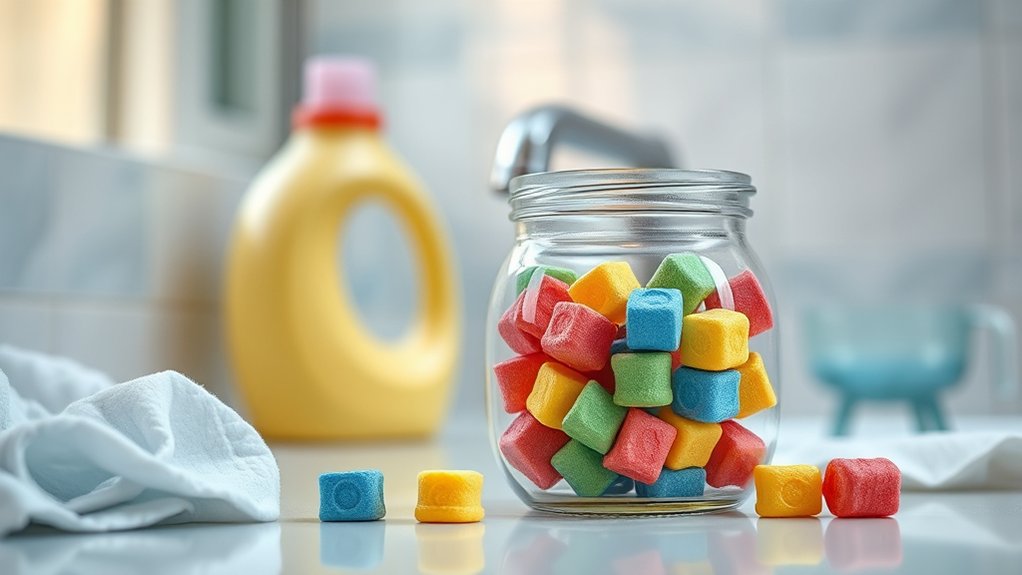
Although laundry pods might seem like a simple convenience, they function through a precisely engineered design: each pod contains a pre-measured dose of detergent sealed within a water-soluble PVA film that dissolves during the wash cycle, releasing concentrated cleaning agents.
When you use laundry pods, you benefit from their consistent cleaning power without the hassle of measuring liquid detergent. However, while these pods are formulated to dissolve in cold water, some brands may struggle, potentially leaving residue on clothes.
Laundry pods offer consistent cleaning without measuring, though some brands may leave residue in cold water.
Compared to traditional detergents, pods reduce the risk of spills and overuse, making them more user-friendly. Their surfactants and enzymes effectively break down stains across various fabrics, though synthetic additives may vary.
Understanding these mechanics helps you choose the right option for your laundry needs.
What Is Liquid Laundry Detergent?
Liquid laundry detergent provides a versatile and widely used cleaning option that lets you tailor the amount of detergent to each load, offering control over wash strength.
Unlike pre-measured pods, liquid laundry detergent allows you to adjust quantities based on soil level and fabric type, which can enhance cleaning performance but also risks overuse and residue buildup.
Many detergent brands offer various formulas and scents, catering to different preferences and laundry needs.
Liquid detergents typically dissolve quickly in both cold and hot water, maintaining effectiveness across wash conditions.
However, their bulky plastic packaging can occupy significant storage space and raise environmental concerns.
Despite newer alternatives, liquid detergents remain favored for tackling tough stains and handling diverse fabrics, making them a reliable choice for many households.
Cost Per Load: Pods vs Liquid Detergent

When you compare the cost per load, pods generally come with a higher upfront price but reduce waste by providing a precise dose every time.
Liquid detergent often costs less per load, especially when bought in bulk, but you risk over-pouring, which inflates expenses.
Liquid detergent can be cheaper per load, but over-pouring may increase your laundry costs.
Laundry detergent pods offer convenience and consistency, preventing overuse, yet their fixed dose may not suit all load sizes. Sometimes this leads to higher overall costs.
Furthermore, if you buy liquid detergent online, shipping fees can increase your cost per load, while pods bought in-store avoid these extra charges.
Understanding these factors helps you balance convenience, pricing, and usage.
Which Cleans Better: Pods or Liquid?
Since you want the best cleaning results, it’s important to evaluate how detergent types perform under different conditions.
When comparing laundry pods vs liquid, liquid detergents typically offer superior cleaning power, especially for tough stains. You can apply liquid directly to spots for pretreatment, something pods don’t allow.
Pods contain concentrated agents that work well on various fabrics and water temperatures, but their effectiveness can drop if they fail to dissolve fully in cold water.
Liquids dissolve quickly and let you adjust dosage based on load size, improving efficiency.
However, some users report that pods sometimes leave residue on clothing, particularly in older machines, which can affect comfort and cleanliness.
Convenience: Laundry Pods vs Liquid Detergent
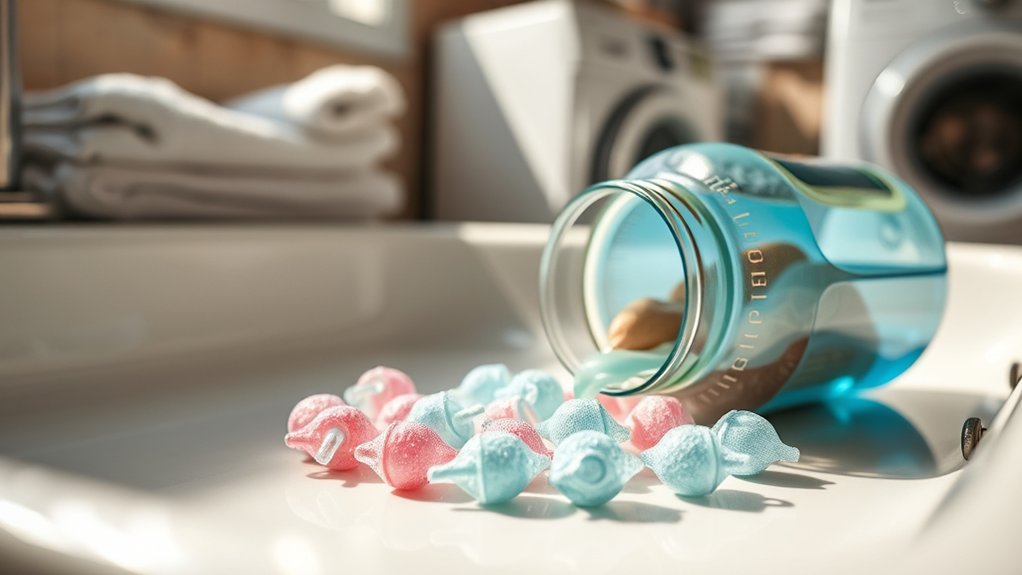
Choosing between laundry pods and liquid detergent also comes down to convenience, which can greatly impact your laundry routine. Pods offer ease of use with their no-measure, mess-free design. They’re perfect if you want a quick, consistent dose that delivers a powerful clean without guesswork. Their compact size also makes storage and transport simpler.
On the other hand, liquid detergent provides flexibility by allowing you to customize the amount based on load size and soil level, which pods can’t match. However, liquid can cause spills and residue buildup if overused.
Keep in mind, some users report pods may struggle to dissolve fully in cold water or older machines, whereas liquid detergent generally dissolves well under various conditions, maintaining consistent cleaning power.
Ultimately, convenience depends on your specific needs and washing habits.
Environmental Impact: Pods vs Natural Liquids
Although laundry pods offer convenience, their environmental impact raises important concerns compared to natural liquid detergents like Bio-D. When weighing detergent pods vs natural liquids, you’ll find pods contain synthetic surfactants and preservatives that can harm aquatic life, whereas Bio-D uses biodegradable ingredients, making it better for the environment.
Pods’ concentrated form increases risks from spills, creating more waste, while liquids let you adjust amounts, reducing excess.
Moreover, pods often don’t dissolve well in cold water, leaving residue that clogs pipes, but liquid detergents dissolve efficiently even in cold cycles.
Choosing natural liquids like Bio-D also cuts plastic waste through refill options, supporting sustainability.
To conclude, natural liquid detergents generally offer a cleaner, more eco-friendly laundry choice than detergent pods.
Safety Concerns: Pods vs Liquid Detergent
When you consider safety, laundry pods pose distinct risks compared to liquid detergents. Their bright colors and small size attract children, leading to thousands of accidental ingestion cases with serious health consequences. The concentrated chemicals in pods can also cause skin sensitivities and allergic reactions due to synthetic coatings and surfactants.
In contrast, many liquid detergents, like Bio-D, are formulated for sensitive skin and contain fewer harsh preservatives. Furthermore, liquid detergent offers flexibility in dosing, reducing overuse risks common with pre-measured pods.
Pods may also leave residues in washing machines, potentially clogging filters and pipes, creating maintenance issues not typical with liquids.
What’s Inside: Ingredients and Skin Sensitivity
Since laundry detergents come into direct contact with your skin, understanding their ingredients is essential for minimizing irritation and allergic reactions.
Laundry pods often contain complex chemicals, including surfactants and preservatives, which can trigger skin sensitivity and allergic responses. Their synthetic coatings may worsen these effects, especially if residue remains after washing.
Laundry pods contain chemicals and synthetic coatings that can increase skin sensitivity and allergic reactions if residues remain.
In contrast, hypoallergenic liquid detergents, like those made from 100% naturally derived ingredients without synthetic dyes, offer a gentler alternative. These liquids reduce the risk of irritation while maintaining cleaning power.
If you have sensitive skin, choosing a hypoallergenic laundry liquid can help avoid the harsher ingredients found in many pods, making it a safer and more skin-friendly option for your laundry routine.
Storage and Use: Pods vs Liquid Detergent
When it comes to storage, pods definitely take up less space and are easier to carry than those bulky liquid detergent jugs.
Plus, pods offer a mess-free, pre-measured dose, so you don’t have to worry about spills or measuring each time.
On the other hand, liquid detergent lets you adjust the amount based on what your laundry needs.
So if you’ve got a smaller load or really dirty clothes, you can use just the right amount.
All in all, if you’re thinking about portability and convenience, pods are simpler to handle.
But if you want more flexibility in how much detergent you use, liquid detergent has the edge.
Storage Space Requirements
Laundry pods take up far less space than liquid detergent jugs, making them a smart choice if you have limited storage. Their compact size means you can store several pods in a small container without worrying about bulky packaging.
In contrast, liquid detergent is usually packaged in large, heavy plastic jugs that demand more cabinet space and can be cumbersome to handle. This difference in storage space requirements gives pods a huge advantage, especially in small apartments or shared laundry rooms.
Moreover, pods reduce the risk of spills and messes often associated with liquid detergent, which can take up even more cleanup space. However, you should store pods carefully to prevent accidental ingestion, particularly if children are around.
Ease Of Measurement
Although both laundry pods and liquid detergent serve the same purpose, they differ significantly in ease of measurement. Laundry pods offer a clear advantage since each pod contains a pre-measured dose, eliminating guesswork and preventing overuse.
You won’t need measuring cups, and the water-soluble film prevents mess during use. In contrast, liquid detergent requires careful measuring to avoid spills and excess detergent, which can waste product and create residue on containers.
However, liquid detergent gives you the flexibility to adjust the amount based on load size or soil level, something fixed-dose pods can’t provide.
Keep in mind, some users find pods may not dissolve fully in cold water, potentially leaving residue, whereas liquid detergent generally dissolves more reliably.
Portability And Convenience
Since space and ease of use matter, pods offer a clear advantage by being compact and easy to store, making them ideal for small spaces or travel. Their portability means you can stash them in tight cabinets or take them on the go without hassle.
Pods also bring convenience by eliminating the need to measure detergent; you simply toss one into the washing machine, reducing spills and mess. In contrast, liquid detergent jugs take up more room and require measuring, which can be less convenient.
However, liquid detergent lets you adjust the amount based on your load size or soil level, offering dosage flexibility.
Keep in mind, pods may not dissolve fully in cold water, especially in older washing machines, which can affect cleaning performance and convenience.
Choosing Between Laundry Pods and Liquid Detergent
When deciding between pods and liquid detergent, you’ll want to weigh convenience against flexibility and cost.
Laundry pods offer pre-measured doses, making them easy to use, but they mightn’t dissolve fully in cold water, sometimes leaving residue.
Liquid detergent gives you control over the amount you use, ideal for treating stains or heavily soiled items. Pods tend to be pricier per load due to packaging, while liquid detergent bought in bulk often saves money.
Environmentally, liquid detergent usually has a smaller carbon footprint and generates less plastic waste. Moreover, liquid detergent can help you save energy by performing well in cold water cycles, unlike some pods.
Your choice depends on whether you prioritize ease, cost efficiency, or environmental impact.
Frequently Asked Questions
Can Laundry Pods Be Used for Hand Washing Clothes?
You can use laundry pods for hand washing, but they’re not ideal. Pods are highly concentrated and may not dissolve fully in small water amounts, leaving residue on your clothes.
Plus, their fixed dosing makes it hard to adjust the detergent amount.
Liquid detergent works better because it dissolves easily and lets you control how much you use.
How Should I Dispose of Empty Laundry Pod Containers?
You should dispose of empty laundry pod containers by first checking your local recycling guidelines, as not all plastics are accepted.
Rinse the container thoroughly to avoid contamination, then place it in your curbside recycling bin if allowed.
If recycling isn’t an option, consider repurposing the container for storage or crafts.
Some brands offer take-back programs, so visit the manufacturer’s website to explore eco-friendly disposal alternatives.
Do Laundry Pods Work Well With High-Efficiency Washing Machines?
Yes, laundry pods can work well with high-efficiency (HE) washing machines if you place them directly in the drum, not the dispenser.
Since HE machines use less water, pods designed for HE washers dissolve more effectively.
You might find some brands don’t fully dissolve on quick or cold cycles, so using warmer water helps.
Are There Any Allergens Commonly Found in Liquid Detergents?
Allergens in liquid detergents can hit your skin like unexpected rain on a sunny day.
You’ll often find fragrances that trigger sensitivities, sodium lauryl sulfate causing irritation, and enzymes that may provoke allergic reactions.
Preservatives like methylisothiazolinone can also cause dermatitis.
Compared to pods, which sometimes use similar ingredients, liquid detergents usually have more allergens.
Always check labels carefully and consider hypoallergenic versions to protect your skin from unwanted reactions.
Can Laundry Pods Cause Damage to Certain Fabrics Over Time?
Yes, laundry pods can cause damage to certain fabrics over time if you’re not careful. Their concentrated chemicals may fade delicate materials like silk or wool, especially if you don’t follow instructions closely.
Unlike liquid detergents, pods sometimes leave residue in cold water or older machines, which can roughen fibers.
If you want to protect your garments, consider fabric type and washing conditions before choosing pods.
Conclusion
When deciding between laundry pods and liquid detergent, consider that 85% of users find pods more convenient thanks to their pre-measured doses. However, liquid detergent offers more control over the amount you use, which can save money per load.
Both clean effectively, but pods pose higher safety risks, especially around children. Ultimately, your choice depends on your priorities: convenience and simplicity with pods or cost-effectiveness and flexibility with liquid detergent.