Does Lysol Laundry Sanitizer Kill Fungus – Straight Answer
You can trust Lysol Laundry Sanitizer to kill 99.9% of bacteria and many fungi during the rinse cycle, including some fungal spores. However, it doesn’t fully eliminate all fungal pathogens, such as dermatophytes known to cause skin infections.
Using it alone won’t guarantee complete fungal control, so combining it with high-temperature washing and antifungal treatments is essential. If you want to understand its effectiveness limits and best practices for fungal hygiene, there’s more to explore.
Key Takeaways
- Lysol Laundry Sanitizer kills 99.9% of bacteria and fungi during the rinse cycle, improving laundry hygiene.
- It does not specifically guarantee effectiveness against dermatophyte fungi like Trichophyton species.
- Using Lysol alone may not fully eliminate fungal spores on fabrics or contaminated items.
- Combining Lysol with hot water washing and antifungal sprays enhances fungal control.
- For thorough fungal elimination, Lysol should be part of a broader, multifaceted cleaning strategy.
How Lysol Laundry Sanitizer Kills Fungus and Bacteria
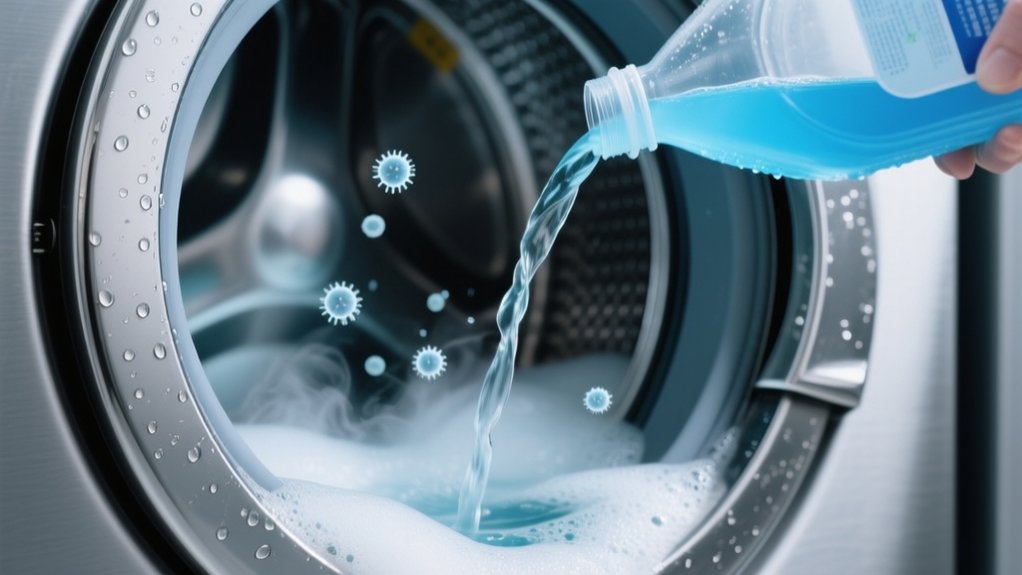
Lysol Laundry Sanitizer kills 99.9% of bacteria and fungi by targeting them during the rinse cycle with a specialized formula that breaks down microbial cells at the molecular level. When you add Lysol Laundry Sanitizer, it effectively sanitizes your laundry by disrupting the structural integrity of bacteria and fungus, ensuring thorough elimination.
Its advanced formula incorporates Malodor Control Technology, which specifically neutralizes odor-causing microbes thriving on synthetic fabrics common in activewear. This technology enhances the sanitizer’s ability to address persistent fungal contaminants and associated malodors.
Compatible with both standard and HE machines, Lysol Laundry Sanitizer maintains efficacy even in cold water, providing a scientifically validated method to kill 99.9% of bacteria and fungus. Using it regularly improves freshness and hygiene, especially for items prone to fungal growth.
Fungal Types Targeted by Lysol Laundry Sanitizer
You should know that Lysol Laundry Sanitizer doesn’t specifically claim to be effective against dermatophytes, which are common fungal agents found in laundry.
Its ability to kill fungi isn’t entirely clear, especially when it comes to fungal spores on synthetic fabrics.
Dermatophytes And Laundry
Although Lysol Laundry Sanitizer effectively kills 99.9% of bacteria, its ability to target dermatophytes, the fungi responsible for athlete’s foot and ringworm, isn’t explicitly confirmed.
Dermatophytes such as Trichophyton rubrum and Trichophyton mentagrophytes can persist on fabrics including clothing, towels, and footwear, creating a reservoir for reinfection and transmission.
When you sanitize fabrics with Lysol Laundry Sanitizer, you reduce bacterial load, but evidence doesn’t confirm its fungicidal action against these dermatophytes.
Given their resilience, relying solely on Lysol Laundry Sanitizer may be insufficient to eliminate fungi completely.
As a result, while using Lysol Laundry Sanitizer supports hygiene by lowering microbial presence, incorporating targeted antifungal measures is essential for thorough control of dermatophytes on fabrics and preventing fungal spread.
Fungicidal Spectrum Coverage
While Lysol Laundry Sanitizer effectively eliminates 99.9% of bacteria, its fungicidal spectrum doesn’t extend completely to dermatophytes or other fungal pathogens.
This Laundry Sanitizer primarily targets bacterial strains such as Staphylococcus aureus and Klebsiella pneumonia, ensuring your laundry is sanitized from these microbes.
However, its ability to kill fungus remains limited. Studies indicate that fungi responsible for conditions like tinea pedis aren’t reliably eradicated by standard laundry sanitizers, including Lysol.
Consequently, while your fabrics may be sanitized against bacteria, fungal spores may persist.
For extensive fungal control, you’ll need additional sanitization methods or products specifically formulated and labeled to kill a broader range of fungal organisms.
Trusting Lysol Laundry Sanitizer alone for fungus elimination may not provide the thorough sanitization you require.
Synthetic Fabric Efficacy
Lysol Laundry Sanitizer targets several fungi commonly found on synthetic fabrics, including dermatophytes such as Trichophyton rubrum and Trichophyton mentagrophytes. Its formulation effectively kills 99.9% of bacteria that coexist with fungal contaminants on synthetic textiles like activewear.
Operating efficiently in cold water, Lysol Laundry Sanitizer suits synthetic fabrics prone to harboring fungi. The product’s advanced Malodor Control Technology disrupts odor-causing bacteria and fungal spores at the molecular level, reducing malodors associated with fungal growth.
Regular application minimizes fungal reinfection risks by eliminating persistent contaminants embedded in synthetic fibers.
Consequently, Lysol Laundry Sanitizer provides a precise, evidence-based solution for maintaining hygiene and controlling fungal contaminants in synthetic fabrics, ensuring both sanitization and odor control in your laundry routine.
Why Sanitizing Laundry Helps Stop Fungus From Coming Back
Because fungal spores can survive on fabrics and surfaces for extended periods, you need to sanitize your laundry regularly to prevent reinfection.
Using Lysol Laundry Sanitizer effectively eliminates up to 99.9% of bacteria and fungi, disrupting the persistent presence of dermatophyte arthroconidia responsible for fungal infections like tinea pedis.
This sanitization occurs during the rinse cycle, ensuring fungal spores clinging to fabrics such as socks and towels are neutralized.
By integrating Lysol Laundry Sanitizer into your hygiene routine, you minimize fungal load on textiles, reducing the risk of reinfection and interrupting fungal transmission.
Consistent sanitization complements medical treatments and helps manage antifungal resistance by limiting environmental reservoirs of fungal organisms.
Consequently, sanitizing laundry is a critical step in controlling and preventing recurrent fungal infections.
Using Lysol Laundry Sanitizer Safely on Fabrics to Fight Fungus
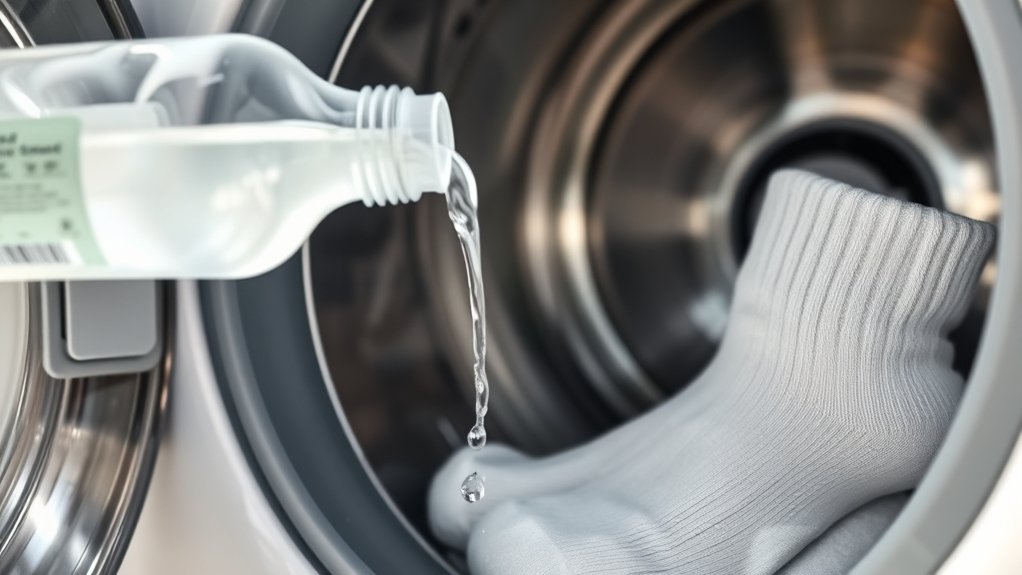
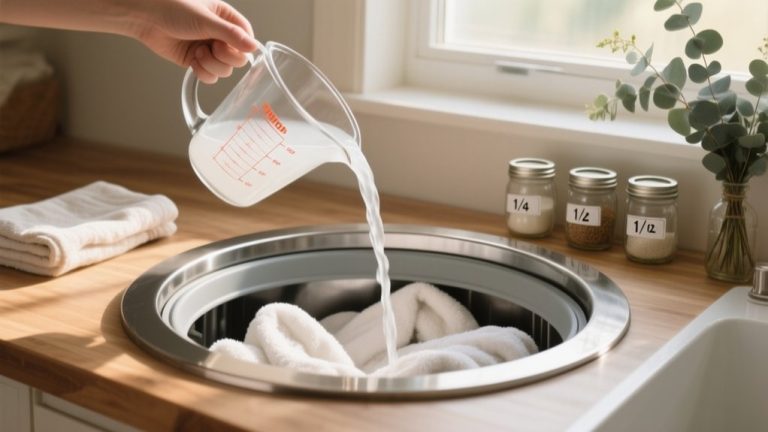
Regularly sanitizing your laundry reduces fungal spores on fabrics, but guaranteeing safety and effectiveness when using Lysol Laundry Sanitizer is equally important. You should add 2 capfuls during the rinse cycle or fabric softener compartment to maximize contact time and sanitize efficiently.
Though not specifically antifungal, it reduces bacteria that support fungi growth, improving fabric hygiene safely on colors and whites.
| Step | Action | Purpose |
|---|---|---|
| Add Sanitizer | 2 capfuls in rinse cycle | Guarantees contact with fabrics |
| Fabric Type | Suitable for colors & whites | Safe on varied textiles |
| Target | Bacteria & odor-causing agents | Limits environment favorable to fungi |
| Frequency | Regular use | Reduces fungal spores over time |
Use Lysol Laundry Sanitizer precisely to fight fungi while preserving fabric integrity.
How to Sanitize Laundry Against Fungus
To effectively remove fungus from your laundry, just add two capfuls of Lysol Laundry Sanitizer to the fabric softener compartment right at the start of the wash cycle.
Make sure the rinse cycle runs for at least 16 minutes—that really helps maximize fungal disinfection.
Following these simple steps will keep your clothes hygienic and prevent fungus from coming back, especially on items like sportswear and towels.
Effective Fungus Removal
Although Lysol Laundry Sanitizer kills 99.9% of bacteria, it doesn’t specifically target fungi like dermatophytes responsible for athlete’s foot. For effective fungus removal, you need to supplement Lysol Laundry Sanitizer with high-temperature washing and chemical disinfectants such as bleach or antifungal laundry additives.
These methods disrupt fungal cell structures, ensuring fungal prevention beyond bacterial reduction.
While Lysol Laundry Sanitizer reduces microbial load, fungi can persist on fabrics, so maintaining rigorous hygiene practices is essential. Incorporating antifungal sprays on footwear and socks helps prevent reinfection.
Advanced options like UV treatment, silver-infused textiles, or ozone gas further enhance fungal eradication in laundry.
Sanitizing Best Practices
When you sanitize laundry against fungus, incorporating Lysol Laundry Sanitizer into your wash cycle greatly reduces microbial presence, including odor-causing bacteria that support fungal growth.
To kill fungus effectively, follow sanitizing best practices by adding two capfuls of Lysol Laundry Sanitizer to the fabric softener compartment or during the rinse cycle.
This placement guarantees the sanitizer remains active for 16 minutes, maximizing contact time to eliminate 99.9% of bacteria and fungal spores.
Use Lysol Laundry Sanitizer alongside your regular detergent for enhanced cleaning efficacy, especially on items prone to fungal growth like towels and sportswear.
Limits of Laundry Sanitizers Against Fungus
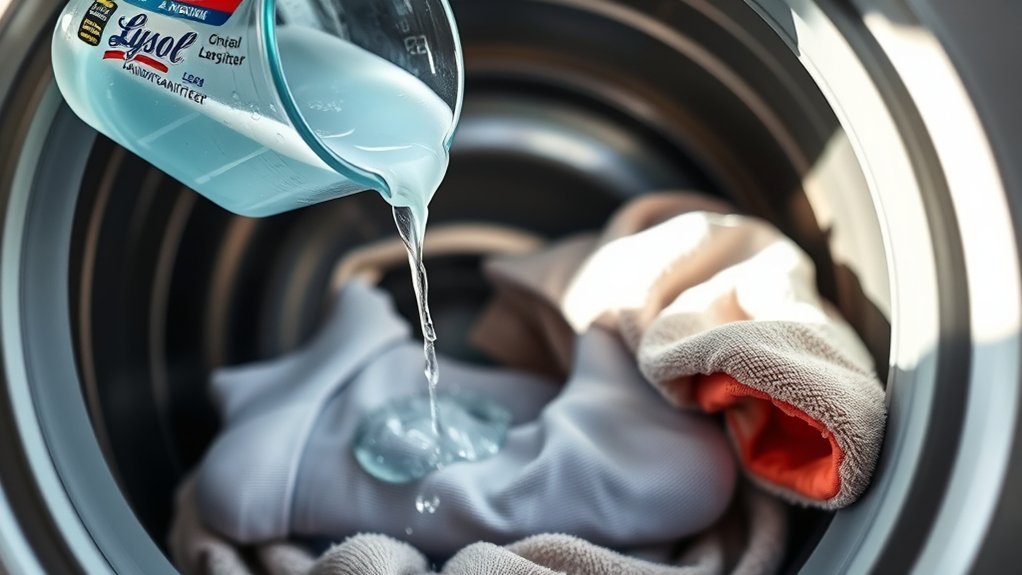
Even though Lysol Laundry Sanitizer effectively eliminates 99.9% of bacteria, it doesn’t specifically target fungi such as dermatophytes responsible for conditions like tinea pedis. Its effectiveness against fungal organisms remains limited, as chemical disinfectants may not fully penetrate fabric layers where fungi reside.
While Lysol Laundry Sanitizer contributes to laundry sanitization, routine use alone may not eradicate all fungal spores. Environmental reservoirs like contaminated footwear and surfaces often require antifungal treatments beyond standard sanitizers.
As a result, relying solely on Lysol Laundry Sanitizer for fungal control can leave gaps in hygiene. To address fungal contamination thoroughly, you need to integrate specialized antifungal approaches within broader cleaning strategies that complement the sanitizer’s bacterial efficacy.
Combining Lysol Laundry Sanitizer With Other Laundry Fungus Control Methods
Since Lysol Laundry Sanitizer targets bacteria more effectively than fungal spores, relying on it alone won’t fully address fungal contamination in laundry.
To optimize fungal control, you should combine Lysol Laundry Sanitizer with hot water laundering. Elevated temperatures considerably reduce fungal viability.
Integrate this approach within a thorough cleaning regimen that includes chemical disinfectants to further mitigate reinfection risks. Furthermore, incorporating antifungal sprays on textiles like footwear and linens enhances efficacy.
Employing UV irradiation or sun exposure for drying complements Lysol Laundry Sanitizer’s action by further decreasing fungal spores on fabrics.
This multifaceted strategy guarantees a scientifically supported reduction of fungal presence beyond what Lysol Laundry Sanitizer achieves alone. It provides a robust defense against persistent fungal contamination in laundry.
Best Laundry Hygiene Practices With Lysol to Combat Fungus
To effectively combat fungal presence in your laundry, you should integrate Lysol Laundry Sanitizer into a consistent hygiene routine that leverages its broad-spectrum antimicrobial properties.
Lysol Laundry Sanitizer kills 99.9% of bacteria and is effective against certain fungi, making it essential for laundry hygiene practices.
Lysol Laundry Sanitizer eliminates 99.9% of bacteria and targets fungi, essential for maintaining clean laundry.
Use it in both standard and HE machines without damaging fabrics. For maximum efficacy, add directly to the fabric softener compartment at the start or during the rinse cycle.
It also works well in cold water, which suits synthetic and activewear prone to fungal growth.
Regular application helps combat fungus and odor-causing microbes, maintaining overall laundry freshness and hygiene.
Avoid adding Lysol Laundry Sanitizer directly to the drum, as this method is less effective than using the designated compartment.
Frequently Asked Questions
Can Lysol Laundry Sanitizer Be Used on Delicate Fabrics Like Silk?
Yes, you can use Lysol Laundry Sanitizer on delicate fabrics like silk.
It’s formulated to be gentle while killing 99.9% of bacteria without bleach, so it helps preserve fabric integrity.
Use it in cold water and follow dosing instructions for the best results.
Add it during the rinse cycle or in the fabric softener compartment.
Always test a small, hidden area first to make sure there’s no adverse reaction on your specific silk item before washing the entire garment.
Does Lysol Laundry Sanitizer Have a Strong Scent After Washing?
Lysol Laundry Sanitizer doesn’t leave a strong scent after washing. It uses Malodor Control Technology to neutralize odor-causing bacteria, resulting in a clean, subtle fragrance rather than an overpowering one.
You’ll notice a fresh, mild scent that’s suitable even if you’re sensitive to strong smells. The Crisp Linen version adds a light, pleasant aroma without compromising sanitizing power, ensuring your laundry smells fresh but not overwhelming.
Is Lysol Laundry Sanitizer Safe for Use Around Pets?
Think of Lysol Laundry Sanitizer as a carefully engineered shield, safe for your pets when used correctly. It’s EPA certified and free of bleach, which reduces risks of irritation.
You should rinse and dry fabrics thoroughly before your pets interact with them. Always store the product out of their reach to prevent accidental ingestion.
If your pet has allergies or health issues, check with your vet first to guarantee complete safety.
How Long Should Laundry Sit Before Washing With Lysol Sanitizer?
You shouldn’t let your laundry sit more than 24 hours before washing it with Lysol Laundry Sanitizer. Prolonged dampness encourages fungal growth, especially on synthetic fabrics, so prompt washing is key.
If you must delay, keep the laundry in a dry, well-ventilated area to reduce microbial risks.
Using Lysol in the rinse cycle for at least 16 minutes effectively kills 99.9% of bacteria, but timely laundering remains essential to prevent fungal issues.
Can Lysol Laundry Sanitizer Replace Bleach in Laundry Routines?
Lysol Laundry Sanitizer kills 99.9% of bacteria but can’t fully replace bleach in your laundry routine.
Bleach offers stronger antifungal action and disinfects more thoroughly, especially for severe fungal contamination.
You can use Lysol as a color-safe, cold-water alternative for everyday sanitizing.
But for deep fungal issues or heavy sanitation needs, bleach remains the more effective choice.
Combine them strategically based on your laundry’s hygiene demands.
Conclusion
When you use Lysol Laundry Sanitizer, you’re releasing a microscopic army that battles stubborn fungi hiding in your clothes, wiping out nearly every spore with scientific precision. While it’s not a magical cure-all against every fungal strain, combining it with proper laundry habits creates a fortress of defense.
Think of each wash as a powerful strike, drastically reducing fungal threats and keeping your fabrics impeccably clean and safe, backed by proven antimicrobial action.