Is Homemade Laundry Detergent Safe For He Washers – Guide
You shouldn’t use typical homemade laundry soap in HE washers because it often creates excess suds, causes residue buildup, and risks mold growth that can damage your machine and fabrics. Low-sudsing detergents with proper surfactants are critical for HE efficiency and longevity.
However, you can make a safer homemade detergent by choosing specific low-sudsing ingredients and following best practices. Understanding these details will help you protect your washer and keep clothes clean.
Key Takeaways
- Homemade detergents often create excess suds, risking HE washer damage and poor cleaning performance.
- Soap residue from homemade mixtures can cause mold, odors, and clogging, reducing machine efficiency.
- Low-sudsing ingredients like washing soda and Sal Suds are safer homemade options for HE washers.
- Using about two tablespoons per load and dissolving detergent fully helps prevent buildup and damage.
- Commercial HE detergents offer consistent cleaning, safety testing, and reduce warranty risks compared to homemade formulas.
What’s the Difference Between Laundry Detergent and Soap?
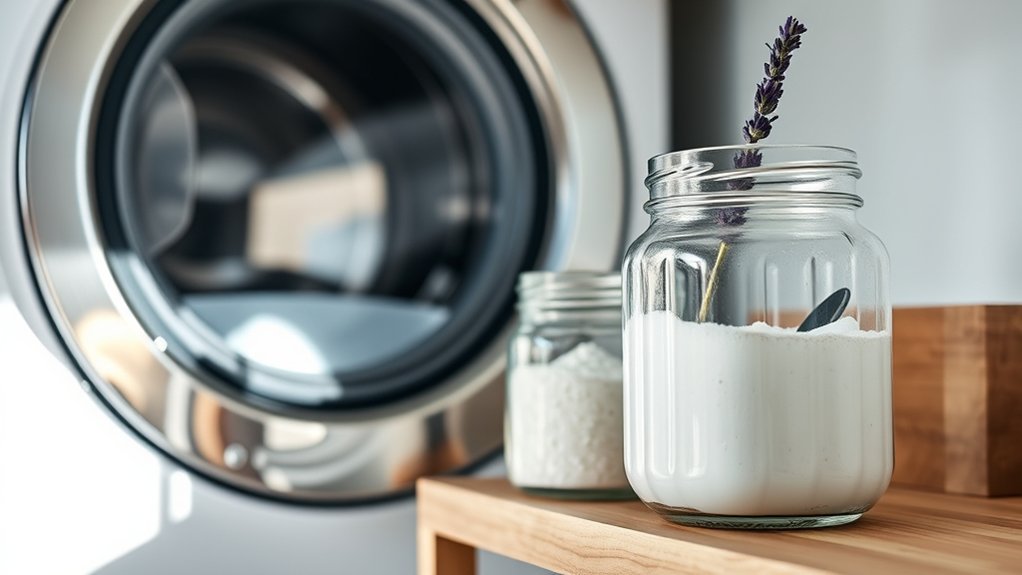
How do laundry detergent and soap differ in their cleaning action and composition?
Laundry detergent is a synthetic product made with surfactants that break down dirt and oils effectively. It works well across various water temperatures, which keeps cleaning performance consistent.
Soap, on the other hand, is a natural product made from fats and alkali. While it can clean, it often struggles in hard water, leading to soap scum and residue buildup.
Many homemade laundry detergent recipes are actually soap-based, which can cause these issues, especially in HE washers designed for low-sudsing detergents.
Commercial laundry detergents usually include extra agents to boost stain removal and prevent dinginess, advantages soap doesn’t have.
Knowing these differences helps you pick the right product to avoid poor cleaning results and potential machine problems.
Why Is Homemade Laundry Detergent Risky for HE Washers?
Because HE washers rely on low-sudsing detergents designed for efficient water use, homemade laundry detergents that contain soap can create excessive suds, risking damage to the machine.
When you use homemade laundry detergent, you face potential issues like soap residue buildup and ineffective cleaning, which commercial HE detergents avoid by formulation.
Using homemade detergent can cause soap buildup and poor cleaning, problems commercial HE detergents are designed to prevent.
These risks include excessive suds that strain HE washers’ mechanics, soap residue encouraging mold and mildew growth, ingredients that may clog dispensers and water lines, inconsistent measurements causing unpredictable performance, and lack of proper surfactants leading to dingy fabrics.
Understanding these factors helps you see why homemade laundry detergent isn’t always safe for HE washers, as it compromises their design for low-sudsing detergents and efficient operation.
How Soap Buildup Harms Your HE Washer and Clothes
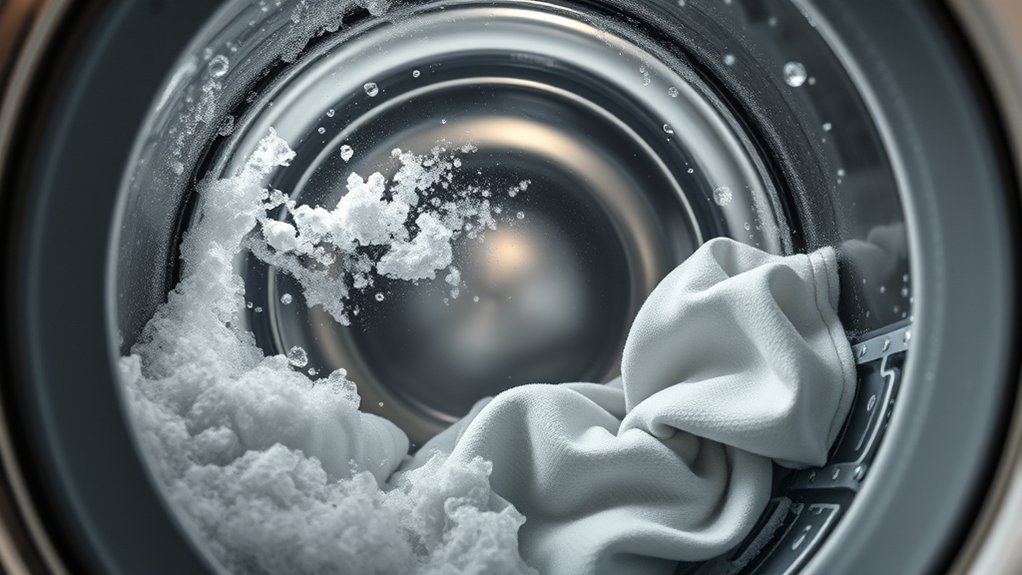
When you use homemade detergents that generate excess soap, soap buildup can quickly accumulate in your HE washer. This leads to mold and mildew growth, causing unpleasant odors and costly repairs.
HE washers use low water, so soap scum and residues don’t rinse out completely. That reduces cleaning performance and makes fabrics feel stiff or greasy.
This buildup can clog dispensers and water lines, which might even void your washing machine’s warranty. Understanding these effects helps you manage soap buildup effectively.
| Impact Area | Cause | Consequence |
|---|---|---|
| Mold & Mildew | Excess soap, moisture | Odors, costly repairs |
| Fabric Condition | Soap residues trapped | Fabrics feel stiff or greasy |
| Washer Efficiency | Soap scum accumulation | Reduced cleaning performance |
| Warranty Risk | Clogged dispensers/lines | Warranty void |
| Water Usage | Low water in HE washers | Incomplete rinsing, soap buildup |
Choosing Safe Ingredients for HE Washer Laundry Detergent
Managing soap buildup in your HE washer starts with selecting the right ingredients for your homemade laundry detergent. HE washers demand low-sudsing formulas to prevent excessive bubbles that disrupt washing cycles and cause residue buildup. When choosing ingredients, prioritize those that dissolve fully to avoid clogging dispensers.
Consider these points for effective laundry detergent recipes:
Use powdered homemade laundry detergent with washing soda and baking soda for enhanced cleaning effectiveness. Incorporate Sal Suds as a gentler alternative to borax, preserving bright colors. Limit borax usage to prevent fading while maintaining cleaning power.
Verify all ingredients dissolve completely to protect your HE washer’s mechanisms. Regularly clean your washer with citric acid to manage any residual soap buildup.
Selecting safe ingredients preserves your HE washer’s performance and guarantees excellent laundry results.
How to Make HE-Friendly Homemade Laundry Detergent
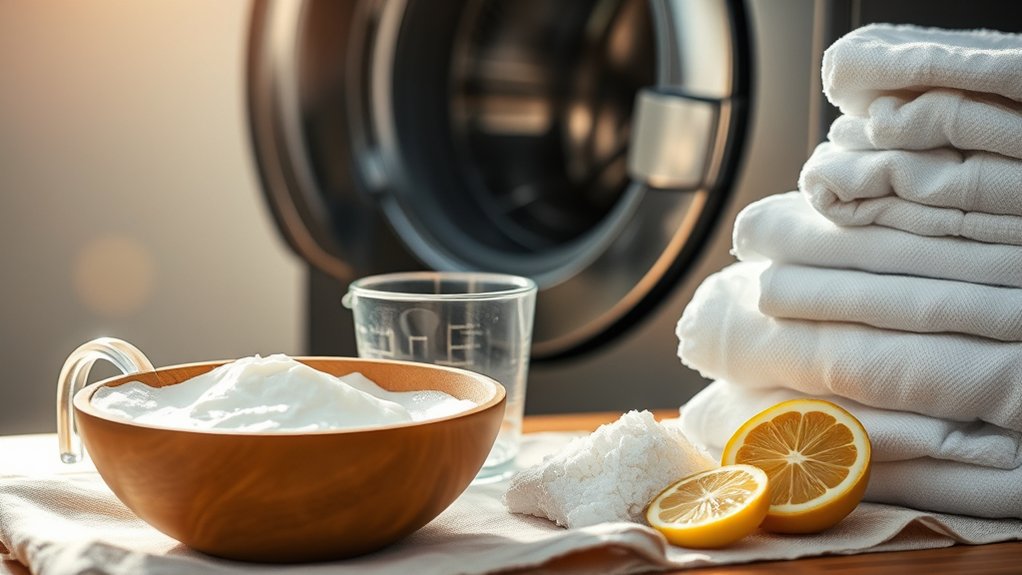
Three key ingredients, washing soda, baking soda, and Epsom salt, form a low-sudsing base ideal for HE washers. This minimizes foam that can interfere with cleaning cycles.
To create HE-friendly homemade laundry detergent, mix 3 cups each of washing soda and baking soda with 1 cup of Epsom salt. You can optionally add 1 cup of Oxi-Clean for enhanced stain removal.
Use 2 tablespoons of this laundry soap recipe per load, sprinkling it directly onto clothes to guarantee proper dissolution. Incorporate essential oils cautiously to add fragrance without risking residue buildup or clogging.
Furthermore, regularly cleaning your machine with citric acid helps prevent soap scum and maintains peak performance.
This evidence-based approach guarantees your homemade detergent is efficient and safe for HE washers. It aligns with best practices for cleaning products.
Powder vs. Liquid Homemade Detergent: Which Works Best?
How do you decide between powder and liquid homemade laundry detergents?
Powder homemade detergents dissolve well in HE washers, especially when made with washing soda and low-sudsing ingredients. This enhances cleaning efficiency and prevents residue.
Liquid homemade detergents excel at treating stains and perform better in hard water but need careful measuring to avoid excess suds. Your choice depends on personal preference and laundry needs.
- Powder detergents suit soft water and dissolve quickly in HE washers
- Liquid detergents improve stain removal and handle hard water effectively
- Low-sudsing ingredients are essential for both types to protect HE washers
- Washing soda in powders boosts water softening and cleaning efficiency
- Storage and preparation ease favor powders; stain treatment favors liquids
Select based on your specific requirements for best results.
Tips for Using Homemade Detergent Safely in HE Washers
When you’re using homemade detergent in your HE washer, try to keep it to about two tablespoons per load. This helps avoid any extra residue and keeps your clothes coming out clean.
It’s a good idea to apply the detergent directly onto your clothes, too. That way, it dissolves better and won’t build up in the dispenser.
Also, don’t forget to clean your machine regularly. Using citric acid is a great way to get rid of soap scum and mildew that can come from homemade formulas.
Keeping your washer fresh like this helps it work better for the long haul.
Proper Detergent Dosage
Since high-efficiency (HE) washers use less water than traditional models, you should only use about 2 tablespoons of homemade laundry detergent per load. This helps prevent excessive sudsing and guarantees proper rinsing.
Using the proper detergent dosage is essential for maintaining your washer’s peak functionality and avoiding soap buildup.
To make sure your homemade laundry detergent works effectively in HE washers, follow these tips:
- Use low-sudsing ingredients to reduce residue and maintain machine performance.
- Add detergent directly onto clothes, not in the dispenser, to maximize cleaning agent efficiency.
- Incorporate washing soda to soften water and boost cleaning power in hard water areas.
- Avoid grated soap, which can clog and harm the washer.
- Monitor for sensitive skin reactions and adjust dosage accordingly for safety.
These measures help protect your HE washer and keep your laundry clean.
Preventing Machine Residue
Although homemade detergents offer a cost-effective and customizable cleaning solution, you must carefully choose low-sudsing formulas designed for HE washers to prevent residue buildup inside your machine.
Using grated bar soap is ill-advised, as it may not dissolve fully, causing soap scum and fabric residue.
Incorporate washing soda and other water softeners like Epsom salts to enhance cleaning without promoting buildup.
Always measure detergent precisely with a tablespoon or scoop to avoid overuse, which contributes to residue accumulation.
To maintain peak performance and a clean washing machine, regularly clean the machine with citric acid, effectively removing any lingering homemade laundry detergent deposits.
These practices guarantee your HE washers run efficiently while preserving fabric quality.
How to Spot If Homemade Detergent Is Damaging Your Washer or Clothes
How can you tell if your homemade laundry detergent is harming your washer or clothes? With HE washers, soap buildup from homemade detergent can clog dispensers and water lines, reducing efficiency.
Users often say their detergent doesn’t work well on stubborn stains, leaving clothes less clean.
Abrasive ingredients in homemade mixtures may cause fabric damage or fading. You might notice a musty smell from mold growth inside your washer, which signals compromised performance.
Residue left on clothing washed with homemade detergent can make fabrics look dingy and smell unpleasant.
- Soap buildup inside HE washers and dispensers
- Mold or mildew odors during or after cycles
- Stubborn stains remaining on clean clothes
- Abrasive ingredients causing fabric wear or fading
- Residue or dinginess on clothing washed
Monitoring these signs helps you assess detergent safety objectively.
Affordable, Safe Alternatives to Homemade HE Laundry Detergent
When selecting a laundry detergent for your HE washer, choosing commercially formulated options can provide safer and more consistent results than many homemade recipes.
Eco-friendly commercial detergents like My Green Fills and Ecover Zero are designed for HE washers, delivering effective cleaning with minimal residue risk.
Eco-friendly detergents like My Green Fills and Ecover Zero clean HE washers effectively with minimal residue.
Natural alternatives such as Dr. Bronner’s Sal Suds offer low sudsing formulas that align well with HE requirements.
These commercial detergents often perform efficiently in cold water and undergo rigorous safety testing, ensuring reliable results.
Incorporating vinegar in the rinse cycle can further improve fabric softness and odor removal without compromising your washer’s functionality.
Compared to homemade laundry detergent, these affordable commercial options provide a safer, evidence-based approach to maintaining your HE washer and achieving effective cleaning.
Frequently Asked Questions
Can Homemade Detergent Cause Mold Growth in HE Washers?
Yes, homemade detergent can cause mold growth in HE washers.
Because it often lacks proper surfactants, it leaves soap residues that trap moisture inside the machine’s components. This residue creates an environment where mold and mildew thrive, especially around rubber seals and dispensers.
If you use homemade detergent, you’ll need to clean your washer regularly to prevent buildup and maintain proper hygiene in your machine.
How Often Should HE Washers Be Cleaned When Using Homemade Detergent?
You should clean your HE washer every 1 to 3 months when using homemade detergent. This frequency helps prevent soap buildup and mold growth, which homemade soaps can encourage if not rinsed thoroughly.
Running a cleaning cycle with hot water and vinegar or citric acid keeps residues at bay.
Regularly check the detergent dispenser and door seal, since neglecting these steps increases the risk of damage and costly repairs over time.
Are There Specific Brands of Enzyme Additives Safe for HE Washers?
Yes, you can use enzyme additives from brands like Seventh Generation, Biokleen, Tide, and Arm & Hammer, all formulated for HE washers.
These products are designed to work efficiently in low-water environments without causing excess suds or buildup.
To guarantee safety and performance, always check for “HE compatible” labels.
Using these enzyme additives at warmer water settings will maximize stain removal while protecting your HE machine’s integrity.
Does Water Hardness Affect Homemade Detergent Performance in HE Machines?
Yes, water hardness affects homemade detergent performance in HE machines.
Hard water causes soap scum formation, which reduces cleaning power and leaves residues on fabrics. Your homemade detergent may not dissolve fully, limiting stain removal.
Adding water softeners like Epsom salts can improve effectiveness by countering hardness.
Regularly cleaning your machine with citric acid also helps prevent buildup.
Can Homemade Detergent Impact the Washer’s Warranty Coverage?
Using homemade detergent can impact your washer’s warranty coverage like a hidden snag in a smooth fabric.
Manufacturers often void warranties if you don’t use their recommended detergents, especially with HE washers.
Homemade soaps may cause excess suds or clogging, leading to damage and denied repair claims.
To protect your warranty, you should stick to low-sudsing, commercial detergents designed for your specific washer model.
Conclusion
When it comes to homemade detergent for your HE washer, remember that “a stitch in time saves nine.” Using the wrong ingredients or too much soap can cause buildup, damaging both your machine and clothes.
Stick to HE-safe recipes and measure carefully to avoid costly repairs. By choosing proven, gentle ingredients and following guidelines, you’ll keep your washer running efficiently and your laundry fresh, saving time, money, and frustration in the long run.