What Is Laundry Detergent – Simple Breakdown
Laundry detergent is a specialized cleaning agent designed to remove dirt, oils, and stains from fabrics. It uses surfactants, molecules with hydrophobic tails and hydrophilic heads, to break down grease and suspend particles in water.
Enzymes target specific stains like proteins and fats, while builders and chelators optimize cleaning efficiency by managing water hardness and pH. You’ll also find detergents in powder or liquid forms, each suited to different needs.
Exploring further reveals how these components impact fabric care and the environment.
Key Takeaways
- Laundry detergent is a cleaning agent designed to remove dirt, oils, and stains from fabrics using surfactants and enzymes.
- Surfactants in detergent break down grease by reducing water’s surface tension and suspending dirt in water.
- Detergents come in liquid and powder forms, each suited for different cleaning needs and water temperatures.
- Key ingredients include enzymes for stain removal, optical brighteners for fabric appearance, and builders to optimize cleaning.
- Proper detergent use protects fabrics, prevents residue buildup, and choosing biodegradable options reduces environmental impact.
What Is Laundry Detergent and How Does It Work
Laundry detergent acts as a specialized cleaning agent designed to remove dirt, oils, and stains from fabrics by leveraging surfactants. These are molecules with hydrophobic tails that bind to grease and hydrophilic heads that attract water.
When you use laundry detergent, these surfactants surround soil particles, forming micelles that suspend dirt and oils in water. This prevents them from re-depositing on your clothes.
Detergents contain enzymes that target specific stains, breaking down proteins and fats to boost cleaning efficiency. As you agitate your laundry, these micelles lift grime off fabrics, allowing water to rinse it away effectively.
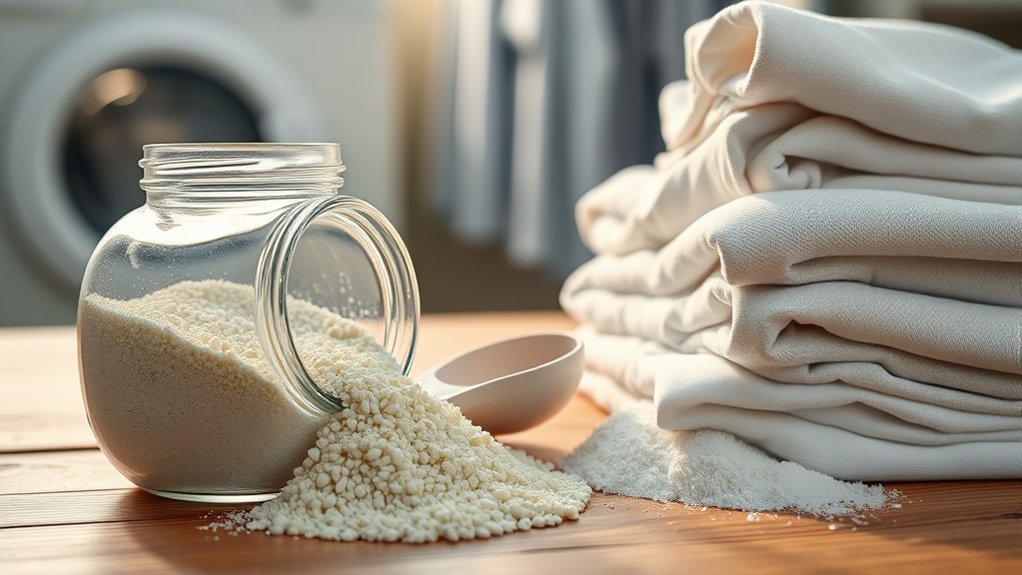
Detergents come in powder and liquid forms, each suited for different cleaning needs. But both fundamentally work to clean your clothes by disrupting and removing unwanted soils through chemical and mechanical action.
Key Ingredients and Their Functions in Laundry Detergents
You’ll find that surfactants are the main players when it comes to breaking down grease. They do this by attaching their hydrophobic tails to oils, while their hydrophilic heads interact with water to lift dirt away.
Then, there are enzymes, which zoom in on those stubborn stains. They work by breaking down proteins, fats, and starches at a molecular level, making stain removal much easier.
On top of that, optical brighteners help improve the way your fabric looks. They reflect blue light, which counteracts yellowing and gives your clothes a brighter, whiter appearance.
Surfactants And Cleaning
Although you mightn’t see them working, surfactants play an essential role in breaking down grease and dirt by using their hydrophobic tails to latch onto oils while their hydrophilic heads attract water. This enables effective removal during washing.
Surfactants come in four types: anionic, nonionic, cationic, and amphoteric. Each is designed to target specific soils and optimize cleaning power.
Enzymes complement surfactants by breaking down protein, fat, and starch stains, which enhances overall stain removal. Furthermore, chelators bind metal ions in hard water that would otherwise inhibit surfactant efficiency.
By combining these components, detergents maximize soil suspension and prevent redeposition, ensuring fabrics come out clean.
Understanding surfactants and their interaction with enzymes helps you appreciate how detergents deliver powerful, targeted cleaning.
Enzymes And Brighteners
Because stains vary in composition, enzymes in detergents target specific molecules to enhance cleaning efficiency.
Proteases break down protein-based stains like blood and egg, lipases degrade fats such as grease, and amylases tackle starch residues from foods. These enzymes work together to dismantle complex stains, improving detergent performance.
Optical brighteners coat fabric fibers to reflect more blue light, boosting whiteness and brightness. They gradually wash out over time, but while they last, they make your clothes look fresher and more vibrant.
When you use detergents containing these ingredients, you benefit from:
- Proteases removing protein stains efficiently
- Lipases targeting greasy, fat-based residues
- Amylases breaking down carbohydrate starches
- Optical brighteners enhancing fabric brightness and color vibrancy
Together, enzymes and optical brighteners optimize stain removal and help maintain fabric appearance.
Surfactants’ Role in Removing Dirt and Oil
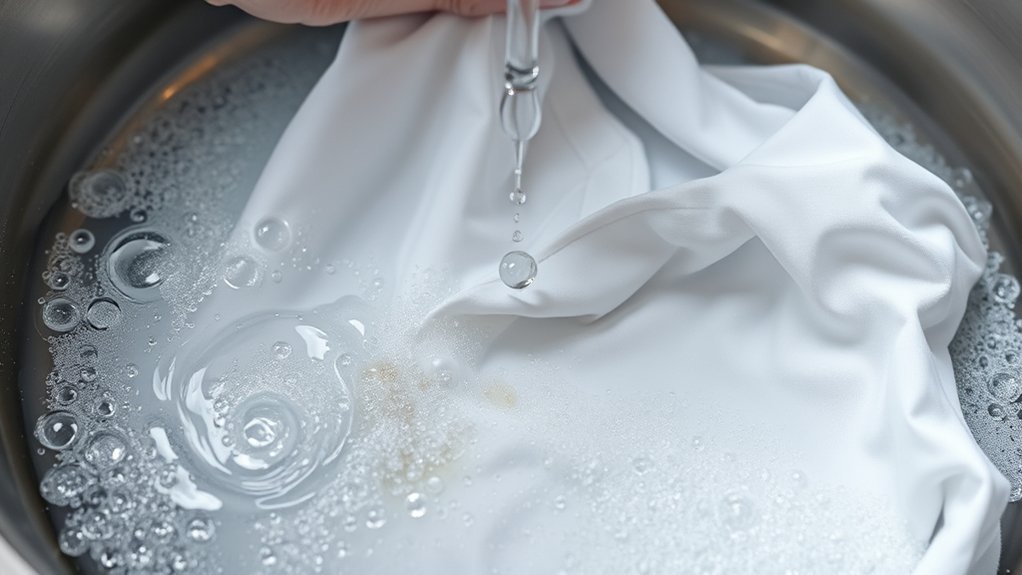
When surfactants enter the wash, their unique molecular structure actively targets dirt and oil. Hydrophobic tails latch onto grease, while hydrophilic heads bind with water, enabling these contaminants to be lifted from fabric fibers.
Surfactants reduce water’s surface tension, allowing deeper penetration into fabric and enhancing cleaning performance. Agitation causes surfactants to form micelles, encapsulating dirt and oil, which prevents re-deposition and facilitates rinsing.
The four main surfactant types—anionic, nonionic, cationic, and amphoteric—each optimize removal of various stains by altering interaction with soils and water.
How Enzymes and Builders Boost Detergent Power
While surfactants tackle dirt and oil, enzymes and builders greatly enhance your detergent’s effectiveness by targeting specific stain components and improving water conditions.
Enzymes like proteases, amylases, and lipases break down proteins, starches, and fats, boosting cleaning power. Builders such as sodium tripolyphosphate bind calcium and magnesium ions in hard water, preventing interference with surfactants.
Here’s how they work together:
- Enzymes degrade complex stains at a molecular level.
- Builders sequester minerals that reduce detergent efficiency.
- Builders optimize pH, enhancing enzyme activity.
- Combined, they reduce the need for harsh chemicals and protect fabrics.
Using enzymes and builders in your detergent markedly improves stain removal, especially in tough conditions, maximizing overall cleaning power.
Powder vs. Liquid Laundry Detergents: Key Differences
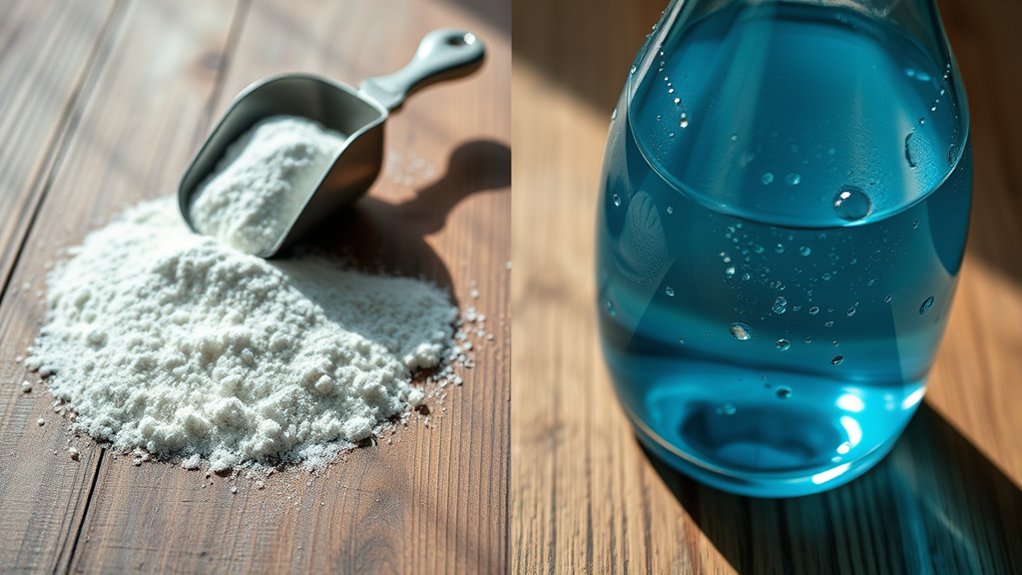
You’ll find that powdered and liquid detergents share many of the same active ingredients, but they differ when it comes to fillers and how well they dissolve. This can actually affect how well they work depending on the type of water you have.
Powdered detergents usually come in recyclable cardboard boxes, which is a plus if you’re trying to be more eco-friendly.
On the other hand, liquid detergents often come in plastic bottles, which aren’t as kind to the environment.
Knowing these differences in both what’s inside and how they’re packaged can help you get the best results when treating stains.
Plus, it’s a smart way to reduce your environmental impact.
Composition And Ingredients
Although powdered and liquid laundry detergents share many active cleaning ingredients, their compositions differ greatly in solvents and fillers. This affects both performance and environmental impact. You’ll notice these key distinctions:
Powder detergents use sodium sulfate as a filler, making them cost-effective and often more environmentally friendly due to cardboard packaging.
Liquid detergents rely on water as a solvent, dissolving active ingredients fully for convenience and stain-targeting.
Powder formulas have enhanced solubility, improving cold-water performance, though they can struggle in hard water.
Liquids dissolve consistently across water types, offering versatile cleaning for various fabrics.
Understanding these detergents’ ingredients and compositions will help you choose the best option for your laundry needs while considering eco-conscious preferences.
Environmental Impact Considerations
Because packaging materials and chemical compositions greatly influence environmental outcomes, choosing between powdered and liquid laundry detergents requires careful consideration.
Powdered detergents typically use cardboard packaging, which considerably reduces plastic waste and lowers environmental impact compared to liquid detergents.
Liquid detergents rely on plastic bottles that have higher carbon emissions during production and transport. However, liquid detergents offer pre-dissolved formulas that can increase chemical persistence in waterways due to synthetic fragrances and additives, posing aquatic risks.
Both forms contribute to the average American family’s 480 pounds of CO2 annually from detergent use.
To minimize your footprint, opt for concentrated, eco-friendly laundry products with minimal, recyclable packaging. This approach balances effectiveness with sustainability, addressing plastic waste concerns and chemical pollution while supporting a lower environmental impact overall.
Usage And Application Benefits
When selecting between powdered and liquid laundry detergents, understanding their usage and application benefits is essential for maximizing cleaning efficiency.
Liquid laundry detergents come pre-dissolved, making them excellent for direct stain treatment and effective in both cold and hot water.
Powdered detergents, while generally cheaper and packaged more sustainably, can struggle to dissolve fully in cold water but have improved solubility overall.
Consider these points:
- Liquid detergents offer versatile performance across water temperatures.
- Powdered detergents reduce environmental impact through less plastic waste.
- Dosage precision is critical to prevent residue buildup with either type.
- Packaging impacts environmental footprint—cardboard for powders, plastic for liquids.
Understanding these factors helps you optimize cleaning results while minimizing environmental impact.
How Detergents Affect Fabric Care and Longevity
While detergents play an essential role in removing stains and maintaining cleanliness, their impact on fabric care and longevity depends largely on how you use them.
Detergents are made to break down oils and dirt, but harsh chemicals in some formulations can degrade fibers over time, weakening fabrics and shortening garment lifespan.
Harsh chemicals in detergents can weaken fibers, reducing fabric durability and shortening the life of your garments.
Mechanical agitation during washing causes most wear, yet excessive detergent use leaves residue that traps dirt, reducing fabric freshness and causing stiffness.
Enzymes in detergents target specific stains efficiently, but their action varies with fabric type and water quality, so you need to choose carefully.
Frequent washing with strong detergents can fade colors and reduce elasticity, especially in delicate materials.
To preserve your clothes, use detergents sparingly, select formulas suited for your fabrics, and avoid overloading your washer.
Environmental Impact of Laundry Detergents
Although laundry detergents effectively clean your clothes, they greatly impact the environment through their chemical composition and packaging. You contribute to this environmental impact with every wash cycle, mostly due to:
- Approximately 480 pounds of CO2 emissions annually per average American family linked to detergent use.
- Non-biodegradable ingredients that persist in waterways, threatening aquatic life.
- Phosphates that stimulate harmful algae blooms, damaging aquatic ecosystems and water quality.
- Plastic packaging from liquid detergents, which adds to plastic pollution and waste.
To mitigate these effects, consider biodegradable detergents and concentrated formulas that reduce chemical residues and packaging volume.
Natural Laundry Soap vs. Detergent: Why Make the Switch
Why should you consider switching from conventional laundry detergents to natural laundry soap? Natural laundry soap is biodegradable and derived from plant oils and fats, making it a more eco-friendly laundry soap option.
It lacks synthetic fragrances and toxic chemicals like phosphates and sulfates, greatly reducing the risk of skin irritation and allergies.
While natural soap performs well in soft water, it may leave residue in hard water, potentially dulling fabric colors over time. Unlike synthetic detergents formulated for all water types, natural soap demands careful water consideration.
Furthermore, natural laundry soaps often come in sustainable packaging, helping reduce plastic waste.
Frequently Asked Questions
Can Laundry Detergent Cause Allergies or Skin Irritation?
Yes, laundry detergent can cause allergies or skin irritation, especially if you have sensitive skin.
Ingredients like synthetic fragrances, dyes, and preservatives often trigger reactions such as rashes or respiratory issues.
Surfactants and phosphates may worsen conditions like eczema.
To minimize risks, you should opt for hypoallergenic detergents free from dyes and fragrances.
It’s also a good idea to perform patch tests before full use to identify any potential allergic reactions early on.
How Should I Store Laundry Detergent Safely at Home?
If you enjoy your detergent turning into a science experiment, leave it open and sunbathing.
Otherwise, store it in a cool, dry place away from sunlight to keep its formula stable.
Always seal the container tightly to prevent moisture clumps, especially with powders.
Keep it locked up, out of reach of kids and pets, and use original packaging or labeled containers.
Don’t forget to check expiration dates to guarantee peak cleaning efficiency.
Are There Specific Detergents for Sensitive or Baby Clothes?
Yes, you’ll find detergents specially formulated for sensitive or baby clothes. These use milder surfactants, avoid harsh chemicals, fragrances, and dyes, and maintain a balanced pH to minimize skin irritation.
Many are hypoallergenic and dermatologically tested to guarantee safety.
Plus, eco-friendly options reduce environmental impact while providing effective cleaning.
Choosing these detergents helps protect delicate skin and maintain fabric integrity without sacrificing washing performance.
Can I Use Laundry Detergent for Hand Washing Clothes?
Yes, you can use laundry detergent for hand washing clothes. Use a small amount of a diluted, gentle detergent to avoid excessive suds.
Fill your sink or basin with cold or lukewarm water, then add detergent and agitate gently. Submerge clothes, lightly rubbing to lift dirt without damaging fibers.
Rinse thoroughly with clean water to remove all detergent residues, preventing irritation or fabric buildup.
Avoid hot water unless fabric care labels specify.
How Do I Measure the Right Amount of Detergent per Load?
Think of detergent like medicine: just the right dose heals, too much harms. To measure it correctly, use the detergent cap or a measuring cup, following the package instructions closely.
For regular machines, 1/4 to 1/2 cup is typical, adjusted for soil level and load size.
For high-efficiency washers, stick to about 2 tablespoons.
Avoid overfilling to prevent residue buildup and guarantee your clothes and machine stay in top shape.
Conclusion
Now that you understand how laundry detergent works, breaking down stubborn grime with surfactants, enzymes, and builders, you hold the key to fabric care mastery. Choosing the right formula is like tuning an engine, ensuring your clothes stay vibrant and strong wash after wash.
Remember, your detergent choice not only cleans but shapes the life of your fabrics and the planet. So, make each wash count, with science guiding your every spin.