Is Lysol Laundry Sanitizer Safe – Myth or Fact
You can trust Lysol Laundry Sanitizer as a scientifically validated, EPA-registered product that kills 99.9% of bacteria effectively without harming most fabrics when used properly. It works well even in cold water and maintains fabric integrity without color fading.
Avoid mixing it with detergents to guarantee full potency and safety. Ideal for everyday laundry needs, it enhances cleanliness and household safety.
Explore further to understand its mechanism, fabric compatibility, and expert recommendations.
Key Takeaways
- Lysol Laundry Sanitizer is EPA-registered, confirming it meets strict safety and environmental standards for household use.
- It effectively kills 99.9% of bacteria without damaging common fabrics like cotton and synthetics.
- Safe use requires adding it during the rinse cycle or fabric softener compartment, avoiding mixing with detergents.
- The product is not recommended for delicate fabrics such as silk or wool to prevent damage.
- Proper ventilation is advised during use to minimize exposure to strong scents and ensure safe laundry sanitization.
Is Lysol Laundry Sanitizer Safe and Effective?
How safe and effective is Lysol Laundry Sanitizer for your laundry needs? Lysol Laundry Sanitizer is EPA-registered and proven to kill 99.9% of bacteria, including harmful pathogens such as Staphylococcus aureus and Klebsiella pneumoniae, ensuring effective sanitization.
Lysol Laundry Sanitizer is EPA-registered and kills 99.9% of bacteria, ensuring thorough and effective laundry sanitization.
You can safely use it on various fabrics, including colored and white items, without bleach’s damaging effects. It works efficiently in cold water, making it compatible with high-efficiency machines.
Following washing instructions, you add two capfuls to the fabric softener compartment or during the rinse cycle, with a rinse time of 16 minutes recommended for best results.
Besides killing bacteria, it effectively eliminates odors, providing added cleanliness assurance, especially valuable in homes with pets or during illness recovery.
What EPA Registration Means for Lysol Safety
Why does EPA registration matter for Lysol Laundry Sanitizer’s safety? EPA registration confirms that the product has undergone rigorous scientific evaluation for safety and effectiveness against bacteria such as Staphylococcus aureus and Klebsiella pneumoniae.
This certification guarantees Lysol Laundry Sanitizer meets strict standards protecting human health and environmental safety. You can trust that the sanitizer effectively kills 99.9% of bacteria when used properly.
Furthermore, EPA registration requires clear labeling and usage instructions, guiding you to apply the product safely during laundering.
The thorough assessments also verify that Lysol Laundry Sanitizer is safe for use on various fabrics under typical conditions.
Is Lysol Laundry Sanitizer Safe for All Fabrics?
With EPA registration confirming Lysol Laundry Sanitizer’s safety and effectiveness, you can confidently consider its compatibility with different fabrics.
Lysol Laundry Sanitizer is safe for fabrics such as cotton, synthetics, and blends, supporting effective sanitization during cleaning laundry.
Lysol Laundry Sanitizer effectively sanitizes cotton, synthetics, and blends while protecting fabric quality.
It works efficiently in both standard and high-efficiency washing machines without compromising fabric integrity. However, it isn’t recommended for delicate fabrics like silk or wool, which may be adversely affected by the sanitizing agent.
For ideal results, follow the usage instructions carefully by adding two capfuls to the fabric softener compartment or during the rinse cycle.
This guarantees thorough sanitization while maintaining the quality of both colored and white fabrics, making Lysol Laundry Sanitizer a reliable option for routine laundry sanitization.
Can Lysol Laundry Sanitizer Damage Clothes or Colors?
Can Lysol Laundry Sanitizer damage your clothes or fade their colors? Lysol Laundry Sanitizer is safe for fabrics, including delicates and baby clothes, and doesn’t damage clothes or cause color fading. It works effectively in cold water, ensuring colors remain vibrant while providing sanitization.
For best performance, use the recommended usage by adding two capfuls to the fabric softener compartment or during the rinse cycle. Avoid mixing Lysol Laundry Sanitizer with detergent, as this can cause adverse fabric reactions.
The formulation is designed as a bleach alternative that’s gentle on various fabric types. By following these guidelines, you can sanitize your laundry without compromising fabric integrity or color quality.
How to Use Lysol Laundry Sanitizer Safely at Home
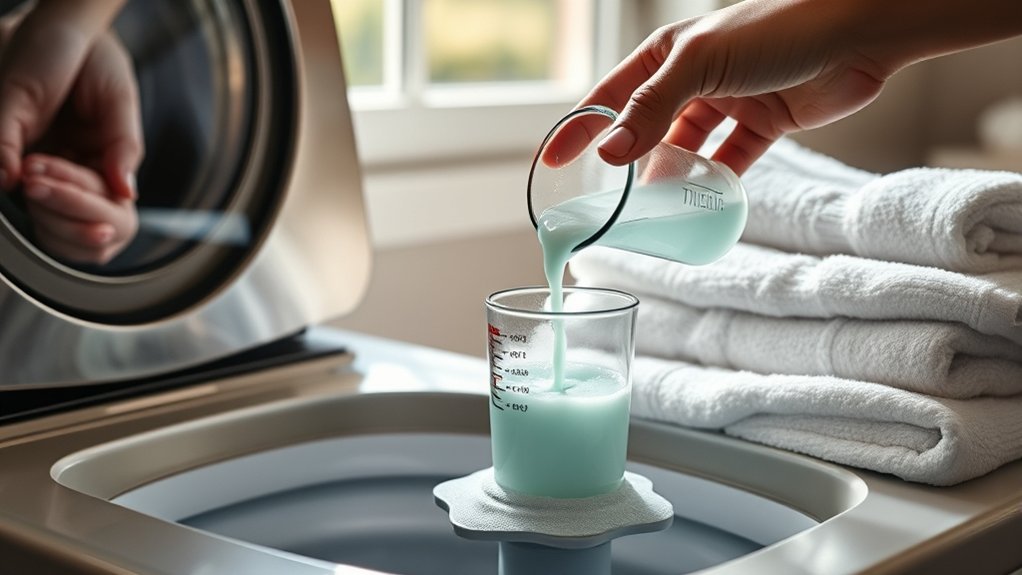
Understanding that Lysol Laundry Sanitizer is safe for most fabrics, including colors and delicates, you should apply it correctly to maximize its sanitizing effects without harming your clothes.
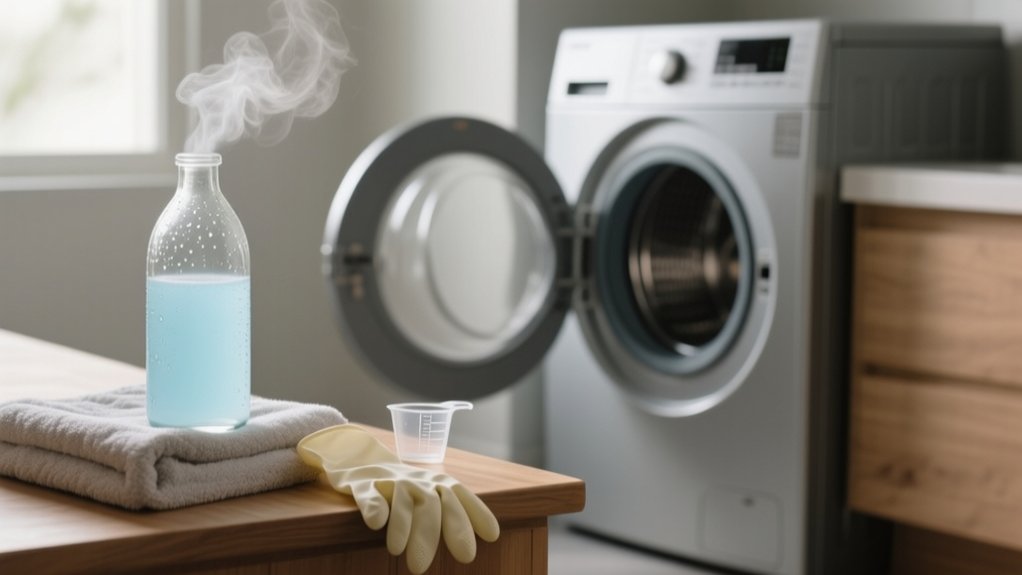
Add 2 capfuls of Lysol Laundry Sanitizer to the fabric softener compartment or during the rinse cycle, making sure it remains separate from the main detergent.
Add 2 capfuls of Lysol Laundry Sanitizer in the fabric softener compartment or rinse cycle, separate from detergent.
Follow the product label instructions precisely, including running the rinse cycle for at least 16 minutes to achieve peak sanitization.
Avoid use on silk, wool, or non-machine washable items. Maintain proper ventilation while using the product to minimize exposure to strong scents.
For enhanced germ protection, especially in homes with pets or during illness recovery, incorporate Lysol Laundry Sanitizer into your regular use routine.
This approach guarantees safe use and effective sanitization of delicate fabrics and everyday laundry.
Risks of Mixing Lysol Laundry Sanitizer With Detergents
You shouldn’t mix Lysol Laundry Sanitizer with regular detergents because doing so can dilute its active ingredients and make it less effective at sanitizing.
Instead, the product is designed to be added during the rinse cycle or placed in the fabric softener compartment. This helps avoid any interference with its cleaning power.
Detergent Interaction Hazards
Although Lysol Laundry Sanitizer offers effective fabric sanitization, mixing it directly with detergents can cause chemical interactions that reduce its antibacterial efficacy.
You should always add Lysol Laundry Sanitizer to the fabric softener compartment or during the rinse cycle to avoid detergent interaction.
Mixing detergents with the sanitizer compromises its ability to sanitize fabrics, especially in cold water. This improper combination may also impair odor removal.
Key detergent interaction hazards include:
- Reduced efficacy in killing bacteria due to chemical reactions between sanitizer and detergent ingredients
- Diminished odor removal and fabric sanitization when mixed improperly
- Failure to follow dosing instructions, leading to suboptimal sanitation
To maintain Lysol Laundry Sanitizer’s performance, use it independently and as directed for safe, effective fabric care.
Proper Usage Guidelines
When Lysol Laundry Sanitizer is mixed directly with detergents, its chemical composition can react unpredictably, reducing its ability to sanitize fabrics effectively.
To maintain sanitizing effectiveness, you should add Lysol Laundry Sanitizer to the fabric softener compartment or during the rinse cycle only. This approach prevents adverse chemical reactions and preserves fabric integrity.
Follow the recommended dosing instructions, two capfuls per load, to avoid residue build-up that could impair laundry performance. Confirm the rinse cycle lasts about 16 minutes for ideal sanitization.
Although Lysol Laundry Sanitizer suits various fabrics, avoid using it on silk, wool, or non-machine-washable items.
What Experts Say About Lysol Laundry Sanitizer Safety
How safe is Lysol Laundry Sanitizer according to experts? Lysol Laundry Sanitizer is EPA-registered, confirming its safety and efficacy in killing 99.9% of bacteria, including harmful strains like Staphylococcus aureus and Klebsiella pneumoniae.
Experts emphasize correct usage for maximum safety. You should add Lysol Laundry Sanitizer to the fabric softener compartment or during the rinse cycle to avoid mixing with detergent. This helps ensure fabric integrity and sanitizer effectiveness.
Use it confidently in cold water cycles, which conserves energy without compromising bacteria elimination.
Apply it on delicates and baby clothes, as it’s gentle yet effective. This provides parents peace of mind about safety and hygiene.
This product balances microbial safety with fabric care, making it a scientifically sound choice for sanitizing laundry.
How Lysol Laundry Sanitizer Kills 99.9% of Bacteria
Understanding the mechanism behind Lysol Laundry Sanitizer’s ability to kill 99.9% of bacteria can help you appreciate its effectiveness. This EPA-registered product targets harmful bacteria such as Staphylococcus aureus and Klebsiella pneumoniae by disrupting their cellular structures.
You add Lysol Laundry Sanitizer to the fabric softener compartment or during the rinse cycle, ensuring even distribution. It works efficiently in cold water, which allows you to sanitize laundry without high temperatures.
Using two capfuls per load enhances sanitization while maintaining fabric integrity. It’s safe for use on delicates and baby clothes, making it a reliable bleach alternative.
How Does Lysol Laundry Sanitizer Compare to Hot Water Sanitizing?
You’ll find that Lysol Laundry Sanitizer is EPA-registered to kill 99.9% of bacteria, which means it works just as well as sanitizing with hot water.
The label clearly points this out, so it’s easy to see how effective it can be compared to the traditional hot water method.
Knowing this can help you decide what’s best for your laundry, especially when you think about different fabric types and washing conditions.
Efficacy Against Bacteria
When comparing Lysol Laundry Sanitizer to hot water sanitizing, you’ll find that Lysol offers a reliable alternative by killing 99.9% of bacteria, including pathogens such as Staphylococcus aureus and Klebsiella pneumoniae.
Its efficacy in cold water enhances sanitization where hot water use is impractical, targeting microorganisms that standard laundering might miss.
This guarantees thorough cleaning and improved household safety.
Key advantages of Lysol Laundry Sanitizer include:
- Effective elimination of harmful pathogens in cold water
- Enhanced bacteria removal beyond typical laundering
- Provides peace of mind for households with children, pets, or illness concerns
Labeling and Consumer Perception
How does Lysol Laundry Sanitizer measure up against traditional hot water sanitizing? Lysol Laundry Sanitizer’s labeling claims it kills 99.9% of bacteria, yet it doesn’t directly compare its efficacy to hot water laundering, which already provides strong sanitizing benefits.
The product’s cold water disclaimer implicitly acknowledges that hot water is more effective at inactivating bacteria.
From a consumer perception standpoint, the labeling isn’t misleading; reasonable consumers wouldn’t assume Lysol offers considerably greater sanitizing value than hot water alone.
While Lysol Laundry Sanitizer adds sanitizing benefits, hot water remains a scientifically validated method for eliminating bacteria during laundering.
When Should You Consider Using Lysol Laundry Sanitizer for Your Laundry?
Why consider adding Lysol Laundry Sanitizer to your washing routine? Lysol laundry sanitizer targets harmful bacteria that standard detergents may miss, providing enhanced sanitization for your laundry.
You should especially use it with high-risk items like children’s clothes, bedding, and towels that harbor bacteria. It’s also great during cold and flu season to reduce pathogens and protect your household.
Ideal for children’s clothes, bedding, and towels, especially during cold and flu season to reduce harmful pathogens.
Fabrics exposed to pet odors or sweat, such as workout clothes, benefit too, as it eliminates bacteria effectively.
Additionally, Lysol laundry sanitizer works well in cold water, preserving delicate fabrics while killing 99.9% of bacteria.
Incorporating it into your laundry routine guarantees thorough cleaning and reduces microbial presence.
It’s a scientifically sound choice for maintaining hygiene and freshness in everyday laundry tasks.
Frequently Asked Questions
Can Lysol Laundry Sanitizer Be Used in Both Top and Front Load Washers?
Yes, you can use Lysol Laundry Sanitizer in both top-load and front-load washers.
You should add two capfuls to the fabric softener compartment or during the rinse cycle.
It works effectively in cold water and requires a rinse cycle of at least 16 minutes for maximum sanitization.
Always follow the product instructions to guarantee safety and effectiveness, especially when washing delicate fabrics or materials that need special care.
Does Lysol Laundry Sanitizer Have a Strong Chemical Odor?
No, Lysol Laundry Sanitizer doesn’t have a strong chemical odor. It features a crisp linen scent designed to be mild and non-overpowering.
The formula minimizes harsh chemical smells common in some sanitizers, and the fragrance typically dissipates after washing. This guarantees your clothes smell fresh rather than chemically enhanced.
You can trust it to sanitize effectively while maintaining a pleasant, subtle scent without strong odors.
Is Lysol Laundry Sanitizer Safe for Baby Clothes?
Yes, Lysol Laundry Sanitizer is safe for baby clothes when you use it as directed.
It’s EPA-registered and kills 99.9% of bacteria without containing bleach, so it preserves fabric integrity.
You can add two capfuls during the rinse cycle or in the fabric softener compartment, even with cold water.
This guarantees effective sanitization while eliminating odors, giving you confidence that your infant’s clothes are clean and safe.
How Does Lysol Laundry Sanitizer Affect Fabric Softeners?
You might think Lysol Laundry Sanitizer would sabotage your fabric softener, but it actually plays nice.
When you add the sanitizer to the fabric softener compartment or rinse cycle, it doesn’t interfere with the softener’s scent or function.
Its carefully balanced formulation guarantees both products work effectively, provided you avoid mixing them directly in the main wash.
This precision keeps your fabrics fresh, soft, and hygienically clean without compromise.
Can Lysol Laundry Sanitizer Be Used for Hand Washing Clothes?
Yes, you can use Lysol Laundry Sanitizer for hand washing clothes. Just dilute it in water according to the label instructions and add it to the rinse water, not the main wash.
This method guarantees effective sanitization by killing 99.9% of bacteria without damaging fabrics.
Always follow the recommended dosing and usage guidelines precisely to maintain safety and ideal results when sanitizing your laundry by hand.
Conclusion
Using Lysol Laundry Sanitizer is like adding a protective shield to your fabrics, effectively eliminating 99.9% of bacteria without the harsh heat of boiling water. Backed by EPA registration, it guarantees safety and efficacy across various fabrics without fading colors or causing damage.
By following usage guidelines, you can confidently enhance your laundry’s hygiene. Trust the science; it’s a precise, reliable ally in keeping your clothes clean and safe.