What Does An Allergic Reaction To Laundry Detergent Look Like
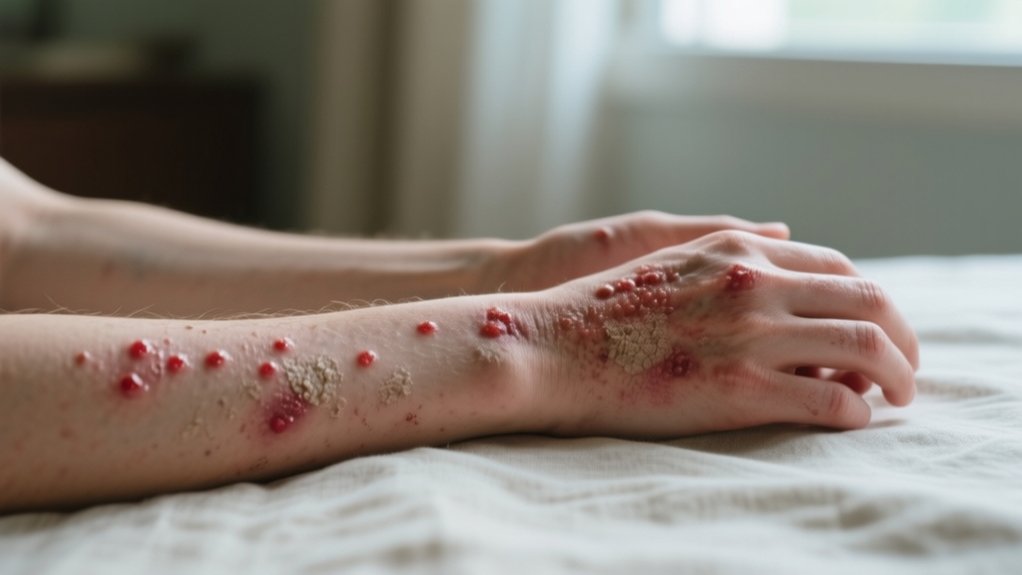
If you have an allergic reaction to laundry detergent, you’ll notice an itchy, red rash, often where your clothes fit tightly like the waist or armpits. This rash can include raised bumps, blisters, or dry, inflamed patches that may appear days after exposure.
You might also experience skin irritation from fragrances, dyes, or preservatives in detergents. Extra rinsing can help, and there are practical ways to identify and manage these reactions to protect your skin.
Key Takeaways
- An allergic reaction to laundry detergent typically causes itchy, red rashes in areas of tight clothing like the waist, neck, and armpits.
- The rash may present as blotchy, inflamed patches, raised bumps, blisters, or dry, irritated skin.
- Symptoms often appear as allergic contact dermatitis with redness, itching, and skin irritation.
- Reactions can develop up to 10 days after exposure to detergent residues on clothing.
- Extra rinsing of laundry and switching to fragrance-free detergents can help reduce skin irritation and allergic symptoms.
What Does a Laundry Detergent Allergy Look Like?
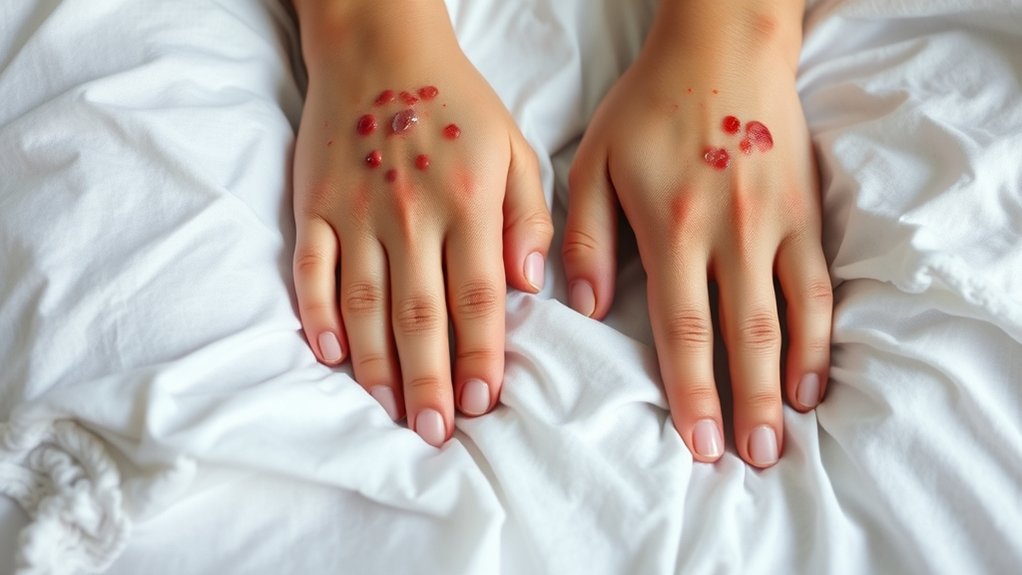
Although symptoms may take several days to emerge, a laundry detergent allergy typically shows up as an itchy, red rash in areas where clothing fits snugly, such as your waist, armpits, and neck.
These laundry detergent rashes often present as allergic contact dermatitis, characterized by skin irritation, raised bumps, blisters, or dry patches.
If you have sensitive skin, exposure to common detergent allergens can trigger these reactions. Because symptoms can develop up to 10 days after exposure, monitoring your skin carefully is essential.
To reduce skin irritation, consider extra rinsing of your laundry to remove residual detergent.
Switching to a hypoallergenic detergent may also help prevent allergic contact dermatitis, especially if your skin remains reactive despite rinsing.
Identifying and managing these symptoms early can improve your skin’s health and comfort.
Which Detergent Ingredients Might Be Causing Your Allergy?
You might be reacting to some common allergenic ingredients like fragrances and dyes.
These often cause skin irritation and contact dermatitis. Surfactants, such as sodium lauryl sulfate, and preservatives like methylisothiazolinone can also disrupt your skin barrier and trigger allergic responses.
Common Allergenic Ingredients
Certain ingredients in laundry detergents commonly trigger allergic reactions by irritating sensitive skin or disrupting its natural barrier.
Fragrances and dyes are frequent culprits, often causing irritant contact dermatitis and skin rashes, especially if your skin is sensitive. Choosing fragrance- and dye-free detergents can reduce these risks.
Preservatives such as methylisothiazolinone and formaldehyde releasers also provoke allergic reactions, making them problematic for susceptible individuals.
Furthermore, sodium lauryl sulfate, a surfactant, compromises your skin’s protective barrier, increasing vulnerability to irritation and dermatitis.
If you develop persistent skin rashes or irritation after laundry, these ingredients might be responsible.
Identifying and avoiding detergents containing these allergens is essential for managing and preventing allergic skin responses effectively.
Surfactants and Preservatives
Beyond fragrances and dyes, surfactants and preservatives in laundry detergents play a big role in causing allergic reactions.
Surfactants like sodium lauryl sulfate (SLS) can strip your skin’s natural lipid barrier, which increases irritation and makes you more prone to allergic dermatitis.
Preservatives, especially methylisothiazolinone, are common culprits that trigger contact dermatitis in sensitive people.
Repeated exposure may cause chemical buildup on your skin, making the allergic response worse over time.
If you notice redness, itching, or rash after washing clothes, surfactants and preservatives might be to blame.
Checking detergent labels for these ingredients helps you avoid allergens and cut down the risk of dermatitis.
For sensitive skin, picking products free of harsh surfactants and known preservatives is key to preventing allergic reactions linked to laundry detergents.
Fragrances and Dyes
Although surfactants and preservatives often contribute to allergic reactions, fragrances and dyes in laundry detergents are frequently the primary triggers for skin irritation.
Fragrances, usually synthetic, are common allergens that provoke allergic reactions and contact dermatitis in sensitive individuals.
Similarly, dyes added for coloring can cause skin irritation, especially if you have pre-existing sensitivities.
To reduce your risk, consider these points:
- Fragrances contain complex compounds that commonly initiate allergic skin responses.
- Dyes may induce contact dermatitis by interacting adversely with sensitive skin.
- Avoiding products with added fragrances and dyes can minimize allergic reactions.
Reading labels carefully and choosing fragrance-free, dye-free detergents helps protect your skin from irritation and allergic reactions linked to these ingredients.
How to Recognize If Detergent Is Causing Your Skin Irritation
How can you tell if your laundry detergent is causing your skin irritation? Detergent allergy often shows up as itchy skin, redness, and swelling, especially in areas where clothing fits tightly.
You might notice a Laundry Detergent Rash appearing as blotchy or inflamed patches. Sometimes, these can develop into raised, blister-like lesions.
These symptoms can take up to 10 days to show, so watch your skin carefully after you switch detergents or stop using the suspected one. A patch test can help identify sensitivity before you get widespread exposure.
| Symptom | Description |
|---|---|
| Itchy Skin | Persistent itching, often where clothes touch |
| Rash Appearance | Blotchy, inflamed, or blister-like lesions |
| Onset Timing | Symptoms may appear up to 10 days post-exposure |
How to Test for a Laundry Detergent Allergy at Home
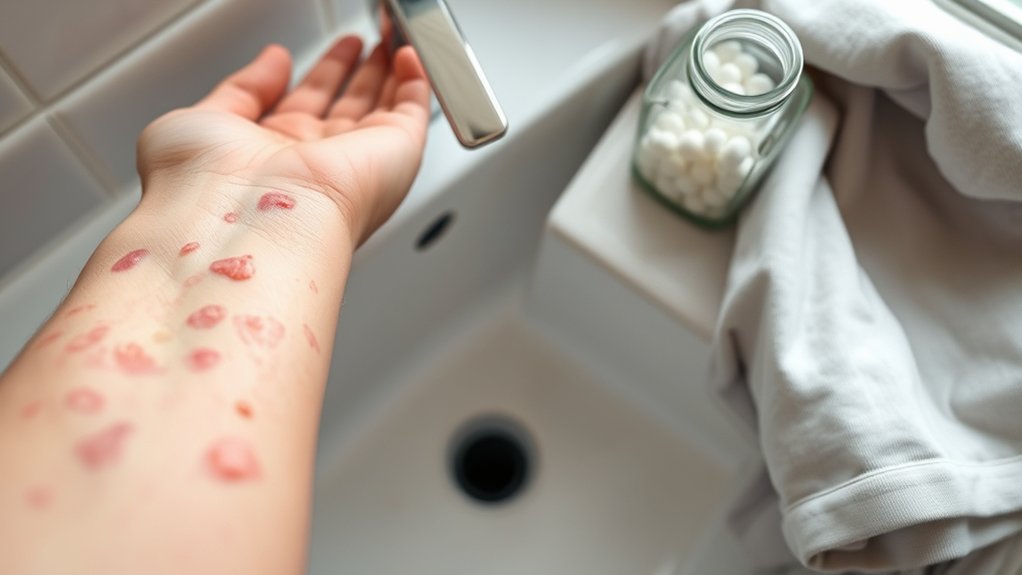
Identifying whether your laundry detergent causes skin irritation requires careful observation and targeted testing. To determine if your skin is allergic or sensitive to a detergent, start by monitoring reactions after wearing clothes washed with the product for 2-3 days.
Next, conduct a patch test by applying diluted detergent on a discreet skin area, such as the inner arm, and observe for 48 hours.
Switching to a hypoallergenic detergent for 3-4 weeks can further clarify if symptoms improve.
To effectively test for a detergent allergy at home, consider these steps:
- Keep a diary logging detergents used and skin symptoms.
- Perform a patch test to detect localized allergic reactions.
- Consult a healthcare provider if symptoms persist or worsen for professional evaluation.
Relieving Itching and Inflammation From Detergent Rash
When you experience itching and inflammation from a detergent rash, rinsing the affected skin with lukewarm water is essential to remove residual irritants.
To further soothe itching and reduce inflammation, apply a cool, damp compress for 10–15 minutes.
Incorporate gentle skin care by using a mild, fragrance-free moisturizer to restore the skin barrier and address dry skin caused by laundry detergents.
For short-term relief, you can apply over-the-counter hydrocortisone 1% cream sparingly, which helps in relieving itching and inflammation.
During recovery, wear soft, breathable fabrics that have been thoroughly rinsed to minimize additional irritation.
These steps collectively promote healing and provide effective relief from the discomfort associated with detergent-induced allergic reactions.
Laundry Habits to Prevent Laundry Detergent Allergies
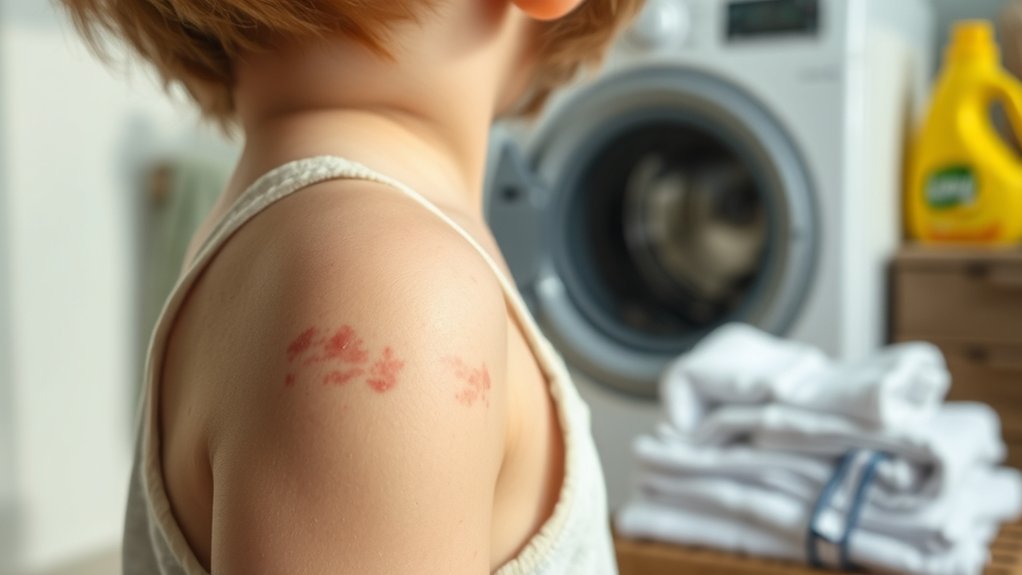
Although allergic reactions to laundry detergents can be challenging to manage, adopting specific laundry habits can considerably reduce your risk of irritation. To prevent detergent allergies affecting your skin, you should prioritize hypoallergenic, fragrance-free detergents and guarantee thorough rinsing.
In your laundry routine, consider these practices to minimize exposure to irritants:
- Use an extra rinse cycle to effectively remove detergent residue that can trigger skin reactions.
- Wash new clothes before wearing to eliminate chemical residues from manufacturing.
- Regularly clean your washing machine to prevent buildup that transfers allergens.
How Hard Water Makes Laundry Detergent Allergies Worse
Because hard water contains minerals like calcium and magnesium, it can interfere with how laundry detergents rinse out of your clothes. These minerals bind with detergent components, causing chemical buildup on fabric fibers.
This residue can worsen detergent allergies by increasing skin irritation and disrupting your skin’s natural pH balance.
Residue buildup from detergents can heighten skin irritation and upset your skin’s natural pH balance.
When detergent clings to clothes in hard water, it may reactivate with sweat or moisture, intensifying itchiness and discomfort. Consequently, even clean clothes can trigger allergic reactions.
To reduce these effects, softening hard water improves detergent rinsing, minimizing residue and lowering allergy risks.
If you experience persistent skin irritation, a dermatologist can test for detergent allergies and recommend appropriate treatment or laundry adjustments to protect your skin health.
Frequently Asked Questions
Can Laundry Detergent Allergies Cause Respiratory Symptoms?
Yes, laundry detergent allergies can cause respiratory symptoms. If you’re sensitive, you might experience sneezing, coughing, or difficulty breathing, especially if you have asthma or other lung conditions.
Fragrances and preservatives in detergents can irritate your airways when they become airborne during washing or drying. Symptoms like nasal congestion, throat irritation, and wheezing may develop hours or days after exposure.
Being aware helps you manage and reduce these reactions effectively.
Are Natural or Hypoallergenic Detergents Always Safe?
Natural or hypoallergenic detergents aren’t always your skin’s sanctuary.
Even these “gentle” formulas can harbor hidden irritants like essential oils or preservatives that might trigger allergies.
Don’t assume safety; always scrutinize ingredient lists and perform a patch test before using them widely.
Your skin’s reaction is the final judge, so stay vigilant.
Hypoallergenic means less likely to irritate, not impossible.
Treat it as a cautious step, not a guarantee.
How Long Does It Take for Symptoms to Appear After Contact?
You can expect symptoms to appear anywhere from 24 to 48 hours after contact with the allergen.
In some cases, especially if you have a severe sensitivity, it may take up to 10 days for symptoms to fully manifest.
Be vigilant during this period, as the reaction might develop slowly.
Early detection helps you manage the irritation effectively and avoid prolonged discomfort or worsening symptoms.
Can Pets Develop Allergies to Laundry Detergent?
Yes, your pet can develop allergies to laundry detergent, like a hidden storm brewing beneath soft fabrics.
Detergents with fragrances, dyes, or preservatives may trigger itching, redness, or rashes on their skin.
You’ll notice discomfort especially where their skin contacts laundered bedding or toys.
To keep your furry friend safe, use hypoallergenic, fragrance-free detergents and watch closely for any signs of irritation after washing their belongings.
Is It Possible to Outgrow a Laundry Detergent Allergy?
Yes, you can outgrow a laundry detergent allergy, especially if you’re a child whose immune system is still developing.
Your sensitivity may decrease over time with reduced exposure or by switching to hypoallergenic detergents.
However, continuous exposure can worsen the allergy.
Monitoring your symptoms and consulting a healthcare professional will help determine your progress.
Each case varies, so personalized advice is essential for managing and potentially outgrowing this allergy.
Conclusion
If you notice redness, itching, or a rash after laundry, don’t just ignore it. Your detergent might be the culprit. Identifying and avoiding specific ingredients can calm your skin and prevent flare-ups.
Testing at home and adjusting laundry habits are key steps. Remember, hard water can worsen symptoms, so addressing it is part of the solution. Taking these measures will help you keep your skin healthy and irritation-free.