What Is Laundry Sanitizer – A Closer Look
Laundry sanitizer targets bacteria and viruses that your detergent alone can’t fully eliminate, killing up to 99.9% of germs for enhanced hygiene. You add it during the rinse cycle, where it works safely on colors and delicate fabrics without replacing detergent.
It’s especially useful for heavily soiled, odorous, or potentially contaminated laundry like sportswear or items exposed to illness. Using the right sanitizer optimizes germ removal beyond standard washing. Discover how to maximize its benefits and proper use.
Key Takeaways
- Laundry sanitizer kills 99.9% of bacteria on fabrics, providing enhanced hygiene beyond regular detergent capabilities.
- It is added during the rinse cycle and works effectively in cold water without damaging colors or delicate fabrics.
- Detergents clean dirt and stains but don’t fully sanitize; laundry sanitizers target bacteria and viruses like SARS-CoV-2.
- Use laundry sanitizer for sweaty, odor-prone, or illness-exposed items, especially towels and sportswear.
- Laundry sanitizers contain active ingredients like PCMX or QAC and are bleach-free options safe for various fabrics.
What Is Laundry Sanitizer and How Does It Work?
Although regular detergent removes dirt and grime, laundry sanitizer targets bacteria on fabrics to provide an additional layer of hygiene.
Laundry sanitizers are specialized additives formulated to reduce up to 99.9% of bacteria, addressing odors, moisture, and contamination, especially in damp or heavily soiled loads.
Laundry sanitizers eliminate up to 99.9% of bacteria, tackling odors and contamination in damp or soiled laundry.
Unlike detergents, which focus on cleaning visible dirt, laundry sanitizers specifically target microbial contaminants and should be used alongside detergent, not as a replacement.
Many products, including Lysol® Laundry Sanitizer, are safe for colors and delicate fabrics.
To maximize effectiveness, you add laundry sanitizers during the rinse cycle, following label instructions precisely.
This guarantees ideal contact time with fabrics and microbes, enhancing hygiene without compromising fabric integrity or color retention.
Why Laundry Detergent Alone Can’t Kill Germs
Even when you use detergent correctly, it won’t fully eliminate harmful bacteria and viruses from your laundry.
Laundry detergent primarily targets dirt, oils, and stains but lacks the virucidal properties needed to effectively neutralize pathogens.
Studies show detergents may inactivate some viruses but often fall short of complete sanitization, especially with loads contaminated by body fluids or during illness.
Certain bacteria can survive standard washing, particularly on synthetic fabrics, allowing germs to persist and risk cross-contamination.
That’s why laundry sanitizer products are essential.
Formulated to kill 99.9% of bacteria, they complement detergents by providing enhanced hygiene.
Using laundry sanitizer products alongside detergent guarantees a scientifically backed, more thorough microbial reduction, safeguarding your laundry beyond what detergent alone can achieve.
When Should You Use Laundry Sanitizer?
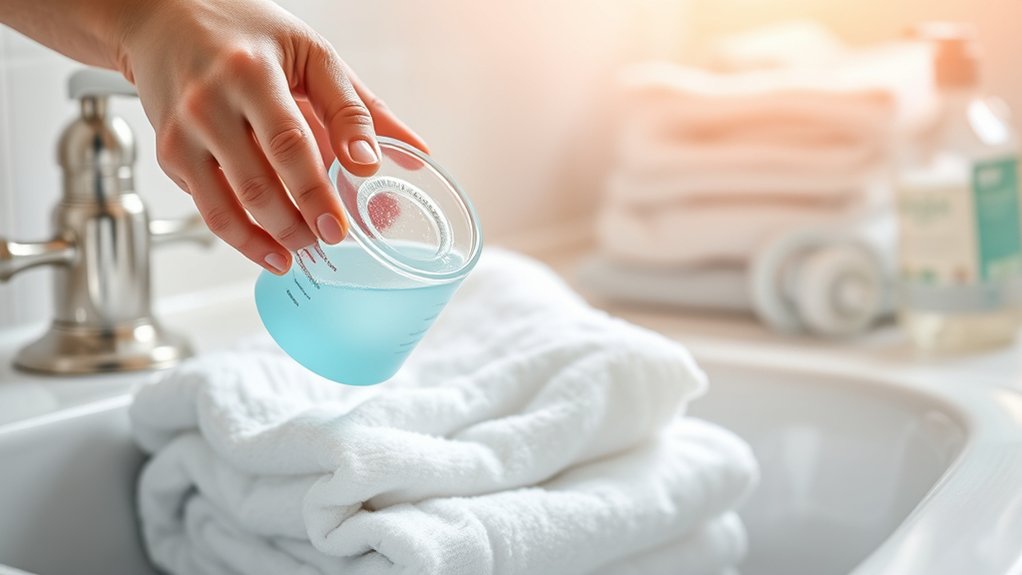
You should use laundry sanitizer on loads that have strong odors or heavy sweat because it helps eliminate bacteria effectively.
It’s especially important for items that have been exposed during illness or come into contact with body fluids to make sure they’re really clean.
And when it comes to fabrics like towels and sportswear, which can be tough to freshen up, adding a sanitizer gives you an extra level of cleanliness that detergent alone just can’t achieve.
Ideal Laundry Loads
Laundry sanitizer works best on loads that are damp-smelling or heavily soiled with sweat. These conditions allow bacteria and odors to persist despite regular washing.
You should prioritize laundry sanitizer for items like sportswear, bedding, and fabrics exposed to body fluids or sickness. Regular daily clothes usually don’t need it unless odors or contamination remain.
Always apply laundry sanitizer during the rinse cycle alongside detergent for maximum efficacy.
| Load Type | Condition | Use Laundry Sanitizer? |
|---|---|---|
| Sportswear | Sweat-heavy | Yes |
| Bedding | Damp, odor-prone | Yes |
| Regular Clothing | Lightly soiled | No |
| Contaminated Items | Body fluids/sickness | Yes |
Hygiene-Related Situations
When dealing with fabrics that have absorbed moisture or come into contact with bodily fluids, using a laundry sanitizer becomes essential to eliminate bacteria and viruses effectively.
You should apply laundry sanitizer for damp-smelling or heavily soiled items like sportswear and gym clothes, which often harbor bacteria and unpleasant odors.
It’s particularly important for bedding and towels used during illness, as laundry sanitizer reduces the risk of virus transmission.
For fabrics that are difficult to freshen or retain moisture, laundry sanitizer provides extra hygiene support.
Always use it alongside detergent, typically during the rinse cycle, to maximize cleanliness.
For ideal results, consult the product label and fabric care instructions to determine the appropriate timing and application of laundry sanitizer in your laundry routine.
How to Use Laundry Sanitizer in Your Wash
Since laundry sanitizer is formulated to enhance hygiene rather than replace detergent, you should always use it alongside your regular cleaning agents.
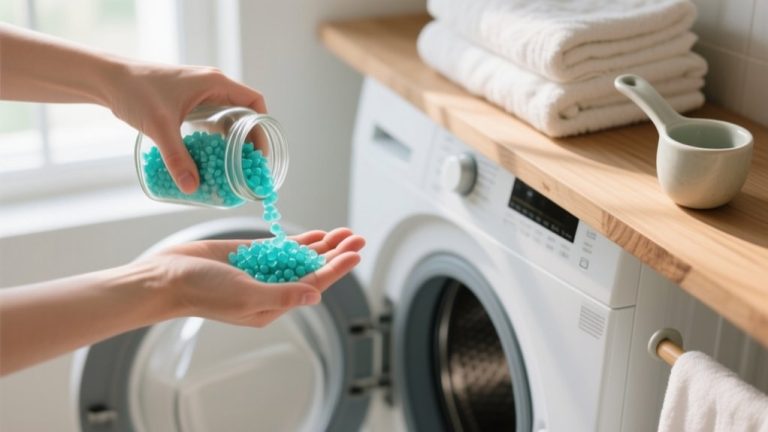
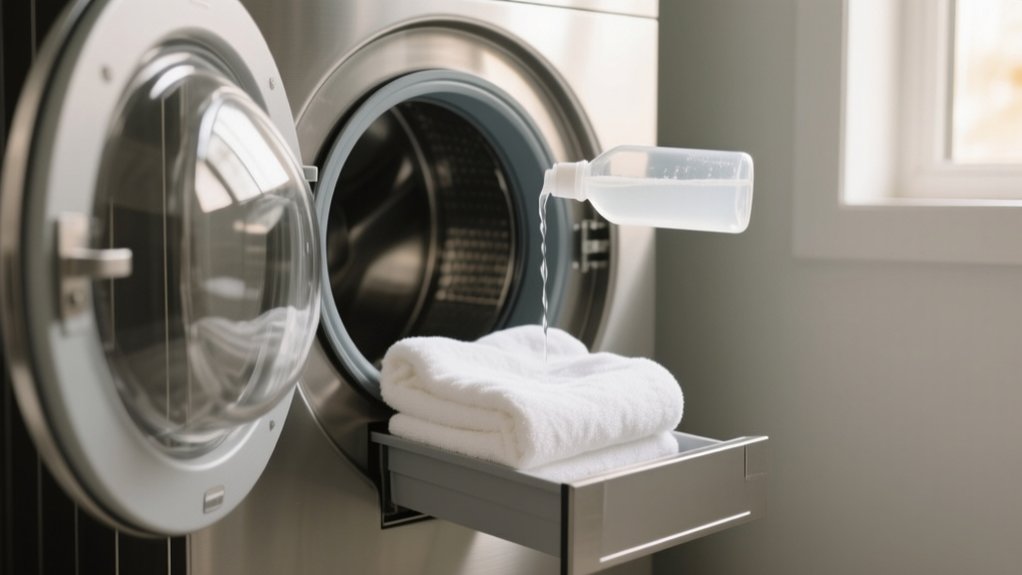
Add the laundry sanitizer during the rinse cycle, ideally through the fabric softener compartment. This helps guarantee even distribution and maximizes antimicrobial efficacy.
Add sanitizer during the rinse cycle via the fabric softener compartment for optimal distribution and effectiveness.
Follow the product’s instructions carefully. Most require about 2 capfuls per load, suitable for both standard and HE machines.
Verify your rinse cycle runs at least 16 minutes to achieve peak sanitization, as supported by product guidelines.
Choose a laundry sanitizer labeled as color-safe or bleach-free to protect your fabrics from damage.
Laundry Sanitizer vs. Bleach and Vinegar: What’s Best?
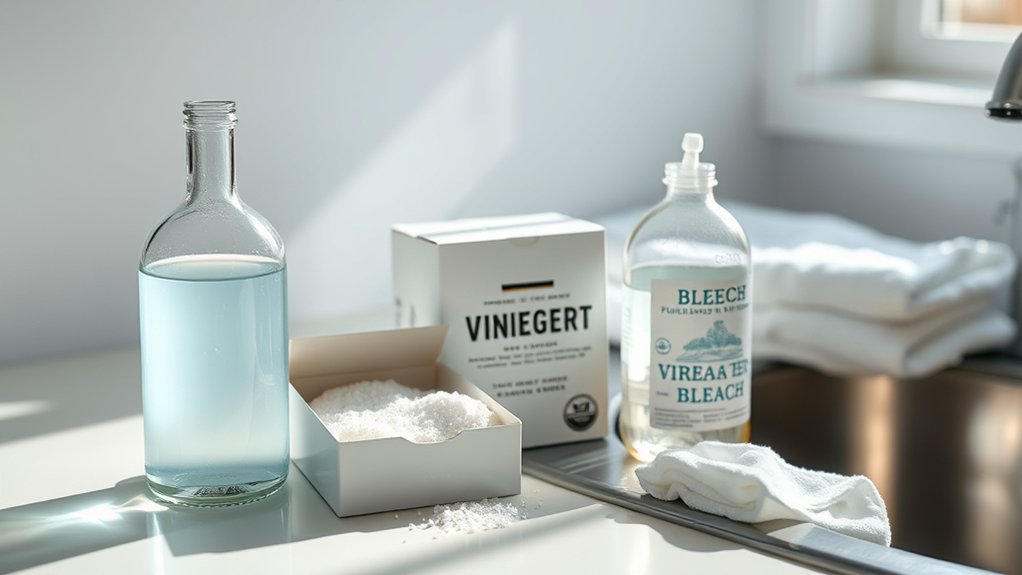
How do laundry sanitizers compare to bleach and vinegar in effectively disinfecting your clothes?
Laundry sanitizer is formulated to kill 99.9% of bacteria and inactivate viruses like SARS-CoV-2 within 15 minutes, outperforming vinegar, which lacks proven broad-spectrum antimicrobial efficacy.
Unlike bleach, which requires hot water and can damage delicate fabrics and colors, laundry sanitizer works effectively in cold water and is safe for various materials.
Vinegar primarily neutralizes odors and softens fabrics but doesn’t disinfect thoroughly.
Using laundry sanitizer alongside detergent enhances hygiene by specifically targeting harmful microorganisms, making it the superior choice for sanitizing loads exposed to illness or heavy soiling.
Bleach remains useful for whitening and disinfecting bleach-safe fabrics, but laundry sanitizer offers a gentler, more versatile, and evidence-based disinfection method.
Best Fabrics and Loads for Laundry Sanitizer
Laundry sanitizer excels at targeting bacteria and viruses on fabrics that tend to retain moisture and odors, such as synthetic sportswear and activewear.
You’ll find laundry sanitizer particularly effective on children’s clothes, bedding, towels, and garments exposed to bodily fluids, like undergarments and hospital linens.
These items harbor harmful germs that standard detergent may not fully eliminate.
Cotton and cotton blends handle laundry sanitizer well without damage, making them ideal candidates.
However, you should use caution with delicate fabrics, as some formulations might affect fiber integrity.
By applying laundry sanitizer properly, you greatly reduce bacteria and odors, promoting a safer, fresher environment.
This is especially important if you or your family have sensitive skin or allergies.
Choose loads accordingly to maximize sanitizer efficacy and fabric care.
How to Choose the Best Laundry Sanitizer for You
When choosing a laundry sanitizer, it’s important to pick one that works well with the types of fabrics you usually wash.
Also, keep in mind whether you have a high-efficiency (HE) or a standard washing machine, since some sanitizers are designed specifically for one or the other.
Next, take a good look at the active ingredients. You want something that effectively kills a wide range of germs but won’t harm your clothes in the process.
It’s a balance between strong antimicrobial power and fabric care.
Finally, make sure the sanitizer is compatible with your washer’s cycle settings.
This way, you can get the best germ-fighting results without risking any damage to your fabrics.
It’s all about optimizing the cleaning process while keeping your clothes safe and fresh.
Fabric Compatibility Matters
Since fabric types vary widely in texture and dye composition, checking compatibility before using a laundry sanitizer is essential. Ensuring fabric compatibility protects your garments from damage and discoloration while maximizing sanitizing efficiency.
Always review product labels for specific fabric guidelines and washing cycle instructions.
To select the best sanitizer, consider these points:
- Choose color-safe or bleach-free formulas for vibrant or delicate fabrics
- Verify the sanitizer suits your fabric’s hygiene needs (e.g., sportswear, bedding)
- Conduct a patch test on a hidden fabric area before full use
- Confirm sanitizer instructions align with your washing machine cycle
- Prioritize products explicitly tested for your fabric type to prevent degradation
These steps help you maintain fabric integrity while effectively sanitizing your laundry.
Sanitizer Ingredients Choices
When selecting a sanitizer, focus on active ingredients like p-chloro-m-xylenol (PCMX) or quaternary ammonium compounds (QAC). These have been scientifically proven to eliminate 99.9% of bacteria and viruses, including coronaviruses, within minutes.
Your sanitizer ingredients choices should prioritize efficacy and fabric safety. Opt for bleach-free formulas if you’re sanitizing colored fabrics to avoid damage. Always review product labels for specific instructions, ensuring compatibility with your washing machine and ideal timing during the wash cycle.
Consider your laundry’s unique needs, such as sanitizing items exposed to illness or odor retention, to select a product tailored for those challenges.
Finally, verify certifications or lab-tested claims on the label to confirm the sanitizer’s proven ability to inactivate harmful microbes. This ensures a reliable choice for your laundry routine.
Washer Type Considerations
Although selecting a laundry sanitizer may seem straightforward, considering your washer type, whether standard or high-efficiency (HE), is essential to guarantee peak performance.
Washer type considerations directly impact sanitizer compatibility and effectiveness.
HE machines use less water and often require formulations tailored to their cycle characteristics. To optimize sanitization, focus on these factors:
- Confirm sanitizer compatibility with your washer type on the product label
- Choose sanitizers designed for HE machines if applicable
- Opt for products suitable for addition during the rinse cycle
- Ascertain the sanitizer is color-safe to prevent fabric damage
- Select sanitizers effective in cold water to match HE cold cycles and conserve energy
Frequently Asked Questions
Can Laundry Sanitizer Cause Skin Irritation or Allergies?
Yes, laundry sanitizers can cause skin irritation or allergies, especially if you have sensitive skin or allergies to certain chemicals like quaternary ammonium compounds.
You should always perform a patch test before full use to check for adverse reactions.
Reading product labels carefully helps you avoid ingredients that might trigger issues.
Choosing hypoallergenic or fragrance-free options can further reduce your risk of irritation or allergic responses during laundry.
Is Laundry Sanitizer Safe for Septic Systems?
Yes, laundry sanitizer is generally safe for septic systems when you use it as directed and in moderation.
Most formulations break down effectively, preserving the beneficial bacteria that decompose waste.
However, avoid excessive use, as high concentrations can disrupt bacterial activity and impair system function.
Always check the product label for septic compatibility and maintain your septic system regularly to prevent any negative effects from laundry products.
How Does Laundry Sanitizer Affect Fabric Colors Over Time?
Studies show that 85% of bleach-free laundry sanitizers preserve fabric colors effectively over time. When you use sanitizers containing quaternary ammonium compounds or PCMX, you minimize fading risks.
However, overusing these products can degrade fibers and dull colors. To maintain your fabrics’ vibrancy, follow manufacturer instructions carefully and combine sanitizers with regular detergent washing.
This balanced approach guarantees peak hygiene without compromising color integrity.
Can Laundry Sanitizer Be Used in Cold Water Washes?
Yes, you can use laundry sanitizer in cold water washes. Products like Lysol® Laundry Sanitizer are tested and proven to kill 99.9% of bacteria even in cold water.
To guarantee effectiveness, add the sanitizer as directed, typically in the fabric softener compartment or during the rinse cycle.
This approach maintains fabric integrity while providing validated antimicrobial protection. It makes cold water sanitization both practical and efficient for your laundry needs.
Are There Eco-Friendly or Natural Laundry Sanitizer Options?
Absolutely, you can find eco-friendly laundry sanitizers nowadays, much like discovering a telegram in a smartphone age.
These options use plant-based ingredients or essential oils, guaranteeing effective bacteria reduction while being biodegradable and safe for sensitive skin.
Products like white vinegar and baking soda also work naturally.
Look for USDA Organic or Green Seal certifications to confirm proven efficacy and environmental safety, minimizing pollution and allergic risks with every wash.
Conclusion
Laundry sanitizer can reduce up to 99.9% of bacteria and viruses that regular detergent often misses, making it essential for truly hygienic laundry. Since detergent alone can’t eliminate all germs, especially on high-touch fabrics, using a sanitizer guarantees safer, cleaner clothes.
By integrating it correctly into your wash, you protect your household from harmful pathogens without relying solely on bleach or vinegar. Choose a sanitizer suited for your fabric type and wash load for ideal results.