How To Use Laundry Sanitizer – Quick Guide
To use laundry sanitizer effectively, add two capfuls during your washing machine’s rinse cycle. This guarantees it kills 99.9% of bacteria and viruses on your clothes.
Use cold water to protect delicate fabrics and avoid mixing sanitizer with detergent by running separate cycles. Confirm your rinse cycle lasts at least 16 minutes for ideal germ elimination.
Sanitizing right helps keep clothes hygienic, especially kids’ and athletic wear. If you want to master all usage tips and avoid common mistakes, keep exploring.
Key Takeaways
- Add 2 capfuls of laundry sanitizer to the fabric softener compartment or during the rinse cycle for effective bacterial elimination.
- Use cold water and avoid mixing sanitizer with detergent by running separate wash and rinse cycles.
- Ensure the rinse cycle lasts at least 16 minutes to allow proper sanitizer exposure and disinfection.
- Apply sanitizer especially on kids’ clothes, sportswear, bedding, and after illness for enhanced hygiene.
- Clean your washing machine regularly and keep the door open to prevent mold and maintain sanitizer effectiveness.
What Is Laundry Sanitizer and Why Use It
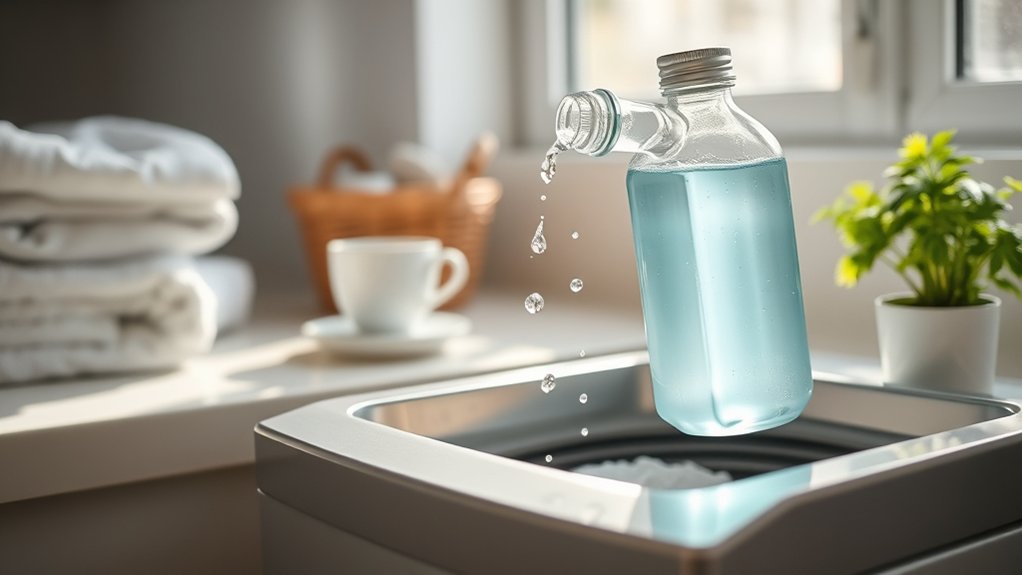
Laundry sanitizer is a powerful liquid product designed to kill 99.9% of harmful bacteria on fabrics during washing, giving you a higher level of cleanliness than detergent alone.
You’ll find that laundry sanitizer effectively eliminates viruses and bacteria like Salmonella and E. coli, which detergent might miss. This makes it essential for guaranteeing truly clean laundry, especially for children’s clothes and sportswear.
Laundry sanitizer targets bacteria like Salmonella and E. coli, ensuring truly clean clothes, especially for kids and athletes.
Unlike bleach, it’s color-safe and gentle enough for delicate fabrics and baby garments, so you won’t have to worry about damage.
Regulated by the EPA, laundry sanitizers work alongside your regular detergent to boost disinfection.
Best Times to Use Laundry Sanitizer
You should use laundry sanitizer on specific loads like kids’ clothes, sportswear, and bedding to keep things hygienic. It really helps target those items that tend to get germy.
Also, when the seasons change, it’s a good idea to step up your sanitizing game. That’s because bacteria and odors can build up more during those times.
Targeted Laundry Loads
Several types of laundry loads benefit greatly from the use of laundry sanitizer. Targeted laundry loads like children’s clothes require extra care, as they often harbor harmful bacteria.
Sportswear, retaining sweat and bacteria, also benefits from laundry sanitizer to maintain freshness and hygiene.
Bedding and towels, known for high germ presence, should be treated with sanitizer to effectively kill bacteria and prevent odors.
Moreover, items frequently in contact with skin, such as undergarments, gain from the added sanitization.
After illness, using laundry sanitizer on contaminated fabrics guarantees pathogens are eliminated, reducing the risk of reinfection.
Seasonal Sanitizing Needs
When managing your household laundry, knowing the best times to use laundry sanitizer can greatly enhance fabric hygiene and prevent the spread of germs. You should sanitize items immediately after illness to kill bacteria and viruses effectively.
Seasonal clothing requires special attention. Sanitize items before storing winter or summer garments to eliminate lingering bacteria and odors.
Regularly sanitize children’s laundry during cold and flu seasons to protect their health.
Athletic gear benefits from sanitizer after sports activities to remove sweat-related bacteria.
Furthermore, sanitize bedding and towels weekly, as these fabrics often harbor bacteria.
How to Add Laundry Sanitizer to Standard and HE Machines
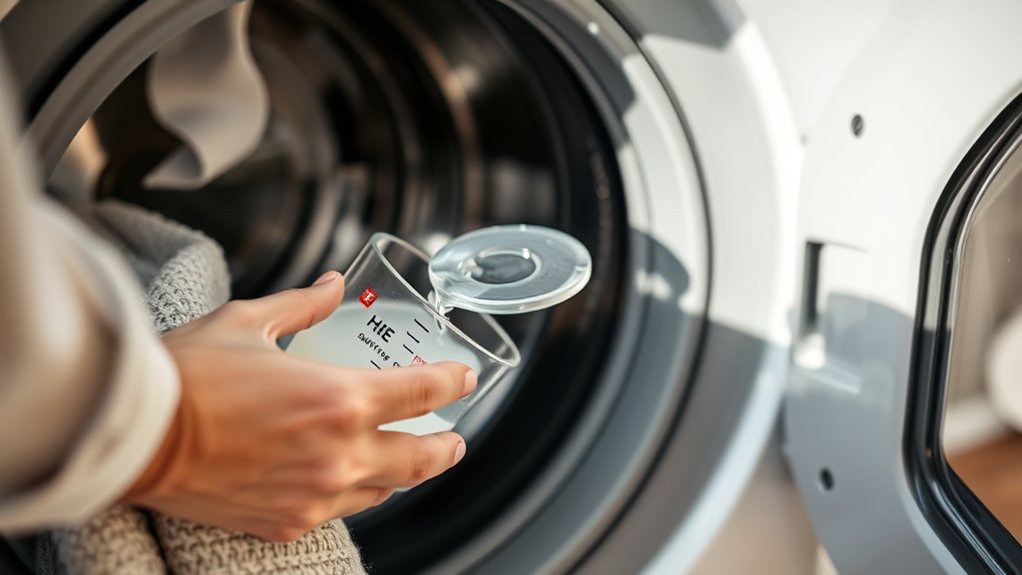
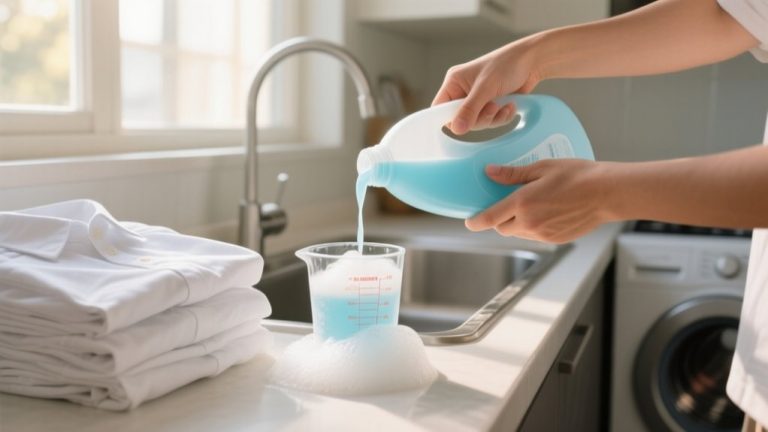
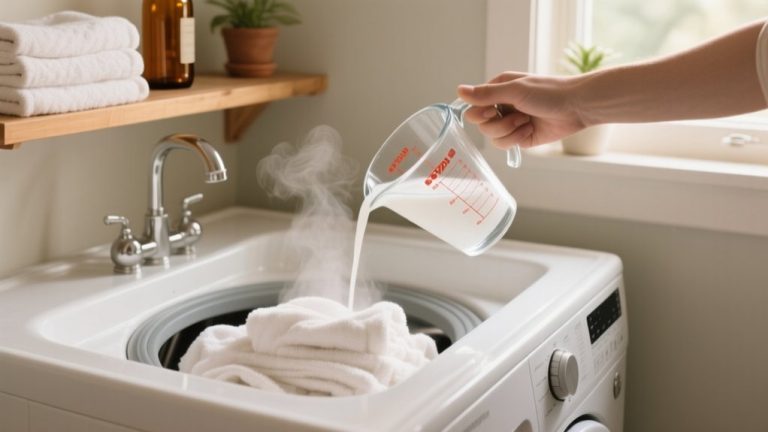
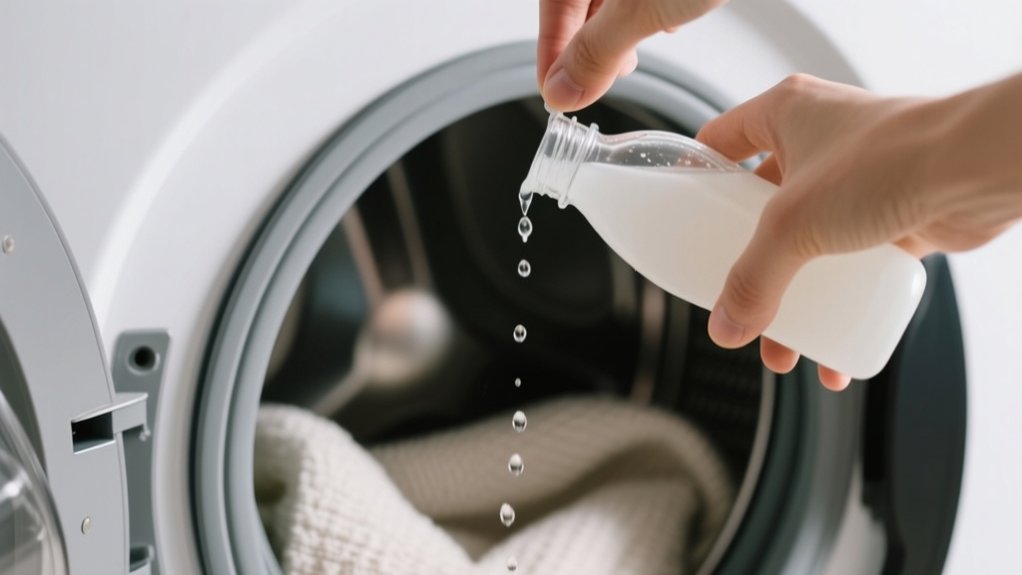
To effectively sanitize your laundry in both standard and HE machines, add 2 capfuls of Lysol® Laundry Sanitizer to the fabric softener compartment or directly into the rinse cycle. Use cold water to protect delicate fabrics and baby clothes.
Never mix detergent and sanitizer; run separate cycles for best results. Confirm the rinse cycle lasts at least 16 minutes to eliminate 99.9% of bacteria.
| Machine Type | Sanitizer Amount | Application Method |
|---|---|---|
| Standard | 2 capfuls | Fabric softener compartment |
| Standard | 2 capfuls | Rinse cycle |
| HE | 2 capfuls | Fabric softener compartment |
| HE | 2 capfuls | Rinse cycle |
| Both | N/A | Use cold water |
Why the Rinse Cycle Matters for Sanitizing
Adding laundry sanitizer during the rinse cycle guarantees that bacteria and pathogens left behind after washing are effectively eliminated.
The rinse cycle is vital because it provides the exposure time laundry sanitizer needs to sanitize your clothes thoroughly.
For proper sanitizing, confirm the rinse cycle runs at least 16 minutes. Using the hottest water setting your fabric allows during this cycle optimizes the sanitizer’s effectiveness.
Avoid mixing detergent and laundry sanitizer in the same cycle, as detergents can reduce sanitizing power.
By adding laundry sanitizer during the rinse cycle, you enhance the cleaning process beyond what detergent alone can achieve, confirming your laundry is hygienically clean and safe.
Prioritizing the rinse cycle makes all the difference in effective sanitizing.
How Laundry Sanitizer Kills Bacteria
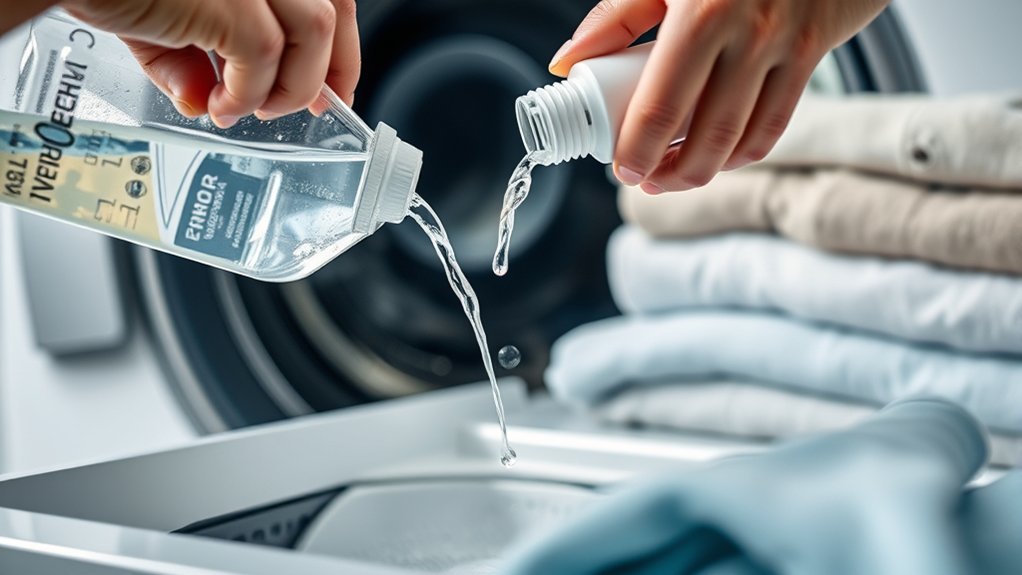
Although many cleaning products claim to eliminate germs, laundry sanitizer specifically targets 99.9% of bacteria, including harmful pathogens like Salmonella and E. coli. It works effectively during the rinse cycle.
Lysol® Laundry Sanitizer is formulated to kill these bacteria in both cold and warm water, ensuring your fabrics are thoroughly clean and disinfected without damage. It operates by exposing your laundry to antimicrobial agents for 15 minutes during rinsing, maximizing bacterial elimination.
Unlike bleach, this sanitizer is safe for colorfast and delicate fabrics, including baby clothes.
Regulated by the EPA, Lysol® Laundry Sanitizer offers a scientifically backed solution. It lets you confidently clean and disinfect your laundry, protecting your household from harmful bacteria while preserving fabric quality.
Sanitizing vs. Disinfecting Laundry: What’s the Difference and How to Do Both
While both sanitizing and disinfecting aim to reduce harmful microbes in your laundry, they differ markedly in the level of cleanliness they achieve.
Sanitizing lowers bacteria to safe levels by adding laundry sanitizer during the rinse cycle, allowing at least 15 minutes of exposure.
Disinfecting, however, kills 99.9% of bacteria and viruses by soaking items in a diluted sanitizer solution for 15 minutes before washing.
To optimize both processes, use the hottest water temperature your fabric can tolerate alongside the right detergent.
Always follow the product’s specific guidelines to guarantee effective results.
Understanding these distinctions helps you choose the appropriate method to maintain hygiene and safety in your laundry routine.
Best Fabrics and Laundry Loads for Sanitizer Use
When you want to keep your laundry truly clean and fresh, choosing the right fabrics and loads for sanitizer use is essential. The best fabrics to treat with laundry sanitizer include children’s clothes, sportswear, bedding, and towels. These items often harbor bacteria and odors.
Synthetic fabrics like polyester especially benefit from sanitizer, which helps maintain freshness by eliminating trapped bacteria.
You can also safely use laundry sanitizer on delicate items, such as baby clothes, without worrying about damage.
Prioritize these fabrics and loads to maximize hygiene and freshness. By targeting these specific items, you guarantee your laundry routine effectively reduces germs, creating a healthier environment for you and your family.
How to Safely Handle Laundry When Someone Is Sick
Taking extra care with laundry becomes even more important if someone in your household is sick. To minimize exposure to viruses, wear disposable gloves when handling contaminated laundry and avoid shaking it out, which can spread germs into the air.
Always wash soiled items separately using a liquid laundry detergent combined with a laundry sanitizer to eliminate pathogens effectively. Choosing an eco-friendly detergent can help maintain safety while being environmentally responsible.
After handling the laundry, immediately remove gloves and wash or sanitize your hands thoroughly.
Furthermore, clean and disinfect hampers and any surfaces that contacted the soiled laundry to prevent cross-contamination.
Following these steps guarantees you safely manage laundry while reducing the risk of spreading viruses throughout your home.
Common Mistakes to Avoid When Using Laundry Sanitizer
Although laundry sanitizers are effective tools for eliminating harmful bacteria, improper use can undermine their benefits. To maximize the efficiency of your laundry sanitizer, always follow the manufacturer’s instructions carefully.
Avoid mixing it with detergent in the same cycle. Use the correct dosage and add it during the rinse cycle to guarantee proper exposure time. Also, check fabric compatibility to prevent damage or ineffective sanitization.
Finally, regularly clean your washing machine to maintain peak performance.
| Common Mistakes | Avoidance Tips |
|---|---|
| Mixing with detergent | Use laundry sanitizer separately |
| Incorrect dosage | Follow manufacturer’s instructions |
| Skipping rinse cycle | Add sanitizer during rinse |
| Ignoring fabric compatibility | Verify fabric suitability before use |
| Neglecting machine cleaning | Clean machine regularly |
Frequently Asked Questions
Can Laundry Sanitizer Be Used With Fabric Softeners?
Yes, you can use laundry sanitizer with fabric softeners. Just make certain to add each product to its designated compartment in your washing machine to avoid mixing them directly.
This method guarantees the sanitizer works effectively while the fabric softener keeps your clothes soft and fresh.
Always follow the product instructions for proper dosage and timing to maximize cleanliness and freshness without compromising either product’s performance.
Does Laundry Sanitizer Remove Pet Odors Effectively?
You know what they say: “A stitch in time saves nine.”
Laundry sanitizer does remove pet odors effectively by killing 99.9% of the bacteria that cause those unpleasant smells.
When you add it during the rinse cycle alongside your regular detergent, it penetrates fabrics deeply, ensuring freshness.
Just follow the product’s instructions for dosage to protect your clothes while eliminating odors efficiently and professionally every time.
How Long Does the Sanitized Smell Last on Clothes?
The sanitized smell usually lasts several days on your clothes, giving you that fresh, clean scent.
How long it sticks around depends on factors like humidity, fabric type, and how you store your garments.
To keep the scent longer, make sure you dry your clothes thoroughly after washing and avoid mixing in items with strong odors.
Using a product like Lysol® Laundry Sanitizer helps maintain that fresh smell while killing bacteria effectively.
Is Laundry Sanitizer Safe for Baby Clothes?
Yes, laundry sanitizer is safe for baby clothes and kills 99.9% of bacteria without harming delicate fabrics.
You can confidently use it on various materials, including those not safe for bleach.
It’s color-safe and works well even in cold water, making your baby’s clothes hygienic without extra wear.
Just follow the product’s instructions for dosage and usage to keep your little one’s clothes clean and safe every time.
Can Laundry Sanitizer Prevent Mold Growth in Washing Machines?
Yes, laundry sanitizer can prevent mold growth in washing machines by killing bacteria and fungi that thrive in damp areas.
You’ll want to add it during the rinse cycle to reduce moisture and odors, which helps stop mold development.
Combine this with proper machine care, like leaving the door open to air dry, and follow the product instructions for best results.
This approach keeps your washing machine cleaner and fresher.
Conclusion
Using laundry sanitizer is a smart way to give your clothes a little extra peace of mind, especially when germs try to overstay their welcome. By adding it during the rinse cycle, you’re gently nudging bacteria out the door without harsh measures.
Just remember to handle your laundry thoughtfully, especially when someone’s under the weather. With careful use, you’ll keep your fabrics fresh and your household feeling comfortably clean, no fuss, just effective care.