How To Plant Potatoes In A Laundry Basket – Quick Guide
To plant potatoes in a laundry basket, choose a lightweight plastic basket with drainage holes and at least 12 inches deep. Drill extra holes if needed, then line it with newspaper or straw to retain moisture while allowing drainage.
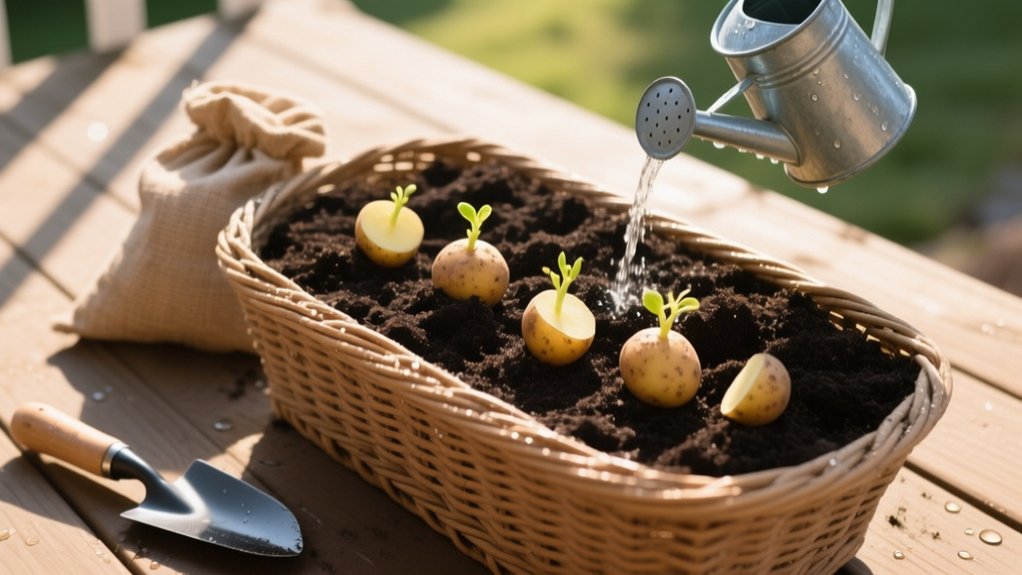
Add 4 inches of well-drained soil, place 3-5 certified seed potato pieces evenly, and cover with 3 inches of soil. Water regularly and hill soil as stems grow.
Keep caring for them until harvest time. You’ll find detailed steps on planting, care, and harvest ahead.
Key Takeaways
- Use a lightweight plastic laundry basket with drainage holes and at least 12 inches deep for planting potatoes.
- Line the basket with newspaper or straw to retain moisture but allow water drainage.
- Add 4 inches of well-drained potting soil before placing 3-5 seed potatoes evenly spaced inside.
- Cover seed potatoes with 3 inches of soil and gradually hill soil around stems as they grow.
- Water consistently, fertilize every few weeks, and harvest potatoes after 10-15 weeks when vines yellow.
Pick the Best Laundry Basket for Potatoes
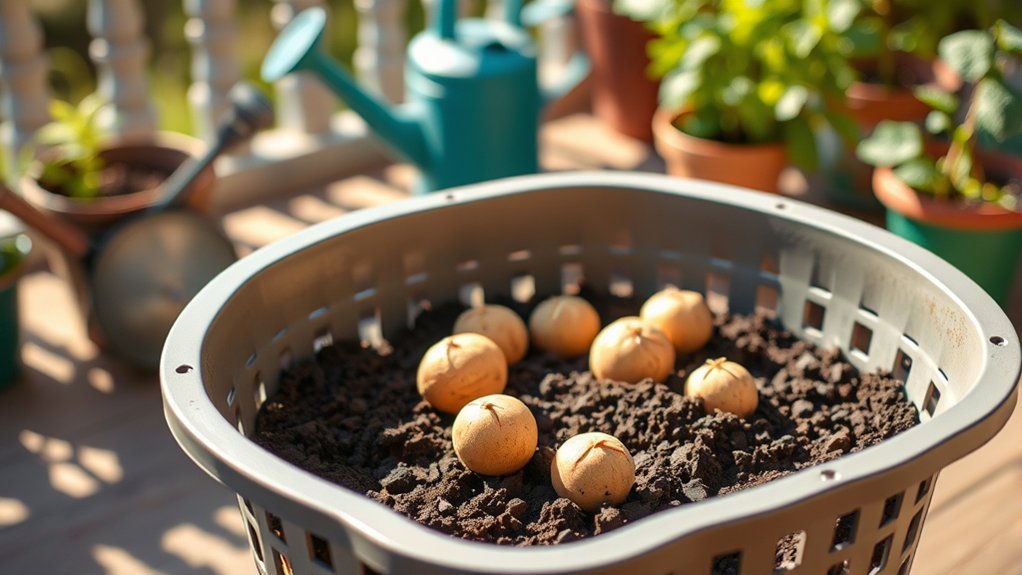
Choosing the right laundry basket is essential for growing healthy potatoes in containers. You want a lightweight plastic laundry basket with drainage holes to prevent waterlogging and guarantee proper root aeration.
Pick a size that comfortably fits 3-5 seed potatoes, giving you enough room for hilling as your plants develop. Aim for a basket at least 12-14 inches deep so the roots have plenty of space and soil coverage.
Choose a basket roomy enough for 3-5 seed potatoes with at least 12-14 inches depth for healthy growth.
If you plan to keep your basket outdoors, choose one made from durable, UV-resistant materials to avoid quick wear.
Also, make certain your laundry basket has a sturdy structure to handle the weight of soil and growing potatoes without bending or breaking.
This way, your container garden will thrive from the start.
Drill Drainage Holes and Line Your Basket
Before filling your laundry basket with soil, drill several 1/4-inch holes in the bottom to guarantee excess water can drain freely and prevent root rot. Proper drainage holes are essential for healthy potato growth.
Here’s how to prepare your basket:
- Use a 1/4-inch drill bit to create multiple holes evenly spaced across the bottom.
- Line the basket interior with newspaper or straw to retain soil and moisture.
- Make sure the lining is thick enough to hold soil but still allows water to escape through the drainage holes.
- After lining, add at least 4 inches of well-drained potting soil to form a stable base for your seed potatoes.
This setup ensures your potatoes won’t sit in water, reducing the risk of waterlogging and promoting healthy roots.
How to Pick and Prep Seed Potatoes
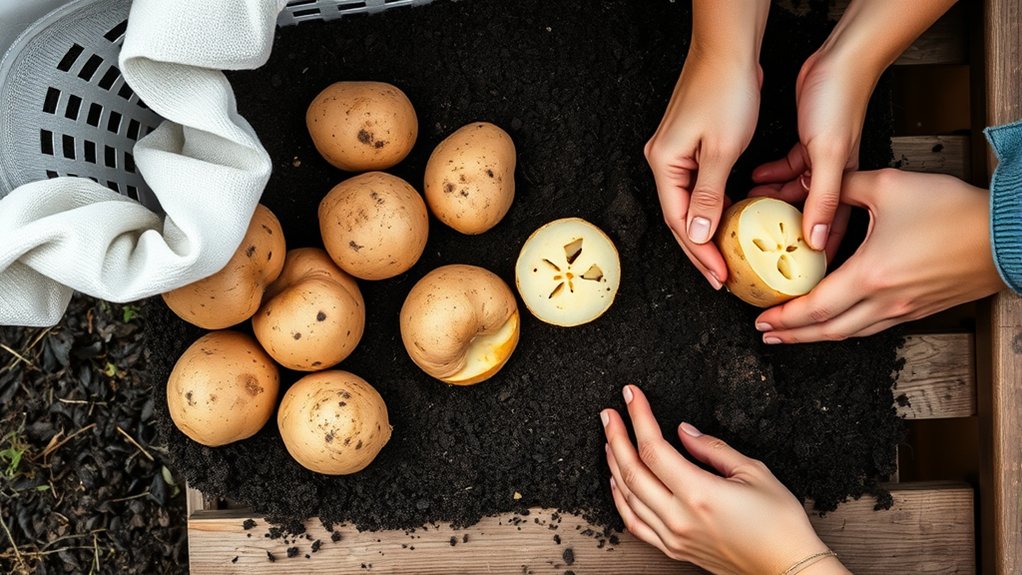
Start by selecting certified seed potatoes, as they guarantee quality and reduce the risk of disease in your crop. Choose seed potatoes weighing about one pound, perfect for your laundry basket.
If your seed potatoes are large, cut them into pieces, making sure each piece has at least two eyes to encourage multiple plants. After cutting, let the pieces cure by drying in a cool, dark place for 1-2 days; this prevents rot when planted.
You can also chit your seed potatoes by placing them in a cool, light area to encourage sprouting before planting. This speeds up growth.
Finally, pick a potato variety suited to your climate, whether early, mid-season, or late, so you can enjoy staggered harvests throughout the growing season.
Step-by-Step Potato Planting in Your Laundry Basket
Once you’ve prepped your seed potatoes, drill several holes in the bottom of your laundry basket to guarantee proper drainage and prevent waterlogging. This step is essential for growing potatoes successfully.
Next, follow these steps:
- Line the basket with newspaper or straw to help retain moisture.
- Add at least 4 inches of well-drained potting soil on top of the lining.
- Place 3-5 seed potatoes evenly spaced in the soil and cover them with 3 inches of soil.
- As the plants grow, gradually add more soil to cover the stems, encouraging better tuber development.
Caring for Your Growing Potato Plants
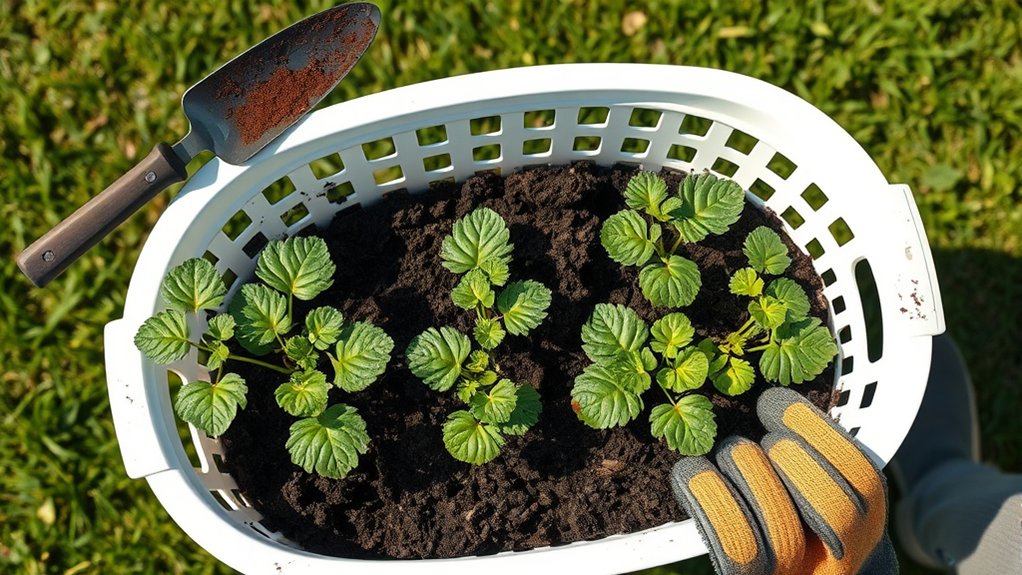
While your potato plants are growing, you’ll need to water them consistently to keep the soil moist but not soggy, especially during the early stages.
When caring for your growing potato plants, monitor regularly for pests or diseases, removing any affected leaves promptly to maintain plant health.
Fertilize every few weeks with a balanced fertilizer to encourage strong growth and tuber development.
It’s crucial to stop watering once the vine leaves yellow and wither, signaling harvest time and preventing tuber rot.
Remember, don’t water excessively throughout growth, as waterlogged soil harms roots.
How and When to Hill Soil for More Potatoes
As your potato stems reach about 6 inches tall, you’ll want to hill soil around them to promote more tuber growth. Hilling soil creates space for potatoes to expand and boosts your yield. Here’s how and when to do it:
- Gradually add sterilized soil, covering stems but leaving the top leaves exposed.
- Hill soil every week or two, keeping the soil level within 2 inches of the basket’s top to avoid overfilling.
- Monitor the container for any buckling from the added weight to guarantee stability.
- Repeat hilling until the plant flowers or the basket is nearly full.
This routine promotes healthy tuber development and helps maximize your potato harvest.
Harvesting Potatoes From Your Laundry Basket
You’ll want to harvest new potatoes about 10 weeks after planting, especially when you notice the vines starting to yellow.
For a full harvest, it’s best to wait up to 15 weeks.
When the day is dry, carefully pour the contents of your laundry basket out.
Take your time doing this to avoid damaging the tubers or leaving soil stuck to them.
Once you’ve brushed off the dirt, store your potatoes in a cool, dark place, ideally around 35-40°F.
And remember, don’t wash them until you’re ready to use them—that way, they’ll stay fresh longer.
Harvest Timing Tips
When should you start harvesting potatoes from your laundry basket? Timing is key for a successful yield. Follow these harvest timing tips to get the best results:
- Begin harvesting new potatoes about 10 weeks after planting for tender, small tubers.
- Wait until around 15 weeks for a full harvest when the tubers have grown larger.
- Stop watering once the vine leaves yellow and wither to prevent tuber rot.
- Choose a dry day to pour out the basket, handling potatoes gently to avoid bruising.
These steps help guarantee your potatoes develop properly and stay healthy until harvest.
Post-Harvest Storage
Although harvesting your potatoes marks an exciting milestone, proper post-harvest storage is essential to maintain their freshness and quality. Once the foliage yellows and withers (around 15 weeks), carefully pour out your laundry basket’s contents on a dry day to avoid damage.
Brush off soil, but don’t wash the potatoes until you’re ready to use them. Store them in a cool, dry, dark place with temperatures between 35-40°F to prolong shelf life. Stop watering once the plants die back to prevent rot.
| Step | Action | Tip |
|---|---|---|
| 1 | Harvest when vines yellow | Harvest on a dry day |
| 2 | Pour out contents gently | Avoid damaging tubers |
| 3 | Brush off soil | Don’t wash yet |
| 4 | Store in cool, dark place | Maintain 35-40°F temperature |
| 5 | Stop watering before harvest | Prevent rot during storage |
Storing and Using Your Homegrown Potatoes
Since proper storage is essential for preserving your homegrown potatoes, start by gently brushing off excess soil to prevent rot.
Gently brush off excess soil from your potatoes to help prevent rot and ensure longer storage.
When storing your potatoes, keep these key practices in mind:
- Store them in a cool, dry, and dark place with temperatures between 35-40°F to maintain freshness and prevent sprouting.
- Avoid washing potatoes before storing, as moisture encourages decay.
- Harvest new potatoes around 10 weeks after planting; full maturity is about 15 weeks.
- Regularly check stored potatoes for spoilage and remove any affected tubers immediately to protect the rest.
Frequently Asked Questions
Can I Plant Other Vegetables in the Same Laundry Basket Afterward?
Yes, you can plant other vegetables in the same laundry basket afterward.
Just make sure you clean the basket thoroughly to avoid disease, and refresh the soil with compost or potting mix to restore nutrients.
Opt for fast-growing, light feeders like lettuce or spinach instead of heavy feeders like tomatoes or peppers, which can drain the soil.
Also, think about the new plants’ growth habits to ensure they thrive in the confined space.
How Do I Prevent Pests From Damaging My Potato Plants?
Think of your potato plants as a fortress under siege. You need vigilant guards. Regularly scout for pests like aphids and beetles and remove them by hand.
Release beneficial insects such as ladybugs and lacewings to patrol naturally. Spray organic insecticidal soap or neem oil to create an invisible shield without harming allies.
Plant marigolds nearby to act as sentinels.
Keep your garden tidy by clearing debris that pests love to hide in.
What Is the Ideal Temperature for Growing Potatoes in a Basket?
You want to keep your potatoes growing between 60°F and 70°F for the best sprouting and development.
Avoid planting if the soil drops below 40°F, as it can stunt growth or cause rot.
Temperatures above 70°F can speed growth but may reduce tuber size if it lasts too long.
Use mulch or insulation around your basket to help maintain steady soil temperatures, and check regularly with a soil thermometer.
Can I Reuse the Soil From the Laundry Basket for Next Season?
Think of your laundry basket soil as a well-worn cookbook. It needs a few fresh ingredients each time. Yes, you can reuse it, but you should mix in fresh compost or nutrients to replenish what the potatoes have used up.
Check for pests or diseases first, then blend the old soil with new potting mix to boost aeration and drainage.
Rotating and composting the soil regularly keeps it healthy and productive for many seasons.
How Long Does It Take for Potatoes to Mature in a Basket?
Potatoes usually take about 10 weeks to produce new potatoes and around 15 weeks for a full harvest in a basket.
Keep an eye on the vine leaves; when they yellow and wither, it’s time to stop watering because your potatoes are nearly mature.
Depending on the variety and conditions, you might see slight variations, so monitor growth closely for the best timing.
Conclusion
Growing potatoes in a laundry basket turns your space into a mini farm, making the process simple and rewarding. By choosing the right basket, prepping seed potatoes, and caring for your plants with regular hilling, you’ll soon see tubers bursting like hidden treasures beneath the soil.
With proper harvesting and storage, you’ll enjoy fresh, homegrown potatoes that taste far better than store-bought. Give it a try; you’re just one basket away from a bountiful harvest.