How Much To Start A Laundry Business – Quick Answer
You’ll need between $200,000 and $750,000 to start a laundry business, with equipment and location driving most costs. Commercial washers cost $500 to $20,000 each, while dryers run about $5,000.
Property expenses vary widely, from $200,000 to $1 million, and utilities can eat up 20-24% of your gross income. Leasing equipment can cut startup expenses.
Understanding these factors helps you plan well. Exploring funding options and profit strategies will guide your next steps.
Key Takeaways
- Starting a laundry business typically requires an initial investment between $200,000 and $750,000.
- Commercial washers cost from $500 to $20,000 each, with stacked dryers around $5,000 each.
- Property and renovation expenses can range from $200,000 to $1 million, depending on location.
- Utilities may consume 20% to 24% of gross receipts, impacting ongoing operational costs.
- Leasing equipment and buying used machines are effective ways to reduce startup expenses.
How Much Does It Cost to Start a Laundromat?
Starting a laundromat typically requires an initial investment between $200,000 and $750,000, depending on your location and equipment choices.
For a laundromat startup, equipment costs dominate your startup costs, with commercial washers priced from $500 up to $20,000 each.
Your laundry business’s total startup expenses will also depend on factors like site selection and scale.
Securing adequate financing is essential, often through SBA-backed or business bank loans, to cover these initial and capital costs.
Preparing a detailed business plan improves your chances of funding by clearly outlining the required investment and projected returns.
Understanding these financial demands helps you plan effectively for your laundromat startup, ensuring you’re ready to manage both setup and early operations efficiently.
Breaking Down the Main Startup Expenses for Your Laundromat
You’ll want to set aside a good chunk of your budget for equipment. Washers can run up to $5,000 each, and dryers are about the same price.
Then there’s the cost of the property and any renovations—these often take up a big portion of your initial investment.
And don’t overlook utilities. They can eat up around 20% to 24% of your gross receipts, which definitely affects your ongoing expenses.
Equipment And Utilities
Although initial costs can vary widely, equipment and utilities represent the largest upfront and ongoing expenses in a laundromat. Your startup expenses will primarily revolve around purchasing or leasing commercial washers and dryers, plus installing water heating systems.
Equipment costs alone can range from $200,000 to $1 million, depending on machine types and conditions.
Utilities, meanwhile, can consume 20% to 24% of your gross receipts, making them a significant ongoing cost.
Key equipment and utilities costs include:
- Commercial washers: $500 to $5,000 each
- Stacked dryers: around $5,000 each
- Water heating systems: $15,000 to $40,000
Consider leasing equipment to reduce initial startup expenses and maintain financial flexibility.
Property And Renovations
Because the location and condition of your laundromat space heavily influence costs, property and renovations typically require an investment between $200,000 and $1 million.
Renovations often involve extensive plumbing and electrical work, which are major cost drivers.
You should obtain detailed quotes for site improvements since labor and material expenses vary by area.
Leasing equipment can lower upfront costs, freeing more capital for property upgrades and renovations.
Careful planning is essential.
Assess lease terms thoroughly to manage your largest investment effectively.
Prioritize budgeting for property improvements that meet operational needs and local regulations.
How Location Impacts Your Laundromat’s Startup Costs
When choosing a location for your laundromat, consider how rent and utilities vary widely based on urban density and foot traffic. Location directly influences your startup costs. Urban areas often demand higher rents but offer greater customer flow.
Conduct thorough market research to identify neighborhoods with high renter density or college students. These demographics typically reduce your initial expenses and improve profitability.
Also, evaluate nearby competition to guarantee your market share justifies the investment.
Key location factors affecting startup costs include:
- Rent and utility rates linked to urban density and foot traffic
- Demographic concentration of renters and students boosting customer base
- Proximity to competitors influencing potential earnings and cost planning
Smart location choices, backed by detailed market research, help you control startup costs and forecast sustainable growth.
Should You Buy, Build, or Rent Your Laundromat Space?
Your choice of location sets the foundation, but deciding whether to buy, build, or rent your laundromat space directly shapes your startup costs and operational control.
Buying an existing laundromat offers an established customer base but demands a high upfront investment, typically $250,000 to $750,000.
Building from scratch requires significant capital but lets you customize the space and may reduce financing costs.
Renting is the most cost-effective initially, minimizing your investment, though it limits your control and ownership.
Location remains critical. Targeting college towns or urban areas with high rental populations increases customer potential regardless of your approach.
Each option has distinct cost and control implications, so analyze your financial capacity and market carefully before committing to buying, building, or renting your laundromat space.
What Equipment Will You Need and How Much Will It Cost?
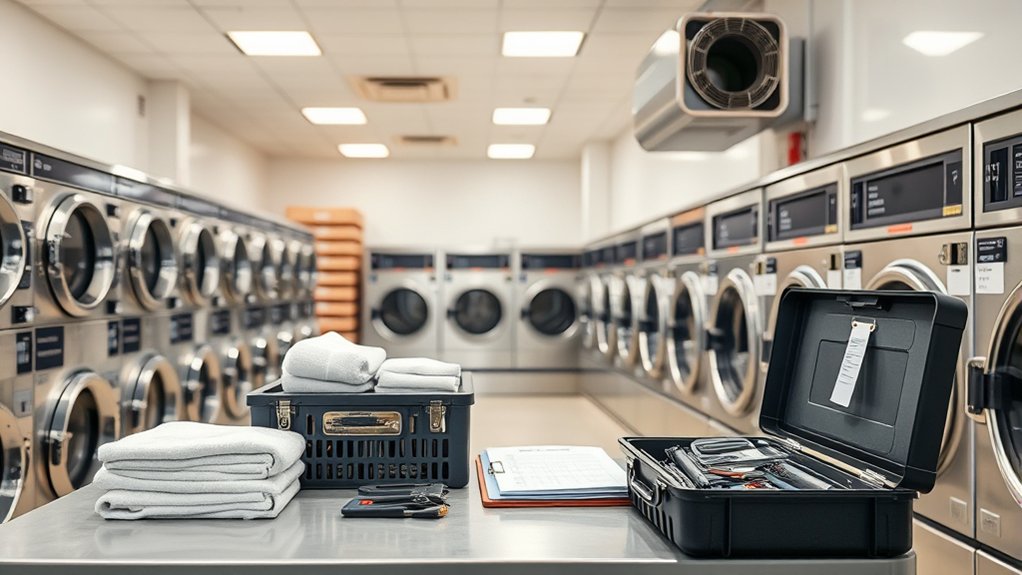
You’re going to need some essential equipment to get your laundry business up and running smoothly. Think commercial washers, stacked dryers, change machines, and water heating systems.
Now, the prices for these can really vary. For example, basic washers might set you back around $500, while high-end water heaters can cost as much as $40,000.
That’s a pretty big range and it can definitely affect your initial investment.
Essential Laundromat Equipment
Although starting a laundromat requires a significant investment, understanding the essential equipment and their costs will help you plan effectively.
When launching your laundromat business, the right commercial laundry equipment is vital. The cost to open hinges largely on these key machines:
- Commercial washers, ranging from $500 to $20,000 depending on capacity.
- Stacked dryers, starting at around $5,000 each.
- Change machines, essential for customer convenience, priced between $1,000 and $3,000.
Don’t forget water heating systems, which can run from $15,000 to $40,000, impacting efficiency and total startup costs.
Equipment Cost Breakdown
Starting a laundromat requires investing in several key pieces of equipment, each with a distinct cost range that impacts your overall budget.
Commercial washers, fundamental for your business, cost between $500 and $5,000, with premium models reaching $20,000.
Stacked dryers usually run about $5,000 each, adding considerably to equipment costs.
Change machines, important for customer convenience, range from $1,000 to $3,000.
Water heating systems, critical for operations, can cost between $15,000 and $40,000, representing a major portion of your startup expenses.
To manage costs, consider leasing equipment, which offers flexibility and reduces upfront payments.
When starting a laundromat, carefully budgeting for these essential items guarantees your business operates smoothly and stays financially viable from day one.
Managing Ongoing Expenses to Keep Your Laundromat Profitable
When managing a laundromat, controlling ongoing expenses is essential since they often consume over 65% of your gross income.
To keep your business profitable, you need to manage every cost category well and regularly analyze your budget.
Monthly expenses typically range from $4,000 to $8,500, covering utilities, supplies, payroll, and rent.
Utilities alone can take up to 24% of gross receipts, so efficient use is critical.
Focus on these key areas to improve profitability:
- Monitor utility usage closely and invest in energy-efficient machines
- Review payroll and staffing levels to avoid unnecessary labor costs
- Allocate about 12% of revenues to marketing to boost customer traffic and offset expenses
How to Finance Your Laundromat Startup Successfully
You’ll probably need between $200,000 and $500,000 to get your laundromat up and running.
So, it’s a good idea to look into different funding sources like SBA loans, private investors, and even crowdfunding.
Putting together a detailed business plan can really help when you’re applying for loans.
It shows exactly what your costs will be and how much money you expect to make down the line.
Knowing your options and having solid financials ready can make a big difference in getting the capital you need to start your business.
Funding Sources Overview
Although launching a laundromat requires significant capital, typically between $200,000 and $750,000, you can secure funding through various avenues such as business bank loans, SBA-backed loans, private investors, and equipment financing.
Understanding diverse funding sources helps you manage startup costs effectively and positions your laundromat for success among small businesses.
Consider these key funding options:
- Business bank loans and SBA-backed loans: Offer competitive rates but require solid credit and a detailed business plan.
- Private investors: Provide capital in exchange for equity or repayment terms, suitable if traditional loans aren’t an option.
- Equipment financing: Reduces upfront costs by spreading payments for commercial washers and dryers.
Exploring these avenues guarantees you cover startup costs without stretching your finances thin.
Preparing Loan Applications
Securing financing for your laundromat startup hinges on a well-prepared loan application that clearly outlines your financial projections and funding needs.
Your business plan must detail expected revenues and expenses, showing profitability.
Clearly highlight startup costs, typically ranging from $200,000 to $500,000, which cover equipment, leasehold improvements, and working capital.
Include a market analysis to prove demand and to set your business apart.
Consider SBA-backed loans for favorable terms, but be ready with thorough documentation.
Strengthen your loan application by providing personal and business financial statements along with a solid credit history.
Choosing the Right Business Structure and Licenses for Your Laundromat
Choosing the right business structure lays the foundation for your laundromat’s legal and financial framework. Your choice affects liability, taxes, and compliance, so you want to select carefully.
Most laundromat owners opt for an LLC or corporation to separate personal assets from business risks.
Next, secure all necessary licenses by registering with state and local authorities. Don’t forget to obtain federal and state tax IDs, including an EIN, for smooth tax filings and legal operations.
Also, make sure your business name meets local regulations to avoid hiccups.
Key steps for laundromat owners:
- Choose a business structure that limits liability and optimizes taxation
- Register your business and file required ownership reports
- Obtain all necessary licenses and tax identification numbers for compliance
What Profit Can You Expect From a Laundromat Business?
How much profit can you realistically expect from running a laundromat? Laundromats can gross between $30,000 and $1 million annually, with an average profit margin around 35% when managed effectively.
This means if your laundromat generates $150,000 in revenue, you could see nearly $50,000 in profit. The return on investment (ROI) typically ranges from 25% to 35%, highlighting strong profitability potential.
Expanding revenue streams, such as adding wash-and-fold services, can boost your income by catering to busy customers.
Plus, laundromats benefit from consistent demand, making them recession-resistant and providing stable profits even in tough economic times.
Key Strategies to Keep Your Laundromat Startup Costs Manageable
Although starting a laundromat requires significant investment, you can keep costs manageable by opting for used equipment. This typically ranges from $500 to $5,000 per commercial washer. This strategy reduces your startup expenses considerably.
Furthermore, thorough market research helps you choose high-demand locations. That minimizes financial risks and ensures steady customer flow.
Consider leasing equipment to lower upfront costs and maintain flexibility. This way, you can invest more in marketing and location improvements.
To keep startup costs manageable, focus on:
- Purchasing used equipment to cut initial expenses
- Conducting detailed market research for ideal site selection
- Leasing equipment to preserve capital and enhance cash flow
These strategies help you control costs while building a profitable laundromat business efficiently.
Frequently Asked Questions
What Are the Best Marketing Tactics for Attracting Laundromat Customers?
The best marketing tactics for attracting laundromat customers include optimizing your website and Google My Business for local SEO, running loyalty programs and discounts, and partnering with nearby businesses like colleges or apartments.
You should also use social media to engage your community with promotions and events, plus target specific demographics through online ads like Facebook.
These strategies boost visibility, encourage repeat visits, and connect you directly with your ideal customers.
How Do I Train Employees for Efficient Laundromat Operations?
You train employees by implementing hands-on sessions with experienced staff, focusing on machine operation, maintenance, and troubleshooting to reduce downtime.
Use a clear daily checklist covering cleaning and cash management to guarantee consistency.
Provide ongoing workshops on new tech and customer service to boost efficiency.
Foster open communication for feedback and workflow improvements.
This structured approach prepares your team for smooth, efficient laundromat operations.
What Technology Upgrades Improve Laundromat Customer Experience?
You can improve your laundromat’s customer experience by implementing cloud-based payment systems, letting customers pay via mobile apps or cards.
Real-time machine availability tracking through an app reduces wait times.
Self-service kiosks speed up check-in and payment, cutting queues.
Installing energy-efficient machines lowers costs and appeals to eco-conscious users.
Finally, digital loyalty programs encourage repeat visits, boosting retention and giving you an edge in a competitive market.
How Can I Make My Laundromat Eco-Friendly and Sustainable?
Want to turn your laundromat green and clean? Start by investing in energy-efficient washers and dryers to cut water and energy use by 50%.
Use biodegradable detergents to reduce pollution.
Implement a water recycling system to save 30% on water.
Encourage reusable laundry bags to minimize plastic waste.
Finally, consider solar panels to slash energy bills and carbon footprint, possibly earning tax credits.
Sustainable choices save money and the planet.
What Insurance Policies Are Recommended for Laundromat Businesses?
You should get general liability insurance to protect against injury and property damage claims, costing about $500-$1,000 annually.
Property insurance is essential for covering equipment and location damages.
Business interruption insurance helps cover lost income during unexpected closures.
If you hire employees, you’ll need workers’ compensation insurance.
Consult an insurance broker to customize your coverage based on your laundromat’s size, location, and specific risks.
Conclusion
Starting your laundromat requires smart spending, strategic site selection, and securing solid financing. By balancing big-ticket buys like equipment with manageable monthly rents, you’ll maximize margins.
Remember, rigorous research, reliable resources, and the right licenses reduce risks and ramp up revenue. With careful cost control and clear-cut planning, you can craft a cash-flowing, customer-captivating business.
Stay savvy, stay streamlined, and start strong to succeed swiftly in the spinning sphere of laundromats.