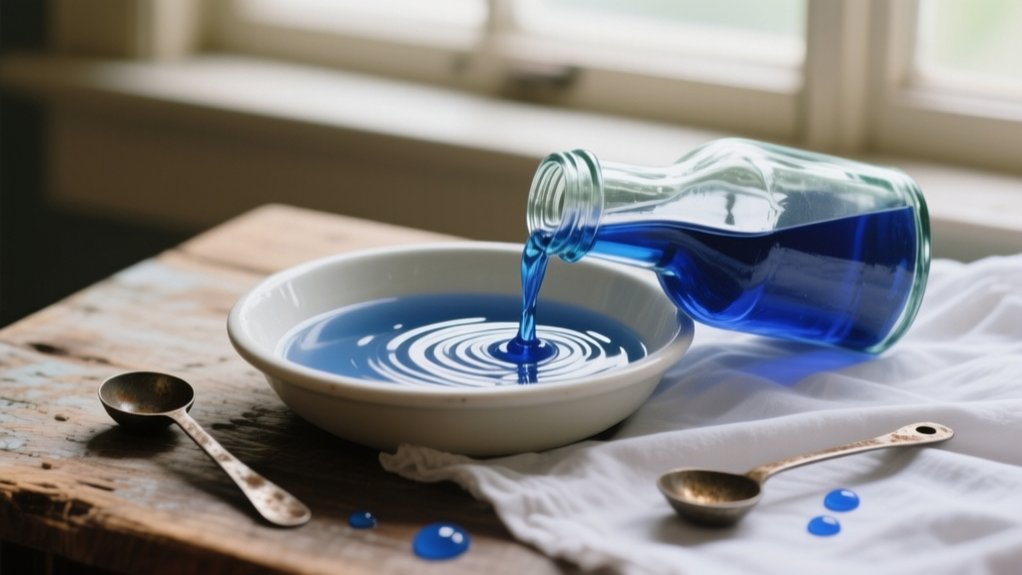
What Is Laundry Bluing – What to Know
Laundry bluing adds a tiny blue tint to your white fabrics, counteracting yellowing and making them look brighter without harsh bleach. It works best on natural fibers like cotton and linen, reflecting light to boost whiteness.
You’ll need to dilute it carefully in cold water to avoid blue stains and follow instructions closely. Bluing preserves fabric integrity and helps your whites pop naturally.
If you want to get the most from it, there’s a lot more useful info ahead.
Key Takeaways
- Laundry bluing adds a subtle blue tint to white fabrics, counteracting yellowing and making whites appear brighter.
- It works best on natural fibers like cotton and linen, restoring brightness without damaging fabric integrity.
- Proper dilution in cold water is essential to avoid blue stains or streaks on clothes.
- Bluing creates an optical illusion by reflecting blue light, enhancing the whiteness of dingy or gray fabrics.
- High-quality bluing contains Prussian blue and is widely available from trusted brands like Mrs. Stewart’s Bluing.
How Laundry Bluing Works
Although it might sound surprising, laundry bluing works by adding a subtle blue tint to your white fabrics, which counteracts yellowing and makes them look brighter. This slight blue dye reflects more light, helping your whites appear crisper and cleaner.
Laundry bluing is especially effective on cotton and other white materials, gradually restoring their original brightness as you use it over time.
To avoid blue stains, you should always dilute laundry bluing in water before adding it to your wash.
When applied correctly, it works alongside your regular detergent without harming the fabric’s integrity.
Why Bluing Makes Whites Look Brighter
Because your eyes perceive colors in relation to surrounding hues, adding a slight blue tint through laundry bluing tricks them into seeing whites as brighter and cleaner.
Bluing counteracts yellow or gray undertones by reflecting blue light more effectively. This optical illusion enhances the fabric’s brightness without harsh chemicals.
Bluing reflects blue light to neutralize dull tones, brightening fabrics naturally without harsh chemicals.
Here’s why bluing works so well:
- Adds subtle blue hues that brighten whites naturally
- Neutralizes dull yellowing in fabrics over time
- Reflects light better, making whites pop visually
- Preserves fabric integrity more than bleach
- Mimics the brightest shades of white found in color theory
Which Fabrics Work Best With Laundry Bluing
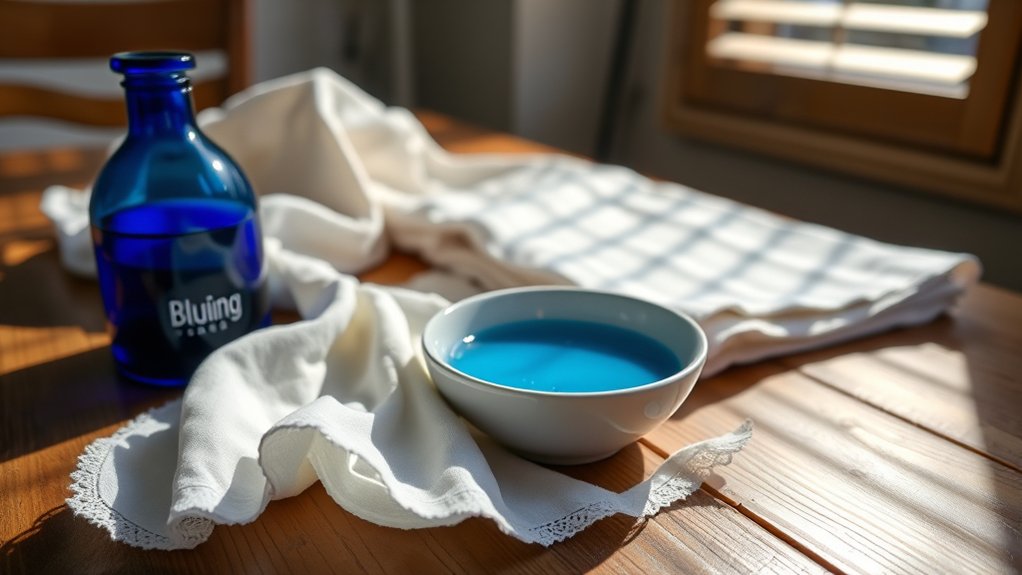
You’ll get the best results using laundry bluing on natural fabrics like cotton and linen. They really absorb the tint well and brighten up nicely.
But if you’re working with synthetics or delicate materials, be careful. It’s always a good idea to test a small hidden spot first to make sure you don’t get any damage or uneven color.
Just keep in mind, bluing works best on dingy whites. So, proper fabric care and picking the right items are key to safely restoring that bright, fresh look.
Suitable Fabric Types
When you want to brighten your whites, laundry bluing works best on natural fibers like cotton and linen. These fabrics absorb the blue tint easily to counteract yellowing.
Knowing the suitable fabric types guarantees you get the best results without surprises. Keep these points in mind:
- Natural fibers like cotton and linen respond well to the blue color.
- Synthetic fabrics such as polyester and nylon don’t absorb bluing effectively.
- White fabrics that look dingy or gray benefit the most.
- Avoid fabrics treated with optical brighteners because they can interfere with bluing.
- Always check care labels to avoid damaging delicate materials.
Avoiding Fabric Damage
Although laundry bluing can brighten your whites effectively, using it on the wrong fabrics may cause damage or uneven coloring. Bluing works best on natural fibers like cotton and linen because they absorb the blue dye well without harm.
Synthetic fabrics, such as polyester, mightn’t absorb the dye evenly, leading to patchy results. To avoid fabric damage, always test a small, hidden area first, especially with delicate materials.
Avoid applying bluing to colored or patterned fabrics since the blue dye can cause unwanted discoloration or color transfer.
For safe and effective use, make sure the bluing is properly diluted and added during the rinse cycle. This helps protect your fabrics while achieving a crisp, bright finish.
Best Fabric Care Practices
Selecting the right fabrics for laundry bluing makes a big difference in achieving bright, fresh whites without damage. Laundry bluing works best on natural fibers like cotton and linen, which absorb the blue dye well and enhance whiteness.
To get the best results, consider these fabric care tips:
- Use laundry bluing on natural fibers rather than synthetics like polyester.
- Dilute bluing in cold water before applying to avoid staining.
- Avoid using bluing on fabrics treated with optical brighteners.
- Check fabric care labels to confirm bluing compatibility.
- Test a small hidden area first to prevent discoloration or damage.
Following these best fabric care practices helps you safely brighten your whites and make the most of laundry bluing.
How To Use Mrs. Stewart’s Bluing
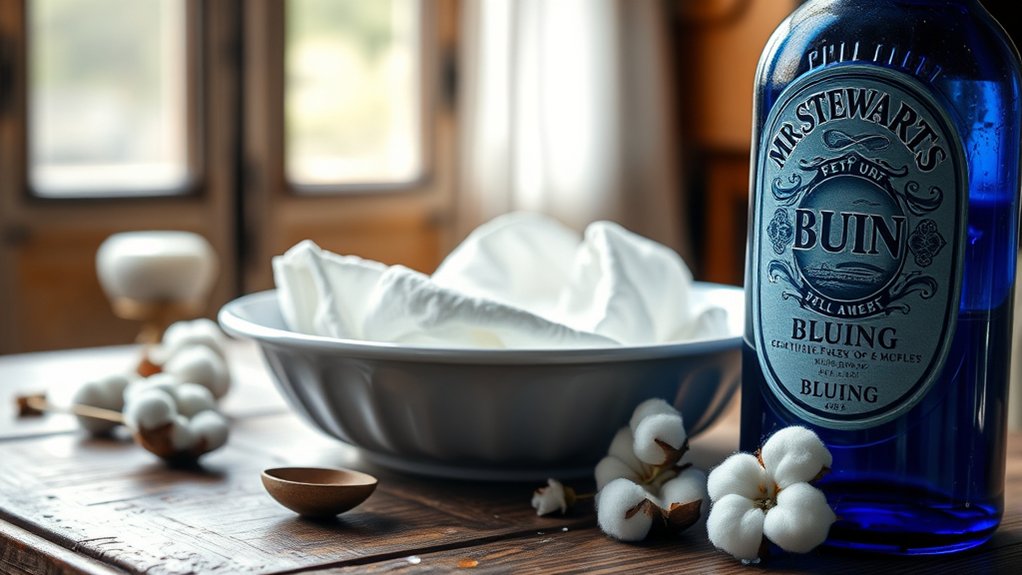
Start by diluting Mrs. Stewart’s Bluing in cold water, just a few drops or up to 1/4 teaspoon per quart. This dilution is key for laundry bluing to work effectively without streaking.
Add the diluted solution to your wash water or during the final rinse cycle to guarantee even coverage. You’ll know you’ve got it right when the water turns a light sky blue, signaling the perfect balance for whitening.
Use bluing on full loads of white fabrics only, avoiding mixing with colored items to prevent unwanted color transfer.
For extra guidance, you can download detailed instructions and a PDF guide.
Following these steps helps you get the best results from Mrs. Stewart’s Bluing every time.
Common Mistakes To Avoid When Using Laundry Bluing
When using laundry bluing, you’ll want to avoid common mistakes that can ruin your clothes or leave unwanted stains. Here are key points to remember:
Always dilute laundry bluing properly with cold water to prevent blue streaks or stains.
Don’t overuse bluing; too much can create an unwanted blue tint that’s tough to remove.
Use bluing mainly on cotton and white fabrics since synthetics might react poorly.
Wash whites separately to avoid color transfer from bluing to non-white items.
Follow the product’s dosage instructions carefully for the best, safest results.
Laundry Bluing vs. Bleach: Which Is Better For Your Whites?
How do you choose between laundry bluing and bleach for keeping your whites bright? Laundry bluing adds a blue tint that creates an optical illusion, enhancing white fabrics gently. Bleach removes stains quickly but can weaken fibers and irritate skin. Here’s a quick comparison:
| Feature | Laundry Bluing | Bleach |
|---|---|---|
| Effect on Whites | Brightens with blue tint | Removes stains, brightens |
| Fabric Safety | Gentle, no damage | Can weaken fibers over time |
| Use & Handling | Mix with detergent, easy to use | Requires careful measurement |
You’ll find laundry bluing safer and better for long-term fabric care. Bleach works best for immediate stain removal. Choose based on your needs for maintaining white fabrics.
Creative Uses For Laundry Bluing
While laundry bluing is primarily known for brightening whites gently, it offers a range of creative uses beyond fabric care.
You might be surprised by how versatile laundry bluing can be when you explore its potential around your home and in projects.
Here are some creative ways to use laundry bluing:
- Enhance white fabrics by counteracting yellowing with a subtle blue tint.
- Create salt crystal gardens for fun, educational science experiments.
- Improve swimming pool water clarity, making it look cleaner and more inviting.
- Soothe insect bites by applying a small amount to reduce irritation and swelling.
- Incorporate it in cultural practices like hoodoo mojo hands for protection and good fortune.
Laundry bluing truly goes beyond laundry, making it a handy product to keep on hand.
Where To Buy Laundry Bluing And What To Look For
You can usually find laundry bluing, like Mrs. Stewart’s Liquid Bluing, at most grocery stores across the U.S. or through online retailers, so it’s pretty easy to get your hands on.
Just keep an eye out to make sure the product is specifically labeled for laundry use.
It’s also a good idea to check that it contains Prussian blue or ferric ferrocyanide—that’s what gives you the best results.
Plus, many brands offer detailed instructions, often as a handy PDF, which can guide you to use the product safely and effectively.
Retail Availability Locations
Finding laundry bluing is easier than you might think, especially with Mrs. Stewart’s Bluing widely available in many U.S. grocery stores.
You can also find it online through various retailers and specialty cleaning websites. When shopping, look for products labeled specifically as “laundry bluing” to guarantee they’re designed for fabric whitening.
Here’s where to check:
- Local grocery stores and supermarkets
- Online marketplaces like Amazon
- Specialty cleaning supply websites
- Big-box retailers with a laundry section
- Vintage or nostalgic product shops
Remember to check the composition. Most contain ferric ferrocyanide, or Prussian blue, so always read usage instructions carefully.
This helps you get the best blue tint effect without damaging your fabrics.
Choosing Quality Bluing
Knowing where to buy laundry bluing is just the start. Understanding what to look for can make all the difference in achieving the best results.
When choosing laundry bluing, aim for trusted brands like Mrs. Stewart’s Bluing, known for its proven effectiveness in brightening whites. Liquid bluing is generally easier to use and more common in everyday laundry than solid forms, which are less typical.
Pay close attention to the ingredients. High-quality laundry bluing contains ferric ferrocyanide (Prussian blue) and avoids harmful additives or bleach.
Always read and follow the product’s dilution instructions carefully to prevent blue streaks on your fabrics.
Online Purchase Options
Where can you easily purchase laundry bluing online? Stewarts® Bluing is widely available through various online purchase options, making it simple to find the right product for your laundry needs.
When shopping, focus on these key points to guarantee you get the best results:
Look for products highlighting optical brightening effects for enhanced whiteness.
Check the label for clear dilution instructions to use it correctly.
Consider bulk or subscription options if you use bluing regularly.
Read customer reviews to confirm product quality and reputation.
Choose trusted retailers that specialize in laundry care products.
Frequently Asked Questions
Is Laundry Bluing Safe for Use Around Children and Pets?
Yes, laundry bluing is generally safe around children and pets when you use it as directed.
It contains ferric ferrocyanide, which is non-toxic in small amounts, making it a gentler alternative to bleach. Just be sure to keep it out of reach to avoid accidental ingestion.
Always follow the dilution instructions carefully to prevent stains, and ventilate the area while using it for the best safety practices.
Can Laundry Bluing Be Used in High-Efficiency Washing Machines?
Yes, you can use laundry bluing in high-efficiency machines, but you’ll need to dilute it properly first.
Because HE washers use less water, undiluted bluing can cause blue stains.
Mix it with a quart of cold water before adding it to the rinse cycle.
Add the diluted solution before loading your whites to guarantee even coverage.
Always follow the product’s dosage instructions to keep your fabrics bright without mishaps.
How Long Does Laundry Bluing Last Once Opened?
Once opened, laundry bluing lasts about 3 to 5 years if you store it properly in a cool, dark place.
Make sure to always seal the cap tightly after use to keep it fresh.
Before using, check for any changes in color or consistency, as those signs mean it’s past its prime.
Even without an expiration date, your eyes are the best guide to decide if it’s still good.
Does Laundry Bluing Have Any Environmental Impact?
Think of laundry bluing as a gentle whisper in a noisy world. It brightens your clothes without shouting pollution.
You’ll find it has a minimal environmental impact since it uses ferric ferrocyanide, a non-toxic ingredient that’s kinder to water life than bleach.
Can Laundry Bluing Remove Stains Besides Whitening Fabrics?
No, laundry bluing can’t remove stains. It’s designed to brighten white fabrics by adding a subtle blue tint, which counteracts yellowing.
If you want to get rid of stains, you’ll need to use a proper stain remover or detergent first.
After treating the stains, you can use bluing to enhance the fabric’s whiteness, but it won’t break down or lift dirt or discolorations on its own.
Conclusion
Now that you know laundry bluing can make whites appear up to 10% brighter by adding a subtle blue tint, it’s clear why it’s a smart alternative to bleach. You’ll appreciate how gentle it is on fabrics while boosting brightness.
Just follow the steps carefully and avoid common mistakes to get the best results. Whether you’re freshening up clothes or trying creative uses, laundry bluing is a handy, practical tool to keep whites looking their best.