What Is Washing Soda For Laundry – Here’s the Answer
Washing soda, or sodium carbonate, boosts your laundry by softening hard water and increasing wash water alkalinity. This enhances detergent effectiveness and stain removal. It binds calcium and magnesium ions, prevents detergent inhibition, and helps break down grease and oils.
Use it to pretreat stains or add about half a cup per load for ideal cleaning. To avoid fabric damage and maximize results, it’s important to use it correctly. You can explore more on safe fabrics and eco-friendly benefits next.
Key Takeaways
- Washing soda (sodium carbonate) boosts detergent effectiveness by softening hard water and binding calcium and magnesium ions.
- It raises water pH to enhance stain removal, especially for grease and oils.
- Washing soda acts as a natural bleaching agent to whiten and brighten fabrics without synthetic chemicals.
- Use about ½ cup per laundry load, adding directly to the drum or detergent dispenser for optimal results.
- Avoid overuse and mixing with vinegar; always pre-treat stains and test on a small fabric area first.
What Washing Soda Is and How It Works
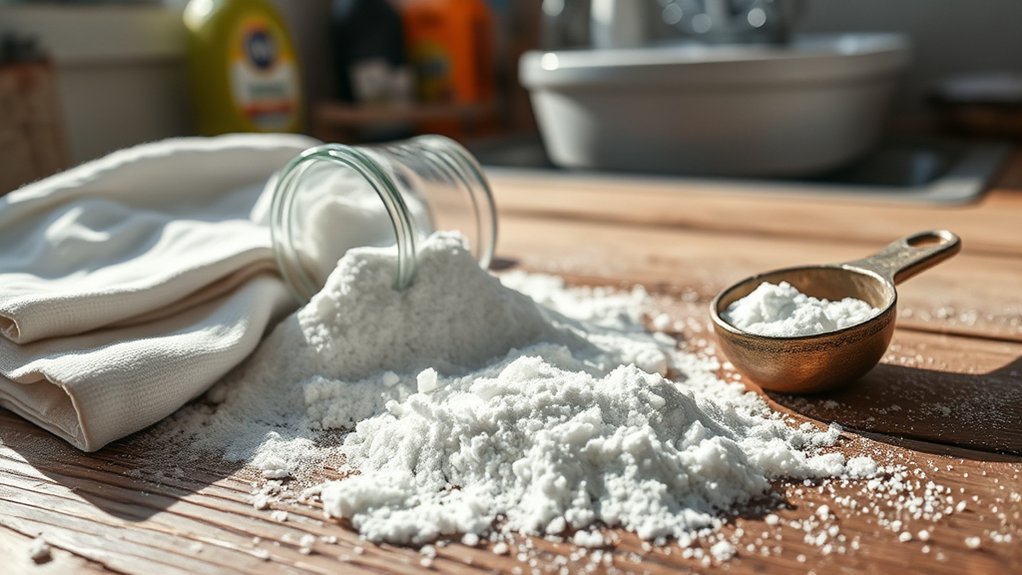
Washing soda, scientifically known as sodium carbonate, boosts your laundry detergent’s effectiveness by softening hard water and increasing the water’s pH level. When you add washing soda to your laundry, it elevates alkalinity, which helps break down grease, oils, and stubborn stains.
Sodium carbonate acts as a chelating agent by binding calcium and magnesium ions found in hard water. This prevents them from disrupting detergent action, allowing detergent molecules to penetrate fabric fibers more effectively. As a result, stain removal and fabric cleaning are improved.
Additionally, washing soda amplifies detergent’s whitening and brightening powers, making whites look cleaner and colors stay vibrant.
When used as a pretreatment paste, it effectively tackles set-in stains like blood or grease, improving overall laundry results by optimizing the chemical environment for detergent performance.
Why Washing Soda Makes Detergents Work Better
Although detergents are formulated to clean effectively, their performance can be hindered by hard water minerals like calcium and magnesium. Sodium carbonate, commonly known as washing soda, acts as a laundry booster by softening hard water. It binds these minerals, preventing interference with detergents and enhancing cleaning efficiency.
Its alkaline nature raises wash water pH, which improves the breakdown of grease, oils, and tough stains more effectively than detergent alone.
| Function | Mechanism | Benefit |
|---|---|---|
| Water Softening | Binds calcium/magnesium ions | Prevents detergent inhibition |
| pH Adjustment | Increases alkalinity | Enhances stain removal |
| Stain Removal Boost | Natural bleaching action | Whitens and brightens fabrics |
Using washing soda maximizes detergent performance for tougher laundry challenges.
Using Washing Soda to Pretreat Stains
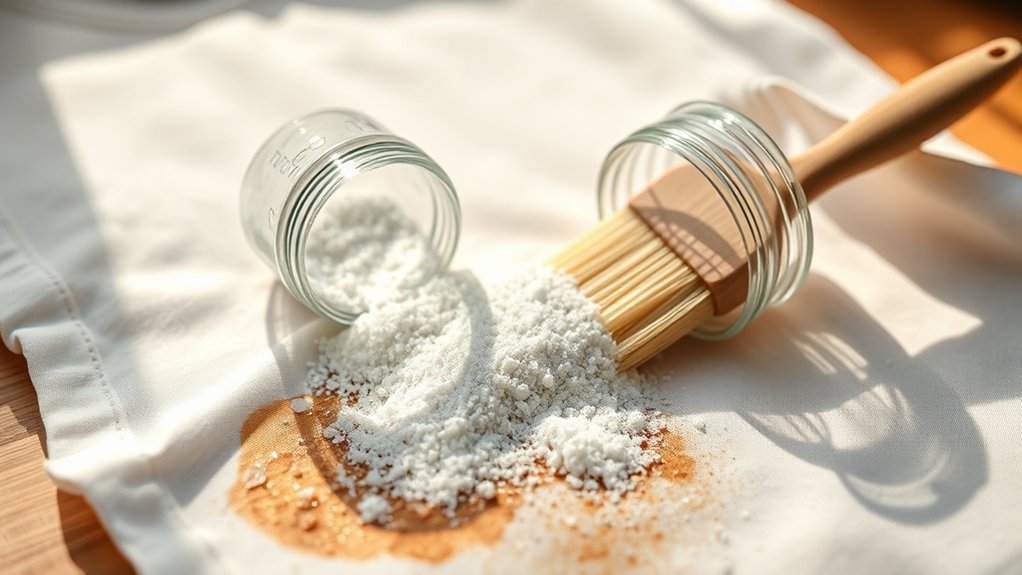
When you need to tackle stubborn stains, applying a washing soda paste directly to the affected area can greatly enhance stain breakdown.
Mix 4 tablespoons of washing soda with ¼ cup of warm water to form a consistent paste.
Combine 4 tablespoons of washing soda with ¼ cup warm water to create a smooth, effective stain-fighting paste.
Apply this mixture precisely to the stain, focusing on cotton or cotton-blend fabrics, as washing soda effectively removes stains without damaging these materials.
Let the paste sit for at least 30 minutes to maximize its stain-lifting action.
Afterward, thoroughly rinse the treated area to eliminate any washing soda residue, which guarantees ideal fabric care.
This targeted pretreatment step considerably improves your ability to remove stains, contributing to consistently clean laundry by breaking down tough dirt and grime before the main wash cycle.
How to Add Washing Soda to Laundry
You’ll want to measure about ½ cup of washing soda for a standard load to get the best results with your detergent.
Just add it directly to the drum or the dispenser along with your regular detergent.
If you’re doing a bigger load, go ahead and adjust the amount accordingly.
Make sure it’s evenly distributed so everything comes out nice and clean.
Measuring Washing Soda
Adding exactly ½ cup of washing soda to each laundry load alongside your regular detergent greatly enhances cleaning performance. Measure precisely to optimize the interaction between washing soda and laundry soap, especially in hard water conditions where washing soda softens minerals. This allows detergent to function more effectively.
Avoid using washing soda alone; it acts as a booster rather than a substitute for detergent. For tough stains, prepare a pre-treatment paste with 4 tablespoons of washing soda and ¼ cup of warm water, applying it directly before washing.
Always adhere to your washing machine’s instructions and exclude delicate fabrics like wool or silk from washing soda treatment to prevent fiber damage.
Accurate measurement guarantees consistent results and safeguards fabric integrity.
Adding To Wash
To maximize washing soda’s cleaning benefits, measure out ½ cup and combine it with your regular detergent before starting the laundry cycle.
Washing soda acts as a water softener by binding calcium and magnesium ions, which is essential for enhanced stain removal, especially in hard water areas.
For best results, add washing soda directly into the washing machine drum before loading clothes or dissolve it in warm water and pour it into the wash.
This boosts detergent effectiveness, improving brightness and grime removal.
Avoid using washing soda on delicate fabrics like wool or silk since its alkalinity can damage fibers.
Common Washing Soda Laundry Mistakes to Avoid
Although washing soda is a powerful laundry aid, using it incorrectly can damage fabrics and reduce cleaning efficiency. To optimize this cleaning product’s performance and protect your clothes, avoid these mistakes:
- Overusing washing soda. Exceeding ½ cup per load risks fabric degradation because of its high alkalinity.
- Mixing washing soda with vinegar. This neutralizes both agents and diminishes their stain-removal capability.
- Skipping pre-treatment. If you don’t apply a washing soda paste (4 tbsp with ¼ cup warm water) on tough stains, cleaning results will be poor.
Always test washing soda on a small fabric area before full application to prevent discoloration or damage.
Following these guidelines guarantees maximum stain removal and fabric preservation when using washing soda.
Fabrics Safe for Washing Soda Use
You can confidently use washing soda on cotton, cotton-polyester blends, and synthetic fabrics like polyester and nylon. It really helps boost stain removal and brighten your clothes.
That said, you want to be careful with delicate fabrics like wool, silk, or rayon. High concentrations of washing soda can damage those fibers.
Suitable Fabric Types
When selecting fabrics for washing soda treatment, it’s important to recognize that this alkaline substance performs best on durable materials like cotton, cotton blends, polyester, nylon, denim, and canvas.
Unlike sodium bicarbonate, washing soda provides stronger alkalinity, making it effective yet potentially harsh on sensitive fibers.
You can safely use washing soda on:
- Cotton-blend fabrics, where it enhances stain removal and cleaning efficiency.
- Synthetic fabrics such as polyester and nylon, which benefit from odor elimination and color brightening.
- Heavy-duty textiles like denim and canvas, which tolerate its alkalinity without degradation.
Avoid using washing soda on delicate fibers like wool, silk, or rayon due to risk of damage or discoloration.
Always conduct a spot test to confirm compatibility before full application.
Delicate Fabric Precautions
Durable fabrics like cotton and polyester tolerate washing soda’s alkalinity, but delicate materials such as silk, wool, and rayon require more careful handling.
When dealing with delicate fabrics, you should always perform a patch test by applying a diluted washing soda solution on an inconspicuous area to check for adverse reactions.
Avoid large concentrations of washing soda, as high alkalinity can degrade fibers and alter colors in sensitive materials. Instead, use smaller amounts or more diluted solutions to minimize potential damage.
While washing soda enhances cleaning effectiveness on robust fabrics, its use on delicate textiles demands caution to preserve fabric integrity and colorfastness.
Following these precautions guarantees you safely incorporate washing soda into your laundry routine without compromising delicate fabrics.
Effective Stain Removal
Three common tough stains like grease, blood, and coffee respond well to washing soda treatment on fabrics such as cotton and cotton-polyester blends.
Using soda as a cleaning agent helps break down residues and boosts detergent performance.
To get the best results, follow these steps:
- Apply a paste of washing soda and warm water directly on set-in stains for targeted treatment.
- Use washing soda in the wash cycle alongside detergent to improve overall stain removal and soften hard water.
- Limit washing soda use to durable fabrics. Avoid delicate materials like wool, silk, or rayon to prevent damage.
Eco-Friendly Laundry Benefits of Washing Soda
Although you might rely on conventional detergents, incorporating washing soda into your laundry routine greatly enhances cleaning efficiency while supporting eco-friendly practices.
Washing soda, a natural biodegradable cleaning agent, acts as an effective water softener, improving detergent performance in hard water by increasing wash water pH.
This elevated alkalinity helps break down grease and stains without using harsh chemicals. Plus, washing soda whitens whites and brightens colors, reducing the need for synthetic brighteners.
It also neutralizes fabric odors, so you don’t have to rely on environmentally damaging synthetic fragrances.
By adding washing soda, you cut down on commercial detergents that often contain harmful chemicals and excess packaging, which promotes sustainability.
Using washing soda in your laundry process contributes a lot to an eco-friendly, efficient, and technically sound cleaning routine.
Frequently Asked Questions
Can Washing Soda Be Used in Dishwasher Cleaning?
Yes, you can use washing soda to clean your dishwasher effectively. Add about one cup to the dishwasher’s bottom and run a hot water cycle.
Its strong alkaline nature dissolves grease, breaks down food residues, neutralizes odors, and softens hard water, enhancing detergent performance.
Just avoid mixing it with acidic cleaners to prevent harmful chemical reactions.
This method improves your dishwasher’s cleanliness and efficiency without harsh chemicals.
Is Washing Soda Safe for Septic Systems?
Think of your septic system as a delicate garden. Washing soda acts like a mild fertilizer, safe when sprinkled sparingly but harmful if overused.
You can use washing soda safely in your septic system if you limit it to about ½ cup per load. It softens water and boosts detergent without disrupting essential bacteria.
Just avoid heavy doses to keep your system balanced and functioning efficiently over time.
How Should Washing Soda Be Stored Properly?
You should store washing soda in a cool, dry place to prevent moisture absorption and clumping.
Use an airtight container, preferably plastic or glass, to block humidity and contaminants.
Clearly label the container to avoid confusion.
Keep it away from children and pets for safety.
Regularly inspect the storage area and container for damage or dampness, since compromised storage reduces washing soda’s effectiveness and can affect your laundry results.
Can Washing Soda Cause Skin Irritation?
Washing soda can act like a harsh desert wind against your skin, causing dryness and redness due to its strong alkalinity.
If you handle it without gloves, prolonged exposure may intensify irritation.
Technically, it disrupts your skin’s natural barrier, so you need protective measures.
Should irritation occur, rinse thoroughly with soap and water.
Always store it safely to avoid accidental contact, especially from children or pets.
What Is the Difference Between Washing Soda and Baking Soda?
The difference between washing soda and baking soda lies in their chemical composition and pH levels.
Washing soda (sodium carbonate) is more alkaline, with a pH around 11.5. This makes it stronger for heavy-duty cleaning and water softening.
Baking soda (sodium bicarbonate) has a milder pH near 8.4, which makes it suitable for baking and light cleaning.
You can convert baking soda to washing soda by heating, but you shouldn’t substitute one for the other in all tasks.
Conclusion
So, next time your laundry’s staging a grime rebellion, just summon washing soda, the unsung hero with a chemist’s precision and a stain’s worst nightmare. It’s like sending tiny detergent commandos that boost your soap’s power, tackle stains head-on, and leave fabrics victorious.
Just don’t go overboard. Your delicates don’t need this chemical boot camp. Embrace washing soda’s eco-friendly muscle and watch your laundry transform from chaotic battlefield to pristine victory parade.