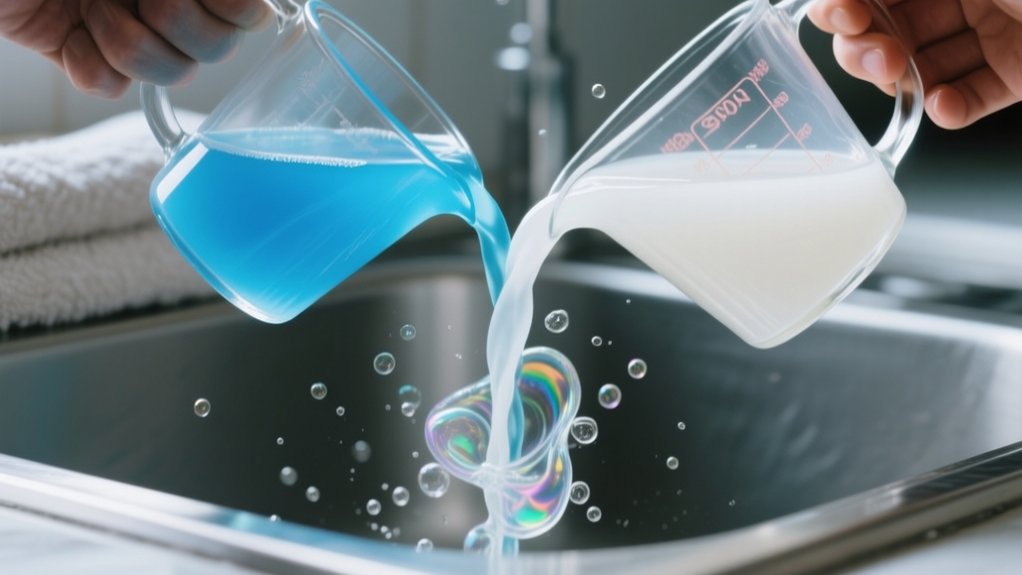
Can You Mix Laundry Detergents – What Really Happens
You shouldn’t mix laundry detergents because their chemicals can interact, reducing cleaning effectiveness and creating excess suds that hinder rinsing. Combining liquid and powder forms often causes incomplete dissolution and residue, especially in front-loading washers.
Mixing different brands risks neutralizing enzymes and surfactants essential for stain removal. Overdosing can also damage your machine and fabrics. Understanding detergent compatibility and proper dosing helps optimize washing results.
Exploring these details further reveals safer, more effective laundry practices.
Key Takeaways
- Mixing detergents often reduces cleaning effectiveness due to chemical interactions that neutralize active ingredients.
- Combining liquid and powder detergents risks residue from incomplete powder dissolution and excessive suds buildup.
- Different brands or detergent types can interfere with each other’s enzymes and surfactants, lowering stain removal power.
- Overdosing from mixed detergents can cause excessive suds, machine damage, and laundry residue.
- Using a single detergent format per wash cycle and following dosing instructions ensures optimal cleaning and machine safety.
What Happens to Cleaning Power When You Mix Detergents
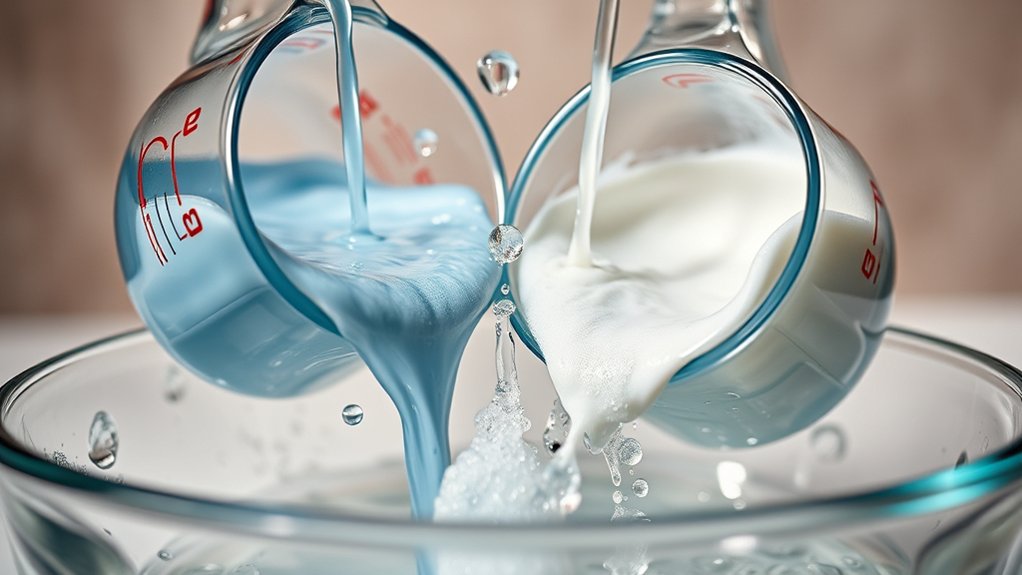
Although mixing laundry detergents might seem like a convenient way to boost cleaning power, it often reduces effectiveness due to chemical interactions between differing active ingredients.
When you mix two detergents, especially from different brands or formulations, their active compounds can neutralize or interfere with each other, diminishing overall cleaning performance.
Moreover, overdosing caused by combining detergents can create excessive suds, which hinder proper rinsing and trap dirt and odors in fabrics.
Powder detergents may also fail to dissolve completely when mixed with liquids, resulting in uneven cleaning and residue.
While small amounts of similar detergent types sometimes don’t cause major issues, you must dose precisely to maintain ideal cleaning performance.
Is It Safe to Mix Liquid and Powder Laundry Detergents?
You probably shouldn’t mix liquid and powder detergents in the same load. Their different formulas can actually get in the way of how well your clothes get cleaned.
See, powder detergents take a bit longer to dissolve and might leave some residue behind when you use them with liquid detergents, which start working right away.
When these two mix, they can cancel each other out and even create too many suds, which means your stains mightn’t come out as well.
Mixing Liquid And Powder
When mixing liquid and powder laundry detergents, you risk slow dissolution of the powder, which can leave residues on fabrics and reduce cleaning effectiveness.
Combining liquid and powder detergent all the time complicates dosing, as each requires distinct quantities, increasing the chance of overdosing or underdosing.
In addition, differing chemical formulations may interact unfavorably, diminishing overall detergent performance. Excess suds generation is another concern, particularly for front-loading machines sensitive to sud buildup, potentially causing operational issues.
To maintain ideal washing machine function and maximize detergent efficiency, it’s best to avoid mixing liquid and powder detergent all the time.
Instead, select one detergent form per load to guarantee proper dissolution, consistent dosing, and prevent unwanted chemical interactions that could compromise your laundry results.
Effects On Cleaning
Mixing liquid and powder laundry detergents in a single wash can compromise cleaning effectiveness due to slow powder dissolution and potential chemical interactions.
When combined, the powder may not fully dissolve, leading to residue buildup on fabrics and within the washing machine.
Moreover, differing chemical formulations can interfere with each other’s stain-fighting agents, reducing the detergents’ ability to remove targeted soils effectively.
Liquids typically excel at organic stain removal, while powders are more effective on grease, but mixing them dilutes these specialized actions.
This results in less efficient stain removal and may cause excessive suds or machine issues.
To guarantee consistently clean clothes and peak machine performance, it’s best to use one detergent type per load rather than mixing liquid and powder detergents.
How Mixing Different Brands Affects Cleaning Results
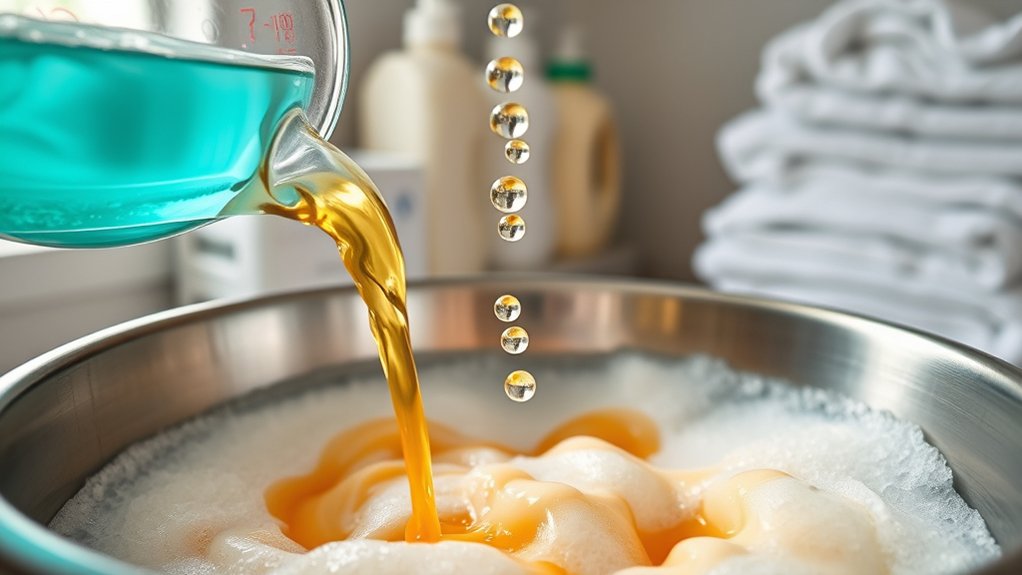
Although most laundry detergents share similar active ingredients, combining different brands can alter cleaning effectiveness because of variations in enzyme and surfactant formulations.
When you mix different detergents, you risk neutralizing their cleaning agents, which reduces overall performance.
Also, improper dosing complicates results. Using more than the correct amount may cause residue or excessive suds.
Key factors affecting cleaning results include:
- Enzyme and surfactant compatibility. Incompatible agents can diminish stain removal.
- Formulation differences. Liquid and powder mixes may produce unwanted residues.
- Dosage precision. Incorrect amounts lead to insufficient cleaning or buildup.
To optimize outcomes, maintain careful control of detergent amounts and avoid mixing brands indiscriminately.
Risks of Mixing Different Detergent Types and Formats
If you combine different detergent types and formats, you risk slow powder dissolution, residue buildup, and overdosing that may cause excessive suds or washer malfunctions.
Mixing liquid and powder detergents often results in incomplete powder solubilization, reducing cleaning efficacy and leaving deposits on fabrics.
Using pods or sheets alongside liquids or powders can lead to detergent overdosing, generating excess suds that interfere with washer sensors and mechanical function.
Additionally, detergents from different brands or formats may chemically interact, neutralizing active ingredients and impairing stain removal.
These operational risks highlight why you should avoid mixing detergent types and formats within the same load.
To maintain peak wash performance and protect your machine, selecting a single detergent format per cycle is the most technically sound approach.
When Does Mixing Detergents Make Sense?
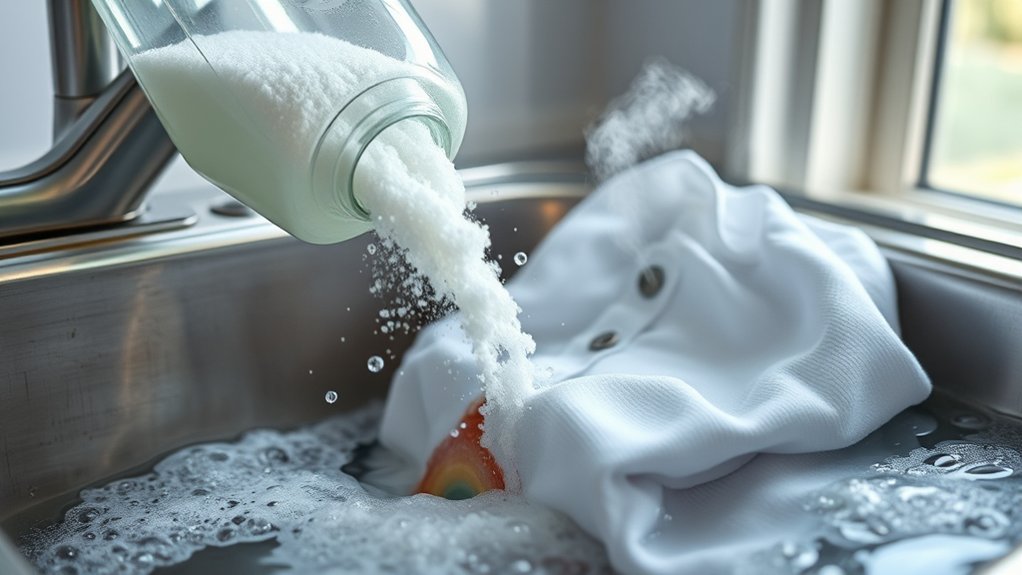
You can mix detergents to use up leftover products without harming your clothes or machine, as long as they’re compatible. It’s a smart way to avoid waste and get the most out of what you have.
Plus, if you add boosters like baking soda, it can really enhance the cleaning power without the risks that come with mixing different types of detergents.
But here’s the catch: you should steer clear of mixing liquid and powder detergents together. Doing that can lead to ineffective cleaning and way too many suds, which is definitely something you want to avoid.
Using Up Old Detergent
When managing leftover detergent, mixing an old product with a new one for a single load can efficiently reduce waste without compromising cleaning performance or damaging fabrics and machines.
You should avoid using too much detergent overall, as excess suds can impair rinsing and machine function.
Mixing works best when both detergents share the same format, like liquid with liquid or powder with powder, to keep chemical compatibility.
Here’s a clear approach:
- Combine small amounts of leftover and new detergent to avoid overdosing.
- Verify detergents are of the same physical type to prevent formulation conflicts.
- Use one detergent mixture per load to maintain consistent cleaning results.
This method helps you use up old detergent effectively, minimizing waste while maintaining laundry quality.
Boosting Cleaning With Additives
Although mixing laundry detergents can sometimes reduce cleaning effectiveness, combining detergents with specific additives like baking soda or oxygen bleach can greatly boost stain removal and odor control.
When you use baking soda alongside your laundry soap, it enhances pH balance, improving the breakdown of organic stains and neutralizing odors.
Oxygen bleach acts as a powerful stain remover without the chemical conflicts that arise from mixing different detergent brands or types.
Instead of blending multiple detergents, adding a dedicated stain remover or pre-treatment to your regular laundry soap yields more reliable results on stubborn stains.
Avoid mixing liquid and powder detergents to prevent overdosing and compromised cleaning.
Strategic use of additives with your detergent maximizes cleaning efficiency while minimizing risks of negative interactions.
Avoiding Negative Effects
If you need to use leftover detergents, mixing two liquids or two powders from different brands generally won’t harm your clothes or machine.
However, to avoid negative effects and overdosing, you should follow these guidelines when mixing laundry detergents:
- Stick to the same format, liquid with liquid or powder with powder, to avoid excessive suds and residue buildup.
- Combining detergents within the same brand and product line is safe and can enhance cleaning performance without compatibility concerns.
- Avoid mixing pods with liquids or powders, as that often leads to overdosing and potential machine issues.
How Mixing Detergents Affects Your Washer
Since mixing different laundry detergents can trigger chemical interactions, you may experience reduced cleaning efficiency and residue buildup in your washer.
When mixing detergents, incompatible formulations, such as liquid and powder types, can cause incomplete dissolution of detergent per dose, leaving clumps and residues.
Excessive suds generated by mixed detergents often lead to overflow issues, particularly in front-loading washers. This can risk mechanical malfunctions or leaks.
Reports indicate that improper mixing can even cause severe washer damage, including rare but serious incidents like explosions.
To mitigate these risks, you must monitor detergent per load carefully and perform regular maintenance cycles to eliminate soap residue and prevent mold growth.
Understanding how mixing detergents affects your washer helps guarantee longevity and peak performance by preventing operational issues linked to detergent incompatibility.
Why Overusing Mixed Detergents Can Cause Problems
When you overuse mixed detergents, your washing machine often produces excessive suds that can lead to leaks or mechanical issues, especially in front-loading models.
Overusing mixed detergents also causes excess detergent residue to accumulate on fabrics, which can impair texture and absorbency.
Moreover, improper dosing from mixing detergents with differing concentrations can reduce cleaning efficiency and increase waste.
Key problems include:
- Mechanical strain from excessive suds causing leaks or operational faults.
- Reduced cleaning power due to ingredient interactions and improper dosing.
- Accumulation of excess detergent residue that degrades fabric quality over time.
Better Ways to Tackle Tough Stains Without Mixing Detergents
You can get better results on tough stains by using treatments made just for those specific stains, rather than mixing different detergents.
For example, products like color-safe oxygen bleach or odor eliminators really boost cleaning power and keep your fabric safe at the same time.
It’s all about picking the right product and applying it carefully.
That way, you can handle stubborn stains effectively without worrying about any harmful chemical reactions.
Targeted Stain Treatments
Although mixing different laundry detergents might seem like a quick fix for tough stains, targeted stain treatments offer a more effective and safer approach.
Applying a specialized stain remover directly to problem areas enhances stain breakdown without unpredictable chemical interactions.
You can optimize stain removal by following these targeted treatments:
- Pretreat stains with a stain remover formulated for the specific fabric and soil type, ensuring compatibility and maximum efficacy.
- Use color-safe oxygen bleach on colored fabrics to boost stain removal power without damaging colors or requiring detergent mixing.
- For white fabrics, apply chlorine bleach only if care labels permit, avoiding unnecessary product combinations.
These methods allow you to tackle tough stains precisely and safely, outperforming detergent mixtures that risk fabric damage or reduced cleaning efficiency.
Specialized Detergent Options
Since tackling tough stains demands targeted chemistry, specialized detergents offer a superior solution by incorporating enzymes and surfactants engineered for specific soil types and fabric needs.
When dealing with heavily soiled laundry, these formulations maximize stain removal efficiency without mixing multiple products, which can cause chemical incompatibilities.
For colored fabrics, using color-safe oxygen bleach supplements specialized detergents by oxidizing stains while preserving fabric integrity.
Pretreating with dedicated stain removers further enhances performance by breaking down residues before washing.
Moreover, detergents tailored for fabric categories like delicates or sportswear maintain material properties during cleaning.
You can also integrate additives such as citric acid or odor eliminators to address particular challenges without compromising detergent efficacy.
This approach guarantees ideal cleaning outcomes through precise, function-specific chemistry rather than uncertain detergent combinations.
How to Safely Use Additives Instead of Mixing Detergents
When aiming to enhance your laundry’s cleanliness without risking chemical interactions from mixing detergents, incorporating safe additives offers a controlled solution.
Enhance laundry cleanliness safely by using additives instead of mixing detergents to avoid chemical interactions.
You can leverage specific additives to boost cleaning efficacy and maintain fabric integrity.
- Add baking soda to your wash to elevate cleaning power and neutralize odors without altering detergent chemistry.
- Use oxygen bleach as a supplementary agent for stain removal, particularly effective on colored fabrics and safe alongside standard detergents.
- Incorporate fabric softeners or scent beads post-wash to customize fragrance without interfering with detergent performance.
Always adhere to the manufacturer’s dosing instructions to prevent excessive suds or residue.
This approach optimizes cleaning outcomes while avoiding the unpredictability of mixing detergents directly.
How to Use Leftover Detergent Without Mixing
If you have leftover detergent, you can maximize its use by applying it directly to stains or saving it for loads that match its cleaning strength. For ideal cleaning, apply leftover liquid detergent as a pre-treatment on stubborn stains, enhancing its efficacy without mixing.
Leftover powder detergent works well dissolved in water for heavily soiled areas before washing. Reserve leftover detergent for smaller or lightly soiled loads, adhering strictly to dosing guidelines to prevent overuse and excessive suds.
Proper storage in a cool, dry environment preserves detergent potency until reused.
Frequently Asked Questions
Can Mixing Detergents Damage Delicate Fabrics?
Yes, mixing detergents can damage delicate fabrics. When you combine different formulations, you risk creating excess suds and chemical interactions that reduce cleaning efficiency and increase fiber abrasion.
Enzymes or surfactants from mixed detergents may weaken fibers, causing wear over time.
Plus, incomplete dissolution from mixing powder and liquid detergents can leave residues or clumps, which further harm delicate materials.
To protect your fabrics, stick to a single, compatible detergent type. It’s the simplest way to keep your clothes looking their best.
How Does Water Hardness Affect Detergent Mixing Outcomes?
Water hardness reduces detergent mixing efficacy by binding minerals like calcium with surfactants, which neutralizes their cleaning power.
You’ll notice increased residue and soap scum formation on fabrics, causing dinginess and odor retention.
Hard water minerals inhibit stain removal by deactivating key detergent ingredients.
To counteract this, you should use water softeners or detergents specifically formulated for hard water, ensuring mixed detergents maintain peak performance and fabric care.
Are There Environmental Impacts From Mixing Laundry Detergents?
Yes, mixing laundry detergents can increase chemical loads in wastewater, posing environmental risks.
You’ll release more surfactants and incompatible compounds that may form harmful byproducts, complicating treatment processes.
Excessive suds from mixed detergents can strain sewage systems and increase water consumption.
Furthermore, synthetic additives may volatilize, contributing to air pollution and respiratory issues.
To minimize impact, you should properly dilute and dispose of mixed detergents, promoting sustainable laundry practices.
Can Mixing Detergents Cause Allergic Skin Reactions?
Sure, mixing detergents is your shortcut to a surprise skin rash party!
When you combine different detergents, their chemical ingredients can interact, increasing allergen concentration or introducing new irritants. This can trigger dermatitis or hives, especially if you’re sensitive to fragrances or surfactants.
You should always test a small fabric patch first, because those unpredictable molecular mashups might just turn your laundry day into an unintended dermatological experiment.
Does Mixing Detergents Affect the Scent of Laundry?
Yes, mixing detergents affects your laundry’s scent by combining their fragrance compounds, which can create unique or unexpected aroma profiles.
The volatility and interaction of scent molecules may enhance or clash, altering the overall fragrance intensity and character.
However, this chemical blending is unpredictable, so you mightn’t consistently achieve a pleasant result.
For controlled scent outcomes, using one detergent with complementary scent boosters is more reliable than mixing multiple detergents.
Conclusion
Mixing laundry detergents might seem like a quick fix, but it’s often a recipe for diminishing your cleaning power. You risk chemical clashes that reduce effectiveness or damage fabrics.
Instead, use additives designed for specific stains and safely finish leftover detergents separately. Think of your laundry as a science experiment. Precision matters.
Stick to one formula at a time to get the best results without unintended reactions or residue buildup.