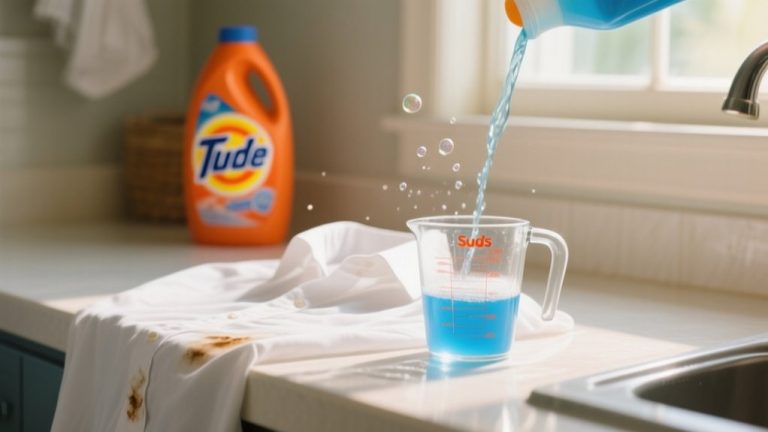
How To Get Blue Laundry Detergent Stains Out Of Clothes
To get blue laundry detergent stains out of your clothes, start by blotting the spots gently with rubbing alcohol, then rinse with cold water. Soak the garment in a diluted white vinegar solution for at least 30 minutes, which helps dissolve stubborn residue.
After soaking, wash the fabric normally without extra detergent. To prevent stains, avoid overloading the machine and use warm water for better detergent dissolution. Keep going to uncover more effective stain removal tips and prevention strategies.
Key Takeaways
- Blot blue detergent stains gently with rubbing alcohol, then rinse thoroughly with cold water and repeat if needed.
- Soak stained clothes in a mixture of one cup white vinegar and one quart warm water for at least 30 minutes.
- Apply undiluted white vinegar directly to tough blue detergent spots before rinsing thoroughly.
- Wash garments on a regular cycle without adding more detergent after pretreatment to avoid residue buildup.
- Avoid overloading the washing machine and use warm water to ensure detergent dissolves fully and rinses out completely.
How To Remove Blue Detergent Stains From Clothes
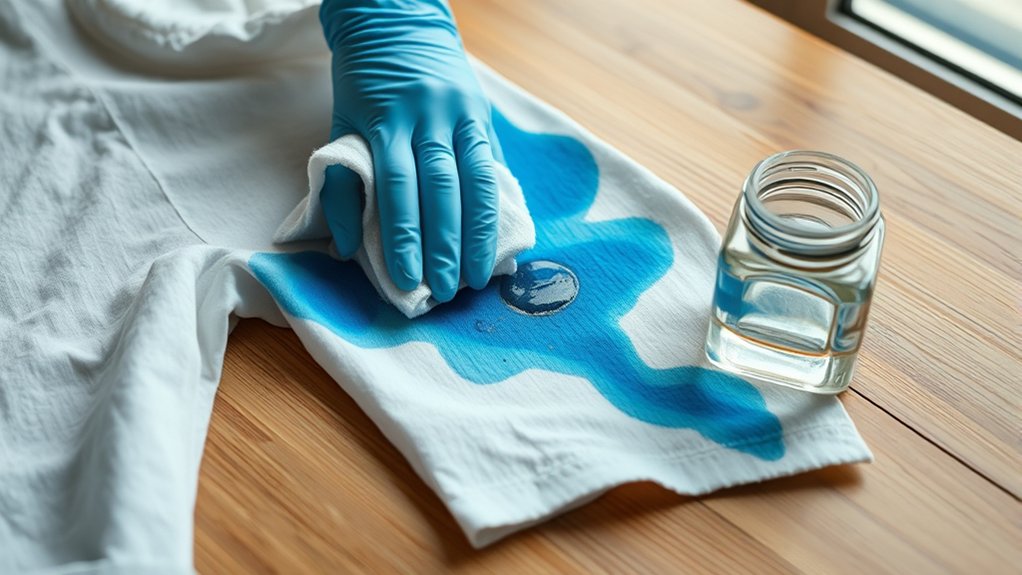
How do blue detergent stains end up on your clothes? They usually occur when concentrated detergent doesn’t dissolve properly. This often happens from pouring it directly onto the garment or overloading the washing machine.
Blue detergent stains appear when concentrated detergent doesn’t dissolve properly, often due to direct pouring or machine overload.
To remove blue detergent stains, start by rinsing the affected area under cool water to loosen residue.
Next, mix one part white vinegar with four parts water and soak the stained garment for 30 minutes. This helps fade the blue stains effectively.
If the stain persists, gently rub the fabric while rinsing to dislodge remaining residue.
Always check the garment’s care label before treatment to avoid damage.
Avoid drying the item until the stain is fully removed, as heat can set the stain permanently.
How To Identify Blue Detergent Stains Vs Other Marks
You’ll recognize blue detergent stains by their distinct streaks or splotches caused by undissolved liquid detergent.
Unlike dirt or oil marks, these stains often feel stiff or waxy because of trapped soap residue.
To be sure, just compare with other clothes from the same wash and check how concentrated your detergent is.
That usually helps confirm if it’s a detergent stain or something else.
Blue Stain Characteristics
Bright blue or turquoise spots on your clothes often signal blue detergent stains, especially when concentrated liquid detergent has been poured directly onto fabric.
These blue stains usually have a slightly waxy texture, indicating detergent residue buildup that’s distinct from other marks.
Proper identification relies on spotting these bright spots where detergent was heavily applied, unlike greasy or discolored stains.
Cold water washes increase the likelihood of residue, as powdered detergents often don’t dissolve fully, leaving behind these characteristic blue marks.
Recognizing this waxy texture and the specific color helps you pinpoint blue detergent stains quickly.
Understanding these traits guarantees you address the problem accurately and avoid mistaking them for dye transfers or other fabric blemishes.
Differentiating Detergent Marks
Recognizing the unique traits of blue detergent stains helps you distinguish them from other marks on your clothes. Blue stains usually show a stiff texture caused by detergent residue trapped in fibers, unlike dye transfer or food stains, which feel soft.
They tend to appear where detergent was poured directly. Undissolved powder creates white patches without the blue color or stiff feel. Proper rinsing often lightens or removes blue detergent stains, confirming their nature.
| Feature | Blue Detergent Stains | Other Stains |
|---|---|---|
| Color | Distinct blue or gray | Various (red, brown, etc.) |
| Texture | Stiff or crunchy | Soft or oily |
| Location | Concentrated detergent spots | Diffuse or random |
| Reaction to Rinsing | Lightens or dissolves | Usually persistent |
This helps you manage clothing care effectively.
Causes Of Blue Detergent Stains On Fabrics
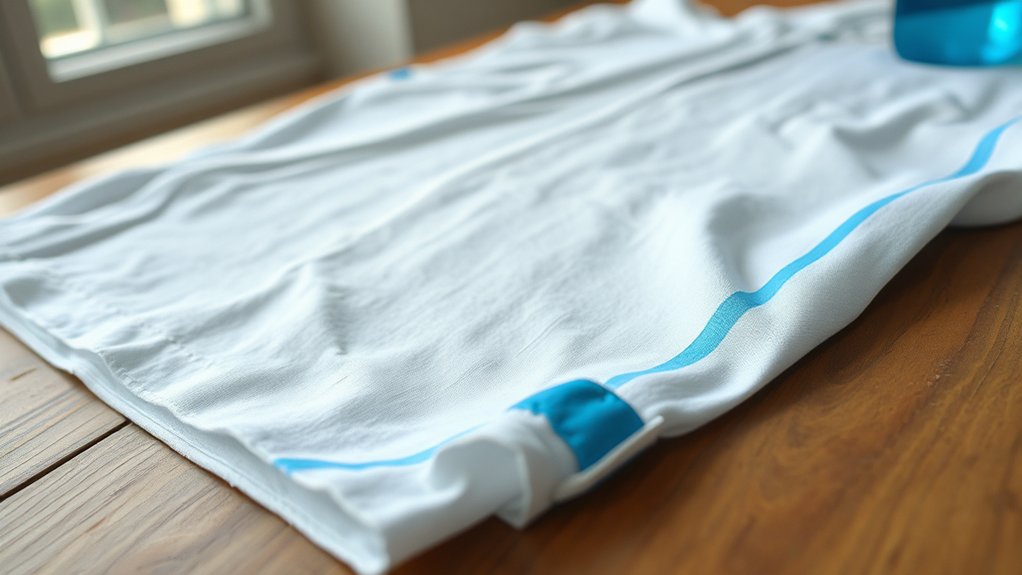
You’ll often notice blue detergent stains when concentrated detergent doesn’t dissolve completely. This usually happens if you overload the washing machine or use cold water.
When that happens, the detergent can’t spread evenly because there isn’t enough movement or warmth to break it down. So, the residue ends up sticking to your fabrics.
Knowing these reasons can really help you avoid those annoying stains and know how to treat them when they do appear.
Detergent Concentration Issues
When you pour concentrated detergent directly onto dry clothes or wash in cold water, the detergent may not dissolve properly, leaving blue stains on your fabrics.
Using liquid detergent this way causes uneven dispersion, resulting in detergent stains that are tough to remove.
It’s essential to measure detergent dosage accurately and dilute it in water before adding clothes.
Hard water compounds the problem by reducing detergent effectiveness, causing residue buildup.
While overloading the washing machine also affects detergent dissolution, focusing on concentration issues means ensuring your detergent fully dissolves during the cycle.
Proper stain removal depends on avoiding direct application of concentrated detergent and using warm water when possible to help it properly dissolve.
This approach minimizes blue stains and keeps fabrics clean and fresh.
Washing Machine Overloading
Although it might seem convenient to fit as many clothes as possible into your washing machine, overloading disrupts detergent circulation and causes blue stains on fabrics.
When the drum is overcrowded, detergent fails to distribute evenly, leaving concentrated spots that result in detergent stains.
Overcrowding restricts water flow and limits proper agitation, which are essential for breaking down detergent and rinsing it out thoroughly. This causes detergent residue to get trapped in fabric folds, intensifying staining.
To prevent blue detergent stains, always adhere to your washing machine’s recommended load size.
Proper load size guarantees sufficient water movement and agitation, allowing detergent to dissolve fully and rinse away, keeping your clothes free from unwanted blue marks.
Water Temperature Effects
Proper load size helps detergent disperse evenly, but water temperature plays a significant role in preventing blue detergent stains on fabrics.
When you use powdered detergents in cold water, they often don’t dissolve properly, leaving undissolved particles that cause blue stains.
Washing garments in warm or hot water helps powdered detergents dissolve fully, reducing detergent residue and minimizing stains. Cold water can cause detergent to pool and concentrate, especially in hard water areas, making blue stains more likely.
Even liquid detergents can leave marks if poured directly onto dry clothes in cold water.
To avoid stubborn blue stains, always match water temperature to the detergent type and follow manufacturer guidelines. Proper water temperature guarantees thorough cleaning and prevents detergent residue from embedding in your fabrics.
Why Era Detergent Might Leave Blue Stains On Your Clothes
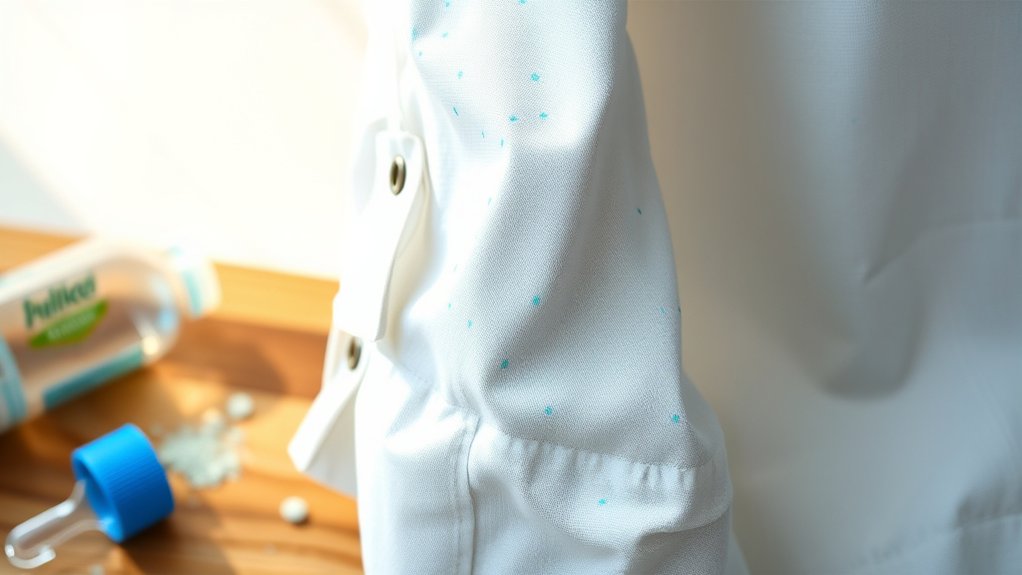
Since Era detergent contains concentrated formulas with blue dye, it can leave noticeable stains if you don’t dissolve it fully before it touches your clothes.
These blue stains often come from undissolved particles, especially when powdered detergent isn’t completely dissolved in cold water.
Pouring liquid detergents directly onto dry fabrics can also cause detergent stains as the dye transfers without dilution.
Overloading the washing machine makes this worse by limiting water circulation, trapping detergent in fabric folds where it can’t rinse out properly.
To avoid blue stains, always use the appropriate detergent dosage and make sure the detergent is fully dissolved before adding clothes.
Taking these steps helps prevent residue buildup and keeps your laundry free from stubborn blue detergent stains caused by Era’s concentrated formula.
How To Pretreat Blue Detergent Stains Effectively
Start by rinsing the stained area under cool water to loosen the concentrated detergent. For effective pretreatment of detergent stains, apply white vinegar directly to the blue stain and let it sit for about 10 minutes to break down residue.
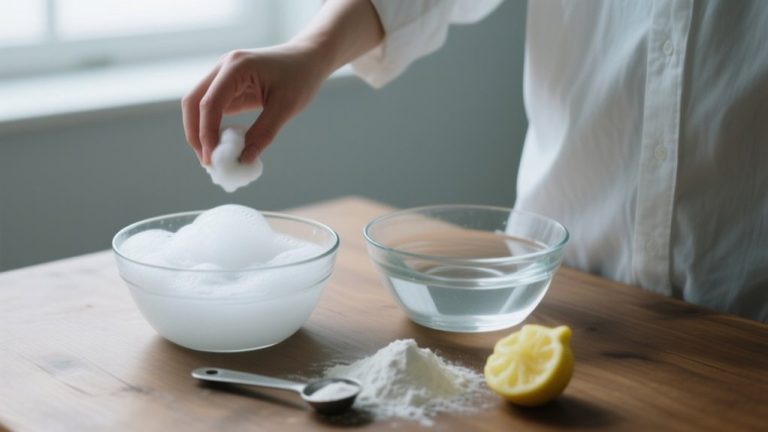
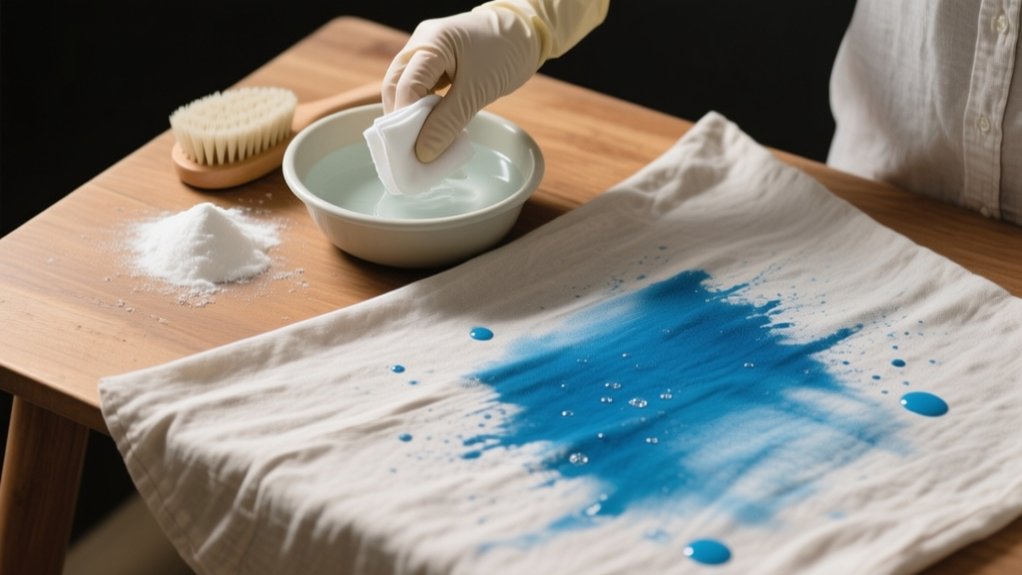
Next, make a paste with baking soda and water, apply it to the stain, and wait 15 minutes before rinsing. You can also blot the stained area gently with a soft cloth dampened in rubbing alcohol, then rinse thoroughly with cold water.
If the stain persists, repeat these pretreatment steps carefully.
Afterward, wash the garment in a regular cycle without adding more detergent to avoid setting the stain further. This method targets the stain effectively while preserving your clothes.
How To Use White Vinegar To Remove Blue Detergent Stains
You can use white vinegar to break down those stubborn blue detergent stains. Just soak the fabric in a diluted vinegar solution for at least 30 minutes.
If the stains are really tough, try applying undiluted vinegar directly onto the spots before rinsing with cool water.
Make sure to rinse and wash the fabric properly afterward to get rid of any leftover residue.
This way, your clothes will look fresh and clean again!
Vinegar Soaking Benefits
Although blue laundry detergent stains can be stubborn, soaking your clothes in a warm solution of white vinegar and water breaks down the residue effectively.
Vinegar’s acidity dissolves detergent stains, making it easier to remove stains from white clothes and other fabrics.
Mix one cup of vinegar with one quart of warm water and soak your garments for about 30 minutes.
This soaking method not only lifts existing stains but also acts as a natural fabric softener.
After soaking, rinse thoroughly to wash away loosened residues and vinegar.
Regular use of vinegar in your laundry routine can help prevent stains by keeping fabrics and your washing machine cleaner.
Incorporating vinegar soaking is a simple, natural way to maintain stain-free, fresh-smelling clothes.
Application Methods Explained
When tackling blue detergent stains with white vinegar, diluting it properly guarantees effective stain removal without damaging your fabric.
Always check the garment care label first to avoid harm to sensitive materials.
Here’s how to apply white vinegar:
- Mix one part white vinegar with four parts water and soak the garment for about 30 minutes.
- After soaking, rinse the garment thoroughly under cool water to help lift detergent stains and make sure vinegar is rinsed away.
- For persistent stains, apply undiluted white vinegar directly to the spot and rub it in gently to loosen residue before rinsing again.
Following these steps assures stains are treated effectively while protecting your clothing.
Post-Soak Rinsing
After soaking your garment in the vinegar solution, make certain to rinse it thoroughly under cool water to remove any leftover vinegar and loosened detergent stains. This step flushes out the broken-down detergent residues, preventing new stains from setting.
Use plenty of water to guarantee all vinegar traces are gone, which also helps maintain fabric integrity. If you still notice blue stains, repeat the soak and rinse process until completely removed.
Remember, white vinegar acts not only to fade detergent stains but also as a natural fabric softener, enhancing your clothes’ feel without harsh chemicals.
Proper rinsing after soaking is essential to achieve clean, stain-free garments and keep your fabrics soft and fresh.
Soaking Techniques To Lift Stubborn Blue Stains
If you want to lift stubborn blue laundry detergent stains, soaking your garment in a warm solution of one cup white vinegar and one quart water can make a significant difference.
Before you start, always check the care label to avoid damaging delicate fabrics.
Here’s how to effectively tackle detergent residue: soak the stained area for about 30 minutes in the warm vinegar solution.
Then gently rub the fabric against itself to loosen blue stains before rinsing thoroughly.
For persistent stains, repeat soaking or apply a vinegar and baking soda paste directly on the stain.
This method breaks down detergent residue and helps restore your clothes without harsh chemicals.
Best Washing And Rinsing Practices To Avoid Detergent Residue
To prevent blue detergent stains, measure your detergent carefully based on load size and soil level to make sure you don’t use too much. Use proper water temperature because warm water dissolves detergent better than cold, which reduces residue. Avoid overloading washing machines so clothes have room to move for thorough circulation and effective rinsing.
For top-loading machines, add detergent to water before adding clothes to prevent concentrated detergent from contacting fabric. Always run an extra rinse cycle if stains persist.
| Practice | Reason | Tip |
|---|---|---|
| Measure detergent | Prevent excess residue | Adjust by load and soil level |
| Proper water temperature | Guarantees detergent dissolves | Use warm water if safe |
| Avoid overloading | Allows full rinsing | Fill machine moderately |
Following these steps helps you avoid detergent stains and keeps your laundry fresh.
Tips To Prevent Blue Detergent Stains In Future Laundry Loads
Although blue detergent stains can be frustrating, you can prevent them by measuring detergent accurately and never pouring concentrated liquid directly onto your clothes. To avoid detergent stains in future laundry loads, follow these tips:
- Always measure detergent according to the load size and soil level to use the correct amount. Overuse increases the risk of blue stains.
- Add liquid detergent to the washing machine water or its dispenser, never directly onto fabrics.
- Clean your washing machine regularly with hot water and vinegar to remove buildup that can cause stains.
Switching to liquid detergent can also help prevent residue, especially in hard water. By following these steps, you’ll minimize blue stains and keep your laundry fresh.
When To Seek Professional Help For Detergent Stains
Even with careful measures, some blue detergent stains resist removal and may require professional attention. When stubborn detergent stains persist after multiple treatments, it’s wise to consult a professional cleaner to prevent fabric damage.
If your stained item is a delicate fabric like silk or wool, seeking professional help guarantees the right treatment without harm. High-value clothing, such as designer pieces, also benefits from expert care to avoid quality loss during stain removal.
Moreover, if you see blue stains on several items from the same wash, your washing machine might’ve an underlying issue. In that case, get a professional inspection and cleaning to stop detergent stains from recurring.
Trusting professionals safeguards your garments and resolves tough detergent stain problems efficiently.
Frequently Asked Questions
Can Blue Detergent Stains Damage Fabric Fibers Permanently?
Yes, blue detergent stains can permanently damage fabric fibers if you don’t act quickly.
The concentrated residue can weaken and discolor fibers, especially on delicate or light-colored fabrics.
If you leave the stains untreated or keep repeating mistakes, the fibers may break down or fray over time.
To protect your clothes, you should always use the right detergent amount and wash them properly to avoid lasting damage.
Are Blue Detergent Stains Harmful to Sensitive Skin?
Yes, blue detergent stains can irritate your sensitive skin because they often contain synthetic dyes and surfactants that cause allergic reactions or discomfort.
If you have sensitive skin, it’s best to rinse your clothes thoroughly to remove any residue.
Opt for hypoallergenic, dye-free detergents to minimize risk.
Treat stains promptly to avoid prolonged skin contact, which can worsen irritation or cause rashes.
Do Blue Detergent Stains Affect Different Fabric Types Differently?
About 75% of fabrics react differently to blue detergent stains. You’ll notice delicate fibers like silk and wool absorb stains more deeply, risking damage, while sturdy cotton or polyester handle them better.
Absorbent textures like towels trap residue, making stains tougher to remove.
Synthetic fibers, with smoother surfaces, shed stains more easily.
You should also consider fabric colorfastness, as non-colorfast materials might suffer permanent discoloration from detergent stains.
Can Blue Detergent Stains Be Removed From Dry-Clean-Only Clothes?
Yes, you can remove blue detergent stains from dry-clean-only clothes, but it’s best to rely on professional dry cleaners.
They use specialized solvents and techniques that protect delicate fabrics.
If the stain is fresh, gently blot it with a damp cloth to reduce it before you take it in.
Always tell your dry cleaner about the stain’s origin so they can choose the safest and most effective treatment method for your garment.
Is It Safe to Mix Enzyme Pretreatments With Other Stain Removers?
Mixing enzyme pretreatments with other stain removers can be a double-edged sword. You can enhance stain removal, but only if you check product compatibility first.
Don’t throw caution to the wind. Always perform a patch test on a hidden fabric spot to avoid damage or discoloration.
Follow each product’s instructions carefully, and consider applying enzymes separately to let them work their magic before adding another remover.
This approach keeps your clothes safe and stain-free.
Conclusion
Just like a skilled sailor navigates stormy seas, you can steer your laundry clear of blue detergent stains. By recognizing the marks, treating them promptly, and adopting smart washing habits, you’ll keep your clothes spotless and vibrant.
Remember, even the best captains call for help when needed. Don’t hesitate to seek professional advice if stains persist. With these strategies, your laundry routine will sail smoothly, free from unwanted blue streaks.