
Does Laundry Detergent Stain Clothes – What You Should Know
Yes, laundry detergent can stain your clothes, mainly because of residue buildup from overuse, improper rinsing, or reactions with hard water minerals. Powder detergents often leave clumps, while liquids may cause streaks or greasy spots, especially if water temperature or load size isn’t right.
Using the wrong washing settings makes stains worse by stopping detergent from dissolving and rinsing properly. Knowing how detergent types, water conditions, and washing habits affect staining will help you manage and prevent these issues effectively.
Key Takeaways
- Laundry detergent can stain clothes due to residue buildup from overuse or improper washing conditions.
- Powder detergents may clump, while liquid detergents can leave streaks or greasy spots on fabrics.
- Hard water and incorrect water temperatures often cause detergent residue and stains on garments.
- Overloading machines reduces rinsing efficiency, increasing detergent buildup and staining risks.
- Proper detergent measurement, correct water temperature, and adequate rinsing prevent detergent stains effectively.
Why Laundry Detergent Leaves Stains on Clothes

Although laundry detergent is designed to clean fabrics, it can leave stains when it doesn’t dissolve properly during the wash cycle. Detergent stains often happen because powdered formulas fail to fully dissolve in cold water, leaving visible residue on garments.
Overloading your washing machine or using too much detergent makes this worse. It overwhelms the rinse process and lets undissolved particles stick to fabrics.
Concentrated detergents, especially when poured directly onto clothes, can also leave greasy or shiny residue, especially on synthetic fibers.
To prevent detergent stains, control water temperature to match the detergent type you use, and measure detergent carefully. By optimizing these factors, you reduce residue buildup and keep your clothes looking their best.
How to Identify Different Types of Detergent Stains
Detergent stains vary in appearance depending on the type of detergent and washing conditions, so recognizing their characteristics helps you address them effectively.
To identify detergent stains, observe the color and texture: blue or white splotches with a waxy or rough finish often indicate undissolved detergent residue.
Overloading the machine or incorrect detergent dosage, especially using powdered detergent in cold water, commonly causes these stains.
On dark fabrics, powdery or chalky streaks signal residue buildup, while synthetic materials might display shiny, greasy patches.
Distinguishing detergent stains from mineral deposits or body oil residues is essential.
White patches may stem from minerals or deodorants, whereas greasy spots usually relate to external oils.
Accurate identification allows you to adjust detergent dosage and washing parameters, minimizing detergent stains effectively.
Why Powder and Liquid Detergents Leave Different Stains
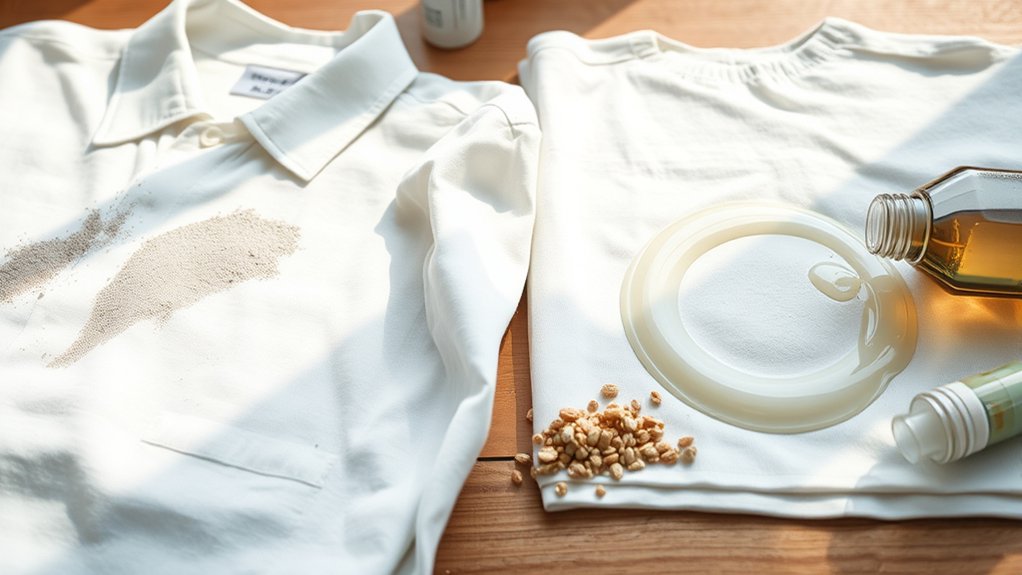
You’ll notice that powder detergents often leave behind residue when they don’t fully dissolve. This usually happens in cold water or hard water conditions.
On the other hand, liquid detergents can sometimes create shiny marks if you apply them too thickly or directly onto the fabric.
Powder Detergent Residue
A common cause of fabric stains after washing comes from powder detergent residue, which often appears as white or chalky marks due to incomplete dissolution in cold water or overloaded machines that limit circulation.
Powder detergents rely on proper water temperature and adequate mechanical action to dissolve properly; otherwise, undissolved particles remain on fabrics, causing detergent residue that can leave stains.
Overuse of powder detergents makes this issue worse by overwhelming the wash cycle’s capacity to dissolve and rinse the detergent fully.
Unlike liquid detergents, powders can clump and fail to disperse evenly, increasing the risk of visible residue.
To prevent powder detergent residue, you need to guarantee correct dosing, use warm water when possible, and avoid overloading the machine to allow proper dissolution and distribution during the wash cycle.
Liquid Detergent Marks
Although liquid detergents dissolve more readily than powders, they can still leave greasy or shiny marks on fabrics if not properly diluted or evenly distributed. Liquid laundry detergent’s viscosity and concentrated formulation increase the risk of detergent stains, especially when poured directly onto clothes or overdosed.
Unlike powder residues, liquid marks appear darker and shinier due to incomplete dissolution or clumping.
To prevent detergent stains, you should pre-dissolve liquid detergent or use pre-measured tablets, ensuring it dissolves completely before contact with fabric.
| Aspect | Liquid Detergent Marks |
|---|---|
| Appearance | Dark, greasy, shiny |
| Cause | Viscosity, uneven distribution |
| Prevention | Pre-dissolve, measured dosing |
Understanding these factors helps you prevent detergent stains effectively.
Dissolution And Temperature Effects
When water temperature drops, powder detergents often fail to dissolve completely, leaving behind chalky residues that stain fabrics. This incomplete dissolution happens because lower temperatures reduce the solubility of detergent powders, causing undissolved particles to embed in fibers.
In contrast, liquid detergents dissolve more readily across temperatures but can create greasy residue if applied directly to garments without dilution.
You should also consider that warmer water elevates the dissolution rate of powder detergents, minimizing residue and boosting cleaning power.
Furthermore, overloading your washing machine messes with detergent dissolution no matter the type, which ups the chance of stains.
Understanding how temperature influences detergent behavior helps you optimize washing conditions and avoid residue formation, making sure your clothes come out clean without unwanted detergent marks.
How Water Temperature and Load Size Affect Detergent Stains
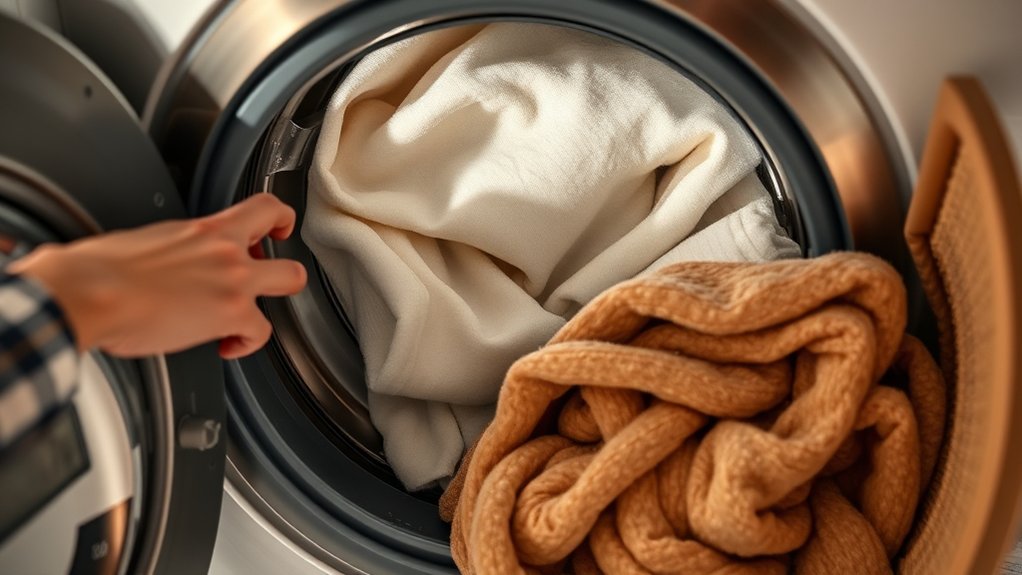
Since water temperature directly influences the dissolution of powdered detergents, using cold water often leaves undissolved residue that shows up as stains on fabrics. You need to optimize water temperature and load size to minimize detergent stains effectively.
Warm or hot water dissolves detergent better, while an appropriate load size guarantees proper garment movement and rinsing. Overloading restricts detergent circulation, which increases the risk of residue buildup.
| Factor | Effect on Detergent Stains |
|---|---|
| Cold water | Poor dissolution, residue forms stains |
| Warm/hot water | Improved dissolution, fewer stains |
| Small to medium load | Enhanced rinsing, reduced buildup |
| Overloaded machine | Limited circulation, increased stains |
Adjusting these factors lets you control detergent stains by improving detergent dissolve and rinse efficiency.
How to Remove Laundry Detergent Stains Step-by-Step
First, take a close look at your clothes to spot any detergent residue—you can often see it or even feel it with your fingers.
Once you’ve identified the spots, the next step is to soak the fabric. This helps to loosen and dissolve those detergent particles that are stuck in the fibers.
After soaking, give your clothes a good rinse and then wash them again to make sure all the stains are completely gone before you dry them.
Identifying Detergent Residue
How can you accurately identify detergent residue on your fabrics?
Detergent residue typically appears as blue or white splotches and may feel waxy or rough. This usually means the detergent didn’t properly dissolve during washing.
To confirm and address this, follow these steps:
- Inspect the fabric for unusual discoloration or texture changes that could indicate detergent residue.
- Rinse the affected area with cool or lukewarm water and gently rub it to see if the residue loosens.
- Use white vinegar in a rinse cycle to help break down and fade stubborn detergent stains.
Effective Soaking Techniques
Effective soaking plays an essential role in breaking down and removing laundry detergent stains from fabrics.
Begin by immersing the stained garment in warm or hot water for 30 minutes to dissolve detergent residue effectively.
For enhanced stain removal, add a cup of white vinegar to the soaking solution, which helps break down persistent detergent buildup.
After soaking, gently rub the fabric against itself to loosen stubborn detergent residue further.
Always follow soaking with a thorough rinse under cool or lukewarm water to eliminate any remaining residue.
If stains persist post-soaking, rewash the item without detergent and run an additional rinse cycle to guarantee complete removal of detergent residue and prevent stain recurrence.
This systematic soaking approach optimizes stain breakdown and fabric restoration.
Rinsing and Rewashing Steps
Although detergent stains can be stubborn, proper rinsing and rewashing steps greatly enhance their removal. To effectively eliminate laundry detergent stains, follow this precise approach:
- Rinse the affected area under cool or lukewarm water to dissolve detergent residue, gently rubbing the fabric to loosen particles.
- Soak the garment in clean water, then run an additional rinse cycle without detergent to guarantee all residue is flushed out.
- For stubborn stains, especially blue detergent marks, apply white vinegar before rinsing thoroughly under cool water.
Avoid drying the fabric until the stains are fully removed, as heat sets detergent residue.
Implementing these rinse cycle steps maximizes the removal of laundry detergent stains and prevents permanent fabric damage.
How to Remove Blue Laundry Detergent Stains
Blue laundry detergent stains typically happen when concentrated detergent doesn’t dissolve completely, especially in cold water. This leaves behind visible residue on your clothes.
To get rid of blue stains caused by liquid detergents, start by rinsing the fabric under cool water. Gently rub the area to loosen the detergent residue.
Next, apply white vinegar directly to the stain. This helps break down the remaining blue compounds, making them easier to remove.
After treating the stain, rewash the garment without detergent. This will flush out any loosened residue thoroughly.
Avoid pouring concentrated liquid detergents directly onto clothing because this causes undissolved detergent clumps, which lead to staining.
How to Prevent Laundry Detergent Stains Every Wash
To stop laundry detergent stains from appearing in the first place, you need to control how much detergent you use and how you apply it. Excess detergent leads to detergent residue, causing stains.
Follow these steps:
- Measure the amount of detergent accurately based on load size and soil level to prevent overdosing and residue buildup.
- Avoid pouring liquid detergents directly onto clothes; instead, dilute them or add them to the dispenser to guarantee proper detergent circulation.
- Don’t overload the washing machine. This ensures effective rinsing and detergent distribution, minimizing detergent residue on fabrics.
Using these techniques guarantees that detergent interacts effectively with fabrics, reducing staining risk and enhancing cleaning efficiency every wash.
Identifying Other Common Laundry Marks and Stains
Several common laundry marks can easily be mistaken for detergent stains if you don’t carefully analyze their characteristics. Detergents leave residues like blue stains from concentrated liquids, while white clothes often show mineral deposits caused by hard water or fabric treatments.
Greasy spots, from body oils or food residues, require different cleaning approaches. Identifying these marks by color, texture, and location helps prevent misdiagnosis and improper treatment.
| Mark Type | Cause |
|---|---|
| White patches | Hard water minerals, fabric softeners |
| Blue stains | Concentrated detergent residues |
| Greasy spots | Body oils, food residues |
| White clothes | Mineral deposits, detergent buildup |
| Fabric marks | Deodorant, treatments |
Understanding these distinctions guarantees effective stain management and protects your garments.
Best Detergents and Washing Practices to Avoid Stains
When you select the right detergent and follow ideal washing practices, you greatly reduce the risk of detergent stains on your clothes. Liquid detergents are preferable because they dissolve completely, minimizing detergent residue that causes marks.
Furthermore, controlling water temperatures optimizes detergent solubility and fabric safety. To avoid stains, consider these practices:
- Use pre-measured detergent doses aligned with load size and soil level to prevent overdosing and residue buildup.
- Load the machine loosely to enhance water and detergent circulation, improving rinsing efficiency and reducing deposits.
- Wash clothes inside out at appropriate water temperatures to protect fabric surfaces and guarantee effective detergent dissolution.
Adopting these strategies promotes even detergent distribution and markedly lowers the chances of stains caused by undissolved detergent or excess residue.
Tips for Washing Clothes to Minimize Detergent Residue
To minimize detergent residue, it’s important to measure the detergent carefully based on the size of your load and how dirty your clothes are. This helps prevent any excess buildup.
Also, make sure you don’t overload your washing machine—giving your clothes enough space allows water to circulate properly, which makes rinsing more effective.
And don’t forget about water temperature. Picking the right temperature can really make a difference because it affects how well the detergent dissolves and how thoroughly the residue gets washed away.
Optimal Detergent Amount
Although it might be tempting to use more detergent for heavily soiled laundry, sticking to the recommended amount based on load size and soil level is crucial to prevent residue buildup.
Using the ideal detergent amount guarantees proper detergent circulation within washing machines, reducing excess residue on fabrics.
Overdosing detergent leads to poor rinsing and potential staining.
To improve detergent use:
- Measure detergent accurately, considering load size and soil level to avoid excess residue.
- Use HE detergents for high-efficiency machines, as they produce fewer suds and enhance detergent circulation.
- Choose appropriate water temperatures; cold water can hinder powder detergent dissolution, increasing residue risks.
Following these steps helps maintain fabric integrity and prevents detergent stains effectively.
Proper Machine Loading
Since proper detergent distribution depends heavily on the movement of clothes within the drum, you must avoid overloading your washing machine. Proper machine loading requires leaving enough room for items to move freely, preventing detergent residue from accumulating.
Aim to fill the drum about three-quarters full and distribute clothes evenly, placing heavier items at the bottom to avoid crushing lighter fabrics. This balance enhances rinsing efficiency and reduces residue buildup.
| Loading Principle | Effect on Detergent Residue |
|---|---|
| Enough room (¾ full load) | Promotes detergent dispersion |
| Distribute clothes evenly | Maintains wash cycle balance |
| Heavier items at bottom | Prevents trapped fabrics, residue |
Following these guidelines guarantees detergent circulates properly, minimizing stains caused by undissolved detergent.
Suitable Water Temperature
How does water temperature influence detergent residue on your clothes? Choosing the suitable water temperature directly affects how well detergents dissolve in water, impacting residue levels. Here’s what to take into account:
Use warm or hot water (around 130°F/54°C) with powdered detergents to guarantee complete dissolution and reduce detergent residue.
Opt for cold water when using liquid detergents, as they dissolve efficiently without leaving residues.
Always check garment care labels to avoid fabric damage while optimizing detergent performance.
Frequently Asked Questions
Can Detergent Stains Cause Allergic Skin Reactions?
Yes, detergent stains can cause allergic skin reactions because residues contain chemicals like surfactants and enzymes that irritate sensitive skin.
If you wear clothes with detergent buildup, you may develop contact dermatitis, showing as red, itchy patches where skin touches fabric.
To minimize reactions, you should thoroughly rinse your laundry and consider switching to hypoallergenic, fragrance-free detergents, especially if you have a history of skin sensitivities or allergies to common detergent ingredients.
Do Natural or Eco-Friendly Detergents Stain Less?
You’ll find that eco-friendly detergents stain 30% less than conventional ones due to their plant-based surfactants, which dissolve more completely in water.
These detergents avoid synthetic dyes and harsh chemicals, reducing residue that causes stains.
Because they’re less concentrated, you’re less likely to overdose, further minimizing staining risks.
Their biodegradable formulas not only protect your clothes but also maintain cleaning efficacy with reduced environmental impact.
How Does Fabric Softener Interact With Detergent Stains?
Fabric softener can worsen detergent stains by leaving a waxy residue that binds with undissolved detergent, making stains more visible.
If you pour concentrated detergent directly onto clothes and then add fabric softener, buildup increases.
Some softener ingredients interact chemically with detergent residues, causing them to cling tightly to fabric fibers. This makes stains harder to remove.
To avoid this, you should use recommended amounts and guarantee thorough rinsing during the wash cycle.
Are Detergent Stains Permanent on Delicate Fabrics?
Detergent stains aren’t set in stone on delicate fabrics if you act swiftly. Think of it like catching a train; you’ve got to be timely.
These stains typically result from residue buildup, not fabric damage. Soaking in warm water with a mild detergent or rewashing with cold water and white vinegar can often remove them.
Using proper detergent types and thorough rinsing minimizes residue, preventing permanent marks on delicate materials.
Can Detergent Stains Affect Colored and White Clothes Differently?
Yes, detergent stains affect colored and white clothes differently.
On white fabrics, you’ll notice chalky or powdery residues. Colored clothes often show blue or white splotches or greasy marks.
This variation results from detergent composition and water temperature.
You should avoid overloading your washer and use properly dissolved liquid detergents to minimize residue.
Understanding these factors helps you prevent visible detergent stains on both fabric types.
Conclusion
You don’t have to battle a detergent stain apocalypse every laundry day. By understanding how detergent types, water temperature, and load size interact, you can pinpoint and prevent stains with surgical precision.
Following our step-by-step removal and prevention techniques guarantees your clothes stay spotless. Adopting best washing practices minimizes residue buildup, protecting your wardrobe investment.
Stay vigilant, and you’ll master stain-free laundry, elevating your fabric care to a science rather than guesswork.