How To Do Laundry – Step-by-Step Guide
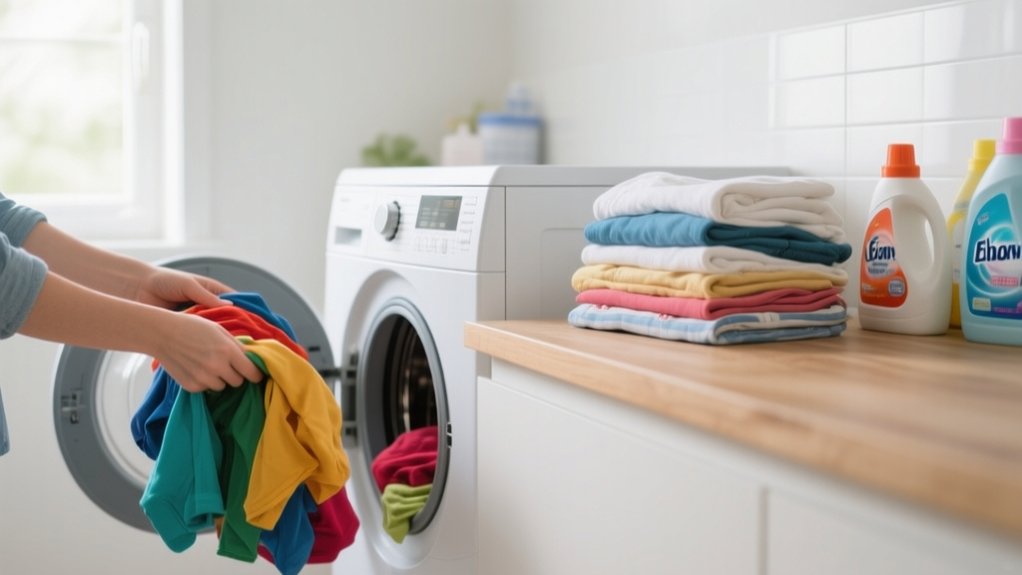
Start by checking garment care tags and sorting clothes by color, fabric, and soil level. Prep items by emptying pockets, fastening zippers, and treating stains. Load your washer about two-thirds full, choosing detergent and boosters suited to your water hardness.
Select the right washing cycle and water temperature based on fabric type. After washing, pick appropriate drying methods. Then fold or hang clothes promptly to avoid wrinkles.
Keep following these practices to master laundry care with ease. You’ll get better at it every time!
Read Laundry Garment Care Tags
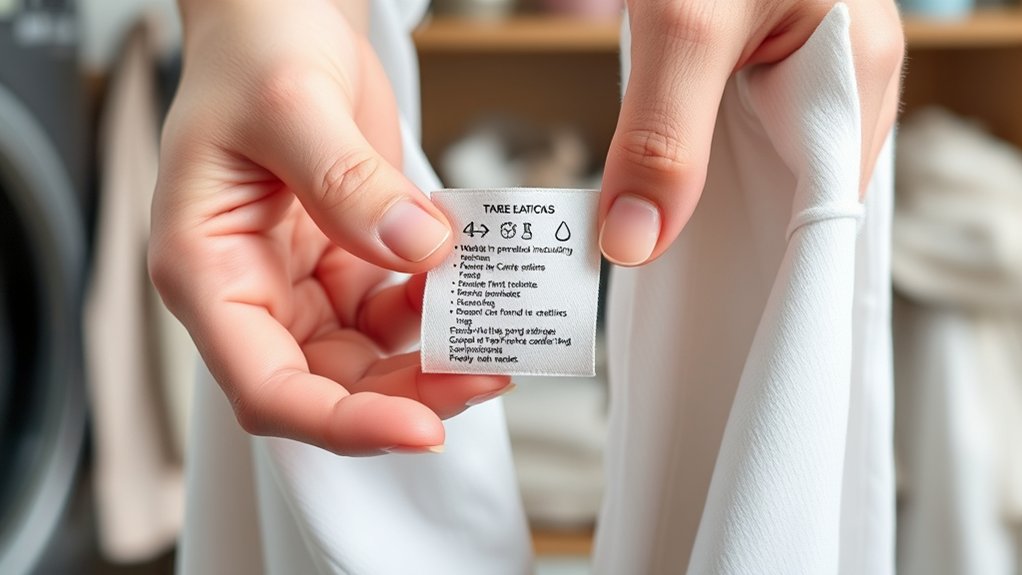
Before you toss your clothes into the washer, always check the care tag to follow the manufacturer’s recommended instructions. These tags tell you the best water temperature, whether cold, warm, or hot, to avoid fabric damage or color bleeding.
Always check the care tag for water temperature to protect your clothes from damage and color bleeding.
You’ll also find symbols guiding you on the appropriate washing cycle, drying method, ironing settings, and whether dry cleaning is necessary.
Paying attention to these details is essential, especially for delicate fabrics like silk or wool. These materials need gentle handling to prevent shrinkage or pilling.
By reading and following the care tag, you make sure your clothes maintain their look and last longer.
Skipping this step can lead to costly mistakes, so make it a habit to check every time before washing. It’s a small effort that goes a long way in keeping your wardrobe looking great.
Sort Laundry By Color, Fabric, and Soil Level
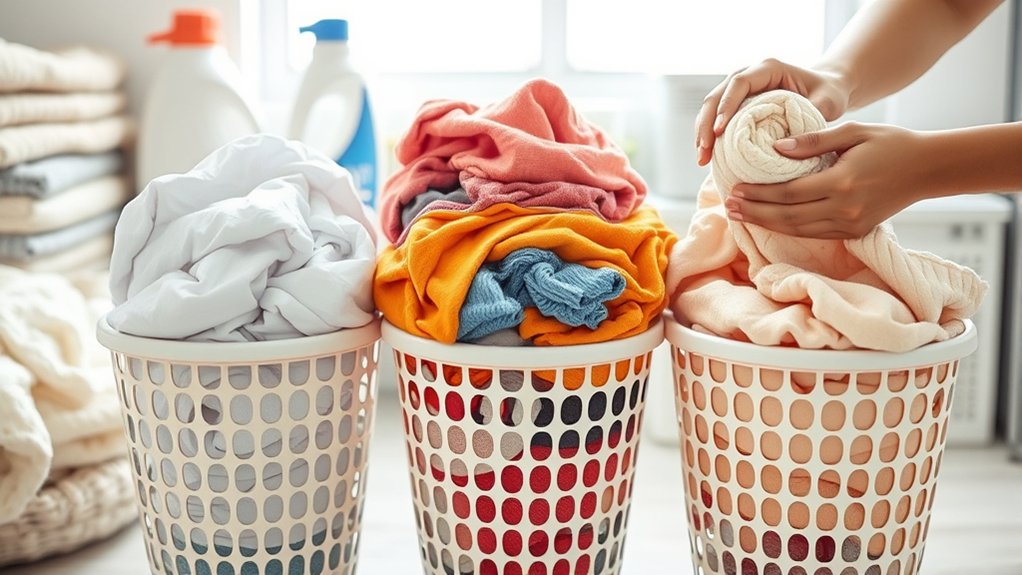
Start by sorting your laundry into whites, lights, brights, and darks to keep colors from bleeding onto each other.
Then, go ahead and separate your clothes by fabric type—think delicates versus heavy fabrics—so you can pick the best wash cycle and take good care of your clothes.
Finally, group everything by how dirty it is; that way, heavily soiled items get a thorough cleaning without overdoing it on the lightly dirty ones.
Color-Based Sorting
How should you sort your laundry to keep colors vibrant and fabrics in good condition? Start by separating clothes into whites, lights, brights, and darks to prevent dye transfer and maintain vibrancy. Always check the care labels before sorting, as they provide essential fabric-specific washing instructions.
Group heavily soiled items separately from lightly soiled ones to avoid dirt spreading and to optimize cleaning. Pay attention to fabric types like cotton, polyester, and wool, sorting them according to their washing needs to prevent damage or shrinking.
Sorting by color and soil level helps you choose the right washing cycle and detergent amount. This way, you ensure effective cleaning without overexposing delicate fabrics. It’s a simple step but really lays the foundation for a successful laundry routine.
Fabric And Soil
Why does sorting laundry by fabric type and soil level matter just as much as color? Because different fabrics need specific wash cycles to avoid damage. Delicates require gentle handling, while heavy fabrics like denim can handle more agitation.
Sorting by soil level also improves cleaning. Heavily soiled items need stronger detergent and longer cycles, while lightly worn clothes need less. Separating these prevents dirt transfer and keeps all your clothes cleaner.
Before washing, pre-treat stains based on their type. Grease or mud respond differently to stain removers. This step boosts stain removal and stops stains from setting.
Prepare Clothes By Checking Pockets, Zippers, and Stains

Before tossing your clothes into the washer, you’ll want to carefully check and prepare each item to prevent damage and guarantee a thorough clean. Start by emptying all pockets to avoid coins or tissues causing damage or clogs.
Always check and prep your clothes before washing to prevent damage and ensure a deep, effective clean.
Then, fasten zippers, buttons, and Velcro to protect your garments from wear and reduce lint buildup.
Take time to spot-check stains and pre-treat them with stain remover or a vinegar-baking soda mix for better results.
For delicate or heavily soiled pieces, turn them inside out to preserve fabric and improve cleaning.
Finally, do a last visual check to verify everything’s ready for washing.
- Empty all pockets completely
- Fasten all zippers, buttons, and Velcro
- Pre-treat any visible stains immediately
- Turn delicate or dirty clothes inside out
- Confirm all clothes are properly prepared
Load the Washer Properly for Best Laundry Cleaning
Although it might be tempting to fill the washer to the brim, loading it about two-thirds full guarantees your clothes have enough room to move freely and get thoroughly cleaned. Start by shaking out each item to reduce tangling and improve water penetration.
Distribute clothes evenly around the drum to keep the washer balanced and prevent excessive vibration during the cycle.
Avoid overpacking, as tightly packed clothes limit water and detergent circulation, reducing cleaning effectiveness.
Make certain all items are sorted by color and fabric type before loading to optimize washing conditions and prevent damage.
Choose the Best Detergent and Laundry Boosters
When picking a detergent, go for one made specifically for your machine. For example, high-efficiency (HE) detergents are great because they produce fewer suds and still get your clothes really clean.
You can also add boosters like oxygen bleach to help fight tough stains and keep your laundry smelling fresh.
Don’t forget to think about your water hardness, too. It can change how well your detergent works, and sometimes you might need special additives to get the best results.
Selecting Detergent Types
How do you decide which detergent type works best for your laundry? Start by matching detergent form to your fabric and soil level. Use high-efficiency (HE) detergents for modern machines to avoid excess suds and residue.
Measure detergent carefully to suit load size and dirtiness, ensuring *ideal* cleaning without waste. For sensitive skin or delicate fabrics, pick fragrance-free or hypoallergenic options for gentle care.
Keep these points in mind when selecting detergent:
- Liquid detergents tackle greasy stains effectively.
- Powder detergents excel at removing ground-in dirt.
- Pods offer convenience but watch the load size.
- HE detergents reduce buildup in high-efficiency washers.
- Always follow dosing instructions to prevent residue and maintain fabric quality.
Choosing wisely helps your laundry come out clean and fresh every time. It’s really about finding what works best for your needs!
Using Laundry Boosters
Once you’ve picked the right detergent for your laundry needs, adding a laundry booster can really improve your cleaning results. Choose boosters like oxygen bleach for color-safe whitening or enzyme treatments to break down protein stains effectively.
Just make sure to follow the manufacturer’s instructions on how much to use and when to add it so you don’t damage your clothes.
You can also try scent-enhancing boosters, like fragrance beads or fabric softeners, to keep your clothes smelling fresh. Combining the right booster with your detergent helps tackle tough stains and odors more efficiently.
Managing Water Hardness
Although hard water contains minerals that can hinder your detergent’s effectiveness, you can manage it by selecting the right detergent and laundry boosters designed to tackle these challenges. Hard water’s calcium and magnesium reduce cleaning power and leave residue on fabrics.
To counter this, use detergents formulated with chelating agents that bind minerals and prevent interference with stain removal. Adding water softeners like washing soda during the main wash cycle boosts cleaning by inactivating minerals.
Regularly test your water hardness to adjust your laundry routine accordingly.
Choose detergents labeled for hard water use. Add sodium carbonate or washing soda as a booster. Incorporate water softeners directly in the drum or detergent compartment.
Test water hardness periodically for best results. Avoid detergent overdosing to prevent buildup and residue.
Pick the Right Washing Cycle and Water Temperature
When you pick the right washing cycle and water temperature, you guarantee your clothes get cleaned effectively without damage. Start by checking the fabric type and soil level to choose the appropriate cycle. Normal works great for everyday items, Delicate is best for fragile fabrics, and Heavy Duty handles heavily soiled clothes.
Use cold water for dark, bright, or delicate items to prevent fading and shrinking. Warm water is good for synthetics and moderately dirty clothes. Hot water is best for whites, cottons, and heavily stained garments because it removes bacteria and stains.
Always follow the care label instructions to match the cycle and temperature. This helps keep your fabrics in good condition. You can adjust the settings as needed to find the right balance between thorough cleaning and fabric care.
Select Drying Methods and Cycles for Each Fabric
Because different fabrics require specific drying methods, selecting the right cycle and temperature is essential to maintain your clothes’ quality. Choosing the wrong setting can cause shrinkage, fiber damage, or uneven drying. Pay close attention to care labels and fabric types before starting the dryer.
Selecting the right drying cycle and temperature is key to preserving fabric quality and preventing damage.
Here’s how to match cycles to your laundry:
- Use high heat for heavy fabrics like towels and jeans to dry thoroughly.
- Select “Delicates” or “Low Heat” for fragile items such as silk or lace.
- Opt for the “Automatic/Auto Dry” cycle to adjust drying time based on moisture.
- Choose “Bulky” or “Heavy Duty” for comforters and large blankets.
- Follow garment labels strictly to decide between air-dry, tumble-dry, or specific temperature settings.
This approach keeps your fabrics looking and feeling their best. Just take a moment to check those labels, and your clothes will thank you for it!
Fold, Hang, and Store Clothes to Prevent Wrinkles
To keep your clothes looking fresh and wrinkle-free, fold or hang them as soon as they come out of the dryer.
Fold heavier items like jeans and sweaters neatly on shelves to keep their shape and avoid stretching.
For delicate or wrinkle-prone fabrics such as silk or blouses, hang them on suitable hangers to preserve their form.
Use space-efficient folding techniques like rolling or filing to organize your clothes and minimize creases.
Avoid leaving clothes crumpled in baskets for long periods, as this leads to stubborn wrinkles that are tough to remove later.
By promptly folding, hanging, and storing clothes properly, you’ll maintain their appearance and extend their lifespan.
This way, your wardrobe looks neat and ready to wear at all times.
Simplify Your Laundry With Helpful Tips and Tools
Although laundry can feel like a chore, using the right tools and tips can make the process much easier and more efficient. You can streamline your routine by organizing clothes, treating stains promptly, and leveraging helpful gadgets. Establish a consistent sorting system and follow a clear routine to reduce confusion and save time.
Use mesh bags and laundry baskets to protect delicate items and keep laundry organized. Sort clothes by color, fabric, and soil level for ideal washing results. Pre-treat stains immediately with specialized products to avoid rewashing.
Utilize detergent dispensers and laundry apps to manage loads and detergent use efficiently. Follow a step-by-step routine from sorting to folding to minimize overwhelm and maintain order.
These strategies simplify your laundry, making it manageable and less time-consuming. Give them a try and see how much easier laundry day can be!
Frequently Asked Questions
How Often Should I Clean My Washing Machine?
You should clean your washing machine at least once a month. Run an empty hot water cycle with vinegar or cleaner. This helps keep things fresh and prevents odors.
Don’t forget to wipe the door seal and gasket. This step is key to stopping mold and buildup from forming. It’s a simple habit that makes a big difference!
Can I Wash Delicate Items With Regular Laundry?
If you toss your silk blouse in with jeans, it risks damage. You shouldn’t wash delicates with regular laundry. Instead, separate them, use cold water, gentle cycles, and mesh bags to keep your items safe.
Doing this helps protect your delicate fabrics from getting stretched or torn. It’s a simple step that makes a big difference in keeping your clothes looking great. So, next time, take a little extra care—you’ll thank yourself later!
What Do I Do if Clothes Shrink After Washing?
If your clothes shrink, soak them in lukewarm water with conditioner for 30 minutes.
Then, gently stretch the damp fabric back to size. Try to avoid heat because it can cause more shrinkage.
Keep in mind, you might not always get your clothes fully back to their original size. But this method usually helps a lot!
How Can I Remove Odors From My Laundry?
You might think washing alone removes odors, but it often doesn’t. Use odor-eliminating rinses and wash smelly clothes hot with enzyme detergents.
Make sure to dry your laundry thoroughly to prevent any lingering smells. And don’t forget to clean your machine regularly. That way, your laundry stays fresh and odor-free!
Is It Safe to Use Bleach on Colored Fabrics?
You shouldn’t use chlorine bleach on colored fabrics since it can cause fading or damage. Instead, choose oxygen-based bleach.
Make sure to test a hidden spot first to see how the fabric reacts. Always follow the care label instructions too.
This way, you keep your colors vibrant and safe without any surprises.
Conclusion
Now that you’ve mastered each laundry step, you’re ready to tackle any pile. No mountain of clothes is too high!
By reading care tags, sorting properly, and choosing the right settings, you’ll keep your clothes fresh and lasting longer. Remember, preparing clothes and selecting the best detergents make all the difference.
With these practical tips, laundry won’t feel like a chore but a quick, easy routine you’ll actually enjoy every time!