How Often Should You Do Laundry – Full Story
You should wash sweat-prone clothes like underwear, socks, workout gear, and t-shirts after every wear to prevent bacteria and odors. Jeans and dress pants can last several wears if spot-cleaned and refreshed with fabric spray.
Over-washing wears fabrics and wastes water and energy, so focus laundry on what really needs it. Air drying and lower wash temperatures help extend garment life.
Keep balancing hygiene, fabric care, and sustainability, and you’ll find smarter laundry habits that save both time and resources.
Key Takeaways
- Wash underwear and socks after every wear to prevent bacterial buildup and maintain hygiene.
- Clean workout clothes after each use to eliminate sweat, bacteria, and odors.
- Wash jeans after 5 to 10 wears, and dress pants after 3 to 5 wears, using spot cleaning as needed.
- Use fabric refresher sprays and spot cleaning to extend wear time and reduce full laundry loads.
- Lower washing frequency and temperature saves energy, preserves clothing, and reduces environmental impact.
How Often Should You Wash Different Types of Clothes?
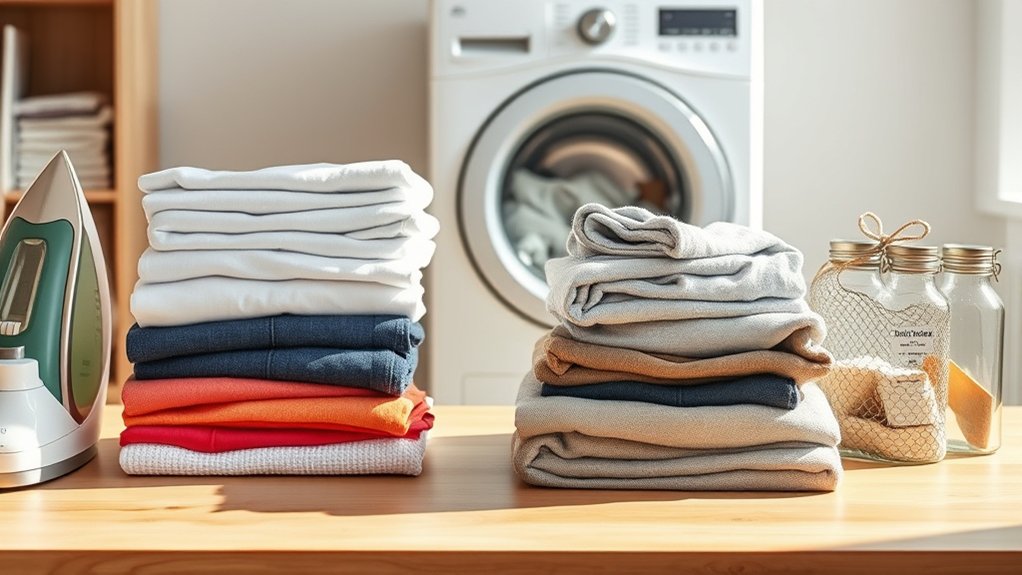
How often should you wash your clothes to keep them fresh and lasting longer? It depends on the type of clothing.
You should wash T-shirts and tank tops after every wear since they absorb sweat and oils quickly.
Workout clothes also need washing after each use to remove bacteria and odors from performance fabrics.
For jeans, you can wash them after 5 to 10 wears, spot-treating stains as needed to preserve fabric quality.
Dress pants and slacks typically last through 3 to 5 wears before washing.
Underwear and socks require washing after every single wear because they come in direct contact with your skin and accumulate sweat and bacteria.
Knowing how often to wash different clothes saves time and extends their lifespan.
Health and Hygiene Impacts of Washing Frequency
You’re actually risking bacterial buildup whenever you rewear clothes without washing them, even if they look clean. It mightn’t be obvious, but those invisible germs can cause problems over time.
So, it’s a good idea to keep up with hygiene standards by washing things like underwear and socks after each use. This helps prevent skin irritations and infections, which nobody wants.
On top of that, wearing clean clothes can help you meet social expectations and boost your confidence when you’re out and about.
Feeling fresh really does make a difference!
Bacterial Risks From Rewear
Although rewearing clothes might seem harmless, it considerably raises the risk of bacterial and fungal infections since microbes are invisible to the naked eye. Bacterial buildup occurs quickly, especially in garments that absorb sweat, like athletic wear and undergarments. To protect your health, these items should be washed after every wear.
Not washing clothes regularly allows bacteria and allergens to accumulate, increasing the chance of skin irritation and infections. Maintaining proper laundry habits is essential to prevent microbial growth that compromises your skin health and overall hygiene.
Hygiene Standards And Perceptions
Because personal hygiene standards vary widely, your laundry habits often reflect both health concerns and social expectations. You may wonder how often you should wash clothes to maintain proper hygiene.
Bacteria and allergens build up on fabrics quickly, especially in humid regions, increasing the need to wash more frequently. Even if clothes don’t look dirty, microbial presence can still pose health risks.
Your personal health standards and social perceptions influence whether you wash after every wear or extend usage. To minimize infection risks and stay socially comfortable, washing clothes regularly is essential.
Ultimately, deciding how often you should wash depends on your environment, activity level, and sensitivity to hygiene, ensuring both cleanliness and peace of mind.
Impact of Laundry Habits on Clothing Lifespan and Costs
When you wash clothes more often than necessary, you accelerate their wear and tear, causing colors to fade and fabrics to lose shape faster. Over-washing damages fibers, so only wash items when they truly need to be washed. Proper cleaning means targeting dirty or sweaty garments rather than washing everything after a single use.
Frequent washing not only reduces clothing lifespan but also increases your utility bills. Each load uses around 23 gallons of water, and energy consumption adds up. This also stresses your washing machine, which can lead to costly repairs.
By minimizing unnecessary washing, you preserve your clothes longer and cut down on water and energy use. This saves money and reduces environmental impact.
How Where You Live Affects Your Laundry Habits
Where you live really impacts how often you do laundry. That’s mostly because the climate affects how fast your clothes get dirty or start to smell.
For example, if you’re in a hotter, more humid place—like the Southern USA—you’ll probably find yourself washing clothes more often to keep up with sweat and odors.
And it’s not just the weather. The local culture around cleanliness also plays a part in how frequently you think you need to wash your clothes.
Climate Influences Laundry
Although laundry habits vary widely, climate plays a major role in determining how often you wash your clothes. In humid areas like the Southern USA, you’ll find that clothes are washed every single day or after one wear due to sweat and moisture buildup.
Conversely, in drier climates, people often wash their clothes less frequently. Understanding the climate helps you tailor your laundry routine for hygiene and fabric care.
| Region | Climate Type | Clothes Washed Every |
|---|---|---|
| Southern USA | Hot & Humid | After 1 wear |
| Southwestern US | Dry & Warm | After 2-3 wears |
| Northern US | Cooler & Dry | After 3-4 wears |
Washing our clothes according to local climate guarantees freshness and prolongs garment life.
Regional Cultural Differences
Since cultural attitudes toward cleanliness differ widely across regions, your laundry habits often reflect more than just climate. They reveal local values and health priorities as well.
For example, in the Southern USA, high humidity and hot summers make frequent washing essential to manage sweat and prevent bacterial growth. Here, regional differences mean you might wash clothes after just one wear.
In cooler or drier areas, people wash less often to protect fabric longevity. Family dynamics also influence how often you do laundry, with some households prioritizing hygiene over conservation.
Understanding these regional differences helps you tailor your laundry routine to both your environment and cultural expectations, balancing cleanliness with garment care effectively.
Sustainable Laundry Tips to Save Water and Energy
When you wash clothes at lower temperatures, between 68 and 86 degrees Fahrenheit, you cut energy use drastically because heating the water accounts for 90% of a cycle’s energy consumption.
To save water and energy, try to wash your clothes only every two to three wears instead of after every use. This reduces water waste since an average machine uses about 23 gallons per load.
Wash clothes every two to three wears to save water and reduce energy use.
Opt for eco-friendly detergents to minimize chemical runoff that harms aquatic ecosystems.
Skip the tumble dryer when you can. Air drying conserves energy and extends garment life.
Finally, consider installing microplastics filters on your washer to catch fibers before they enter waterways, decreasing microplastic pollution.
These simple steps help you do laundry sustainably without sacrificing cleanliness or convenience.
How Often to Wash Bedding, Towels, and Linens
How often should you wash your bedding, towels, and linens to keep them clean and hygienic? Regular washing is essential to prevent allergens, bacteria, and odors from building up in your home.
Here’s a practical guide to help you maintain freshness:
Wash bedding every one to two weeks, focusing on sheets to keep your sleep environment healthy.
Clean comforters and blankets about once a month to remove dirt and dust.
Wash towels after three to five uses, making sure they dry thoroughly to avoid mildew.
Launder pillowcases and pillow liners weekly to reduce sweat and oils.
How to Keep Clothes Fresh Longer Between Washes
Although you mightn’t need to wash every item after a single wear, taking simple steps can keep your clothes fresh longer between washes. Airing out clothes after wearing them lets you wear garments one to two more times without washing.
Use fabric refresher sprays to eliminate odors, especially on lightly worn items like sweaters or dress pants. You can wear these three to five times before washing.
Spot clean stains immediately to avoid full washes and maintain appearance.
When you do wash clothes, opt for lower temperatures and air dry to conserve energy and reduce environmental impact.
Frequently Asked Questions
What Detergents Are Best for Different Fabric Types?
For delicate fabrics like silk and wool, you’ll want to use gentle, pH-neutral detergents to protect their fibers.
Cotton and polyester handle standard detergents well, but if you’re washing athletic wear, opt for enzyme-based detergents that tackle odor and sweat.
For general cleaning, powder detergents work great, especially in hard water, while liquid detergents are better for greasy stains.
Eco-friendly options are perfect if you want to reduce environmental impact.
How Can I Remove Tough Stains Without Frequent Washing?
Tough stains act like unwelcome guests, but you don’t have to invite frequent washes to kick them out. Treat stains immediately with cold water and gentle detergent to stop them from settling in.
For oily marks, sprinkle baking soda to soak up excess oil, then blot with dish soap.
Organic stains respond well to vinegar or hydrogen peroxide mixed with baking soda.
Always patch test first to avoid fabric damage and use fabric refresher sprays to keep clothes fresh.
What Laundry Settings Are Optimal for Energy Efficiency?
You should choose cold water settings since heating water uses most energy.
Opt for shorter wash cycles, especially for lightly soiled clothes, to cut down on power use without sacrificing cleanliness.
Always run full loads to maximize efficiency and minimize waste.
If your machine has an energy-saving or eco mode, use it.
Finally, skip the dryer and air dry your clothes whenever possible to save even more energy and protect your garments.
How Do Water Hardness Levels Affect Laundry Results?
You mightn’t realize it, but water hardness can make or break your laundry results.
Hard water, loaded with calcium and magnesium, forces you to use more detergent and still leaves clothes stiff and dull. It even causes mineral buildup inside your machine.
On the other hand, soft water boosts detergent’s power, giving you brighter, softer clothes while protecting your washer.
Using water softeners can transform your laundry game completely.
Can Fabric Softeners Harm Certain Clothing Materials?
Yes, fabric softeners can harm certain clothing materials.
They’ll coat moisture-wicking fabrics, reducing their ability to manage sweat. You’ll find they also weaken spandex elasticity, causing loss of shape and support.
For towels, softeners decrease absorbency by leaving residues.
If you care for delicate fabrics like silk or wool, avoid them because they can break down fibers.
Instead, try eco-friendly alternatives like vinegar or baking soda to soften clothes without damage.
Conclusion
Now that you know how often to wash everything from your jeans to your bedding, you might wonder what’s the perfect balance? Too little, and odors or germs build up; too much, and your clothes wear out faster.
The secret lies in tuning into your lifestyle, environment, and fabric needs. By adjusting your laundry habits thoughtfully, you’ll save money, protect your health, and keep your wardrobe fresh longer.
Ready to rethink your laundry routine?