How Long Does Laundry Take At A Laundromat – By the Numbers
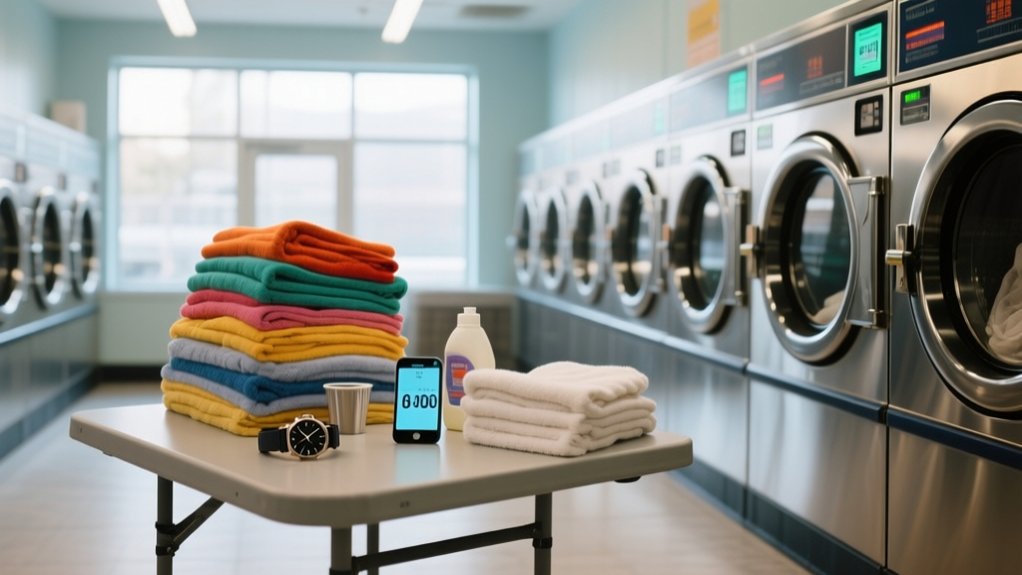
You can expect your laundry at a laundromat to take anywhere from 45 minutes to 2 hours. Wash cycles vary from 15 to 45 minutes depending on soil level and load size, while drying ranges between 20 and 70 minutes based on fabric weight.
Factors like overcrowded machines, extra rinses, and peak hours add time. By timing visits strategically and using larger machines, you can streamline your visit. Explore more to optimize your entire laundromat routine efficiently.
Key Takeaways
- Typical wash cycles range from 15 to 45 minutes depending on soil level and load size.
- Drying times vary from 20 to 70 minutes based on fabric weight and item bulkiness.
- Peak weekend times can extend laundry visits to 1.5 to 2 hours due to wait times.
- Weekday early mornings offer the quickest laundry times, often under 1 hour.
- Pre-sorting and using larger machines reduce total laundromat visit durations effectively.
How Long Does a Typical Laundromat Wash Cycle Take?
How long does a typical laundromat wash cycle take? Generally, it ranges from 25 to 35 minutes for everyday clothing under normal settings.
If you’re washing lightly soiled clothes, you can opt for quick cycles lasting 15 to 20 minutes, saving you time.
Heavily soiled garments require longer cycles, about 35 to 45 minutes, to guarantee thorough cleaning.
Large-capacity washers, common in laundromats, might take a bit more time but can handle bigger loads, reducing the total number of cycles you need.
While the wash cycle duration is essential, remember that drying time also factors into your overall laundromat trip.
Understanding these typical wash cycle times will help you plan your visit more effectively and optimize your laundry routine.
What Factors Affect Laundromat Wash Cycle Duration?
Although laundromat wash cycles generally fall within a 25 to 45-minute range, several factors can considerably affect their duration. You’ll notice wash cycle durations vary based on temperature settings, with hot cycles requiring extra time for preheating.
Heavily soiled items demand longer cycles, adding 10 to 15 minutes. Extra rinse cycles also extend cycle times, which is often important for sensitive skin. Overloading the washer restricts drum movement, causing inefficient cleaning and longer cycles.
Commercial washers are designed for efficiency, but these variables still impact total wash time.
| Factor | Impact on Duration | Notes |
|---|---|---|
| Heavily Soiled Items | +10 to 15 minutes | Requires extended cleaning |
| Temperature Settings | Varies by cycle | Hot cycles preheat, adding time |
| Extra Rinse Cycles | +10 to 15 minutes | Used for sensitive skin/detergent |
How Long Do Laundromat Dryers Take?
You can usually expect laundromat dryers to run anywhere from 20 to 70 minutes. It really depends on things like the fabric weight and how big your load is.
Heavier items—think towels and comforters—naturally take more time to dry. On the other hand, lighter clothes will dry much faster.
To get the best results, think about how wet your clothes are when you start.
And don’t forget to check the lint trap before you begin—it can make a big difference in drying efficiency.
Dry Cycle Duration
Dry cycles at laundromat dryers typically last between 30 and 45 minutes for most clothing, but the exact duration depends heavily on fabric weight and moisture levels.
Lightweight fabrics often require 20 to 30 minutes of drying time, whereas heavier items can extend to 40 to 50 minutes.
Bulky items like blankets or comforters need even longer, around 50 to 70 minutes, to guarantee thorough drying.
Using higher heat settings can reduce drying time, but you have to balance speed with fabric care to avoid damage.
Furthermore, maintaining drying efficiency by regularly cleaning lint traps helps prevent extended cycles and improves overall performance.
Understanding these factors lets you estimate dry cycle duration more accurately for your load.
Factors Affecting Drying
Several key factors influence how long laundromat dryers take to complete their cycles.
First, the load size and type of fabric determine drying times. Lightweight clothes dry in 20-30 minutes, medium-weight in 30-40, and heavy items like jeans or towels require 40-50 minutes.
Second, the wetness of clothes entering the dryer impacts the duration. Wetter clothes extend the dryer cycle considerably.
Third, spin speed in washers affects drying efficiency. Higher spin speeds extract more water, reducing drying times.
Furthermore, lint buildup in dryer traps restricts airflow, slowing drying efficiency and lengthening cycles.
To optimize your laundromat drying experience, consider these three factors:
- Load size and fabric weight
- Initial moisture level of wet clothes
- Proper maintenance of lint traps and washer spin speed
Why Do Some Laundromat Loads Take Longer Than Usual?
Why does your laundry sometimes take longer at the laundromat than expected? Several factors affect wash cycles and drying times.
For example, heavily soiled clothes often require longer wash cycles, adding 10 to 15 minutes. If you select an extra rinse, expect an additional 10 to 15 minutes because of extra fills and drains.
Bulky items like comforters retain more moisture, greatly extending drying times to 50–70 minutes. Overloading washers restricts drum movement, causing cycles to run longer than the standard 45 to 60 minutes.
Delicate cycles also take more time, typically 20 to 30 minutes. Finally, peak times at the laundromat can mean waiting 15 to 30 minutes for available washers, further extending your total laundry duration.
Tips to Reduce Your Total Laundromat Visit Time

Saving 5 to 10 minutes begins before you even leave home by sorting your laundry into separate bags. This initial step reduces your total time at the laundromat by streamlining load preparation.
To further reduce your visit time: Pre-treat stains to avoid additional wash cycles, which can add 10 to 15 minutes. Opt for larger machines that accommodate multiple loads simultaneously, consolidating wash cycles and cutting down machine wait times.
Synchronize all washers by starting them at once, enabling you to coordinate drying and folding efficiently. Setting timers for each cycle guarantees you don’t miss transfers, minimizing idle waiting.
How to Handle Multiple Loads Efficiently at the Laundromat
Efficiently managing multiple loads at the laundromat starts with careful preparation and strategic machine use. To optimize wash time, use larger washers to consolidate loads and start all machines simultaneously.
Pre-sorting laundry into separate bags saves 5-10 minutes, while higher spin cycle settings reduce drying time for heavy fabrics. Avoid peak hours to prevent machine wait times that hinder efficiency.
Coordinating cycles guarantees smooth shifts to dryers, minimizing downtime.
| Strategy | Benefit |
|---|---|
| Larger washers | Consolidates loads, saves time |
| Simultaneous starts | Synchronizes cycles |
| Pre-sorting laundry | Saves 5-10 minutes |
| High spin cycle | Reduces drying time |
When Is the Best Time to Visit a Laundromat for Faster Service?
You’ll find the fastest service at a laundromat during off-peak hours, like early mornings between 5 AM and 8 AM. That’s when machines are most likely to be available.
Plus, if you can swing by on weekdays—Tuesday through Thursday are best—you’ll avoid the weekend rush and shorter wait times.
Off-Peak Hours Benefits
Although many people tend to visit laundromats on weekends or weekday evenings, choosing off-peak hours like early mornings between 5 AM and 9 AM or late nights after 8 PM can greatly reduce your wait time for machines.
During these times, you benefit from:
- Shorter wait times due to less foot traffic, cutting your overall laundry duration by up to 30 minutes.
- Quicker access to washers and dryers, enhancing weekday efficiency especially from Tuesday to Thursday.
- A more relaxed environment that allows you to fold and sort clothes without rush.
Prioritizing off-peak hours not only speeds up your laundry process but also improves your experience by minimizing crowd-induced delays and stress.
Weekday vs Weekend
Choosing off-peak hours clearly improves your laundromat experience, but understanding the differences between weekdays and weekends can help you plan even better. On weekdays, especially early mornings and late evenings, you’ll encounter shorter waiting times and faster cycle times. This allows you to finish laundry in about 1 to 1.5 hours.
Conversely, weekend afternoons are busiest, with peak cycle times and 15-30 minute waits.
| Time Slot | Weekdays (Avg. Duration) | Weekend (Avg. Duration) |
|---|---|---|
| Early Morning | Under 1 hour | 1.5 hours |
| Midday | 1.25 hours | 2 hours (peak delays) |
| Late Evening | About 1 hour | 1.75 hours |
Choosing weekdays during off-peak hours minimizes waiting times and total laundromat duration.
Early Morning Advantages
Visiting a laundromat between 5 AM and 8 AM offers several clear advantages for faster service. During these early morning off-peak hours, you’ll encounter:
1. Shorter wait times
Fewer customers mean machines are readily available, letting you start your laundry promptly and reduce laundry time by 15-30 minutes.
2. Quieter environment
The calm atmosphere lets you focus or relax while waiting, improving your overall experience.
3. Better dryer access
With less competition for dryers, you can move loads quickly, minimizing total time spent at the laundromat.
Choosing early morning visits not only speeds up your laundry routine but may also save money due to potential discounts during off-peak hours.
This strategic timing maximizes efficiency and convenience every time you do laundry.
Frequently Asked Questions
What Payment Methods Do Laundromats Typically Accept?
Laundromats typically accept coins, especially quarters, as their primary payment method.
Many now also let you pay with credit or debit cards, which makes transactions easier.
Some places offer mobile payment options through apps on your smartphone, adding convenience.
A few laundromats still accept cash at the front desk, though this varies by location.
You should always check the payment options at your chosen laundromat before you go.
Are Laundromats Safe for Delicate Fabrics?
Laundromats can be a gentle haven for your delicate fabrics if you handle them with care.
You’ll want to select the delicate cycle, usually lasting 20 to 30 minutes, and use mesh bags to shield your garments from rough treatment.
Low-heat drying for about the same time helps preserve fabric integrity.
Always pre-treat stains beforehand, since short cycles mightn’t fully clean stubborn spots.
With these steps, your delicates can stay safe and fresh.
Can I Bring My Own Detergent to the Laundromat?
Yes, you can bring your own detergent to most laundromats. It saves money and lets you choose your preferred formula, scent, and skin-friendly options.
Make sure to use high-efficiency (HE) detergent if your machine requires it. Pre-measuring detergent speeds up your process and prevents spills.
However, always check the laundromat’s policy beforehand, as some may restrict certain types of detergents to protect their machines or comply with local regulations.
Do Laundromats Offer Folding Services?
Yes, many laundromats offer folding services where you can drop off your laundry and staff will wash, dry, and fold it for you.
This service usually costs between $1 and $2 per pound, depending on the location.
If you prefer folding yourself, some laundromats provide designated folding areas or tables.
You should check with your local laundromat for exact prices and availability to save time during your visit.
How Are Laundromats Maintained and Cleaned Regularly?
Laundromats maintain cleanliness by having staff clean machines, floors, and empty lint traps daily.
They perform routine maintenance weekly or monthly to spot mechanical problems early.
High-traffic areas like folding tables get sanitized multiple times daily.
Commercial-grade cleaners target bacteria and odors effectively.
Staff also keep detergent dispensers and vending machines stocked, ensuring you have everything you need.
This thorough upkeep guarantees a hygienic, efficient laundry experience every time you visit.
Conclusion
By understanding wash and dry cycle times, you can optimize your laundromat visits like a pro. Remember, factors like load size and machine type affect duration, so plan accordingly.
Handling multiple loads efficiently and choosing off-peak hours can save you precious time. No more waiting like it’s the era of telegrams.
With these strategies, you’ll cut down your total laundromat time sharply, making laundry less of a chore and more of a streamlined task.