How Many Loads Of Laundry Per Week For 1 Person – Guide
You’ll likely do between one and three laundry loads per week as one person, depending on your lifestyle. If you exercise, wear uniforms, or have pets, expect more loads, up to five weekly.
Each load usually holds five to seven outfits plus extras, weighing 15-20 pounds, sometimes more with towels or bedding. Planning a schedule and sorting clothes properly helps manage this efficiently.
Keep going to discover smart tips on reducing loads and caring for different fabrics.
Key Takeaways
- One person typically washes 1 to 3 laundry loads per week, totaling about 15-20 pounds of laundry.
- Active lifestyles or gym routines may increase laundry needs to up to 5 loads weekly.
- Sorting laundry by color and fabric type helps maintain garment quality and efficiency.
- Washing full loads and using cold water cycles saves energy and reduces laundry frequency.
- Laundry services can be considered if spending over 7 hours weekly on washing and drying.
How Many Laundry Loads Does One Person Do Each Week?
How often do you need to do laundry each week? For the average person, this usually means handling 1 to 3 laundry loads weekly. You generate about 15-20 pounds of laundry, including clothes, gym wear, and pajamas.
If you add towels and bedding, your laundry weight can jump to 30-60 pounds, increasing the number of loads. While some people stick to a couple of loads, those with active or professional lifestyles might find themselves doing up to 5 loads weekly.
Managing laundry loads efficiently saves time, so pre-sorting and setting specific laundry days can streamline your routine.
Understanding how many loads the average person does helps you plan your laundry without overwhelming your schedule.
What Lifestyle Factors Affect Your Laundry Frequency?
Although laundry frequency varies widely, your lifestyle choices play a major role in determining how often you need to wash clothes. Your individual lifestyle, like exercise routines or wearing work uniforms, can increase laundry frequency since gym clothes and uniforms often require frequent washing.
If you have pets, expect extra loads from pet bedding and fur, contributing to your laundry volume.
Seasonal activities, such as outdoor sports or vacations, can also influence how many loads you do at different times of the year.
Furthermore, personal habits like washing clothes after every wear or changing outfits multiple times daily will impact your laundry frequency.
Understanding these factors helps you manage your laundry routine efficiently and tailor it to your specific needs.
What Types of Clothing and Items Increase Your Laundry Loads?
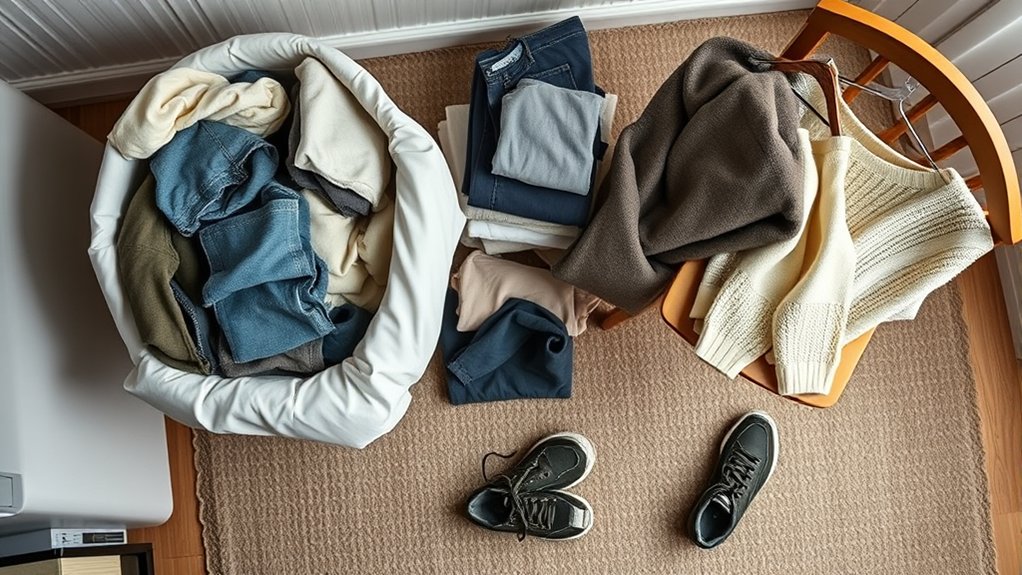
You’ll notice that certain types of clothing, like workout gear or work uniforms, can really ramp up how often you need to do laundry.
And it’s not just clothes—household items like towels and bed linens also add several loads each week because they need regular washing.
Knowing this stuff can help you get a better idea of your weekly laundry needs.
Clothing Types Impact
Several types of clothing and household items can considerably increase your laundry loads. Clothing worn close to the skin, like underwear and workout gear, needs washing after each use, which quickly adds to your laundry loads.
In contrast, casual wear such as t-shirts and jeans can be worn multiple times before washing. This reduces how often you do laundry. Socks and gym clothes, however, require frequent washing and can raise your load count.
Seasonal items like winter coats don’t need regular washing, but everyday essentials do.
Towels and bedding also contribute, typically adding 2-4 loads weekly.
Household Item Influence
When you factor in household items alongside your regular clothing, your laundry loads can grow quickly.
Besides your daily wear, you’ll likely wash 2-3 towels weekly, plus bed sheets, which need laundering every week.
If you exercise regularly or have outdoor hobbies, expect more frequent outfit changes, adding to your laundry per week. Specialized items like workout gear, uniforms, or delicate fabrics can tack on an extra 1-2 loads.
Furthermore, if you use cloth diapers or have pets, your loads of laundry can increase substantially due to the necessity for more frequent washing.
Keeping these household items in mind helps you better estimate how many loads of laundry you’ll tackle weekly, ensuring you stay on top of your laundry routine efficiently.
How Much Laundry Weight Does One Person Generate Weekly?
One person typically generates between 15 and 20 pounds of laundry weekly, covering everyday clothes, gym wear, and pajamas. If you include towels and bedding, your laundry weight can jump to 30 to 60 pounds.
On average, you’ll wash 1 to 3 loads a week, depending on your habits and lifestyle. Each load usually contains 5 to 7 outfits plus extras like workout gear. Understanding this helps you plan your laundry schedule efficiently, especially compared to the average household.
| Item Type | Weekly Weight (lbs) | Loads per Week |
|---|---|---|
| Everyday Clothes | 15–20 | 1–2 |
| Towels | 10–20 | 0–1 |
| Bedding | 10–20 | 0–1 |
| Gym Wear | 2–5 | 0–1 |
| Total | 30–60 | 1–3 |
How Long Does It Take to Do Laundry for One Person per Week?
How long does it really take to do laundry for just yourself each week? On average, you’ll tackle 1 to 3 laundry loads weekly, translating to 50 to 150 loads annually.
Each load, weighing about 15 to 20 pounds, takes roughly 1.5 to 2 hours to wash, dry, and fold. This time frame includes the core tasks but doesn’t fully account for sorting or treating stains, which can add several extra minutes.
While a single large load of around 60 pounds might take 3 to 4 hours, managing smaller weekly loads keeps your laundry routine more manageable.
Understanding these average time commitments helps you plan efficiently and guarantees laundry doesn’t overwhelm your schedule.
Make a Laundry Schedule That Works for You
You’ll save time and reduce stress by setting a laundry schedule that fits your weekly routine. Aim for one to three loads per week, so it doesn’t feel overwhelming.
Try picking specific days to do your laundry, and pre-sort your clothes to keep things efficient and manageable.
Of course, you can always adjust your plan as needed based on your lifestyle and available resources.
That way, laundry won’t pile up and become a bigger hassle.
Benefits Of Scheduling
Although laundry might feel like a never-ending chore, creating a schedule can help you manage the 15–20 pounds of weekly laundry more efficiently. By establishing a consistent laundry routine, you’ll handle your typical loads per week without feeling overwhelmed.
Setting specific days for washing guarantees essential items like towels and bedding stay fresh and clean. Spreading out your laundry reduces last-minute rushes and saves time through better organization.
A regular schedule also prevents clothing buildup, letting you use your washing machine more efficiently and lowering energy consumption.
If you share your home, involving family members in this routine not only lightens your load but also encourages responsibility and teamwork.
Scheduling your laundry is a practical way to stay on top of your weekly tasks.
How To Plan
Planning a laundry schedule that fits your lifestyle can make managing your weekly loads much easier. Aim for 1 to 3 laundry loads a week, which is typical for one person, to keep things manageable.
Pre-sort your clothes by color or fabric type throughout the week to save time on laundry day. Assign specific days for different laundry loads, like towels on Mondays and clothes on Thursdays, to keep the process organized.
If you have a larger washer, use it to reduce the number of loads needed by fitting more items in each cycle.
If you live with others, delegate laundry tasks to share the responsibility and lighten your load.
This way, you’ll keep laundry from piling up and maintain a smooth routine.
Adjusting For Lifestyle
To make your laundry routine truly effective, tailor it to fit your unique lifestyle and clothing needs. Start by evaluating how many loads you typically generate each week. Usually, it’s between 1 to 3 for one person, but add extra loads if you regularly wash workout gear or uniforms. That can push the number to 3 to 5.
Implement a pre-sorting system throughout the week to save time and reduce stress when laundry day arrives. Schedule specific days for different laundry types, like weekdays for clothes and weekends for bedding. This helps keep things consistent and manageable.
If possible, involve household members in age-appropriate tasks to share the workload. By adjusting your laundry loads and schedule this way, you create a practical system that suits your life perfectly.
How to Reduce Laundry Loads Without Losing Cleanliness
When you wash clothes on a cold water cycle, you save up to 70% energy compared to hot water without compromising cleanliness or risking shrinkage.
Washing clothes in cold water saves up to 70% energy without sacrificing cleanliness or causing shrinkage.
To reduce laundry loads without losing clean clothes, wear jeans multiple times, up to 4-5 wears, before washing and pajamas for up to three nights.
Always run full loads to maximize water and energy efficiency, consolidating smaller washes into one.
Pre-sorting laundry during the week helps you plan efficient loads, keeping clothes fresh and clean.
Establish a structured laundry schedule to manage your time and guarantee essential items like towels and bedsheets are washed weekly.
These practical steps help you cut down on laundry frequency while maintaining spotless, clean clothes every time.
How to Sort Laundry Loads Efficiently
To sort your laundry efficiently, start by separating clothes by color—whites, darks, and colors—to avoid dye transfer.
It really helps keep your clothes looking fresh and bright.
Next, group items by fabric type, like delicates or towels.
This way, you can choose the right wash settings for each load.
And don’t forget about those delicate items!
It’s best to handle them with smaller loads to protect them from damage.
Sorting Laundry By Fabric
Sorting laundry by fabric type is one of the most effective ways to protect your clothes and guarantee they get cleaned properly. When sorting, separate fabrics like cotton, synthetics, and delicates into different loads. This lets you choose the right wash settings, preserving fabric quality and preventing damage.
Remember to wash heavier items, such as towels and jeans, separately from lighter fabrics to avoid uneven wear and assure thorough cleaning.
Sorting also helps you select appropriate water temperatures; for instance, use cold water for delicates to avoid shrinking, while cottons can handle warmer water.
Proper sorting prevents overloading your washer, allowing each load to clean efficiently without causing extra wear on your clothes.
Color Separation Tips
How do you keep your clothes looking vibrant and fresh wash after wash? The key is effective color separation. Always sort your laundry into whites, colors, and delicates to prevent color bleeding and maintain fabric quality.
Wash whites separately to keep them bright, since colors can transfer and dull white fabrics over time. Moreover, group similar colors together, as darker shades tend to bleed more and can cause fading.
For best results, separate heavier items like towels and jeans from lighter fabrics to guarantee even cleaning.
To save time, use separate hampers for each category throughout the week.
Following these color separation tips helps protect your clothes, extends their lifespan, and keeps your wardrobe looking its best.
Handling Delicate Items
Although delicate items require extra care, you can efficiently sort them by keeping lingerie, silk, and other sensitive fabrics separate from heavier clothing. This prevents damage and guarantees your delicate items last longer.
Use mesh laundry bags for delicate items to protect them from snags and tears during washing. Always choose a gentle cycle with cold water when washing delicate fabrics to maintain their quality and avoid shrinking.
Check the care labels carefully, as some delicate items may need hand washing or air drying instead of machine washing. For added protection, use a mild detergent formulated specifically for sensitive fabrics.
Incorporating these steps into your laundry every week helps you handle delicate items efficiently and keep your wardrobe in great condition.
When Should You Consider Laundry Pickup and Delivery Services?
When do you know it’s time to try laundry pickup and delivery services? If laundry consumes over 7 hours weekly, a laundry delivery service can save you a lot of time and reduce stress.
You should consider it if you:
- Spend more than 7 hours weekly on laundry tasks
- Juggle work, childcare, and chores with little spare time
- Handle 10–20 loads weekly and want to save up to 12 hours
- Need frequent washing of gym clothes or bedding without hassle
These services often cost $1.25 to $2.50 per pound, which can be cheaper than water, detergent, and electricity combined.
Outsourcing laundry helps you streamline your routine and focus on what matters most, making your week more manageable and less overwhelming.
Balancing Laundry Frequency With Environmental Impact and Cost
Managing your laundry routine efficiently not only saves time but also affects your environmental footprint and expenses.
Balancing laundry frequency means washing full loads whenever possible to reduce water use. Each wash consumes about 50 liters.
Washing clothes less often extends garment life, cutting replacement costs and lowering environmental impact. Cotton production demands over 2,000 liters of water per shirt, so wearing clothes longer really helps.
Using cold water cycles helps, too, slashing energy consumption by 70% and preserving fabric quality.
By consolidating loads and wearing items longer, you minimize microplastic pollution and overall resource use.
Frequently Asked Questions
What Detergent Types Work Best for Small Laundry Loads?
For small laundry loads, liquid detergents work best because they dissolve quickly and clean effectively with less product.
You’ll also find pods and packs convenient since they’re pre-measured, preventing waste.
High-efficiency (HE) detergents suit modern machines, producing fewer suds while cleaning well.
Eco-friendly concentrates save you money and reduce environmental impact.
Finally, single-use detergent sheets offer a mess-free, space-saving option perfect for small loads.
How Do Washing Machine Settings Affect Laundry Quality?
Washing machine settings directly affect laundry quality by tailoring the wash to your clothes’ needs.
Using cold water saves energy and prevents fading, while hot water tackles tough stains but can shrink fabrics.
Choosing the right cycle, like gentle for delicates or heavy-duty for dirty items, protects fabric integrity.
Adjust spin speed to reduce drying time.
Matching detergent type to your machine enhances cleaning power, ensuring your clothes come out fresh and well cared for.
Can Handwashing Reduce the Number of Laundry Loads?
You might think handwashing takes too much time, but it can actually reduce your laundry loads. By washing lightly soiled or delicate items by hand, you avoid running a full machine cycle just for a few pieces.
This means fewer loads overall, saving water, energy, and wear on your clothes.
Handwashing small batches helps you stretch time between machine washes, making your laundry routine more efficient and sustainable.
What Are Common Laundry Mistakes to Avoid for One Person?
You should avoid washing clothes too often, as it wears them out faster.
Don’t overload your washer because it prevents proper cleaning and rinsing. Always follow care labels to protect delicate fabrics.
Sort laundry by color and fabric type to prevent damage or color bleeding.
Use the right amount of detergent. Too much leads to buildup and odors.
How to Handle Delicate Fabrics in a Single-Person Laundry Routine?
Think of delicate fabrics as fragile butterflies in your laundry garden. To protect them, use a mesh bag and wash on a gentle cycle with cold water.
Pick a mild detergent made for delicate materials, and don’t overload the machine. Give each piece space to breathe.
After washing, air dry your delicate items instead of using the dryer. This helps preserve their shape and softness.
This careful approach keeps your garments beautiful and lasting longer.
Conclusion
Now that you know how often one person typically does laundry, it’s clear that balancing cleanliness with time and effort is key. By sorting loads smartly and cutting down unnecessary washes, you’ll save both water and energy, killing two birds with one stone.
Remember, managing your laundry routine efficiently keeps your wardrobe fresh without overwhelming your week. Keep these tips in mind, and laundry won’t feel like a never-ending chore.