What Are Delicates Laundry – Here’s the Answer
Delicates laundry includes fragile fabrics like silk, lace, chiffon, and satin that need gentle handling to avoid damage from rough washing or high agitation. You should wash these items with cold water, use a mild detergent, and opt for hand washing or a delicate machine cycle.
Avoid bleach, high heat drying, and always follow care labels closely. Taking these steps protects your clothes’ quality and longevity. Keep going to discover the best practices for washing and caring for your delicate garments.
Key Takeaways
- Delicates laundry includes fragile fabrics like silk, lace, chiffon, and satin that require gentle washing to prevent damage.
- Always follow care labels, using cold water and low agitation or hand washing for delicate items.
- Use pH-neutral detergent and mesh laundry bags to protect delicates during machine washing.
- Air dry delicates flat away from direct sunlight, avoiding dryers or using no-heat settings if necessary.
- Proper care preserves fabric quality, extends garment life, and prevents wear from rough washing or improper storage.
What Makes Laundry ‘Delicate’ : And Why You Should Care
Because delicate fabrics like silk, lace, and chiffon are more vulnerable to damage from rough washing and high agitation, you need to handle them with extra care.
Always check care labels to identify delicate items and follow instructions precisely.
Care labels provide essential guidance—always identify delicate items and follow instructions carefully for best results.
Use a delicate wash cycle or gentle setting on your machine, paired with detergent formulated specifically for delicate fabrics.
For added protection, place small or fragile items in mesh laundry bags to prevent snagging or tearing.
When possible, opt for hand washing to further protect fragile materials.
Choose cold water and a slow spin to avoid shrinking, stretching, or fading.
Properly caring for your delicate fabrics guarantees their longevity, preserves their appearance, and saves you from frequent replacements.
Respecting these steps helps you maintain the quality of your delicate items effectively.
Common Fabrics And Clothing Considered Delicate
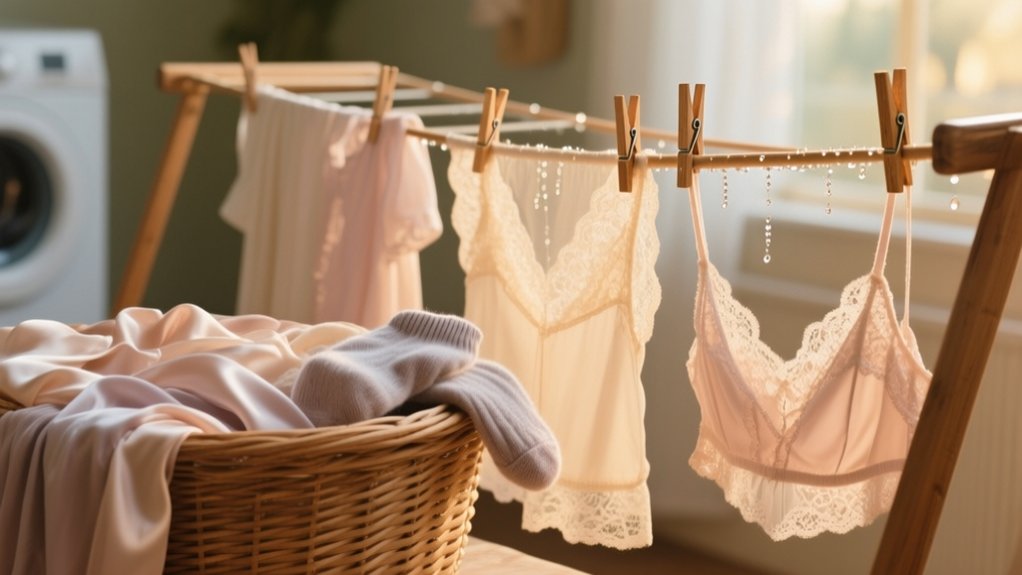
While many fabrics require standard washing care, delicate materials demand extra attention because they’re fragile. Delicate fabrics like silk, lace, chiffon, and satin often show up in blouses, evening wear, and lingerie, and they need a gentle wash to avoid damage.
Silk’s smooth texture and satin’s glossy surface can easily fray. Lace and chiffon are prone to snagging or tearing.
Performance fabrics, common in activewear, also need careful handling to keep their stretch and moisture-wicking qualities.
When you machine wash delicate garments, always check the care label for specific instructions to protect these sensitive textiles.
How To Spot Delicate Clothes From Care Labels
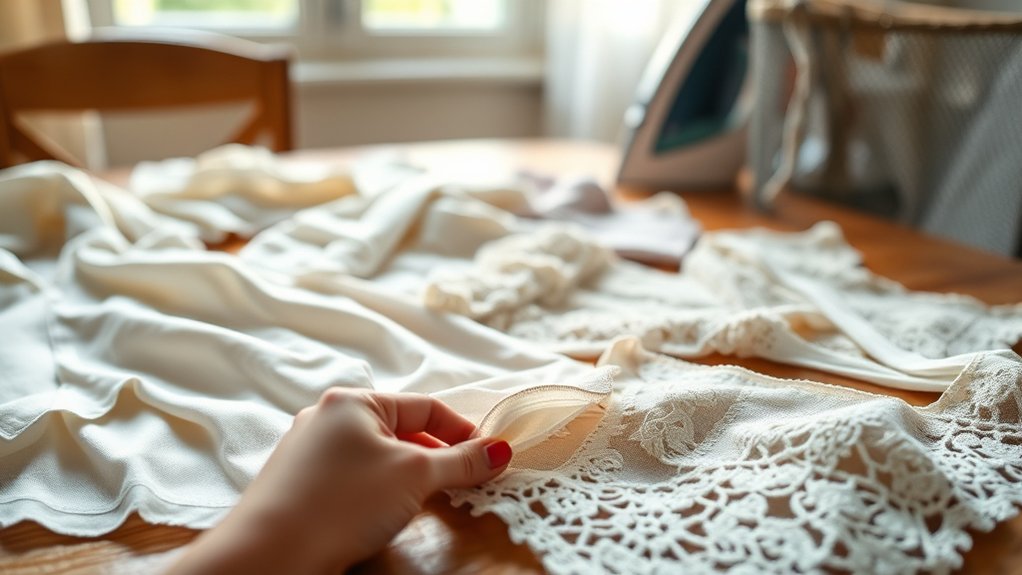
When you want to protect your delicate garments, understanding care labels is essential.
Start by looking for the “hand wash” symbol, which signals fragile fabrics needing gentle handling.
If the label indicates “machine wash delicate cycle,” you can use a gentle cycle but avoid regular washing.
Pay close attention to fabrics like silk, lace, chiffon, and fine knits, as these are often marked delicate.
Specific instructions on the care label, such as washing in cold water, help prevent damage.
Also, watch for a triangle with an “X,” which means avoid bleach to protect sensitive fibers.
Why Delicate Clothes Need Special Washing
If you want to keep your delicate clothes looking their best, you need to treat them with special care during washing.
Delicate fabrics, made from fine fibers, are prone to wear and tear. Using gentle washing techniques with cold water and low agitation reduces the risk of damage.
Delicate fabrics require gentle washing with cold water and minimal agitation to prevent damage.
Sensitive fabrics like silk or lace can easily fray or lose shape if washed improperly. Mesh laundry bags offer extra protection, preventing snagging and entanglement.
Always follow the care label instructions to avoid irreversible harm such as shrinking or fading.
Special care guarantees your delicates maintain their quality and longevity.
- Use cold water and low agitation to preserve fine fibers
- Protect sensitive fabrics with mesh laundry bags
- Follow care label guidance to prevent damage
Picking The Best Detergent And Tools For Delicates

Protecting your delicate clothes goes beyond gentle washing techniques. Choosing the right detergent and tools plays an essential role in preserving their quality.
Always use a gentle, pH-neutral detergent designed for delicate fibers to avoid harsh chemicals that can damage your garments.
Check the care tag for specific recommendations, and stick to the detergent amount suggested to prevent residue buildup.
To protect delicate items further, place them in mesh laundry bags before you wash delicates, minimizing snagging and tangling.
Opt for cold water washes, never exceeding 80 degrees, to prevent shrinking and fading.
Step-By-Step Guide To Washing Delicates Safely
To wash your delicate fabrics safely, start by sorting them carefully and preparing each item according to its specific needs.
It’s a good idea to separate your delicates from heavier items to avoid any unnecessary wear and tear.
Next, use gentle washing techniques. For example, placing garments in mesh bags can really help protect them.
Also, make sure to select the appropriate cycle on your machine—something designed for delicate fabrics—to minimize damage.
By following these steps, you’ll help preserve the quality and longevity of your delicate clothing.
It’s all about being a little extra careful to keep your favorites looking great for longer!
Preparing Delicate Fabrics
When preparing delicate fabrics for washing, you should always start by checking the care label to confirm the recommended cleaning methods and cycles. This guarantees you treat each garment properly, avoiding damage.
Next, place smaller delicates inside a mesh laundry bag to protect them from snagging or tangling during the wash. Select a gentle cycle with cold water and use a mild detergent to minimize fabric stress.
If hand washing, soak items in cold water with detergent, then gently squeeze without wringing.
After washing, reshape your delicates and lay flat to dry, preserving their original fit and preventing distortion.
Always follow the care label’s instructions exactly. Use a mesh laundry bag for extra protection. Reshape and lay flat to maintain the garment’s shape.
Gentle Washing Techniques
Washing delicate fabrics requires careful attention to detail to prevent damage and maintain their quality. Always follow care labels, opting for the delicate cycle or hand wash for fragile items like silk or lace. Use cold water and a gentle detergent formulated for delicates to protect fabric integrity.
Sort garments by color and fabric type, placing them in a mesh bag to prevent snagging and tangling. When hand washing, soak in cold water with detergent, gently agitate, then rinse thoroughly to remove residue.
Avoid the dryer. Instead, follow drying instructions by reshaping and laying items flat or hanging them to air dry. Keep delicates out of direct sunlight to prevent fading, ensuring your fragile items stay in excellent condition while you prevent damage effectively.
Choosing Between Delicate Cycle And Hand Washing
Consider these points for ideal garment care:
Hand wash prevents shrinking and tearing by allowing precise control and using detergent designed for delicate fabrics.
Hand washing offers gentle care, preventing shrinkage and damage with controlled cleaning and specialized detergents.
The delicate cycle, combined with mesh bags, reduces stress from machine movement for machine-washable delicates.
For irreplaceable or highly embellished pieces, hand washing guarantees maximum protection and longevity.
Choosing carefully protects your garments and extends their lifespan.
How To Dry Delicate Clothes Without Damage
Although drying delicate clothes may seem straightforward, using the wrong method can easily cause shrinking, stretching, or fabric damage. To prevent shrinking and preserve fabric quality, always air dry by laying flat on a clean towel or drying rack.
Avoid dryer use, but if necessary, select the no heat setting and monitor drying times closely. For fragile items, use a mesh laundry bag to prevent snagging. Keep delicate clothes out of direct sunlight to avoid fading.
| Method | Benefits | Tips |
|---|---|---|
| Laying Flat | Maintains shape | Use clean towel or drying rack |
| No Heat Dryer | Minimizes fabric stress | Limit drying time |
| Mesh Laundry Bag | Protects from friction | Ideal for delicate fabrics |
Follow these steps to keep your delicates safe and looking their best.
Frequently Asked Questions
Can Delicate Laundry Be Ironed Safely?
Yes, you can safely iron delicate laundry if you use a low heat setting and place a pressing cloth between the iron and the fabric to protect it.
Iron your delicates while they’re slightly damp or use gentle steam from a distance to avoid water spots.
Always check the garment’s care label first, as some fabrics may require avoiding heat entirely.
Taking these precautions helps maintain your delicate items’ quality and longevity.
How Often Should Delicate Items Be Washed?
You should wash delicate items every 3-4 wears unless they’re heavily soiled or stained.
For lingerie and activewear, wash after each use to keep them fresh and intact.
Lightly soiled delicates like blouses can be worn 2-3 times, depending on exposure.
Always follow the care label, and use a mesh laundry bag to protect fabrics during washing, helping you extend their lifespan effectively.
Is It Okay to Use Fabric Softener on Delicates?
Of course, you should smother your delicates with fabric softener because who doesn’t want silky lingerie coated like a waxed car?
But seriously, avoid it. Fabric softeners can damage delicate fibers, reducing breathability and lifespan.
Instead, use gentle detergents made for delicates. If you insist on softener, pick one formulated specifically for delicate fabrics and use it sparingly.
Always check your garment’s care label to keep your delicate pieces looking their best.
Can Delicates Be Bleached if Stained?
You shouldn’t bleach delicates if stained, as bleach can damage fibers and cause discoloration. Instead, use a gentle stain remover made for delicate fabrics.
Always check the care label first; if it says “hand wash only,” avoid bleach.
For minor stains, try a diluted oxygen bleach solution, which is safer.
Before applying anything, perform a patch test on a hidden area to verify no damage occurs.
How to Store Delicate Clothes to Prevent Damage?
You’d think delicate clothes could survive a tornado, but they actually need gentle care to stay pristine.
Store them in a cool, dry place away from sunlight to prevent fading.
Use padded hangers for silky items and fold others with acid-free tissue paper to avoid creases.
Keep them in breathable garment bags to reduce friction and regularly check for pests or moisture.
This way, you’ll keep your delicates safe and beautiful longer.
Conclusion
Now that you know what makes laundry delicate and how to care for it, treating these garments like fragile treasures will keep them looking their best. By choosing the right detergent, washing method, and drying technique, you’ll avoid the pitfalls that can unravel their beauty.
Think of your delicates as a garden. Tend to them carefully, and they’ll flourish wash after wash, maintaining their softness and shape for years to come.