Can Laundry Detergent Cause Hives – Find Out
Yes, laundry detergent can cause hives if your skin reacts to allergens like fragrances, dyes, or harsh chemicals in the detergent. Sensitive skin or conditions like eczema increase your risk.
Hives usually appear within minutes to a few hours after wearing freshly washed clothes, especially in tight or friction-prone areas. Using hypoallergenic, fragrance-free detergents and extra rinse cycles can help prevent reactions.
Understanding triggers and treatment options can help you manage and avoid future flare-ups.
Key Takeaways
- Laundry detergents can cause hives due to allergens like fragrances, dyes, and harsh chemicals irritating sensitive skin.
- Hives often appear within minutes to hours after contact, especially in areas with tight clothing or friction.
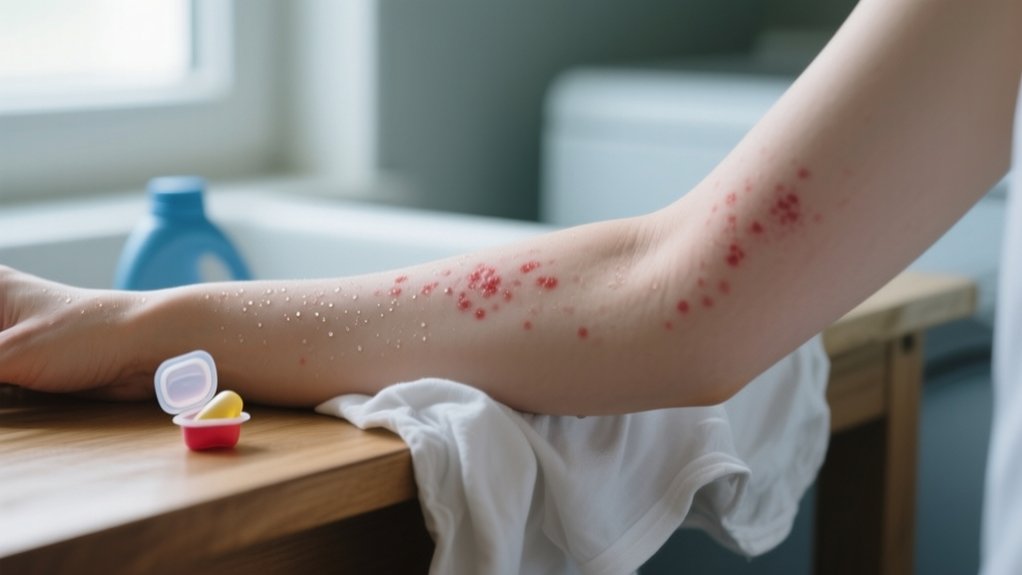
- Symptoms include raised, itchy welts, redness, swelling, and blotchy or scaly skin patches where clothes touch.
- Using hypoallergenic, fragrance-free detergents and extra rinse cycles can help prevent detergent-induced hives.
- Persistent or severe hives should prompt consultation with a dermatologist for proper diagnosis and treatment.
What Are Laundry Detergent Hives and How Do They Develop?
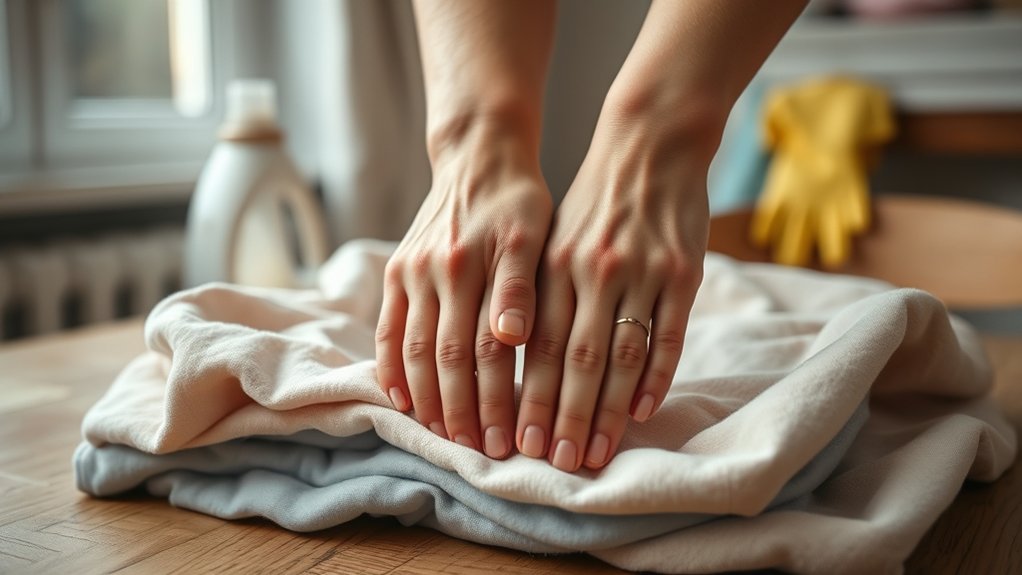
Although laundry detergent hives are relatively uncommon, you may experience raised, itchy welts called urticaria after wearing clothing washed in irritating detergents. This reaction stems from a laundry detergent allergy, where allergens like fragrances, dyes, or preservatives in detergent residue trigger allergic reactions or contact dermatitis.
If you have sensitive skin or pre-existing conditions such as eczema, you’re more susceptible to developing skin irritation from these substances. The welts often appear shortly after contact, especially in areas where fabric rubs against your skin.
Understanding this connection helps you recognize the importance of choosing hypoallergenic or fragrance-free detergents to minimize exposure.
Recognizing Signs of a Laundry Detergent Allergy Rash
Anyone who experiences a laundry detergent allergy rash will notice symptoms such as itching, redness, and swelling in areas where clothing touches the skin.
These allergic reactions often appear in sensitive skin regions prone to friction, like the armpits, groin, and backs of the knees.
The rash may show as blotchy red patches, raised spots, or dry, scaly areas, especially where detergent residue remains on fabric.
If you have pre-existing skin conditions, your reactions could be more severe.
Keep in mind that symptoms mightn’t appear immediately; they can take hours or even up to 10 days after contact.
Monitoring changes after switching detergents helps identify if your skin reacts unusually, allowing you to address the rash promptly and avoid further irritation from detergent residues.
When Do Laundry Detergent Hives Usually Appear?
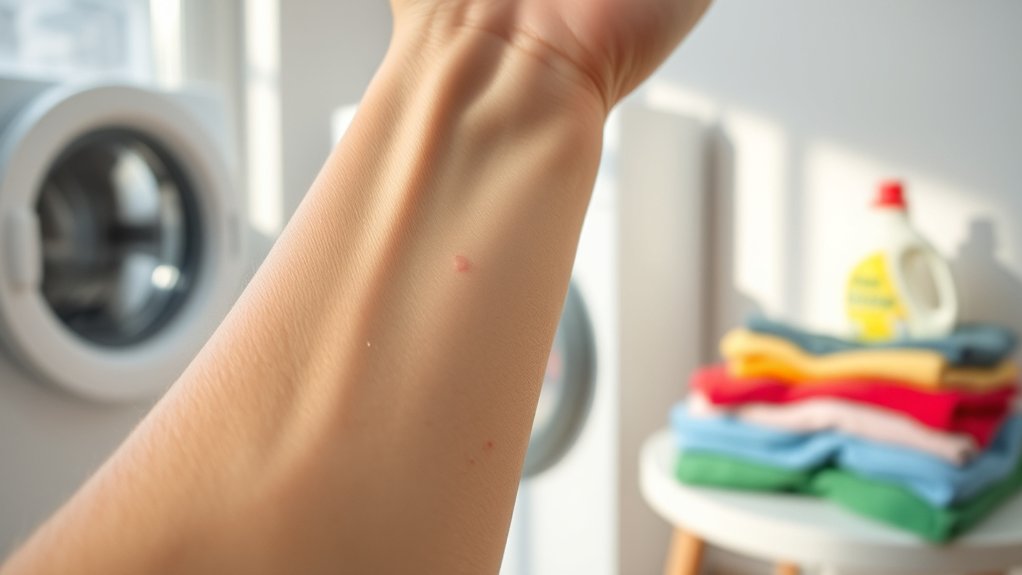
You’ll often notice laundry detergent hives popping up shortly after you put on freshly washed clothes, especially in spots where the fabric fits snugly against your skin.
Usually, the reaction shows up within minutes to a few hours.
But sometimes, it might take as long as 10 days to appear.
Knowing this timeline can really help you tell the difference between an immediate reaction and a delayed skin response.
Onset Timing Factors
When your skin reacts to laundry detergent, hives can appear within minutes to hours after wearing freshly washed clothes.
The onset of hives often depends on factors like your skin sensitivities and the specific irritants laundry detergents contain.
Some individuals experience allergic contact reactions that trigger itchy skin almost immediately, while others may notice delayed hives from laundry detergent several days later.
Areas where clothing fits tightly, such as underarms, are common sites for these reactions.
The concentration of allergens or irritants in your detergent also influences how quickly symptoms emerge.
Monitoring your skin’s response after switching detergents can help pinpoint triggers.
Understanding these onset timing factors is essential for managing and preventing hives linked to laundry detergent exposure.
Skin Reaction Timeline
Understanding how quickly hives appear after exposure to laundry detergent can help you identify and manage allergic reactions more effectively.
Laundry detergent can cause skin reactions that usually show up within minutes to a few hours after wearing freshly laundered clothes.
However, in some cases, allergic reactions may take up to 10 days to manifest, especially if you have sensitive skin or pre-existing conditions like eczema.
Hives often appear in areas where your clothes cause friction, such as underarms and the groin.
To avoid irritation, consider doing a patch test before using a new detergent.
- Hives typically appear within minutes to hours post-exposure
- Delayed reactions can take up to 10 days
- Common sites include friction-prone areas where your clothes fit tightly
- Patch tests help identify irritants that may irritate sensitive skin
Delayed Versus Immediate
Although hives from laundry detergent can appear immediately after contact, they may also take up to 10 days to show, depending on your skin’s sensitivity and the type of allergic reaction.
Immediate reactions usually manifest in areas where clothing fits tightly, causing raised welts and intense itching soon after exposure.
If you have existing skin conditions like eczema, you’re more likely to experience these rapid responses.
On the other hand, delayed reactions develop gradually, often in less exposed areas, making it harder to link them directly to detergent use.
Monitoring when your hives appear helps differentiate immediate from delayed reactions, guiding you to identify the specific irritant affecting your skin.
Understanding this timeline is essential for managing and preventing future detergent-related hives effectively.
Which Laundry Detergent Ingredients Can Trigger Hives?
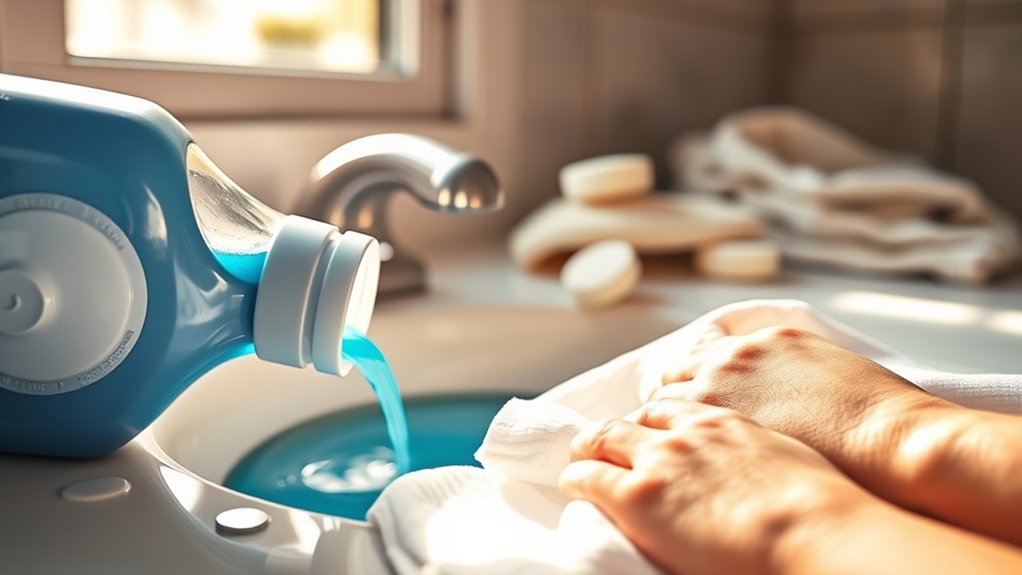
What ingredients in your laundry detergent could be triggering hives?
Laundry detergents often contain harsh chemicals that irritate sensitive skin, causing allergic reactions and persistent itching. Residual detergent left on fabrics, especially in areas with frequent friction, can worsen these symptoms.
Harsh chemicals in laundry detergents can irritate sensitive skin, with residue worsening allergic reactions and itching.
Common culprits include strong fragrances and dyes, which frequently provoke skin reactions.
Watch out for these ingredients:
- Surfactants like sodium lauryl sulfate that dry and irritate skin
- Preservatives such as parabens and formaldehyde-releasers linked to allergies
- Enzymes used for stain removal that can inflame sensitive skin
- Fragrances and dyes known to cause irritation and hives
Understanding these triggers can help you avoid exposure and manage skin sensitivity effectively.
Can Natural or Hypoallergenic Detergents Still Cause Hives?
Even natural or hypoallergenic detergents can cause hives if you have sensitive skin. That’s because they might still contain mild fragrances, preservatives, or plant-based allergens.
It’s also good to know that ingredients like enzymes and surfactants, which are common in these products, can trigger reactions too.
So, paying attention to how your skin responds is really important.
To help reduce your risk, try choosing fragrance-free options whenever possible. Keeping an eye on your skin’s reaction can make a big difference.
Hypoallergenic Detergent Risks
While hypoallergenic detergents are designed to minimize allergens and irritants, you should be aware that they can still contain ingredients capable of triggering hives in sensitive individuals.
Even these gentler products may include botanical extracts or preservatives that cause allergic reactions.
Residue left on fabrics after washing can also provoke skin reactions, particularly in sensitive areas.
To protect your skin, especially if you have a history of allergies or eczema, conducting patch tests before full use is crucial.
Keep an eye on any changes in your skin health when switching detergents.
- Hypoallergenic detergents can still trigger allergic reactions in rare cases
- Residual chemicals may cause skin reactions despite gentle formulas
- Patch tests help identify potential irritants on sensitive areas
- Monitoring skin after use guarantees early detection of hives or other reactions
Natural Ingredients Allergies
Although natural and hypoallergenic detergents are often chosen to reduce the risk of allergic reactions, they can still cause hives in sensitive individuals due to ingredients like natural fragrances and coconut-derived surfactants.
Even natural ingredients such as essential oils may trigger skin irritation, especially in sensitive areas.
Laundry detergents labeled “natural” or “hypoallergenic” can contain common allergens like preservatives and surfactants, albeit in lower concentrations.
If you have a history of allergies or eczema, it’s essential to perform patch tests before using new detergents to identify potential reactions early.
Remember, minimal exposure to these allergens can still provoke hives in highly sensitive individuals.
Staying informed about ingredient lists helps you avoid unwanted allergic reactions while choosing safe laundry products.
How to Treat Laundry Detergent Hives Effectively
When you experience hives caused by laundry detergent, you can start treatment by using over-the-counter antihistamines like Benadryl to reduce itching and swelling.
Addressing allergic reactions promptly helps prevent complications.
You should also apply hydrocortisone cream to soothe inflammation and discomfort. Keeping your skin moisturized with hypoallergenic lotions supports healing and prevents dryness.
Consider these additional steps:
- Take oatmeal baths to calm inflamed skin and relieve itching
- Avoid scratching to reduce irritation and risk of infection
- Use mild, fragrance-free skin products to maintain skin barrier
- Consult a dermatologist if hives persist or worsen despite home treatment
How to Prevent Laundry Detergent Hives With Safer Laundry Habits
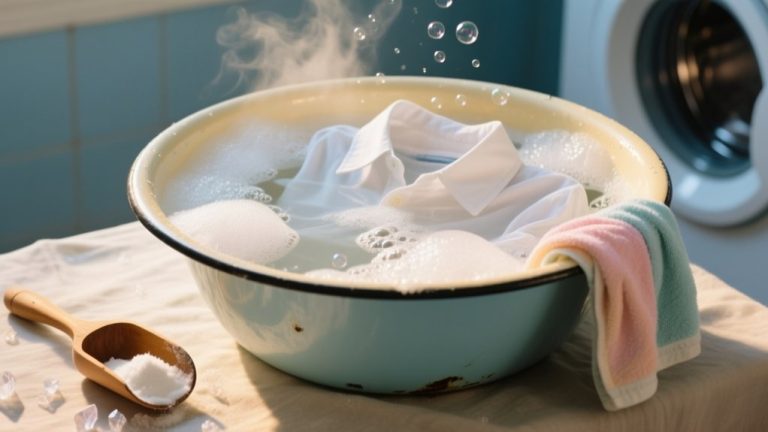
Managing laundry detergent hives involves not only treating symptoms but also adopting safer laundry habits to prevent future outbreaks. Choose hypoallergenic, fragrance-free laundry products to reduce skin reactions, especially on sensitive areas.
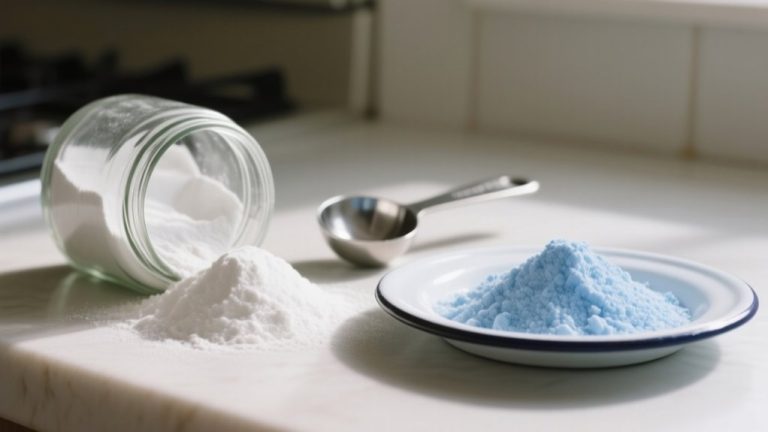
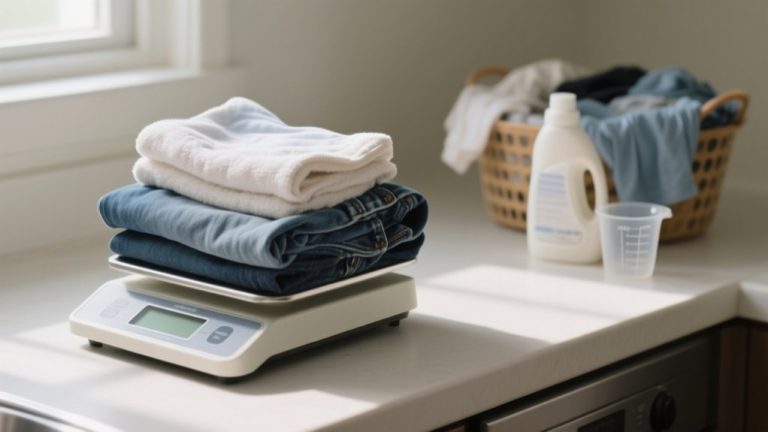
Use the recommended detergent amount to avoid detergent residue buildup, which can trigger hives. Incorporate an extra rinse cycle to thoroughly remove residues from fabrics.
Regularly clean your washing machine to prevent irritants like mold and mildew. Monitor your skin’s response to different laundry products and adjust accordingly.
| Habit | Purpose | Benefit |
|---|---|---|
| Hypoallergenic products | Minimize irritants | Reduce skin reactions |
| Extra rinse cycle | Remove detergent residue | Prevent hives on sensitive areas |
| Washing machine cleaning | Eliminate mold and mildew | Maintain skin health |
Frequently Asked Questions
Can Laundry Detergent Hives Affect Children Differently Than Adults?
Yes, laundry detergent hives can affect children differently than adults because your child’s skin is more sensitive and absorbs allergens more easily.
You’ll notice hives often appear where clothing touches the skin, especially if your child has eczema or asthma.
To protect your child, you should choose hypoallergenic, fragrance-free detergents to reduce the risk of irritation and allergic reactions.
Taking these steps helps keep your child’s skin healthy and comfortable.
Are Laundry Detergent Hives Contagious?
Laundry detergent hives aren’t contagious, so you don’t have to worry about spreading them to others. They result from your skin’s unique reaction to certain detergent ingredients, not from germs or infections.
If you’re prone to allergies or sensitive skin, you might develop hives after contact, but this won’t affect those around you.
To protect yourself, consider using hypoallergenic detergents and practicing good skin care.
How Long Do Laundry Detergent Hives Typically Last Without Treatment?
If you’re lucky, those laundry detergent hives will pack up and leave your skin alone within a day or two, kind of like a bad guest who knows when to exit.
Typically, they last a few hours to 24 hours without treatment, depending on your sensitivity and exposure.
If you keep wearing clothes washed in the same detergent, expect the irritation to stick around longer.
Stopping contact usually helps them clear up faster.
Can Wearing Gloves While Handling Detergent Prevent Hives?
Yes, wearing gloves while handling detergent can prevent hives by minimizing your skin’s contact with irritants and allergens.
Gloves act as a protective barrier against fragrances, dyes, and harsh chemicals that often cause reactions.
If you have sensitive skin or allergies, choosing nitrile or latex-free gloves is especially important.
Remember to wash your hands after removing gloves to further reduce the risk of irritation and hives.
Is There a Link Between Laundry Detergent Hives and Asthma?
Think of your body as a fortress; when it faces an invisible enemy like laundry detergent allergens, both your skin and lungs can raise alarms.
Yes, there’s a link between laundry detergent hives and asthma, as both result from your immune system’s heightened reaction to irritants or allergens.
If you’re sensitive, these allergens can trigger skin hives and worsen asthma symptoms.
Using hypoallergenic detergents helps protect your fortress from these dual attacks.
Conclusion
Did you know that nearly 15% of people experience skin reactions from laundry detergents? If you’ve noticed hives or rashes after washing your clothes, it’s likely your skin reacting to certain ingredients.
By identifying triggers and switching to gentler options, you can prevent discomfort. Remember, treating hives promptly and adopting safer laundry habits will keep your skin healthy and irritation-free.
Stay informed and take control of your skin’s health today.