Can I Do Laundry When It’s Freezing Outside – Yes or No?
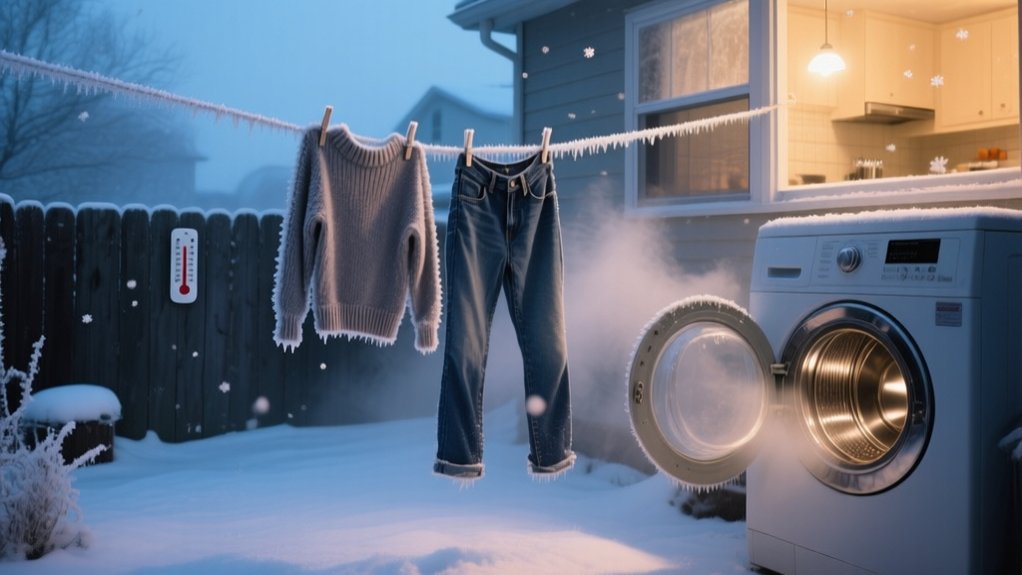
Yes, you can do laundry when it’s freezing outside, but you must take precautions to avoid frozen water lines and potential pipe bursts. Frozen hoses or pumps can block water flow and cause costly damage.
Watch for slow drains, low water pressure, or unusual sounds indicating freezing risk. Use small loads with cold water and consider handwashing if pipes seem vulnerable. Proper insulation and temperature monitoring are essential.
Understanding these factors helps you manage laundry safely in cold weather.
Key Takeaways
- Laundry is possible but risky if pipes or hoses show freezing signs like slow drains or low water pressure.
- Avoid using the washing machine during winter storms or if pipes are suspected frozen to prevent flooding.
- Handwashing clothes with warm water is a safer alternative during freezing weather.
- Insulating water lines and maintaining indoor temperatures above freezing reduces freezing risks.
- Use cold water and small loads if machine washing is necessary, monitoring for unusual sounds or leaks.
How Cold Weather Can Freeze Washer Water Lines and Cause Damage
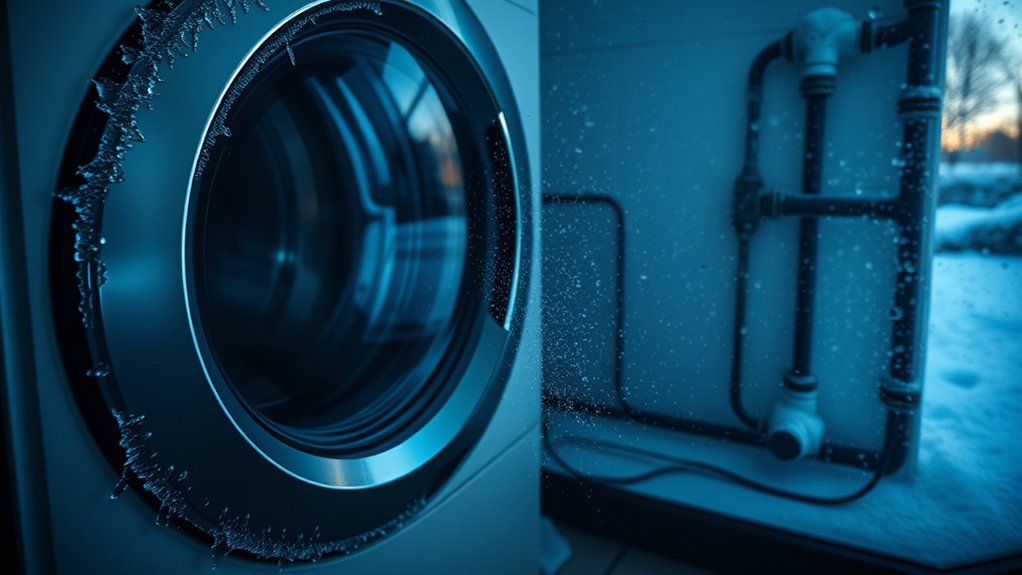
When temperatures drop below freezing, ice can form inside the water hoses and pumps of your washing machine. This creates blockages that disrupt water flow and risk mechanical damage.
Freezing temperatures cause water in the water lines to expand, which can crack or burst the pipes. These fractures may result in leaks or flooding once the ice thaws.
If water lines are left uninsulated or positioned near exterior walls, they become more vulnerable to freezing. To prevent this, you should insulate water lines and relocate them away from cold surfaces.
Doing this ensures continuous water flow and protects your machine’s components. Understanding the physical effects of freezing temperatures on water lines allows you to take preventive measures.
This way, you maintain your washing machine’s functionality during cold weather.
Risks of Doing Laundry During Freezing Temperatures and Winter Storms
Doing laundry when it’s freezing outside can be risky because your pipes might freeze or even burst. That can cause water damage and lead to expensive repairs.
If you start noticing slow drains or hear gurgling sounds, those are red flags that your pipes could be freezing. When that happens, it’s a good idea to hold off on using the washer.
Instead, try handwashing your clothes with warm water. It’s a safer way to keep your plumbing and appliances protected during those icy conditions.
Freezing Pipes Risks
Although doing laundry is a routine task, freezing temperatures greatly increase the risk of supply or drain lines freezing and bursting due to ice expansion. When water inside pipes freezes, it expands, exerting pressure that can cause pipes to rupture, leading to significant water damage.
Using your washing machine during these conditions elevates this risk, especially amid winter storms when temperatures plummet further. Appliance specialists advise against laundry use if pipes show signs of freezing, as this may worsen plumbing failures.
To minimize water damage, you must maintain indoor temperatures above freezing and regularly monitor water line conditions. Avoid operating your washing machine if pipes are suspected frozen to prevent flooding.
Understanding these risks helps you protect your home and plumbing system during cold weather.
Warning Signs Detected
Since freezing temperatures directly impact your plumbing’s integrity, recognizing early warning signs becomes essential before running laundry. Frozen supply or drain lines can cause flooding and costly damage.
Watch for these indicators:
| Warning Sign | Cause | Risk Level |
|---|---|---|
| Slow drains | Partial pipe freeze | Moderate |
| Low water pressure | Frozen supply line | High |
| Gurgling sounds | Air trapped in pipes | Moderate |
| Pipe bulging/cracks | Water expansion from freeze | Severe |
| Power outages | Interrupt washer cycle | Severe |
Ignoring these warning signs can make existing vulnerabilities worse during winter storms. To reduce risk, monitor your plumbing closely and avoid laundry if you notice any signs of frozen supply or system strain.
Laundry Alternatives Suggested
When freezing temperatures threaten your plumbing system, doing laundry poses significant risks, including frozen supply lines and potential pipe bursts that can cause flooding.
Appliance specialists recommend avoiding laundry during winter storms, as power outages may leave machines full of water, making leaks worse.
Instead, consider laundry alternatives such as handwashing clothes, which requires only a bathtub and warm water and can be completed in about 20 minutes. This method reduces reliance on vulnerable plumbing and electrical systems during extreme cold.
Furthermore, if you detect warning signs like slow drains or gurgling pipes, postpone machine use until you resolve these issues.
Taking preventive measures like insulating pipes and monitoring temperatures can also help reduce risks, but handwashing remains the safest immediate alternative during freezing conditions.
Signs Your Washing Machine’s Water Lines Might Be Freezing
How can you tell if your washing machine’s water lines are freezing? Start by observing slow drains and reduced water pressure. These often indicate ice forming inside the pipes.
Gurgling sounds near the water intake valve suggest strain caused by ice buildup. Inspect the pipes visually for frozen sections or frost accumulation, especially around exposed areas.
Standing water or ice on septic lids nearby can also signal freezing conditions affecting your plumbing. Detecting these signs early is essential because frozen pipes can lead to ruptures or flooding if you keep using the machine.
Avoid operating it until you confirm the water intake valve and lines are fully thawed to prevent damage and keep everything running safely.
Should You Run Your Washing Machine During a Winter Storm?
You probably shouldn’t run your washing machine during a winter storm, especially if you notice things like slow drains or gurgling sounds.
That’s because frozen pipes can crack and cause flooding, which is a big headache. Plus, power outages make things worse—if the washer stops mid-cycle, leaks are more likely to happen.
Risks Of Frozen Pipes
Although running your washing machine during a winter storm might seem harmless, doing so markedly increases the risk of frozen supply or drain lines.
Extreme cold causes water inside pipes to freeze and expand, which exerts pressure that can crack or burst frozen pipes. This damage not only disrupts water flow but also raises the likelihood of flooding and costly repairs.
Appliance specialists advise against laundering during such conditions to avoid these complications.
Furthermore, power outages common in winter storms can leave your washer full of water, increasing leak risks if you’re not actively monitoring it.
Signs Of Freezing Issues
Recognizing the early signs of freezing issues in your plumbing can help determine whether running the washing machine during a winter storm is safe. You should monitor your system closely for indicators that suggest compromised flow or potential pipe damage.
Key signs include:
- Slow drainage and reduced water pressure, which often signal partial pipe freezing restricting flow.
- Gurgling sounds from drains, indicating air trapped by ice blockages increasing strain on your plumbing.
- Presence of standing water or ice near septic lids, a direct sign of freezing that risks pipe bursts if the washer runs.
If you detect any of these symptoms, avoid operating the washing machine to prevent leaks or flooding.
Promptly addressing these freezing issues will minimize damage and guarantee plumbing integrity throughout harsh conditions.
Safe Laundry Alternatives
When winter storms cause temperatures to plummet, running your washing machine can increase the risk of frozen pipes and water damage. During extreme cold, frozen supply or drain lines may burst, causing flooding and costly repairs.
Power outages make this worse by leaving the washer full, which can leak if pipes freeze. To avoid these problems, consider safe laundry alternatives like handwashing clothes in a bathtub with warm water and detergent. This method treats stains well without relying on appliances that can freeze.
Also, avoid running your washer if you notice slow drains, low water pressure, or pipe gurgling.
Always stay home when using the machine during cold spells so you can respond quickly if any issues arise. These steps help protect your home during extreme cold weather.
How to Prevent Frozen Pipes and Flooding When Doing Laundry
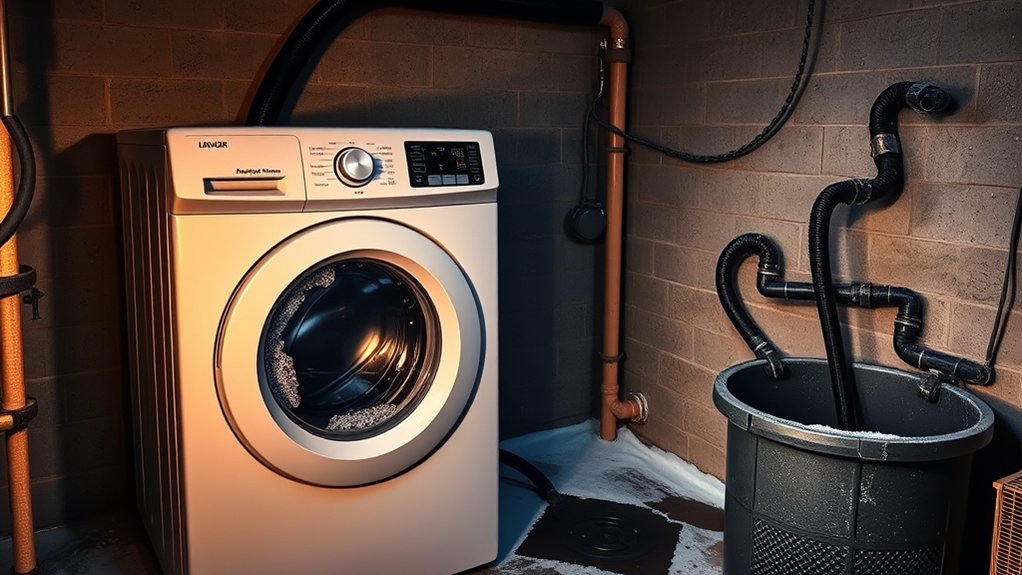
Since freezing temperatures can cause ice to form inside water pipes, you should take proactive steps to prevent blockages and flooding when doing laundry.
Frozen pipes can expand and rupture, leading to costly water damage. To minimize this risk, follow these critical measures:
- Insulate pipes along exterior walls and apply heat tape to maintain consistent warmth, preventing ice buildup.
- Regularly monitor ambient temperatures near your washing machine and water lines to detect early signs of freezing.
- When not using the washing machine, disconnect and drain the water lines thoroughly to eliminate residual water that could freeze.
Additionally, maintaining a slow water flow through faucets connected to your laundry supply lines reduces freezing risk.
Alternatives to Using Your Washing Machine in Extreme Cold
Although using your washing machine during extreme cold poses risks like frozen pipes, you can effectively clean clothes by handwashing. Handwashing requires only a bathtub, warm water, and laundry detergent, making it a practical alternative in extreme cold.
You can spot-treat stains beforehand to enhance cleaning efficacy and preserve garment quality. This method typically takes about 20 minutes, providing a quick, efficient solution without the hazards linked to machine use in freezing conditions.
Moreover, stocking stain removers and towels dedicated to handwashing supports ongoing garment care.
If machine washing is unavoidable, use small loads with cold water to reduce the risk of pipe freezing and flooding.
How Laundry Detergents Work in Cold Weather
You’ll notice that most laundry detergents work best when the water temperature is above 60°F (15.6°C). That’s because they need warmer water to dissolve properly and activate.
If the water is too cold, detergent residues might stick to your clothes and even inside the washing machine. This can make your laundry less clean than you’d like.
So, during colder weather, it’s a good idea to set your washer to a warm or semi-warm cycle.
This little adjustment helps the detergent do its job well, even when the air outside is chilly. It’s a simple way to keep your clothes fresh and clean all year round.
Detergent Temperature Needs
How does water temperature influence the effectiveness of laundry detergents in freezing weather? Detergent temperature critically affects how well cleaning agents dissolve and activate. Most detergents need water at or above 60°F (15.6°C) for ideal function.
When you use cold water below this threshold, especially during freezing conditions, detergents may not fully dissolve. This leads to residue buildup and diminished cleaning performance.
Consider these points:
- Detergents require a minimum temperature to activate enzymes and surfactants effectively.
- Water below 60°F slows chemical reactions, reducing stain removal and fabric care.
- Washing machines can compensate by using warm or semi-warm cycles, enhancing detergent activity without excessive energy use.
Thus, maintaining appropriate detergent temperature guarantees effective cleaning even when outside temperatures drop.
Cold Water Effectiveness
When water temperatures drop below 60°F (15.6°C), detergents struggle to dissolve fully and activate their cleaning agents, which reduces their effectiveness.
At cold temperatures, many detergents fail to perform effectively, leaving residues on fabrics and inside the washer.
Cold water cycles usually range from 60°F to 80°F, a necessary window to guarantee detergent activation and thorough cleaning.
Washing below this threshold compromises results and risks buildup.
Modern machines accommodate cold water use efficiently, but maintaining water temperature near or above 60°F is essential.
You can use warm or semi-warm settings during freezing weather to reach this temperature without excessive energy use.
Understanding these temperature effects helps you enhance laundry performance in cold conditions.
Cold vs. Tap Cold Wash Settings: What’s the Difference?
Although both cold and tap cold wash settings use lower temperatures, they differ considerably in water temperature control and cleaning effectiveness.
Cold and tap cold settings use low temperatures but vary greatly in temperature control and cleaning power.
Tap cold relies on unregulated water directly from your plumbing, which can drop below 60°F in freezing conditions, lowering detergent efficiency. In contrast, cold wash settings blend hot and cold water to maintain a stable 60°F to 80°F range, optimizing detergent activation.
Consider these key differences:
- Tap cold water temperature averaged 54.3°F in tests, while cold wash reached 58.6°F.
- Most detergents dissolve best above 60°F, favoring cold wash settings.
- Cold wash saves energy compared to warm cycles but outperforms tap cold in cleaning.
Choosing cold wash settings guarantees more consistent temperature control and superior cleaning, especially when outdoor water sources are cold.
Why Warm or Semi-Warm Washes Work Better When It’s Freezing
Because detergents require a minimum temperature of around 60°F to dissolve and activate fully, using warm or semi-warm wash settings guarantees more effective cleaning in freezing conditions.
Warm water, typically between 60°F and 110°F, ensures that detergent molecules break down and interact with soils optimally.
Cold settings can drop to about 54.3°F in extreme cold, risking incomplete dissolution and residue buildup.
Furthermore, warm washes help prevent ice formation within hoses and water lines, reducing mechanical stress and potential damage.
While modern washers can handle cold water, warm or semi-warm cycles maintain both cleaning efficacy and appliance integrity during freezing weather.
Essential Safety Tips for Doing Laundry in Freezing Weather
To minimize risks associated with freezing temperatures, you should avoid doing laundry during winter storms, as frozen supply or drain lines can cause flooding and water damage.
When you must do laundry in extreme cold, follow key safety tips to protect your home and plumbing.
First, wash small loads with cold water and stay nearby to monitor for unusual sounds or slow draining.
Second, insulate pipes and consider heat tape on exposed lines to prevent freezing.
Third, locate your water shutoff valve in advance for quick emergency response.
If you suspect frozen pipes, opt for handwashing to reduce water use and avoid appliance damage.
These steps help you manage water flow safely and mitigate risks linked to extreme cold during laundry tasks.
Frequently Asked Questions
Can Freezing Temperatures Affect My Dryer’s Performance?
Yes, freezing temperatures can affect your dryer’s performance.
Cold weather may cause moisture in the vent line to condense and freeze, blocking airflow and reducing efficiency. This ice buildup increases the risk of malfunctions and prolongs drying times.
To maintain ideal function, you should insulate vent pipes and perform regular maintenance checks.
Using ventless dryers or ensuring proper vent insulation helps prevent these cold-weather issues effectively.
How Long Does It Take for Laundry to Dry in Cold Weather?
In cold weather, your laundry typically takes 2 to 6 hours to dry, depending on fabric type, humidity, and airflow.
Lower temperatures reduce evaporation rates, extending drying time by about 50% or more.
If you hang clothes indoors, using heat or ventilation can speed up drying.
A dryer set to warm or semi-warm settings helps maintain temperatures above 60°F, optimizing moisture removal despite freezing outdoor conditions.
Are There Specific Fabrics Better for Winter Laundry?
Imagine you wash a fleece jacket after a winter hike. Yes, fleece and wool are better for winter laundry because they retain insulation even when damp.
You’ll want to avoid cotton since it traps moisture, risking chill. Synthetic blends like polyester-spandex thermal fabrics also work well. They wick moisture and trap heat.
Use cold or warm water to clean without damaging fibers, preserving their insulating properties for your next cold-weather outing.
Can Cold Weather Cause Mold in My Washing Machine?
Yes, cold weather can cause mold in your washing machine. When temperatures drop, condensation forms inside the drum and hoses. This creates a moist environment that encourages mold growth if ventilation is poor.
Furthermore, slow drying times increase moisture retention on clothes inside the machine.
To prevent mold, you should guarantee proper drainage, keep the machine dry after use, and perform regular maintenance like cleaning and using mildew-resistant detergents.
Should I Adjust Laundry Schedules Based on Outdoor Temperature?
Yes, you should adjust your laundry schedule based on outdoor temperatures.
Freezing conditions can cause water in hoses and lines to freeze, leading to damage or leaks.
Running laundry when it’s extremely cold risks ice buildup in your machine’s components, which reduces effectiveness and increases wear.
To protect your appliances and guarantee proper cleaning, schedule laundry during warmer periods.
Or use warm water settings to maintain at least 60°F internally.
Conclusion
Doing laundry in freezing weather is like walking a tightrope. You can do it, but you need balance and caution. Frozen water lines risk bursting pipes, and cold washes might reduce detergent effectiveness.
To avoid costly damage, monitor your machine for signs of freezing. Choose warm wash settings and follow safety tips to prevent flooding. By understanding these factors, you’ll protect your washer and keep your clothes clean without falling into winter’s icy trap.