Is Borax Safe For Laundry – What Science Says
You can safely use borax in laundry when you follow proper handling guidelines, like wearing gloves and ensuring good ventilation. Science shows borax effectively boosts cleaning by softening water, neutralizing stains, and eliminating odors, with minimal risks when used correctly.
It’s generally safe on most fabrics but test delicate items first to avoid damage. While borax poses low environmental harm, careful use and storage matter. Explore further to understand its cleaning power, safety, and when to weigh alternatives.
Key Takeaways
- Borax is classified as a minimal risk substance by the EPA and is generally safe for most laundry fabrics when used properly.
- It effectively neutralizes stains and odors while softening hard water, enhancing detergent performance in laundry.
- Wearing gloves and using borax in well-ventilated areas reduces skin irritation and inhalation risks during handling.
- Borax may cause damage to delicate fabrics, so testing on hidden areas and diluting for sensitive materials is recommended.
- Keep borax away from children and pets to prevent accidental ingestion, and flush any skin or eye contact with water immediately.
What Is Borax and How Is It Used in Laundry?
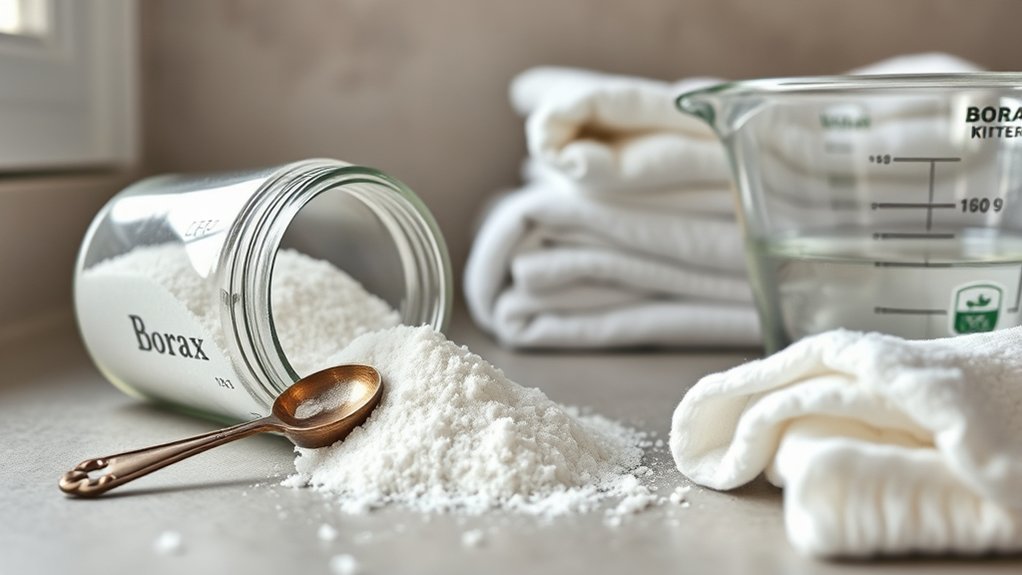
Borax, also known as sodium tetraborate, is a naturally occurring mineral that you can use to boost your laundry detergent’s effectiveness.
As a laundry detergent booster, borax raises the pH to about 9.5, helping neutralize acidic stains and odors, which makes them easier to remove.
It also softens hard water by binding with minerals like calcium and magnesium, enhancing detergent performance. You typically add around half a cup of borax per load to brighten whites and eliminate dulling residues on fabrics.
Furthermore, borax can be made into a paste for targeted stain treatment, increasing its versatility in laundry care.
Using borax cautiously and according to guidelines guarantees you maximize its benefits without risking fabric damage.
How Borax Cleans and Softens Clothes
Boosting your laundry detergent’s effectiveness hinges on the alkaline nature of borax, which raises the pH to about 9.5. This helps neutralize acidic stains and odors.
Borax also breaks down tough residues by loosening soil and preventing dirt from redepositing on fabrics.
Borax loosens stubborn soil and stops dirt from settling back on your clothes for a deeper clean.
It softens hard water by binding with minerals like calcium and magnesium, which improves detergent performance. This action results in cleaner, brighter, and softer clothes while maintaining fabric integrity.
Key ways borax helps include:
- Emulsifying oils and lifting away grime for thorough cleaning
- Softening hard water to enhance detergent efficiency
- Breaking down into borate ions that prevent soil redeposition
Using borax carefully can optimize your laundry results without compromising fabric quality.
Using Borax Safely in Laundry
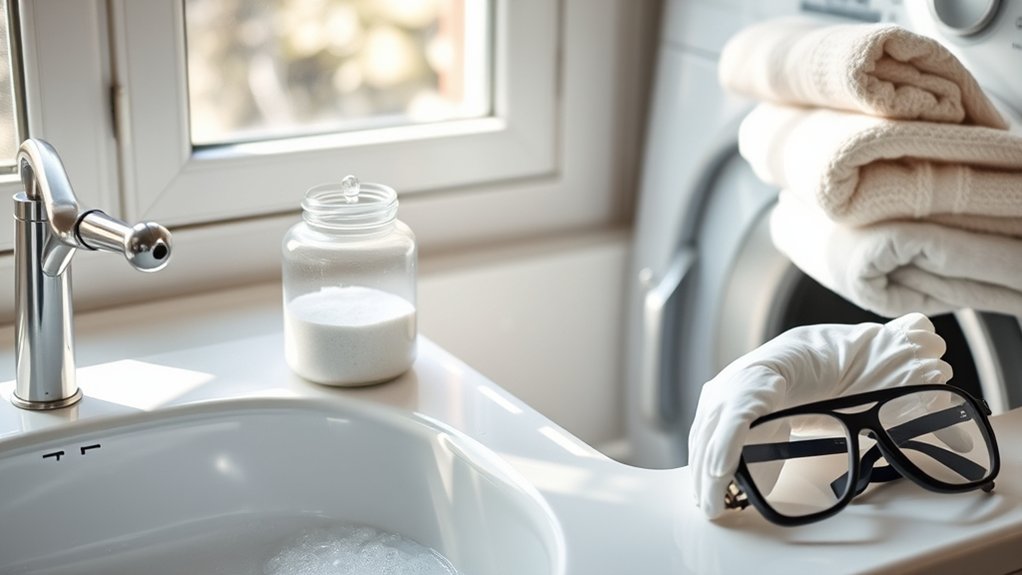
How can you use borax safely in your laundry routine? Borax might enhance your cleaning power, but you must handle it cautiously. Always wear gloves to avoid skin irritation and wash your hands thoroughly afterward.
Use borax in a well-ventilated area to minimize inhaling dust, which can cause respiratory issues. Keep borax out of reach of children and pets to prevent accidental ingestion.
When laundering delicates, dilute borax in plenty of water and test it on an inconspicuous fabric area to avoid damage.
If exposure occurs, immediately flush affected skin or eyes with water for at least 15 minutes and seek medical attention if needed.
Can Borax Cause Skin or Respiratory Irritation?
Can exposure to borax cause skin or respiratory irritation? Yes, borax can cause skin irritation in sensitive individuals, resulting in redness and itching after direct contact.
Borax may cause skin irritation, including redness and itching, especially in sensitive individuals after direct contact.
Inhaling borax dust may also cause respiratory irritation, with symptoms like coughing or difficulty breathing, especially in poorly ventilated spaces. To minimize these risks, it’s important to handle borax carefully.
Use gloves to prevent skin irritation when applying borax.
Wear a mask if you’re working in an area where borax dust may become airborne. Conduct a patch test on clothing if you have sensitive skin, as residues may cause irritation.
Taking these precautions helps reduce your chances of experiencing skin or respiratory irritation when using borax in laundry.
What Science Says About Borax Safety
What does science reveal about borax’s safety in laundry use?
Borax has been used for decades as a laundry booster, and research supports its safety when used as directed. Classified by the EPA as a “minimal risk” substance, borax poses low hazards if you handle it properly.
Its antimicrobial properties, linked to its boric acid content, help neutralize odors and remove stains effectively. You should use about half a cup per load to enhance detergent performance safely.
However, be cautious. Keep borax away from children and pets since ingestion can cause nausea and other health risks.
Diluting borax in water is advisable for delicate fabrics to avoid damage, underscoring the importance of careful application based on scientific guidance.
Is Borax Safe for All Fabrics and Colors?
You should know that borax is generally safe for most fabrics. However, it can affect delicate materials like silk and wool because of its alkaline nature.
So, it’s a good idea to always test borax on a hidden spot first, especially when dealing with vibrant colors. This way, you can avoid any unwanted discoloration.
Also, make sure to follow the fabric care labels and dilute borax properly when using it on sensitive materials. That helps ensure you’re using it safely every time.
Fabric Compatibility Guidelines
When handling different fabrics, how you use borax can make all the difference in preserving their quality and color. Borax generally works well with most fabrics when combined with your regular laundry detergents and plenty of water. However, you should always test it on a hidden patch first to prevent any unexpected damage.
Keep these guidelines in mind:
- Use borax as a whitener for whites to remove dull residues without harming fabric.
- Dilute borax thoroughly in water before applying it to delicate materials like silk or wool.
- For dark or bright fabrics, apply borax sparingly and opt for cold water to reduce fading risks.
Always adhere to garment care labels, as some may prohibit borax or alkaline substances to protect fabric integrity.
Color Safety Considerations
Understanding how borax interacts with different fabric colors is key to maintaining your clothing’s appearance. Borax works effectively on most fabrics but may cause fading on bright or dark colors if overused.
Diluting borax reduces this risk, especially on delicate or vibrant fabrics. Avoid using borax on “dry clean only” items to prevent damage. Always follow your garment’s care instructions for safe use.
| Fabric Type | Color Type | Borax Effect |
|---|---|---|
| Cotton | White | Brightens and removes stains |
| Cotton | Dark/Bright | Risk of fading if undiluted |
| Synthetics | Mixed Colors | Generally safe when diluted |
| Delicates | Vibrant Colors | Use diluted; test first |
| Dry Clean Only | All Colors | Not recommended |
These color safety considerations help you protect your fabrics while using borax.
Testing Before Use
How can you guarantee borax won’t damage your fabrics or alter their colors? The key is thorough testing before use. Always check for colorfastness by applying a diluted borax solution on an inconspicuous fabric area. This cautious approach helps identify any potential lightening or damage.
Keep these guidelines in mind for effective testing:
Test borax on hidden fabric spots to assess colorfastness, especially on delicate or colorful textiles.
Dilute borax in water for sensitive materials like silk or wool to reduce risk.
Follow garment care instructions and consider water hardness, as alkaline borax can interact with dyes differently.
When Should You Skip Borax and Call a Pro?
Why should you consider skipping borax and calling a professional cleaner? If you handle delicate fabrics like silk or lace, professional cleaning is safer to avoid damage. Also, for vintage or heirloom textiles that need specialized care, pros offer treatments borax can’t match.
Persistent odors or stains unresponsive to home remedies also call for professional expertise. Finally, if you’re unsure about garment care or have borax sensitivity, professionals provide safer alternatives.
| Situation | Why Call a Pro? |
|---|---|
| Delicate fabrics | Prevent damage with professional cleaning |
| Heavily soiled/vintage items | Specialized, safe treatment |
| Persistent odors/stains | Targeted, effective solutions |
| Borax allergy/sensitivity | Alternative, safer cleaning methods |
Relying on experts guarantees your laundry’s integrity and safety when borax isn’t suitable.
Borax vs. Other Laundry Boosters and Alternatives
When you compare borax to baking soda, you’ll notice borax really shines at softening water and boosting the power of your detergent.
Baking soda, on the other hand, is more about deodorizing your laundry.
Now, vinegar does bring some cleaning benefits to the table, but it mightn’t be as effective on greasy stains as borax, thanks to borax’s alkaline strength.
If you’re interested in natural alternatives, oxygen bleach and enzyme detergents are great options. They can help you tackle specific laundry needs safely and effectively.
Borax Versus Baking Soda
Although both borax and baking soda can boost your laundry detergent’s effectiveness, borax outperforms baking soda in tackling tough stains and odors because it has higher alkalinity and can soften hard water.
Borax’s chemical makeup lets it break down acidic stains more efficiently and bind with minerals like calcium and magnesium, which enhances cleaning power beyond what baking soda offers. Baking soda mainly acts as a deodorizer and mild abrasive, great for lighter cleaning tasks.
Borax works best in high-alkaline environments for heavy-duty stain removal. Baking soda is safer for general household use and less irritating.
Borax requires careful handling, especially around children and pets.
Choosing between them depends on your cleaning needs and safety considerations.
Borax Compared To Vinegar
Since borax and vinegar serve different chemical roles in laundry, understanding their distinct properties can help you choose the best booster for your needs.
Borax, with a pH around 9.5, softens hard water and neutralizes odors. This makes it effective for tough stains and deep cleaning, including laundry stripping.
Vinegar, on the other hand, is acidic (pH 2-3) and works well against alkaline stains. It adds freshness and reduces static cling but doesn’t match borax’s stain-fighting power or residue removal.
While vinegar is generally safe for household use, borax requires cautious handling due to potential health risks if ingested.
Natural Alternatives For Laundry
Understanding how borax compares to vinegar highlights the broader range of natural laundry boosters available. On laundry day, you can choose from several effective alternatives depending on your needs.
Borax excels at softening water and enhancing detergent power, which improves stain removal.
Vinegar naturally softens fabrics, while baking soda neutralizes odors. Lemon juice tackles soap scum and hard water stains, especially when combined with baking soda to form a scrubbing paste. Each option has distinct advantages, so selecting the right booster depends on your laundry goals.
- Borax: boosts detergent efficiency and removes stains
- Baking soda: deodorizes and balances pH
- Lemon juice: fights soap scum and water stains
Use borax cautiously, as it differs from harsher compounds like washing soda.
Borax’s Environmental Impact
When you choose borax for laundry, you’re opting for a cleaner that breaks down naturally and poses fewer environmental risks than many synthetic detergents. Borax, a naturally occurring mineral, biodegrades effectively, reducing its environmental impact compared to harsher chemical cleaners.
Its alkaline properties help neutralize acidic waste, potentially improving wastewater treatment. Furthermore, using borax can decrease reliance on phosphates, which are known to cause water pollution and harmful algal blooms.
Scientific studies confirm that moderate borax use presents minimal risks to soil and water ecosystems. The U.S. Environmental Protection Agency also lists borax as safe for household use when handled properly.
While borax isn’t completely without impact, current evidence supports its role as an environmentally safer alternative in laundry applications.
Safety Precautions When Handling Borax
Borax offers environmental benefits compared to many synthetic detergents, but handling it safely remains important. You should follow strict safety precautions when handling borax to minimize risks.
Always wear gloves to prevent skin irritation and work in a well-ventilated area to avoid inhaling dust particles.
Keep borax away from children and pets since ingestion poses serious health hazards.
To guarantee safe use, remember to store borax in a tightly sealed container to maintain effectiveness and prevent moisture absorption.
Flush skin or eyes immediately with water for 15 minutes if contact occurs, and seek medical advice if needed.
Also, avoid creating dust clouds when scooping or pouring borax to reduce inhalation risks.
Frequently Asked Questions
Can Borax Be Used in Dishwasher Cycles?
Yes, you can use borax in dishwasher cycles, but you should do so sparingly, about one tablespoon per load. It helps soften hard water and breaks down grease, improving cleaning efficiency.
However, be cautious because too much borax might cause cloudy glassware or residue buildup.
Always check your dishwasher’s manual first since some manufacturers warn against borax use to avoid damaging components or voiding warranties.
Use it carefully for best results.
Does Borax Have Any Antibacterial Properties?
Imagine you’re washing gym clothes with borax added to your detergent. Yes, borax does have antibacterial properties. It disrupts some bacterial cell membranes because of its alkaline nature.
Studies confirm it inhibits certain bacteria, but it’s not a full disinfectant. You shouldn’t rely on it alone for sanitizing, especially for harmful pathogens.
Instead, use borax alongside traditional detergents to boost cleaning and limit bacterial growth more effectively.
How Should Borax Be Stored at Home?
You should store borax in a cool, dry place to prevent clumping and keep it effective.
Use an airtight container to keep moisture and pests out.
Keep it clearly labeled and away from children and pets because it can be harmful if ingested.
Regularly check the storage area for humidity and replenish your supply as needed to make sure borax stays safe and effective for your laundry routine.
Can Borax Remove Pet Odors From Laundry?
You might think pet odors are forever, but borax actually tackles them head-on.
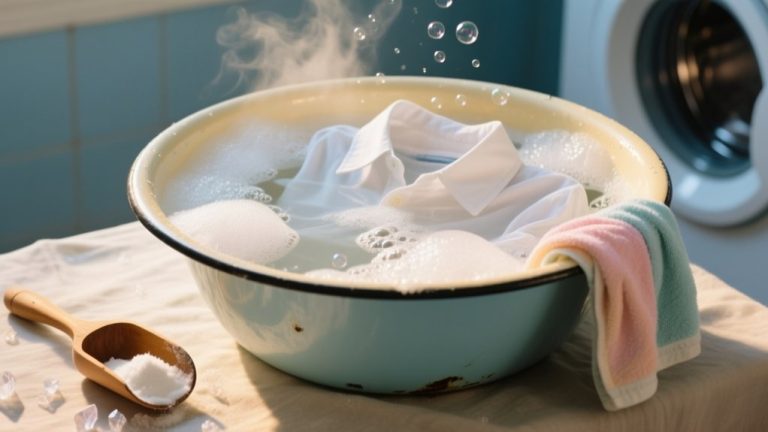
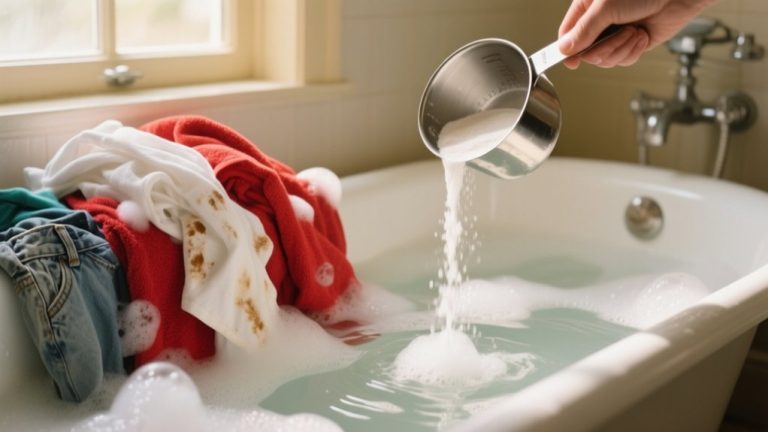
Thanks to its alkaline nature, borax breaks down those stubborn acidic smells in your laundry. Just add half a cup to your wash or soak smelly items first in a borax solution.
It boosts detergent power and softens water, improving cleaning. Just remember to handle it carefully. It’s effective but not something to leave where pets or kids can reach.
Is Borax Effective in Cold Water Washing?
Borax can be effective in cold water washing, but its performance depends on your water quality and how you use it.
It works best when dissolved in warm water first, helping activate its alkaline properties that neutralize stains and odors.
In softer water, you’ll see better results, while hard water may reduce its effectiveness.
Conclusion
Borax might seem like a simple laundry booster, turning your wash into a fresh, bright stream, but it carries risks beneath its clean promise. While science supports its effectiveness and generally safe use, you should handle it cautiously to avoid skin or respiratory irritation.
If you’re unsure or face persistent issues, it’s wise to skip borax and consult a professional. Balancing benefits with safety guarantees your laundry routine stays both effective and responsible.