How To Clean Dry Battery Acid – Safe Guide
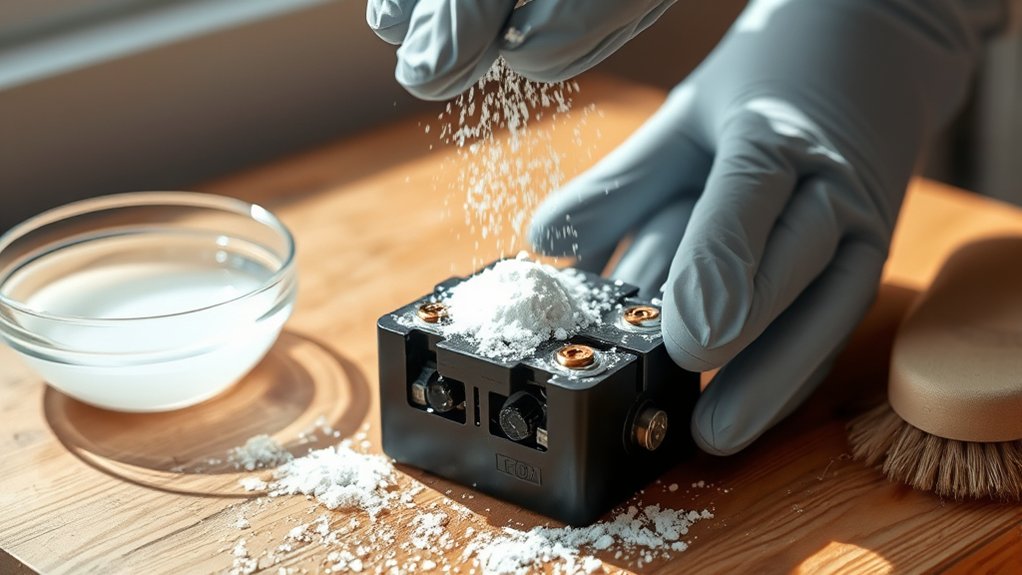
You should always wear chemical-resistant gloves and safety goggles before handling dry battery acid. Carefully remove batteries using insulated tools, disconnecting the negative terminal first. Neutralize acid residues with a baking soda paste applied via cotton swabs, then wipe away corrosion completely.
Make sure to thoroughly dry and inspect the device for damage before inserting new batteries. Proper disposal and prevention help safeguard your device and health. There are additional essential steps to ensure safe, effective cleaning and maintenance.
Just take your time with each step, and don’t rush the process to keep everything safe and working well.
Stay Safe: Wear Gloves and Eye Protection
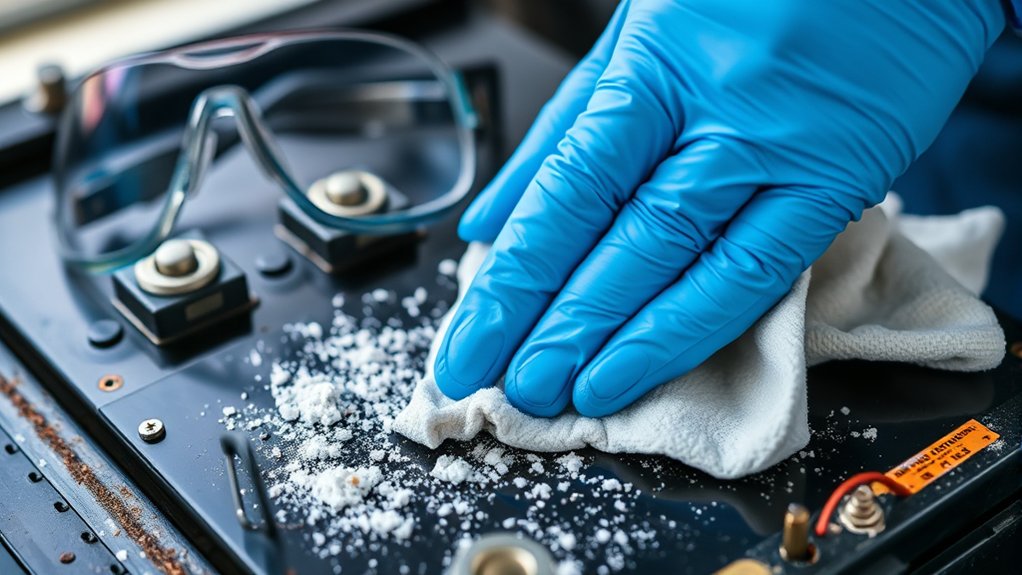
How should you protect yourself when cleaning dry battery acid? Always wear chemical-resistant gloves and eye protection to guarantee your safety. Gloves made of nitrile or rubber provide effective barriers against corrosive battery acid and cleaning agents, preventing skin burns.
Equally important, safety goggles shield your eyes from harmful splashes and fumes that can cause severe damage or vision loss. Make sure your gloves fit snugly without compromising dexterity, and confirm your goggles fully cover your eyes.
Working in a well-ventilated area further reduces inhalation risks from acidic fumes. Neglecting proper protective gear increases the risk of chemical injuries.
How to Safely Remove Batteries With Battery Acid Buildup
Before you start, make sure you’re wearing gloves and safety goggles to protect yourself from any acid exposure. It’s really important to keep your skin and eyes safe.
Next, carefully remove the corroded batteries. Try not to touch the terminals or let any acid spill out. Take your time with this step to avoid any accidents.
Handle the batteries gently and use proper techniques so you don’t cause any more damage or hurt yourself. Safety first!
Protective Gear Essentials
Wearing at least two essential pieces of protective gear, rubber gloves and safety goggles, will shield your skin and eyes from harmful battery acid during removal. These safety precautions are critical to prevent chemical burns and irritation.
Always choose gloves made of acid-resistant material and goggles that provide a secure seal around your eyes.
Make sure your workspace is well-ventilated to avoid inhaling hazardous fumes.
Before handling, power down the device and disconnect the battery to eliminate electrical risks.
Use insulated tools to minimize sparks.
After removal, handle corroded batteries carefully, following local regulations for hazardous waste disposal to protect both yourself and the environment.
Prioritizing protective gear and sticking to safety precautions ensures a controlled, safe process when dealing with battery acid buildup.
Battery Removal Techniques
Once you’ve equipped yourself with proper protective gear and guaranteed your workspace is safe, the next step involves carefully removing batteries affected by acid buildup. Proper battery removal is essential to avoid spreading corrosion and guarantee safety.
First, turn off and unplug the device to eliminate electrical hazards before starting.
Use a non-metallic tool to gently pry out the batteries. This helps minimize damage and prevents short circuits.
Make sure to remove batteries in a well-ventilated area. Place them on a non-reactive surface to contain any leakage.
Then, dispose of corroded batteries following local hazardous waste guidelines to protect the environment.
Following these steps guarantees you handle batteries with corrosion responsibly while maintaining safety and preparing for the next cleaning phase.
Handling Corroded Batteries
Although corroded batteries pose risks, you can safely remove them by following strict precautions. First, always wear gloves and safety goggles to protect against acid exposure. Disconnect the negative battery terminal before the positive to avoid sparks or shorts.
Use a plastic or nylon tool to carefully pry out corroded batteries, preventing damage to battery terminals or device components. Before removal, apply a baking soda paste around the battery area to neutralize acid residues. This step reduces the risk of chemical burns and corrosion spread.
After extraction, clean the terminals thoroughly and make sure the workspace is free from acid traces. Finally, arrange for the proper disposal of corroded batteries at designated recycling centers to prevent environmental contamination and comply with safety regulations.
Get the Materials You Need to Clean Battery Acid
Before you start cleaning dry battery acid, it’s important to gather all the materials you’ll need. Things like baking soda, cotton swabs, gloves, and safety goggles are essential.
You’ll want to mix baking soda with water to safely neutralize the acid.
Also, have some paper towels or microfiber cloths ready for the cleanup.
Oh, and make sure your workspace is well-ventilated so you don’t end up breathing in any harmful fumes while you’re working.
Essential Cleaning Materials
What materials do you need to safely clean dry battery acid? To address battery corrosion effectively, gather these essential cleaning materials:
- Baking soda. It neutralizes acidic residue and helps prevent further damage.
- Gloves. These protect your skin from corrosive substances.
- Cotton swabs. They allow precise application and help you reach tight spots.
- Water. You’ll use this to mix with baking soda and form a paste for controlled cleaning.
Use small containers to prepare the baking soda paste. This helps ensure you apply it precisely on the affected areas.
While gloves shield your hands, remember to handle all materials carefully to avoid contact with acid residues. These tools are the foundation for safe and effective battery acid cleanup. They help minimize risk and preserve surfaces from further corrosion.
Safety Gear Requirements
When cleaning dry battery acid, you must wear safety goggles or protective glasses to guard your eyes against splashes or debris. Furthermore, use protective gloves made of chemical-resistant materials like rubber or nitrile to prevent skin contact with corrosive substances.
Always work in a well-ventilated area or outdoors to avoid inhaling harmful fumes released during cleanup.
Before you begin, gather all necessary materials and keep a small container of water close by to rinse tools and dilute any acid spills promptly.
Wearing the correct safety gear ensures you minimize exposure risks and handle battery acid safely.
Prioritizing these precautions reduces the chance of injury and contamination while effectively managing hazardous residues. It’s really about keeping yourself safe and making the cleanup process as smooth as possible.
Neutralize Battery Acid With Baking Soda or Vinegar
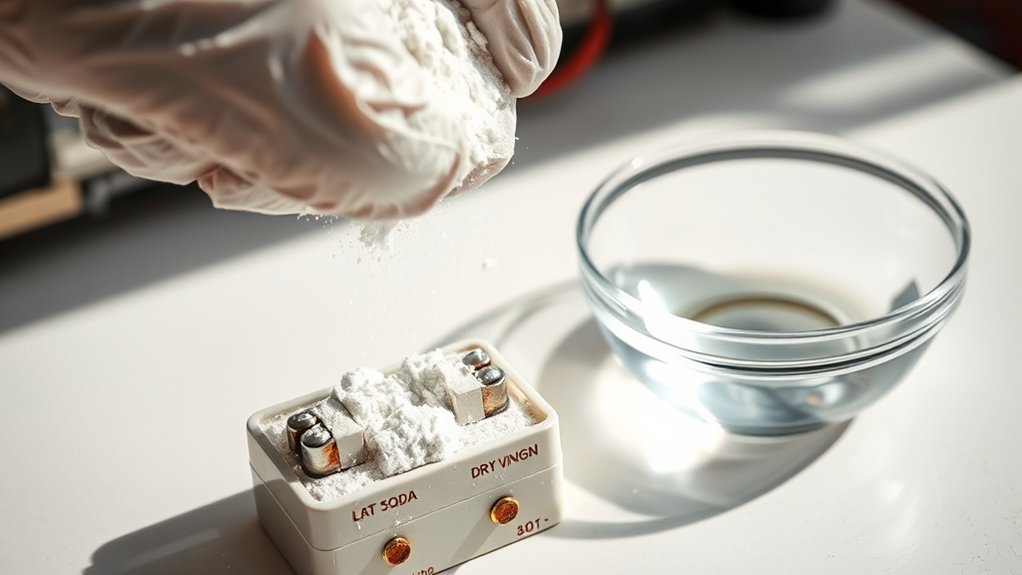
Although battery acid is highly corrosive, you can safely counteract it using common household substances like baking soda or vinegar.
To neutralize battery acid effectively, follow these steps:
- Mix baking soda with water to form a paste, or use vinegar directly to address the corrosion.
- Apply the baking soda paste or vinegar with a cotton swab to precisely target the battery acid residue.
- Allow the reaction to neutralize the acid; baking soda produces carbon dioxide gas, while vinegar balances alkaline discharge.
- After neutralization, thoroughly rinse the area with water to remove any residual substances, preventing further corrosion.
Using baking soda or vinegar cautiously ensures you neutralize battery acid safely while minimizing damage from corrosion.
It’s a simple and effective way to handle battery acid without causing more harm.
Clean and Wipe Away All Corrosion Residue
After neutralizing the battery acid, you need to carefully clean and wipe away all corrosion residue to protect the battery terminals and contacts.
Use a damp cotton swab or cloth dipped in water or a baking soda paste to gently remove white or blue powdery corrosion from the battery terminals. Make certain you clean all crevices and surfaces thoroughly, leaving no debris behind.
For stubborn corrosion, apply a small amount of vinegar with a cotton swab before wiping the area with water.
After cleaning, use a dry cloth or paper towel to completely dry the terminals, preventing further corrosion. Repeat this cleaning process as necessary until all corrosion residue is fully removed.
This way, you guarantee the battery terminals are clean, dry, and safe for use. Taking your time here really pays off!
Dry and Inspect Your Device Before Replacing Batteries
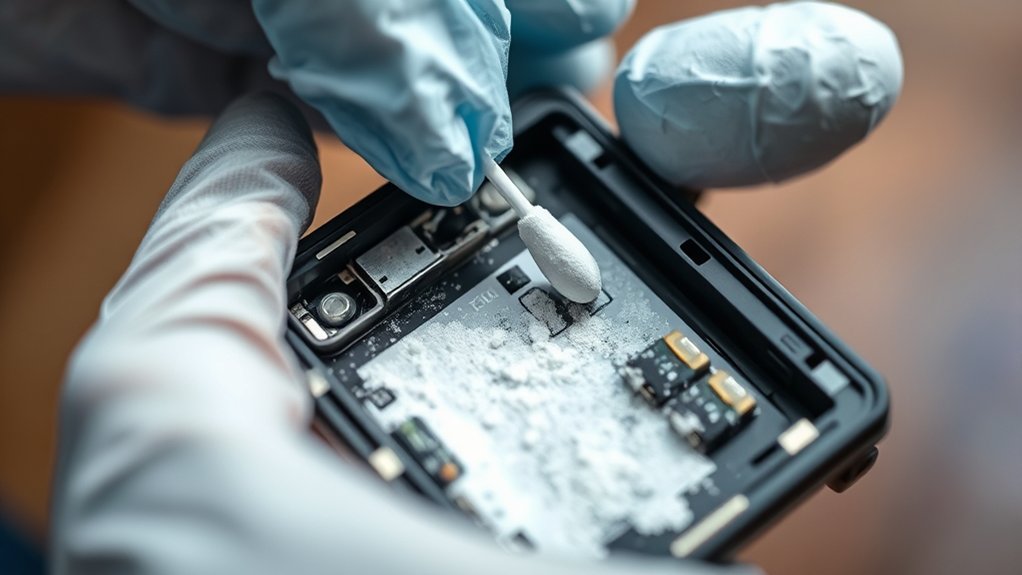
Before you replace the batteries, make sure to turn off and unplug the device to eliminate any risk of electrical shock.
Next, carefully dry and inspect your device to guarantee proper function and safety.
First, check the battery compartment for any visible corrosion or acid residue. Use a dry cloth or brush to clean away any remaining corrosion from battery contacts.
Make sure the compartment and surrounding areas are completely dry because moisture can cause short circuits.
Also, take a look at the device housing for cracks or leaks that might indicate internal acid damage.
Following these steps helps maintain device integrity and prevents battery malfunction.
Only after thorough drying and inspection should you insert fresh batteries to ensure safe, reliable operation.
Prevent Battery Acid Damage With Proper Care
Once you’ve dried and inspected your device, focus on preventing battery acid damage through proper care. Regularly check battery terminals for signs of battery corrosion.
After drying and inspecting, regularly check battery terminals to prevent acid damage through proper care.
Clean the corrosion promptly using a baking soda and water paste to neutralize dry acid safely.
Always remove battery cells from devices that remain unused for extended periods. This helps prevent acid from drying out and causing further corrosion.
Store batteries in a cool, dry environment to minimize the risk of acid leakage and damage.
By doing routine maintenance like inspecting, cleaning, and proper storage, you can effectively prevent battery acid damage.
This will extend your device’s lifespan and keep it working reliably. Staying consistent and using the right cleaning agents are key to avoiding irreversible harm from battery corrosion.
Frequently Asked Questions
Can Battery Acid Cause Long-Term Damage to Electronics?
Yes, battery acid can cause long-term damage to electronics if you don’t address it promptly. It corrodes metal contacts and circuit boards, leading to electrical shorts and component failure.
Even dried acid residues can continue reacting, accelerating deterioration.
You need to carefully neutralize and clean the acid to prevent persistent corrosion and keep your device working properly. Ignoring it could mean permanent damage and reduced performance over time.
How Do I Dispose of Batteries With Acid Safely?
You should never toss batteries with acid into regular trash. Instead, take them to designated recycling centers or hazardous waste facilities equipped to handle toxic materials.
Always wear protective gloves and eye protection when handling damaged batteries.
Check your local regulations, as disposal rules vary by location and battery type. Proper disposal prevents environmental contamination and fire hazards.
It also ensures safe handling of the harmful substances contained in the batteries.
What Are the Signs of Battery Acid Leakage?
You’ll notice battery acid leakage by spotting a white or bluish powdery residue near the terminals. Corrosion appears as crusty, flaky patches in white, green, or blue shades.
You might smell a sour, rotten odor around the battery area.
Check for loosened or discolored metal contacts.
Also, swollen or bulging batteries indicate internal damage and possible leakage.
Always handle these signs cautiously to avoid chemical exposure or injury.
Can Expired Batteries Increase the Risk of Acid Leaks?
Yes, expired batteries do increase the risk of acid leaks. Over time, their internal chemical reactions degrade, causing seals to weaken and allowing acid to escape.
You should handle them cautiously since leaks can corrode devices and surfaces.
It’s wise to replace batteries before they expire to minimize these risks. Regular inspection helps you catch potential leaks early, preventing damage and ensuring safety when using battery-powered equipment.
Just keep an eye on them, and you’ll avoid trouble down the line.
Is It Safe to Reuse Batteries After Cleaning Acid Residue?
It’s not safe to reuse batteries after cleaning acid residue because internal damage often remains despite surface cleaning.
You risk reduced performance, leaks, or short circuits due to weakened seals and corrosion.
Even if the acid feels neutralized, the chemical composition inside usually deteriorates. So, it’s better not to take the chance.
Instead, you should properly dispose of or recycle these batteries to avoid safety hazards.
This way, you can guarantee reliable operation with new, undamaged ones.
Conclusion
Now that you know how to safely clean dry battery acid, why risk damage or injury by ignoring proper precautions? Always wear gloves and eye protection. Neutralize acid carefully, and thoroughly clean corrosion to protect your device.
Taking these precise steps guarantees safety and extends your device’s life. Don’t forget to inspect and dry everything before inserting new batteries. With proper care, you can prevent future acid buildup and keep your gadgets running smoothly.