Can You Dry Clean A Stuffed Animal – What To Know
You can dry clean a stuffed animal if its care label allows it, but you need to prepare it by removing batteries and loose parts first. Dry cleaning uses solvents that may harm delicate fabrics, glued sections, or electronic components, so it’s important to assess risks beforehand. Always communicate any special concerns to the cleaner.
After cleaning, check for damage or odors. Understanding these basics helps guarantee safe care. Explore further to learn how to protect your plush toy properly.
Is Dry Cleaning Safe for Stuffed Animals?
Wondering if dry cleaning is safe for your stuffed animal? It can be, but you need to check the care label first. If the label says dry cleaning is okay, especially for delicate fabrics or intricate designs, you’re generally good to go.
Dry cleaning uses solvents instead of water, which helps avoid mold, mildew, or water damage. That’s definitely a plus for plush toys.
Dry cleaning’s use of solvents prevents mold, mildew, and water damage—great benefits for cleaning plush toys safely.
However, if your stuffed animal has glued parts or sensitive materials, dry cleaning might cause harm. Always follow the manufacturer’s instructions and consider a professional assessment before you proceed.
This way, you make sure dry cleaning won’t damage your toy’s condition or durability.
Taking these steps helps you keep your stuffed animal safe while cleaning it effectively.
What Risks Does Dry Cleaning Pose to Stuffed Animals?
You should know that dry cleaning can actually harm your stuffed animal’s fabric, especially if it’s delicate or brightly colored. It’s kind of risky because the chemicals used might be too harsh.
And if your stuffed animal has any electronic parts, dry cleaning could damage them beyond repair, which would be a real bummer.
On top of that, the chemical solvents might leave behind some residue that stiffens the plush fur or even causes it to deteriorate over time.
Potential Fabric Damage
Although dry cleaning might seem like a convenient way to clean your stuffed animal, it can pose several risks to its fabric and structure. Dry cleaning solvents often weaken delicate fabrics or glue, causing fabric damage that’s hard to repair. Materials like silk or velvet, common in some plush toys, are especially sensitive to these chemicals and may discolor or deteriorate.
The agitation during dry cleaning can also split seams or fray fibers, particularly in older or fragile stuffed animals. Plus, any moisture left behind can promote mold or mildew growth, which damages the fabric even more over time.
Electronic Component Risks
Beyond fabric concerns, dry cleaning can pose serious risks to any electronic components inside stuffed animals. If your plush toy has sound modules or heartbeat mechanisms, dry cleaning solvents may cause corrosion or malfunctions. Moisture can seep into these delicate parts, leading to short circuits.
Here’s what you need to take into account:
- Electronic components might be sealed but still have vulnerable connections.
- Batteries inside can get damaged or leak during dry cleaning.
- Chemical solvents can permanently harm sensitive circuitry.
- Improper dry cleaning can void warranties on electronic features.
Always get a professional assessment before proceeding because dry cleaning isn’t always safe for stuffed animals with electronic components. You risk damaging their special functions beyond repair.
Solvent Residue Concerns
When dry cleaning stuffed animals, residual solvents can linger on their surfaces if not thoroughly removed. This can pose risks like skin irritation or allergic reactions.
Solvent residues from dry cleaning chemicals such as perchloroethylene, which is a possible carcinogen, might stay trapped in delicate fabrics or glued parts. Over time, this can increase the risk of damage.
These residues can also cause unpleasant odors and expose children to harmful chemicals during play.
Professional cleaners often use low-residue, eco-friendly solvents to help reduce these risks. But complete removal isn’t always guaranteed.
You should weigh these solvent residue concerns carefully before choosing dry cleaning for your stuffed animal. This is especially important if it’s a cherished toy or has sensitive materials that could deteriorate or cause health issues because of leftover dry cleaning chemicals.
How Do You Know If Your Stuffed Animal Can Be Dry Cleaned?
First, take a look at the care label on your stuffed animal to see if there are any dry cleaning instructions or warnings. It’s usually the best place to start.
Then, think about the materials your toy is made from. Are there any delicate fabrics or glued parts? Those mightn’t react well to dry cleaning solvents.
Also, don’t forget to check if your stuffed animal has any electronic components or special stuffing—those could get damaged during the dry cleaning process.
Check Care Label
A essential step before dry cleaning your stuffed animal is to check its care label for specific instructions. This label guides you on whether dry cleaning is safe and how to proceed.
Look for a circle symbol. An empty circle means dry cleaning is allowed, while a crossed-out circle means it’s not.
If the label says “Dry Clean Only,” dry cleaning is safe. But be sure to check for any specific solvent restrictions.
Labels stating “Do Not Dry Clean” warn against the process, especially for delicate fabrics or glued parts.
When you’re unsure, contact the manufacturer or a professional cleaner to confirm if dry cleaning suits your stuffed animal.
Always rely on the care label to protect your stuffed animal during dry cleaning.
Assess Material Delicacy
How can you tell if your stuffed animal’s material can handle dry cleaning? Start by checking the care label for any dry cleaning instructions or symbols.
Delicate fabrics like silk, lace, or those with glued components usually aren’t suitable for dry cleaning because the solvents can damage them.
If your toy features intricate embroidery or detailed stitching, it’s best to get a professional opinion before proceeding.
To be safe, try a small patch test on an inconspicuous area to see how the fabric reacts to dry cleaning solvents.
Avoid dry cleaning if the material shows any discoloration or texture change.
By carefully evaluating the material’s delicacy and following the care label, you can decide if dry cleaning is a safe option for your stuffed animal.
It’s always better to be cautious so your toy stays in great shape!
Evaluate Toy Components
Before deciding on dry cleaning, you’ll want to carefully evaluate your stuffed animal’s components to guarantee they can withstand the process. Not all toys are suitable for solvent-based cleaning, and improper care can cause damage. Here’s how to check:
- Examine the care label for any dry cleaning instructions or warnings.
- Avoid dry cleaning if the toy has glued parts, delicate fabrics, or electronic components.
- Inspect for loose buttons, embellishments, or other attachments that could detach during cleaning.
- Confirm that the fabric is compatible with solvent-based cleaning, especially if it’s specialty material.
If you’re uncertain or the toy holds sentimental value, it’s a good idea to consult a professional cleaner. They can help protect your stuffed animal’s components during cleaning.
When Should You Avoid Dry Cleaning and Choose Alternatives?
Since dry cleaning uses strong solvents, you should avoid this method for stuffed animals with glued parts, delicate fabrics, or electronic components. These materials can easily get damaged during the process.
If the care label forbids dry cleaning or the toy has fragile embroidery, it’s better to go for hand washing or spot cleaning instead. Dry cleaning can also cause colors to fade or bleed, which is especially true for vintage plush toys.
| Risk Factor | Why Avoid Dry Cleaning? |
|---|---|
| Glued parts | Solvents weaken adhesives |
| Delicate fabrics | Chemicals damage fibers |
| Electronic components | Solvents harm mechanics and circuits |
Choosing alternatives like these helps keep your stuffed animal looking great and preserves its overall integrity.
How to Prepare Your Stuffed Animal Before Dry Cleaning
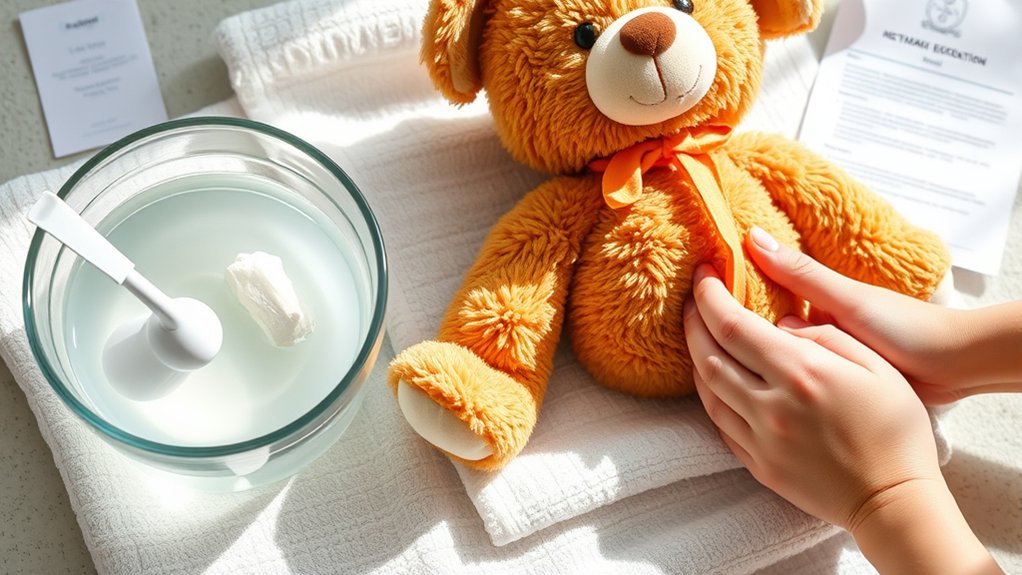
Before you take your stuffed animal to the dry cleaner, it’s a good idea to check its care label first. That way, you’ll know if there are any specific instructions or warnings to keep in mind.
Next, give your stuffed animal a careful once-over. Look for any loose parts or damage that might get worse during the cleaning process.
If you spot any removable components like buttons or embellishments, make sure to either secure them tightly or take them off altogether. This will help keep everything safe while it’s being cleaned.
Check Care Label
How can you be sure that dry cleaning is safe for your stuffed animal? The first step is to check the care label carefully. This label holds essential clues about whether dry cleaning is appropriate and how to proceed.
Here’s what you should do:
- Identify dry cleaning symbols, usually a circle with a letter inside, indicating it’s safe.
- Avoid dry cleaning if the label explicitly says “do not dry clean” to prevent damage.
- Note any specified solvents or methods recommended for professional cleaners.
- Always follow the manufacturer’s instructions exactly to preserve your stuffed animal’s fabric and components.
Inspect For Damage
Why should you inspect your stuffed animal carefully before dry cleaning? Inspecting helps you spot any damage like loose seams, tears, or worn areas that could get worse during cleaning. It’s a good idea to check for stains or heavy dirt spots too, so the dry cleaner knows exactly what needs extra attention.
Take a close look at the toy for buttons, embellishments, or removable parts that might fall off or get damaged. Securing or removing those will be covered later. Also, make sure to remove or protect any electronic components or batteries to avoid malfunctions.
Secure Removable Parts
When preparing your stuffed animal for dry cleaning, you’ll want to remove any detachable electronics, batteries, or sound modules to prevent damage. Handling removable parts carefully ensures your toy stays intact and safe.
Here’s how to secure removable parts effectively: remove all electronics and batteries to avoid water or chemical damage. Secure or detach loose buttons, embellishments, or accessories to prevent loss. Check seams and stitching, gently tightening any loose threads to avoid tearing.
Place the stuffed animal in a protective bag to minimize agitation and protect delicate fabrics during cleaning. Following these steps helps preserve your stuffed animal’s condition.
Always consult manufacturer instructions or a professional cleaner if you’re unsure about handling removable parts safely.
What Should You Tell Your Dry Cleaner About Your Stuffed Animal?
Before handing your stuffed animal over to the dry cleaner, make sure you tell them about any loose parts, buttons, or embellishments that might get damaged during cleaning.
It’s also important to point out any specific stains or spots that need special attention.
Check the care label to see if dry cleaning is even a good idea, and share any instructions from the manufacturer.
Don’t forget to remove or secure any electronic components, sound modules, or removable pieces ahead of time.
Also, be clear about the material and fabric type of your stuffed animal. This helps the dry cleaner pick the right solvents and cleaning methods.
Giving them all this info makes sure your stuffed animal gets the best care without any damage. It keeps the cleaning process safer and more effective for your special toy.
How Does the Dry Cleaning Process Work?
Although dry cleaning doesn’t use water, it effectively removes dirt and oils from your stuffed animal by using specialized solvents designed to clean gently. The dry cleaning process relies on solvent-based solutions that dissolve grime without soaking the fabric, which helps protect delicate materials.
Here’s how it works: Professionals carefully inspect your stuffed animal first to choose the safest method. Then, they target stains with treatments that tackle spots without damaging the toy.
Next, controlled agitation with solvent-based solutions loosens dirt and oils. Finally, thorough drying removes any solvent residue, preserving the softness and shape of your stuffed animal.
This method cuts down moisture-related risks and keeps your stuffed animal looking fresh and intact. You can trust dry cleaning to clean gently while taking good care of your cherished toy’s delicate features.
How to Check Your Stuffed Animal After Dry Cleaning
Since dry cleaning can sometimes affect delicate materials, you should carefully inspect your stuffed animal right after the process. Check for any damage like loose seams, torn fabric, or fabric shrinkage. Also, take a close look at buttons, electronics, and embellishments to make sure they’re intact and working properly.
Be sure to check for any lingering odors or stains that might need extra cleaning. It’s important that the plush is completely dry and has regained its shape before you handle it any further.
| What to Check | What to Inspect |
|---|---|
| Loose seams | Torn fabric |
| Electronics/buttons | Embellishments |
| Odors | Stains |
| Dryness | Shape restoration |
| Fabric shrinkage | Color fading |
How Much Does Dry Cleaning a Stuffed Animal Cost?
Dry cleaning a stuffed animal typically costs between $10 and $50, depending on its size and complexity. When you consider this cost, keep these factors in mind:
Dry cleaning stuffed animals usually costs $10 to $50, depending on size and care needed.
- Larger stuffed animals usually cost more because they need extra care.
- Delicate or vintage plush toys require special handling, which can increase the price.
- Some cleaners charge a flat rate, while others base the cost on size or weight.
- Extra fees might apply if stain removal or special treatments are needed.
Knowing these details helps you figure out if professional dry cleaning fits your budget.
For valuable or sentimental stuffed animals, the cost often feels worth it. You get thorough cleaning and preservation without risking damage.
How Professional Dry Cleaners Handle Stuffed Animals
When you bring a stuffed animal to a professional cleaner, they first check out its fabric, embellishments, and care labels. This helps them decide if dry cleaning is really the best way to go.
They use gentle, solvent-based cleaning techniques that get rid of dirt and odors without soaking the plush toy in water. That way, there’s less risk of damage.
This method protects delicate fabrics, embroidery, and glued parts way better than traditional washing. Professionals handle each plush toy with care throughout the process to avoid tearing, color bleeding, or losing its shape.
After cleaning, they give the stuffed animal a thorough once-over to make sure it’s clean, undamaged, and properly dried before giving it back to you.
This careful approach keeps your plush toy in great shape while getting it effectively cleaned through dry cleaning.
Frequently Asked Questions
Can Dry Cleaning Remove Odors From Stuffed Animals?
Yes, dry cleaning can remove odors from stuffed animals effectively. When you choose dry cleaning, solvents neutralize tough smells like smoke, pet dander, or mildew without soaking the fabric.
This method targets deep-set odors that water cleaning might miss, leaving your plush toy smelling fresh and clean.
Plus, dry cleaning reduces musty scents trapped in fibers, so you’ll restore your stuffed animal’s scent without risking damage from water or harsh agitation. It’s a great way to freshen up your favorite plush friend without any hassle.
How Often Can You Safely Dry Clean a Stuffed Animal?
You can safely dry clean a stuffed animal about once every 6 to 12 months, depending on how often it’s used and its condition. Don’t overdo it, since frequent dry cleaning can weaken fabrics and damage glued parts.
Only dry clean when your stuffed animal looks dirty or smells bad.
Always check the care label or ask a professional cleaner to make sure you’re treating your toy properly and keeping it in good shape. It’s better to be cautious than sorry when it comes to preserving your stuffed animal’s quality.
Are There Eco-Friendly Dry Cleaning Options for Stuffed Animals?
You might think dry cleaning stuffed animals harms the environment, but eco-friendly options do exist. You can choose cleaners using biodegradable solvents like silicone-based agents or hydrocarbon. These are gentle and non-toxic, which is great for your plush toys.
Some places even offer wet cleaning, using water and mild detergents to reduce chemical waste. Just make sure your dry cleaner is certified for green practices.
It’s also important they confirm their methods suit delicate stuffed animals.
That way, you keep your toy safe and stay eco-conscious at the same time.
Can Dry Cleaning Affect a Stuffed Animal’s Color or Texture?
Yes, dry cleaning can affect your stuffed animal’s color and texture. The solvents used may cause colors to fade or bleed, especially if the dyes aren’t stable.
The process can also make plush fabrics feel rougher or brittle.
Delicate embroidered details might lose their softness or get damaged. It’s best to have a professional assess your toy beforehand to avoid unwanted changes and preserve its original look and feel.
Taking these steps can really help keep your stuffed animal looking its best.
What Alternatives Exist if Dry Cleaning Is Not Recommended?
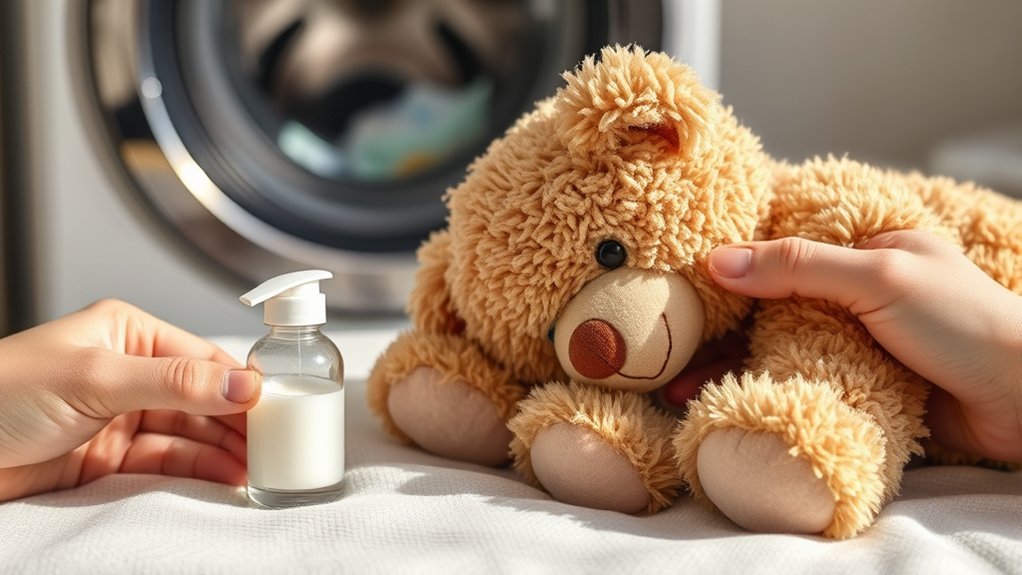
When dry cleaning isn’t an option, think of your stuffed animal as a delicate flower needing gentle care. You can spot clean it with a damp cloth and mild detergent or hand wash it using cold water and gentle soap.
Afterward, air dry it in a well-ventilated space to preserve its shape and prevent mold.
For toys with electronics or glued parts, stick to surface cleaning or use specialized plush cleaning sprays to freshen them safely.
Conclusion
You might be surprised to learn that nearly 70% of stuffed animals can safely undergo dry cleaning when properly assessed and prepped. However, knowing when to prevent it is just as important to protect their fabric and stuffing.
By understanding the risks, checking care labels, and choosing the right cleaning method, you’ll keep your cherished stuffed animal fresh and intact. Always inspect it carefully after cleaning to ensure it’s in perfect shape.