How To Clean Dry Paint Off Floor – Easy Guide
To clean dry paint off your floor, first figure out what type of paint it is and what kind of finish your floor has. This helps you avoid any damage while cleaning.
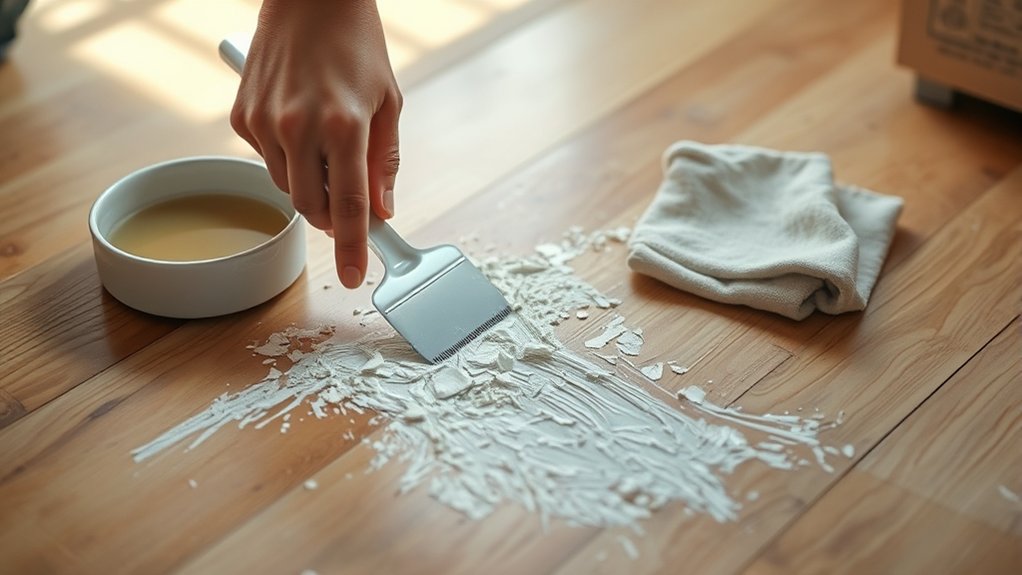
Start by gently scraping any loose spots with a plastic scraper. If the paint is stubborn, try softening it with a bit of heat or mild solvents like rubbing alcohol.
For latex paint, warm water and mild soap usually do the trick. If it’s oil-based paint, you might need stronger solvents.
Once the paint is gone, clean the area thoroughly. Don’t forget to restore your floor’s protective finish to keep it looking great.
Follow these steps, and you’ll quickly get the hang of removing paint safely and effectively.
How To Identify The Paint On Your Hardwood Floor
Before you start cleaning, you need to identify the type of paint on your hardwood floor. First, check the paint can label or container to see if it’s water-based or oil-based. If that’s unavailable, perform a test on a small, hidden spot.
Use a cloth with warm water to see if the paint softens or lifts easily. This usually means it’s water-based. If that doesn’t work, try rubbing alcohol or acetone on a cotton ball. If the paint dissolves, it’s oil-based.
Also, observe the paint’s texture. Water-based paints are thinner and less glossy, while dried latex or acrylic paint feels rubbery or plastic-like. These steps help you identify the paint type accurately before proceeding with cleaning.
Check Your Hardwood Floor’s Finish Before You Start
Before you start removing paint, it’s a good idea to figure out what kind of finish your hardwood floor has. Is it polyurethane, wax, or shellac? Each type reacts differently to solvents and scrapers because they all have different levels of durability.
Knowing this will help you pick the right cleaning method and avoid damaging your floor.
Identify Floor Finish
Since different floor finishes react uniquely to cleaning agents, you need to identify your hardwood floor’s finish before tackling dry paint removal. Start by checking any manufacturer labels or documentation for clues about the floor finish.
Next, examine the surface’s appearance—is it glossy, matte, or satin? This helps narrow down whether it’s polyurethane, wax, or shellac.
To confirm, perform a small test spot with water or a mild solvent on an inconspicuous area. Watch the surface reaction carefully; if it dulls or softens, adjust your cleaning method accordingly.
Avoid harsh chemicals or abrasive tools until you’re sure of the finish type to guarantee damage prevention.
Identifying the floor finish precisely sets the stage for safe and effective dry paint removal. Taking these steps first will save you time and keep your floors looking great.
Assess Finish Durability
Knowing your floor’s finish type sets the foundation for evaluating its durability. This directly influences how aggressive your cleaning approach can be.
First, identify if your hardwood has a polyurethane, wax, or shellac finish by checking the manufacturer’s label or testing a hidden spot with water or rubbing alcohol.
Polyurethane finishes offer high durability and tolerate chemical removers better, while wax and shellac finishes are delicate and prone to damage.
To assess durability, start with a gentle test using warm soapy water on a small area and observe how the finish reacts.
If it holds up, you can cautiously proceed with stronger chemical methods.
Understanding your floor’s finish and its durability helps you select the safest method to remove dry paint without compromising the surface.
Gently Scrape Off Dry Paint Without Damaging Your Floor
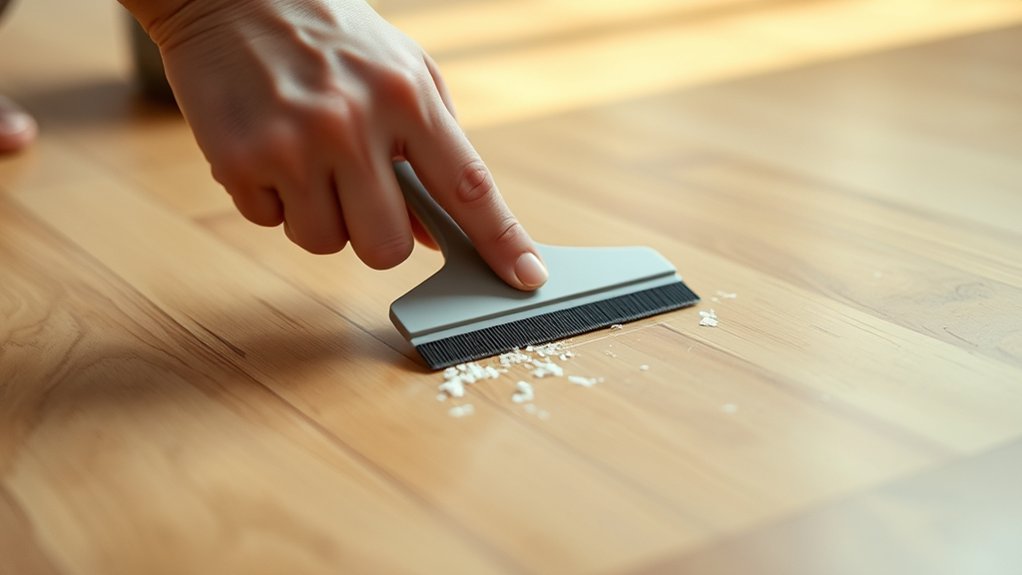
You’ll want to grab a plastic putty knife or a nylon scraper and gently lift the dry paint without scratching your floor.
Take your time working around the edges so you don’t accidentally gouge the finish.
If you run into any stubborn spots, try applying some warm water or a mild cleaner to soften them up.
Just be sure to test your tools and any cleaning solutions on a hidden area first to make sure they won’t damage your floor.
Choosing Safe Scraping Tools
Although it may be tempting to reach for a metal scraper, choosing plastic or nylon tools will help you avoid scratching or gouging your hardwood floor. Start by selecting a plastic scraper designed for delicate surfaces.
Before you begin, test the scraper on an inconspicuous area to make sure it won’t damage the finish.
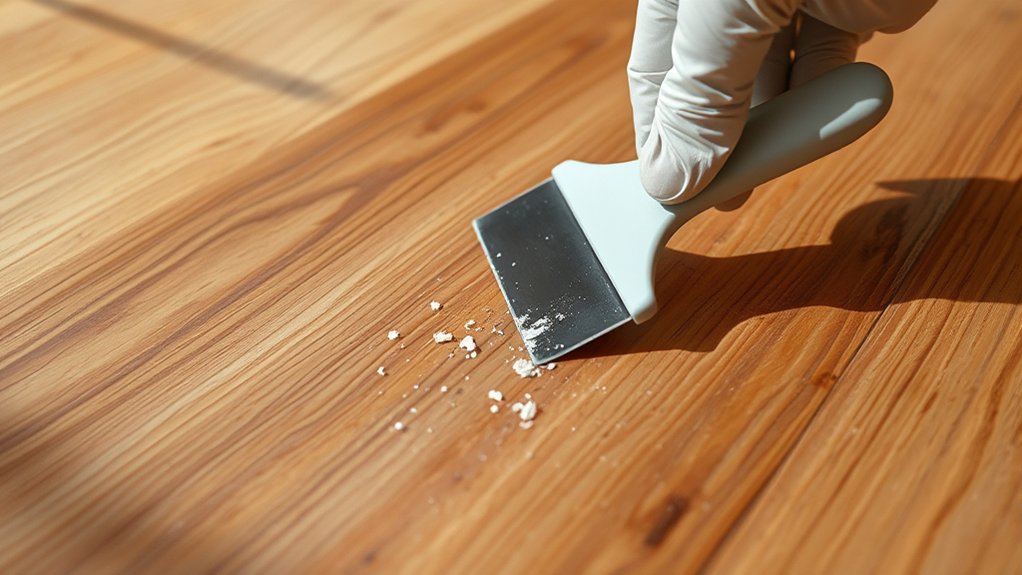
When scraping, hold the tool at about a 30-degree angle and apply gentle pressure to lift the dry paint. To reduce the force needed, consider softening paint with warm water or a mild solvent first.
Always wear protective gear, like gloves and eye protection, to stay safe.
Use a gentle, circular motion to minimize stress on the floor. This careful approach preserves your floor’s integrity while effectively removing dry paint. It’s worth taking your time here to avoid any damage.
Techniques To Avoid Damage
When gently scraping dry paint off your floor, using a plastic scraper or putty knife held at a shallow angle helps lift the paint without scratching the surface. Avoid metal tools and excessive pressure, as these can cause permanent damage to hardwood finishes.
Carefully test your scraping method on a hidden spot first to make sure it won’t harm the floor. Work slowly and gently, scraping small sections at a time to prevent gouging or tearing the wood.
If the paint is stubborn, soften it with warm water or a gentle solvent before scraping to make removal easier and safer.
Soften Tough Paint Spots With Heat Or Solvents
If dried paint resists scraping, applying gentle heat or a solvent can soften it for easier removal. Start by using a hair dryer on high for 10-20 seconds, keeping it a few inches above the paint to avoid damaging your floor’s finish.
Alternatively, apply a small amount of mineral spirits or rubbing alcohol to loosen the paint. Always test heat or solvents on a hidden spot first.
Once softened, gently scrape the paint using a plastic scraper to prevent scratches.
Follow these steps:
- Heat the paint area evenly without overheating the floor.
- Apply solvent sparingly and let it sit briefly.
- Use a plastic scraper to lift softened paint carefully.
This method reduces effort and protects your floor while removing tough paint spots.
Pick The Right Cleaner For Latex Or Oil-Based Paint
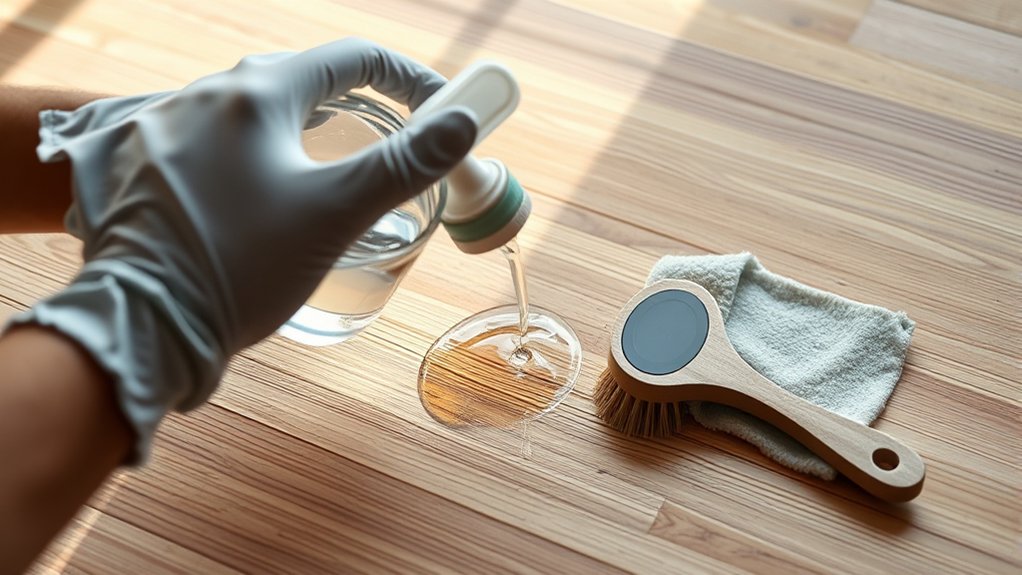
Two main types of paint, latex and oil-based, require different cleaning approaches, so choosing the right cleaner is vital for effective removal.
For latex paint, start with warm water and mild soap. Fresh stains respond well to a damp cloth, while dried paint may need gentle scraping.
When dealing with oil-based paint, you’ll need stronger chemical solvents like rubbing alcohol or a commercial paint remover. Before applying any cleaner, always test a small area to confirm it won’t damage your floor’s finish.
Work in a well-ventilated space and wear protective gear when using chemical solvents because they can be harsh.
Picking the right cleaner based on the paint type helps make removal easier and keeps your floor’s surface safe. It’s all about working smart to avoid any unnecessary damage.
Use Tub O’ Towels For A Quick Paint Cleanup
After choosing the right cleaner for your paint type, you can speed up the removal process with Tub O’ Towels. These wipes use Bond Buster™ Technology to break down dry paint effectively without harsh scrubbing.
To use Tub O’ Towels for quick paint cleanup on your floor, follow these steps: Grab a Tub O’ Towel and gently wipe over the dry paint spot. Let the textured, quilted material lift and remove the stain safely. Dispose of the used wipe and repeat if necessary for stubborn spots.
Tub O’ Towels work on hardwood, concrete, and tile, so they’re super versatile. They simplify the removal process, saving time and protecting your floor from damage during dry paint cleaning.
Restore And Protect Your Hardwood Floor
When restoring and protecting your hardwood floor, start by gently lifting dried paint with a plastic putty knife to avoid surface damage. If the paint resists, apply a small amount of rubbing alcohol or mineral spirits to soften it before scraping.
Use a hair dryer on low heat to reheat stubborn spots, making the paint easier to lift.
Always test any solvent on a hidden area first to make sure it won’t damage the floor’s finish. Once the paint is removed, clean the area thoroughly with a damp cloth to get rid of any residue.
To restore and protect your hardwood, consider applying a suitable protective finish or polish. This step won’t only bring back the floor’s shine but also help guard it against future damage.
Frequently Asked Questions
Can Dry Paint Damage Hardwood Floors Permanently?
Yes, dry paint can permanently damage hardwood floors if you don’t act quickly. The longer it sits, the more it bonds with the wood finish, making removal tougher.
Using harsh chemicals or scraping aggressively can scratch or gouge your floor, causing lasting harm. To avoid this, you’ll need to carefully use gentle methods as soon as you spot paint.
This way, you minimize the risk of permanent discoloration or damage. It’s all about catching it early and handling it with care.
How Long Should Paint Dry Before Removal Attempts?
You should wait at least 24 hours before trying to remove paint from your floor. This allows the paint to fully cure, which helps reduce smudging or spreading.
For latex paint, drying usually takes 1-2 hours, but curing takes longer. Oil-based paints need even more time, often 6-8 hours or more.
Always test by gently scraping a small spot to check the hardness.
Following these steps makes removal easier and cleaner without damaging your floor.
Are There Eco-Friendly Alternatives to Paint Removers?
Like a gentle breeze easing stubborn leaves away, you can use eco-friendly alternatives to paint removers. Try natural oils like olive or coconut oil to soften dried paint.
Baking soda mixed with water forms a mild abrasive paste that loosens stains without harsh chemicals.
White vinegar acts as a mild solvent for certain paints. You can also opt for biodegradable, plant-based paint strippers to reduce environmental impact while effectively cleaning your floor.
It’s all about choosing options that are kinder to the planet and still get the job done.
What Tools Are Safest for Scraping Delicate Floors?
You should use plastic or silicone scrapers with smooth, rounded edges to safely remove dried paint from delicate floors.
Avoid metal tools or abrasive materials like steel wool, as they can scratch or damage finishes.
Always test your scraper on a hidden spot first to make sure it won’t harm the surface.
Work gently and steadily, applying minimal pressure to lift paint without causing any marks or gouges on fragile flooring.
Taking it slow really helps protect those delicate floors while getting the job done.
Can Heat Damage Hardwood Floor Finishes?
Yes, heat can damage hardwood floor finishes if you’re not careful. Applying excessive heat breaks down polyurethane resins, causing dull or sticky surfaces.
Delicate finishes like wax or shellac risk peeling or melting under direct high heat.
To protect your floor, always use heat at a safe distance, limit exposure time, and test on a small hidden spot first.
This way, you minimize the chance of ruining your floor’s finish. Just a little caution goes a long way!
Conclusion
Just like an artist restoring a cherished masterpiece, you’ll carefully remove that dry paint without harming your hardwood floor’s natural beauty. By identifying the paint, choosing the right method, and using gentle techniques, you’ll bring your floor back to its original glory.
Remember, patience and the right tools turn a tough cleanup into a straightforward task. This way, you preserve your home’s charm for years to come.
You’ve got this. Your floor’s story isn’t over yet.