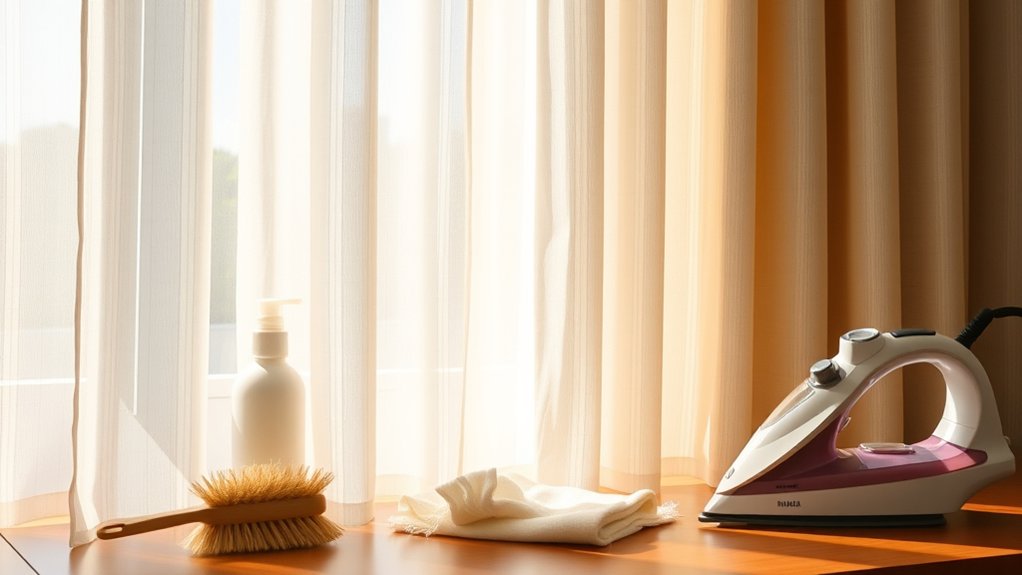
Can You Wash Dry Clean Only Curtains – Safe Guide
You can wash dry clean-only curtains at home, but only if you carefully check the care label first. It’s important to test a hidden area for colorfastness before you start. Use gentle hand-washing with mild detergent in cool water to keep them safe.
Avoid machine washing because it can cause shrinkage, distortion, or damage to any linings. When drying, hang them in the shade and don’t twist or tumble dry the curtains. This will help preserve their shape and fabric.
While these home methods can work, some fabrics really do need professional cleaning to maintain their quality and longevity. So, it’s worth exploring detailed precautions and care steps to handle your curtains safely and keep them looking great.
How Can You Tell If Curtains Are Truly Dry Clean Only?

How can you confidently determine if your curtains are truly dry clean only? First, examine the care label for explicit instructions. “Dry Clean Only” is a clear sign you should follow. Look for symbols on the label too.
A circle with a “P” or “F” means professional dry cleaning is needed, while a crossed-out circle means don’t dry clean. Also, think about the fabric type. Materials like silk, velvet, or special linings usually need dry cleaning.
You can check by doing a patch test: dab a hidden spot with water. If you see damage or color bleeding, dry cleaning is the way to go.
If your curtains don’t have a care label or it’s unclear, reach out to the manufacturer or retailer for advice.
Following these steps helps protect your curtains and keeps them looking great without risking costly damage.
What Happens If You Machine Wash Dry Clean-Only Curtains?
Why risk damaging your curtains by machine washing when they’re labeled dry clean only? Machine wash cycles aren’t designed for delicate fabrics like these, and that can lead to some serious fabric damage.
Here’s what can happen: shrinking and distortion. The agitation and water heat cause uneven shrinking and irreversible warping. Plus, the breakdown of adhesives and linings is a big problem. Water exposure compromises the structural components inside the curtains, causing deformation.
Color bleeding and texture loss are other issues. Improper washing strips dyes and damages the fabric’s integrity, dulling its appearance. Using unsuitable machine wash settings, like wool or heavy-duty cycles, only makes things worse.
In the end, machine washing dry clean-only curtains reduces their lifespan and messes with their look. So, to keep your curtains in good shape, avoid machine washing and stick to dry clean-only instructions.
How to Hand Wash Dry Clean-Only Curtains Safely
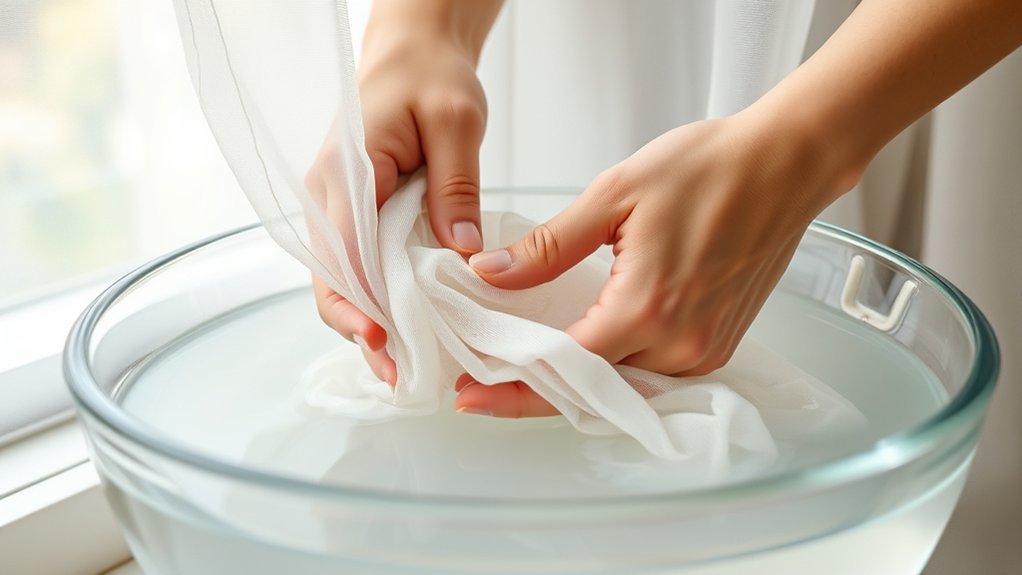
Although dry clean-only curtains require careful handling, you can safely hand wash them by following specific steps to prevent damage.
Begin by submerging the curtains in cool water mixed with a mild detergent formulated for delicate fabrics. Use gentle agitation to move the curtains through the water without wringing or twisting, which can distort the fabric.
For delicate areas, carefully clean using a soft cloth or sponge, avoiding excessive rubbing.
Rinse thoroughly with clean, cool water to eliminate all detergent residues, preventing stiffness.
After rinsing, gently press out excess water without wringing.
Finally, hang the curtains to air dry in a shaded area, away from direct sunlight. This helps ensure effective fabric care and maintains the integrity of the material throughout the process.
Should You Use Dry-Cleaning-at-Home Kits for Curtains?
Hand washing dry clean-only curtains offers a controlled way to maintain fabric integrity, but you might also consider dry-cleaning-at-home kits as an alternative. These kits can be useful, but you need to be careful, especially with delicate curtains.
Before using them, check the fabric care label and do a patch test to see if the color fades or the fabric gets damaged.
Always check the fabric care label and perform a patch test to ensure colorfastness and fabric safety.
Keep in mind that dry-cleaning-at-home kits use solvent-based agents that might harm linings or sensitive fibers. They often don’t remove deep stains or heavy dirt very well.
Also, using these kits could void warranties or cause irreversible damage.
If your curtains are valuable or really dirty, professional cleaning is usually the safest and most reliable choice. It helps preserve the fabric’s quality and makes sure they last longer.
How to Dry Dry Clean-Only Curtains Without Shrinking Them

When drying dry clean-only curtains, you need to avoid methods that expose the fabric to high heat or too much agitation. These can cause shrinkage and damage. Instead, gently press out the excess water between towels. Never wring the fabric.
Lay the curtains flat on a clean towel in their natural shape to air dry. Make sure the area is cool and well-ventilated, and keep them away from direct sunlight. Avoid using a tumble dryer completely because the heat will shrink delicate fabrics.
If you decide to hang them, use padded hangers and place them in a shaded, draft-free area. This helps prevent stretching. For removing wrinkles, it’s best to use a professional low-temperature steamer.
| Action | Recommendation |
|---|---|
| Remove Water | Press between towels |
| Drying Method | Air dry flat, avoid tumble dry |
| Location | Cool, shaded, well-ventilated |
| Hanging | Padded hanger, draft-free space |
This method keeps shrinkage to a minimum and protects your delicate curtains.
Easy Ways to Keep Dry Clean-Only Curtains Fresh Between Washes
To maintain the freshness of dry clean-only curtains between washes, you should implement routine care techniques that minimize dust and odors without compromising the fabric’s integrity. First, regularly vacuum with a brush attachment to remove dust and allergens effectively.
Maintain dry clean-only curtains’ freshness by routinely vacuuming with a brush attachment to remove dust and allergens.
Second, use steam cleaning or a handheld steamer to refresh curtains, eliminate wrinkles, and maintain fabric quality safely.
Third, spot clean stains immediately with a damp cloth and mild detergent to prevent buildup and odors. Furthermore, gently shake curtains outdoors every two weeks and ensure proper ventilation by airing curtains through open windows or fans.
These precise methods help you consistently refresh curtains, prolonging their lifespan and preserving their appearance without risking damage inherent in improper cleaning.
With these simple steps, you can keep your curtains looking great between professional cleanings. It’s all about a little regular care that won’t harm the fabric but keeps it fresh and inviting.
When Is It Best to Call a Professional for Curtain Cleaning?
If you’re not sure about the fabric of your curtains or how to clean them properly, it’s a good idea to call in a professional. This way, you can avoid accidentally causing any costly damage.
Delicate materials, like silk or velvet, really need expert care to keep their texture and look just right. Plus, professionals have the right tools and know-how to get out tough stains without harming the fabric’s quality.
Fabric Uncertainty Concerns
How do you handle curtains labeled “dry clean only” or those made from delicate fibers? When fabric composition is unclear or care instructions say dry cleaning, it’s safest to check with a professional cleaner to avoid any damage.
Delicate fabrics like silk, linen, or wool need careful handling. Washing them at home the wrong way can cause shrinking or discoloration.
It’s a good idea to call a professional cleaner if:
- You don’t know the fabric type or composition, and it might need special testing.
- The curtains have intricate details or linings that require expert care.
- The care instructions clearly say not to wash at home.
A professional cleaner knows the right methods to keep your curtains looking great and protect the fabric. When you’re unsure, leaving it to the specialists reduces the chance of damage and helps your curtains last longer.
Delicate Material Handling
Although some delicate fabrics might seem manageable for home cleaning, silk, velvet, and lace really need professional care to avoid damage or shrinkage. When your curtain’s care label says “Dry Clean Only,” trying to wash it at home could end up damaging the fabric.
Professional cleaning uses special equipment and solutions designed to handle these materials gently. This helps reduce the chances of shrinkage and keeps the fabric’s integrity intact.
You can try hand-washing as an alternative, but it takes precise technique and often still benefits from professional expertise.
For valuable or sentimental curtains made of delicate fabrics, it’s best to leave cleaning to the pros to get the best results without risking quality.
When in doubt, always go for professional cleaning because improper handling can cause irreversible damage to these sensitive textiles. It’s worth being careful!
Stubborn Stain Removal
If stubborn stains resist your gentle cleaning efforts, it’s crucial to call a professional for curtain cleaning to avoid damaging the fabric.
Attempting DIY stain removal on dry clean only curtains risks fabric damage, discoloration, and weakening, especially with delicate fabric.
Professionals use specialized cleaning solutions and advanced equipment designed to target stubborn stains effectively without compromising fabric integrity.
You should seek expert assistance when the stain has deeply penetrated the fibers, making home removal ineffective.
Also, if the curtain fabric is delicate or high-value, it needs precise handling.
And if previous attempts at stain removal have failed, that only increases the risk of permanent damage.
Professional cleaning ensures safe, thorough stain removal while preserving your curtains’ appearance and longevity.
It’s really the best way to keep your curtains looking their best without the hassle.
Tips to Maintain and Protect Dry Clean-Only Curtains Long-Term
Since maintaining dry clean-only curtains requires careful attention, you should regularly vacuum them with a soft brush attachment to prevent dirt buildup and preserve their appearance.
Airing your curtains outdoors every two weeks promotes freshness and reduces odors, which helps extend the time between professional cleanings.
To keep the fabric in good shape, avoid direct sunlight exposure because it can cause fading and damage delicate fabrics.
Make sure your space is well ventilated, and consider using a dehumidifier to prevent mold growth—this is key for long-term care.
Following these maintenance tips supports fabric preservation and reduces wear.
Importantly, schedule professional cleaning every 6 to 12 months to keep your curtains looking their best and avoid damage from improper washing.
Stick to these guidelines, and you’ll effectively prolong your curtains’ lifespan.
Frequently Asked Questions
Can Dry Clean-Only Curtains Be Ironed at Home Safely?
You can iron dry clean-only curtains at home, but you need to be extremely cautious. Use a low heat setting and always place a pressing cloth between the iron and fabric to prevent damage. Avoid direct contact, especially with delicate materials.
Testing a small, hidden area first is essential.
For safer wrinkle removal, consider steaming or seek professional pressing. This helps maintain fabric integrity and avoid irreversible harm.
It’s definitely better to be safe than sorry when dealing with delicate curtains!
How Often Should Dry Clean-Only Curtains Be Professionally Cleaned?
You should have dry clean-only curtains professionally cleaned every 6 to 12 months to keep the fabric looking good and in great shape.
If you have pets, smokers, or lots of dust around, think about cleaning them more often—every 3 to 6 months works better.
Regular professional cleaning helps stop allergens from building up, gets rid of odors, and prevents the fabric from wearing out.
Just make sure to always follow the manufacturer’s guidelines so you don’t accidentally damage the curtains.
If you skip cleaning for too long, you risk mold growth and stubborn dirt that’s really tough to remove later on.
That can shorten the life of your curtains and make them less hygienic.
Are There Specific Detergents Recommended for Delicate Curtain Fabrics?
Yes, you should use gentle, pH-neutral detergents that are specifically made for delicate fabrics. Look for products labeled safe for silk, linen, or fine fabrics to avoid any damage.
Avoid harsh chemicals, bleach, or fabric softeners. For hand washing, it’s best to choose mild liquid detergents that dissolve easily and rinse out thoroughly.
Always follow the manufacturer’s dosage instructions carefully to prevent any residue buildup.
That way, your delicate curtains will keep their texture and appearance without getting harmed.
Can Sunlight Damage or Fade Dry Clean-Only Curtains?
Yes, sunlight can damage or fade dry clean-only curtains. UV rays break down dye molecules, causing discoloration and loss of vibrancy.
Prolonged exposure weakens fabric fibers, increasing the risk of tearing or fraying, especially in delicate materials.
To protect your curtains, avoid direct sunlight during peak hours. You can also use UV-protective coatings or simply draw them closed.
Taking these steps helps preserve both color and fabric integrity effectively.
What Storage Methods Best Preserve Dry Clean-Only Curtains?
You might think folding dry clean-only curtains is fine, but it often causes creases and fabric damage. Instead, store them hanging on sturdy, padded hangers to maintain shape and prevent creasing.
Use breathable garment bags or fabric covers to shield them from dust, moisture, and pests.
Always guarantee curtains are clean and dry before storage. Keep them in a cool, dry place away from direct sunlight to avoid fading and deterioration.
This way, your curtains stay looking fresh and last longer.
Conclusion
If you think washing dry clean only curtains is a casual chore, think again. One wrong move and you could turn your elegant drapes into a shrunken, color-bleeding disaster! Always verify fabric care labels before you start.
It’s best to opt for gentle hand washing or professional services, and avoid reckless machine cycles. Follow precise drying methods to maintain their integrity. Treat these curtains like delicate masterpieces.
Their longevity depends on your careful, informed actions. There’s no room for shortcuts here.