How Much Bleach To Use To Clean Washing Machine – Guide
To clean your washing machine effectively without causing damage, use ½ cup of bleach for standard washers and ¼ cup for high-efficiency models. Add bleach to the dispenser or drum before starting a hot water cycle for best results. Proper dosage prevents corrosion, protects fabrics, and guarantees thorough sanitization.
After cleaning, run an extra rinse cycle and leave the door open to air dry. Following these steps keeps your washer fresh and odor-free. More tips on maintenance await you.
How Much Bleach to Use for Cleaning Your Washing Machine
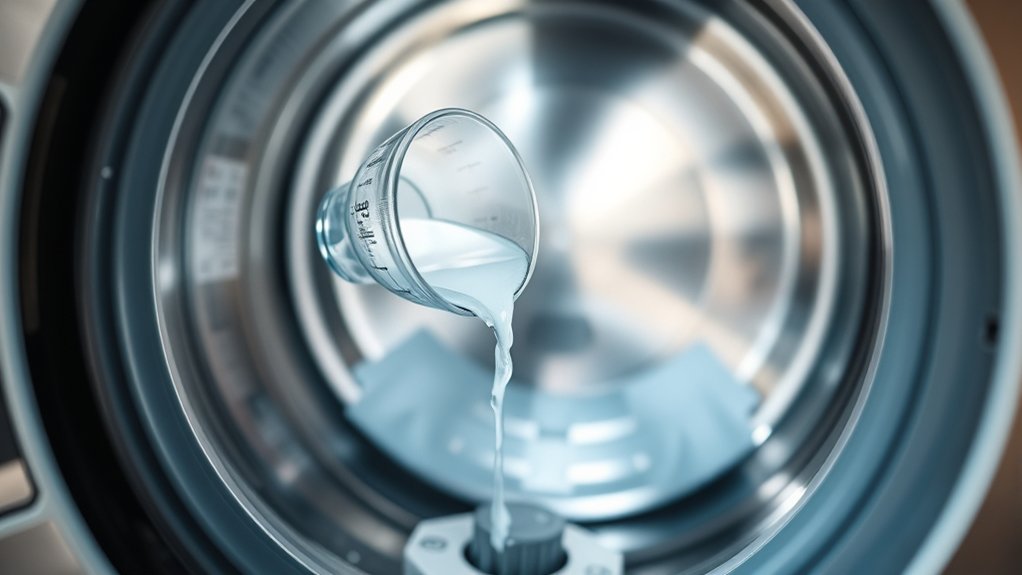
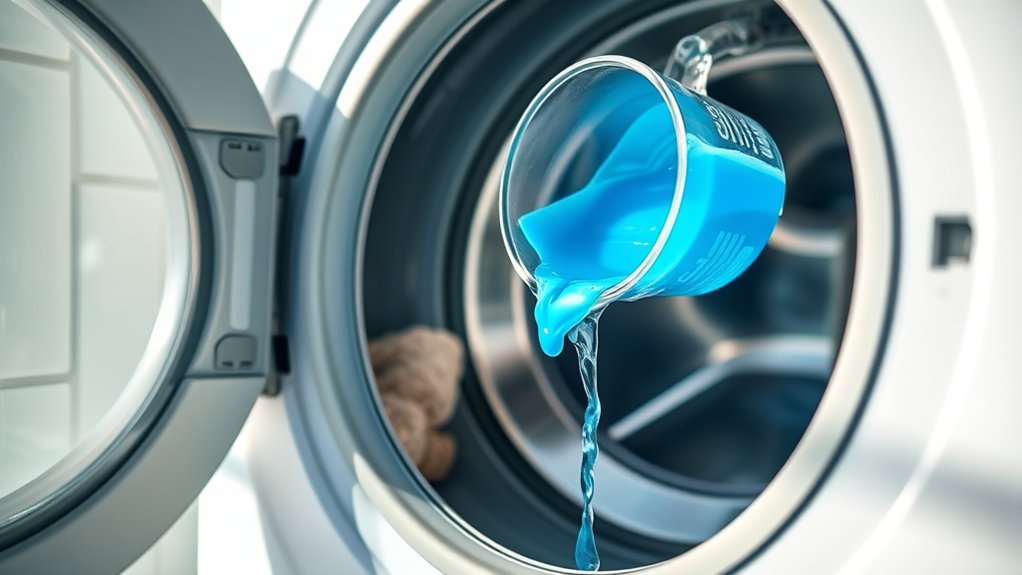
When cleaning your washing machine, you should use ½ cup of chlorine bleach for standard models and ¼ cup for high-efficiency (HE) machines. Always add the bleach to the designated dispenser or directly into the drum before starting a hot water cleaning cycle.
Running one or two cleaning cycles with bleach helps sanitize the drum and prevent mold buildup effectively.
Running one or two bleach cycles effectively sanitize the drum and keep mold at bay.
Make sure to pay close attention to water temperature. Hot water activates bleach’s cleaning power and makes maintenance easier.
Avoid using more bleach than recommended to protect your washer’s components and your fabrics from damage.
Proper dilution and placing the bleach correctly ensures it works efficiently without causing harm.
Following these guidelines will keep your washing machine clean, safe, and working at its best. It’s a simple routine that really makes a difference!
Why Using the Right Amount of Bleach Protects Your Washer
You want to use just the right amount of bleach to keep your washer running smoothly and avoid any damage to its parts. If you use too much bleach, it can actually corrode the seals and hoses.
On the other hand, using too little won’t fully sanitize your machine. So, sticking to the recommended dosage is key—it not only ensures effective cleaning but also helps protect your washer’s longevity.
Optimal Bleach Dosage
Although it might seem convenient to add extra bleach for a deeper clean, using the right amount, typically ½ cup for standard washers and ¼ cup for high-efficiency models, protects your machine from damage. Proper bleach dosage ensures effective disinfecting, mold removal, and odor elimination without harming rubber seals or hoses.
Following manufacturer guidelines helps maintain water level balance and prolongs your washer’s lifespan. It’s really about finding that sweet spot between cleaning power and machine care.
| Washer Type | Bleach Dosage | Key Benefit |
|---|---|---|
| Standard Washers | ½ cup | Effective sanitizing |
| High-Efficiency Washers | ¼ cup | Protects rubber seals |
| Low Water Level Washers | Adjust accordingly | Prevents residue buildup |
| All Washers | Follow guidelines | Ensures maintenance |
Stick to the recommended bleach amounts for thorough cleaning and to keep your machine running smoothly for years to come.
Preventing Machine Damage
Since using too much bleach can corrode rubber seals and damage the drum, it’s essential to measure carefully.
Using the proper bleach amount prevents machine damage by protecting rubber seals and internal components from chemical corrosion. Overusing bleach accelerates chemical buildup, which impairs cleaning effectiveness and shortens your appliance lifespan.
Sticking to the recommended usage avoids discoloration and persistent odors, ensuring your washer stays in top condition. Proper measurement is key to damage prevention, maintaining ideal performance without risking costly repairs.
By controlling bleach dosage, you balance effective cleaning with safeguarding your washing machine’s parts.
This practical approach not only improves cleaning outcomes but also extends the durability of your appliance. So, making proper bleach use a habit is crucial for every washer owner.
It’s a simple step that really pays off in the long run.
Ensuring Effective Sanitization
When you use the right amount of bleach, typically ½ cup for standard washers and ¼ cup for high-efficiency models, you guarantee effective sanitization without harming your machine.
Proper bleach measurement ensures disinfecting during the cleaning cycle is thorough, eliminating bacteria and preventing mold and mildew growth.
Using the correct dosage avoids residue buildup that can impair washer performance and cause unpleasant odors.
Overusing bleach risks damaging rubber seals and hoses, while underusing it reduces sanitization effectiveness.
Always follow manufacturer guidelines to balance cleaning power with appliance maintenance needs.
Accurate bleach dosing optimizes microbial kill rates, preserving both your washer’s longevity and fabric safety.
By adhering to proper bleach measurement, you maintain a clean, efficient washing machine that performs reliably over time.
It’s really about finding that sweet spot to keep both your clothes and your washer happy.
How to Add Bleach Safely in Front-Loading Washers
To add bleach safely in your front-loading washer, always pour it into the designated bleach compartment rather than directly into the drum. This guarantees even distribution and protects your machine’s internal parts from damage.
Always pour bleach into the designated compartment to ensure even distribution and protect your washer’s internal parts.
Use about ½ cup of chlorine bleach during the cleaning cycle, which is safe to use with most front-loading washers.
Select the hottest water setting and a cycle with an extra rinse option for the best results.
Never overfill the bleach compartment, as excess bleach can harm fabrics and affect machine maintenance.
Wait until the washer reaches the proper water level before adding bleach to avoid splashing and chemical hazards.
Following these steps guarantees proper usage, effective cleaning, and extends the lifespan of your front-loading washer.
How to Add Bleach Correctly in Top-Loading Washers
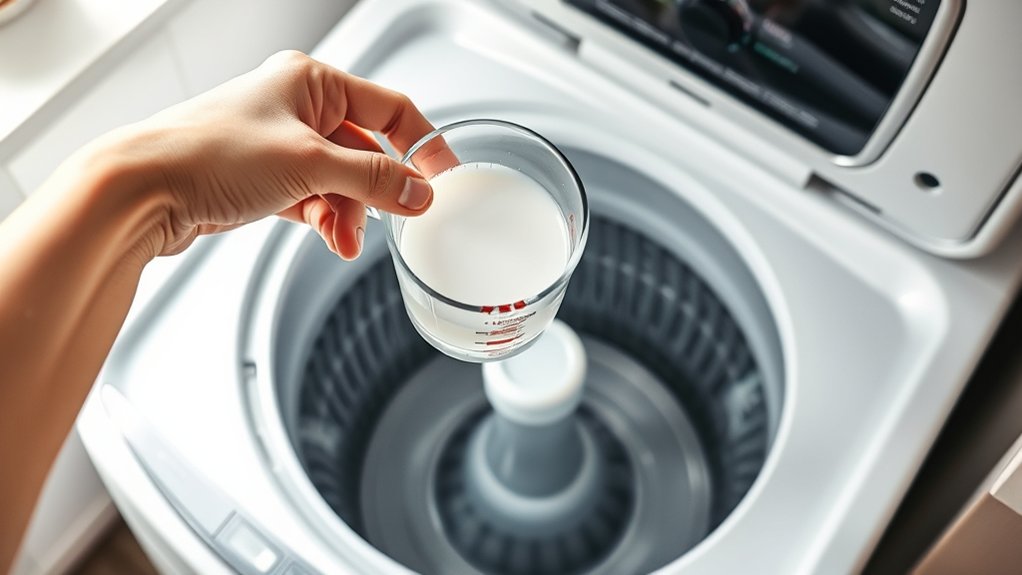
Although top-loading washers differ from front-loaders, adding bleach correctly is still essential for effective cleaning and keeping your fabrics safe. To add bleach properly in top-loading washers, just follow these simple steps.
Use ½ cup of bleach for standard washers or ¼ cup for high-efficiency models. You can pour it into the dispenser or directly into the drum—it works either way.
Always pick the hottest and longest cycle you can. This helps the bleach work better and really sanitizes your load.
Make sure you don’t pour bleach directly on your clothes or overload the washer. This way, the bleach spreads out properly and won’t damage your fabrics.
Let the cycle run for at least 10 minutes before you open the lid. This gives the bleach enough time to sanitize everything thoroughly.
How Often to Clean Your Washer With Bleach for Best Results
Since regular maintenance prevents buildup and keeps your washer running smoothly, you should clean your machine with bleach about once a month. This cleaning frequency aligns with every 30 wash cycles, helping to maintain odor control and prevent mold growth.
This is especially important in front-loading washers where rubber seals trap moisture.
Following a consistent cleaning schedule ensures effective disinfecting and a thorough deep clean. These are essential for washer maintenance and for prolonging your machine’s lifespan.
Overusing bleach beyond this recommended frequency can damage components and fabrics, so regular cleaning strikes the right balance between hygiene and care.
How to Run a Bleach Cleaning Cycle Step-by-Step
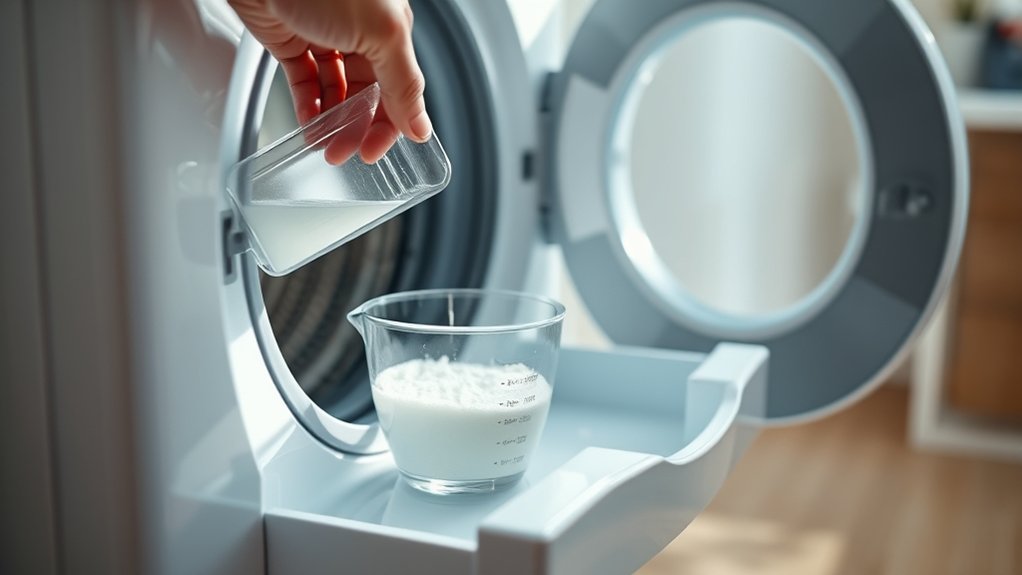
Keeping up with monthly bleach cleanings keeps your washer fresh, but knowing exactly how to run the cycle guarantees you get the best results without damaging your machine. Follow these steps for a proper bleach cleaning cycle:
First, add ½ cup of bleach to the detergent dispenser or directly into the washing machine drum.
Then, select the hottest water setting and choose a long or maintenance cycle for thorough cleaning.
Let the cycle run for at least 10 minutes to maximize bleach effectiveness, then allow it to complete.
After that, run an additional rinse cycle to remove any residual bleach.
Finally, leave the washer door open to air dry and help prevent mold.
This process guarantees thorough cleaning and extends your washing machine’s lifespan.
How to Fix Overusing Bleach in Your Washer
If you’ve used too much bleach in your washer, it’s important to act quickly to prevent damage and lingering odors. Bleach overuse accelerates chemical buildup, which can cause washer damage and fabric damage. It also reduces the lifespan of your machine.
Start by running multiple rinse cycles with water only. This helps remove residue and prevents mold and odor from developing.
Always stick to the bleach guidelines for the proper dosage. This will help you avoid corrosion and keep your washer in good shape.
| Issue | Solution |
|---|---|
| Chemical buildup | Run extra rinse cycles |
| Fabric damage | Avoid direct bleach contact |
| Washer damage | Follow manufacturer’s bleach dosage |
How to Dry and Maintain Your Washer After Bleach Cleaning
After you finish cleaning your washer with bleach, leave the door or lid open for at least 1-2 hours to let it air dry completely. Proper air drying is crucial for mold prevention and odor control.
Leave your washer door open for 1-2 hours after bleaching to prevent mold and odors.
Follow these steps for effective maintenance:
- Run a rinse cycle with water only to flush out any bleach residues.
- Wipe the drum, door gasket, and dispensers with a dry microfiber cloth to remove moisture residues.
- Regularly inspect and clean the door gasket and detergent dispensers to prevent mold buildup.
- Store the washer in a well-ventilated, dry space to promote ongoing moisture evaporation.
Doing these simple things helps keep your washer fresh and working well for a long time. It’s all about stopping mold before it starts and keeping things dry.
How to Prevent Mold and Odors Between Bleach Cleanings
Although bleach cleanings effectively eliminate mold and odors, you’ll need consistent care between deep cleans to keep your washer fresh.
For mold prevention, leave the washing machine door slightly open after each use to promote air circulation and reduce moisture buildup. Regular maintenance includes wiping down the door gasket and drum interior with a microfiber cloth to prevent mold growth.
If your laundry area experiences high humidity, use moisture-absorbing desiccants to enhance humidity control. Running a quick, low-bleach cycle weekly with the door open helps dry the drum interior and inhibit odors.
Finally, maintain proper ventilation by opening windows or using exhaust fans to minimize moisture that fosters mold and musty smells.
These steps guarantee your washing machine stays clean and odor-free between bleach cleanings. It’s really about keeping things dry and well-ventilated so mold doesn’t get a chance to grow.
With a little regular care, your washer will stay fresh and ready to use.
Frequently Asked Questions
Can I Use Alternative Cleaning Agents Instead of Bleach?
Yes, you can use alternative cleaning agents instead of bleach. Vinegar effectively removes odors and buildup.
Baking soda deodorizes and breaks down residue.
Enzyme-based cleaners like affresh offer deep cleaning without harsh chemicals.
Hydrogen peroxide provides gentle disinfection.
Just make sure to follow your washing machine’s instructions to avoid damage.
These alternatives are practical, safer for your machine, and still keep it fresh and clean.
Is It Safe to Mix Bleach With Other Washing Machine Cleaners?
Imagine mixing bleach and ammonia like combining fireworks and gasoline. It’s dangerous and unpredictable.
It’s not safe to mix bleach with other washing machine cleaners because chemical reactions can release toxic gases or even cause explosions. Always use bleach separately, rinse your machine thoroughly, and never combine it with vinegar or ammonia.
Following these steps keeps you safe and your washer clean without risking your health or home.
What Should I Do if Bleach Fumes Cause Irritation?
If bleach fumes cause irritation, immediately move to a well-ventilated area to get fresh air. Avoid inhaling any more vapors and remove yourself from the source of the fumes.
Rinse your eyes thoroughly with water if they’re affected.
Next time, use a mask or respirator to prevent this from happening.
If the irritation doesn’t improve, seek medical attention promptly for proper treatment and advice.
Don’t ignore persistent symptoms.
Can Bleach Damage Clothes Left in the Washer?
Yes, bleach can definitely damage clothes left in the washer. When you leave clothes in contact with bleach, the strong chemicals can cause discoloration, yellowing, and weaken fabric fibers.
Over time, this exposure can lead to fading, spots, and even fabric tearing. To protect your clothes, always remove them before running a bleach cycle.
This prevents damage and keeps your garments looking their best.
How to Dispose of Leftover Bleach After Cleaning?
You should never pour leftover bleach directly into storm drains or onto the ground. Instead, dilute small amounts with plenty of water and dispose of them down your household drain safely.
If you have larger quantities, take them to a hazardous waste disposal facility.
Always check and follow your local regulations to protect the environment. Diluting bleach properly before disposal prevents harm to wildlife and water systems.
It’s a simple step that makes a big difference.
Conclusion
Using too little bleach leaves grime behind, while too much can damage your washer. Finding the right balance is key. By following the correct amount and cleaning steps, you protect your machine and keep it fresh.
Regular, mindful bleach use prevents mold and odors without causing harm. So, take control. Use bleach wisely, clean consistently, and maintain your washer properly to enjoy spotless laundry and a longer-lasting appliance.