Can You Dry Clean A Graduation Gown – What To Know
You can and often should dry clean your graduation gown, especially if it has delicate fabrics, embellishments, or visible stains. Dry cleaning protects materials like velvet or satin better than home washing. Washing at home risks damage, shrinking, and color fading.
Always check your gown’s care label for specific instructions. Proper handling before and after dry cleaning helps preserve its look and lifespan.
Discover the best practices to keep your gown and accessories in pristine condition for your big day. Taking these steps makes sure you look your best when it counts!
Can You Dry Clean a Graduation Gown?

Wondering whether you can dry clean a graduation gown? Yes, you should opt for professional dry cleaning to preserve its delicate fabrics and embellishments. Graduation gowns often feature materials that home washing or ironing can easily damage.
Dry cleaning removes stains, wrinkles, and dust effectively without compromising the gown’s quality. Most manufacturers explicitly advise against home cleaning methods, highlighting the importance of relying on experienced professionals.
By choosing a reputable dry cleaner familiar with formalwear, you ensure your gown receives careful handling and thorough cleaning. Proper dry cleaning not only maintains the gown’s appearance but also extends its lifespan, allowing you to keep it pristine for future use or as a cherished keepsake.
How Your Gown’s Fabric Affects Cleaning Options
Because graduation gowns come in various fabrics, understanding your gown’s material is essential for choosing the right cleaning method. Most gowns are made from synthetic fabrics like polyester or acetate, each requiring specific care.
Knowing your gown’s fabric is key to selecting the best cleaning method for proper care.
Polyester gowns handle gentle washing and water exposure well, while acetate fabrics are more delicate and vulnerable to heat and harsh chemicals.
Matte finish fabrics resist wrinkles better than shiny or satin ones, which tend to crease easily.
The fabric type ultimately dictates whether you should opt for hand washing, spot cleaning, or entrusting your gown to a dry cleaner.
Always consult the care label to avoid damage, as improper cleaning can ruin the fabric.
Knowing your gown’s fabric assures you select appropriate cleaning methods that maintain its appearance and longevity.
When Dry Cleaning Your Graduation Gown Is Necessary
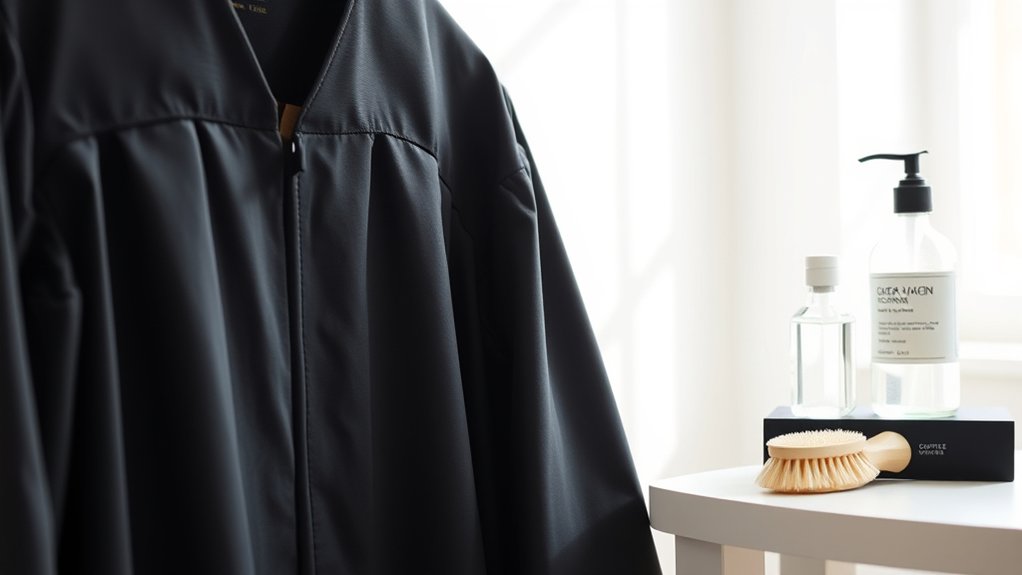
Although many graduation gowns can be cleaned at home, you should opt for dry cleaning when your gown features delicate fabrics like velvet, has significant stains, or includes embellishments and embroidery.
Dry cleaning is essential for gowns with matte finishes or delicate fabrics to prevent damage that water or home cleaning methods might cause.
If your gown has noticeable stains, such as makeup or food, professional dry cleaning ensures safe and thorough removal without harming the fabric.
Moreover, gowns with embroidery or special finishes require careful handling, which dry cleaning provides, preserving both fabric and details.
For the proper care of your gown, avoid frequent dry cleaning unless it’s visibly soiled. Always prioritize dry cleaning when delicate fabrics or persistent stains are involved to maintain your gown’s appearance and longevity.
How to Read Your Graduation Gown’s Care Label
When caring for your graduation gown, understanding its care label is essential to choosing the right cleaning method. Care labels provide vital garment care details, including whether the gown is dry clean only or machine washable. Look for symbols like a circle, indicating dry cleaning, or a washing machine icon for home washing.
Text cleaning instructions may specify preferred methods, temperatures, or chemicals to avoid. Some gowns require “Professional Dry Clean Only,” highlighting the need for specialized services.
By carefully reading and following these care labels and cleaning instructions, you prevent fabric damage, color fading, and shrinking. Always prioritize the label’s guidance to maintain your gown’s appearance and longevity.
This way, it remains in excellent condition for future use or keepsake purposes.
Risks of Washing Graduation Gowns at Home
After reviewing the care label on your graduation gown, you might think about cleaning it at home to save time and money. But washing gowns yourself can come with some risks that might cause irreversible fabric damage.
Home laundering often leads to distortion, shrinking, and color bleeding, especially on delicate or synthetic fabrics.
Also, improper cleaning can ruin the gown’s finish, whether it’s matte or shiny, which really takes away from how it looks.
Ironing or steaming at home can be risky too, especially with fabrics like velvet or satin, because you might accidentally scorch them.
Plus, stains can be tricky. You mightn’t get them out, or worse, create new ones with the wrong cleaning methods.
And keep in mind, cleaning the gown yourself could void any warranties, which means you’d lose some protection on your gown.
Here are the key risks to watch out for:
- Fabric distortion and shrinking
- Color bleeding and fading
- Damage to matte or shiny finishes
- Scorching from improper ironing
- Voiding manufacturer warranties
Honestly, choosing dry cleaning is usually the safest bet to avoid these common issues.
What Happens When You Take Your Gown to a Dry Cleaner
How does professional dry cleaning protect your graduation gown? When you take your gown to a dry cleaner, it goes through a special process using solvents instead of water. This method effectively cleans delicate fabrics like velvet and satin without causing any damage.
The dry cleaning service also includes expert stain removal and carefully targets wrinkles through pressing and steaming. This helps restore your gown’s pristine appearance.
Professionals handle embellishments and finishes with care, which prevents color fading and fabric shrinkage that often happen with home washing.
Plus, depending on your gown’s fabric and condition, the cleaner might suggest preservation or special handling to help it last longer.
How to Prepare Your Graduation Gown for Dry Cleaning
Before you take your graduation gown to the dry cleaner, give it a good once-over to check for any stains or debris. If you spot anything, try to treat those areas right away.
Also, be sure to remove all the accessories like cords, tassels, and pins. Leaving them on could cause damage during cleaning.
Taking these simple steps will help make sure your gown is well-prepared and stays protected throughout the dry cleaning process.
Pre-Cleaning Inspection
Although dry cleaning is a professional process, you should carefully inspect your graduation gown beforehand to identify stains, tears, or loose seams that need special attention. A thorough pre-cleaning inspection guarantees the best results and prevents damage.
Before taking your gown to the cleaner, follow these steps:
- Examine the fabric for visible stains and treat or note them for the cleaner.
- Check for tears or loose seams that might require repair.
- Review the care label to verify if dry cleaning is recommended and note any cleaning instructions.
- Empty all pockets and inspect the hood lining for forgotten items.
- Address any fabric issues to facilitate proper treatment during cleaning.
This careful preparation helps maintain your gown’s condition and guarantees professional care is applied effectively. It’s worth taking the time to do this so your gown looks its best on your big day.
Accessory Removal
Why should you remove all accessories from your graduation gown before dry cleaning? Removing cords, tassels, pins, stoles, and any embellishments is essential to prevent damage during the cleaning process. Accessories may snag, fade, or cause complications if left attached.
Make sure to detach decorative trims, embroidery, and any loose items like name tags or identification labels to avoid tearing or detachment. Also, secure or remove buttons, hooks, and closures that aren’t meant for cleaning.
Once all accessories are removed, place your gown in a breathable garment bag. This protects the fabric and makes handling easier during dry cleaning.
Proper accessory removal keeps your graduation gown looking pristine and undamaged. It also helps professional cleaners treat your garment effectively without risking harm to delicate or attached items.
Tips to Keep Your Graduation Gown Looking Great After Dry Cleaning
Proper care after dry cleaning is essential to keep your graduation gown looking sharp and fresh for future use. Once dry cleaning is complete, take steps to maintain its quality and appearance.
Always hang your gown in a well-ventilated area to remove residual chemicals and prevent odors.
When you store it, use a breathable garment bag to shield it from dust, light, and humidity. Avoid folding or crushing the gown to prevent wrinkles and preserve its shape.
If wrinkles do appear, gently use a steamer rather than an iron.
Finally, keep your gown away from direct sunlight and heat sources to maintain fabric color and integrity.
- Hang in a ventilated space
- Store in a breathable garment bag
- Avoid folding or crushing
- Use a steamer for wrinkles
- Keep away from sunlight and heat
Caring for Graduation Accessories Alongside Your Gown
When preparing your graduation attire, you should give equal attention to caring for your accessories as you do your gown. Honor cords should remain untied or loosely tied, with multiple cords tied centrally for easy handling.
Hang stoles and V-stoles for 24-48 hours before use to reduce creases and present a polished look.
Check tassels to ensure they’re present, correctly colored, and matched to your graduation year.
If you receive hoods or shields early, hang them for 24-48 hours but avoid washing them with water.
For delicate accessories, professional dry cleaning is the best way to maintain their appearance and integrity.
Proper gown cleaning and accessory care will help you keep your gown and related items looking pristine throughout your graduation day. It’s worth taking these little extra steps so everything looks perfect when it counts.
Frequently Asked Questions
Can I Store My Graduation Gown in a Garment Bag Long-Term?
You can store your graduation gown in a garment bag long-term, but avoid plastic ones. Use a breathable cotton or muslin bag to prevent moisture buildup and fabric damage.
Hang the gown on a padded, wide-shoulder hanger to keep its shape and avoid creases.
Store it in a cool, dry, dark place away from sunlight and heat. It’s important to check it periodically for any signs of damage or moisture.
That way, you can make sure it stays in good condition.
How Soon After Graduation Should I Clean My Gown?
Think of your graduation gown like a fine wine. It needs time to breathe. You should wait at least 24 to 48 hours after graduation before cleaning it to let any moisture or odors dissipate and wrinkles relax.
If stains are visible, address them quickly. But general cleaning can wait up to one or two weeks to protect the fabric’s integrity.
This careful timing helps your gown stay in pristine condition for future use.
Are There Eco-Friendly Dry Cleaning Options for Graduation Gowns?
Yes, you can find eco-friendly dry cleaning options for your graduation gown. Many cleaners now use biodegradable solvents like liquid carbon dioxide or silicone-based solutions. These are less toxic and safer for the environment.
Look for certifications such as Green Earth to guarantee they follow sustainable practices. This includes energy-efficient processes and reduced water usage.
Choosing these services helps you preserve your gown while minimizing chemical runoff and environmental impact.
Can Dry Cleaning Remove Ink or Paint Stains From Gowns?
Imagine a graduation gown stained with stubborn ink or paint, colors threatening to mar your special day. You can trust dry cleaning to tackle these stains effectively.
Professional cleaners use specialized solvents that gently lift ink and paint without harming your gown’s delicate fabric.
Acting promptly guarantees the best results. Avoid home remedies because they might spread or set the stain.
Instead, just tell your cleaner about the stain type so they can treat it properly.
Is It Safe to Alter or Tailor a Graduation Gown?
Yes, it’s safe to alter or tailor a graduation gown, but you should always use a professional experienced with formalwear.
Delicate fabrics like satin or velvet require special handling to avoid damage.
Make sure you tell your tailor about the gown’s material so they can use the right techniques, like steaming instead of ironing for velvet.
Avoid last-minute alterations to give enough time for proper adjustments and fabric stabilization.
Taking these steps will help keep your gown looking great for the big day!
Conclusion
You might be surprised to learn that nearly 70% of graduation gowns require professional cleaning because of their delicate fabrics. Dry cleaning your gown helps keep it crisp and wrinkle-free, which preserves those special memories. Always check the care label before making a decision.
Preparing your gown properly and trusting experts will keep it looking its best for years. Taking these steps protects your investment and honors the significance of your achievement. It’s definitely worth the effort!