Can You Dry Clean A Pillow – What To Know
You shouldn’t dry clean pillows because the process often leaves harmful chemical residues and doesn’t remove deep dirt or allergens effectively. Dry cleaning can damage delicate materials like memory foam, down, or silk covers. It may also cause odors or mold if not dried properly.
Instead, use gentle washing, spot cleaning, and thorough drying to keep pillows fresh and safe. If you want to understand care for different pillow types and avoid common risks, there’s more helpful information ahead.
Why Dry Cleaning Pillows Is Not Recommended
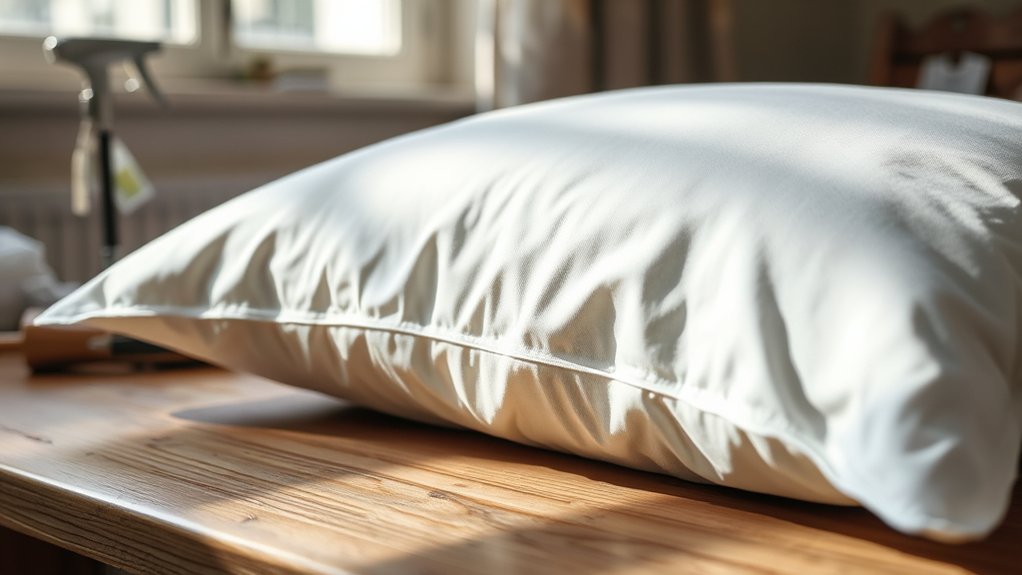
Although dry cleaning might seem like a convenient option, it’s not recommended for pillows because the solvents used often fail to remove deep-seated dirt, bacteria, and allergens embedded in the filling. The chemicals involved in dry cleaning can leave residues that may be toxic or trigger allergic reactions over time.
Dry cleaning often leaves harmful residues and fails to remove deep dirt, bacteria, and allergens from pillows.
Plus, many pillows contain delicate fillings like foam that can suffer damage when exposed to these harsh solvents. Dry cleaning also doesn’t effectively clean pillow covers or eliminate odors, which require washing or airing out.
Safer and more effective cleaning methods for pillows include washing or spot cleaning, which preserve the pillow’s integrity while ensuring hygiene.
Ultimately, dry cleaning poses risks that outweigh its convenience for pillow care.
Pillow Materials Unsuitable for Dry Cleaning
When caring for pillows, it’s important to know which materials don’t do well with dry cleaning. Memory foam pillows, for instance, shouldn’t be dry cleaned because the solvents can damage the foam and change its shape.
Delicate materials like silk or satin covers aren’t a good fit either. Dry cleaning might cause discoloration or even damage the fabric.
Down and feather pillows can also suffer when exposed to dry cleaning chemicals. They risk clumping and losing their loft, which means they won’t be as fluffy or comfortable anymore.
Specialty pillows that have glued or foam components are another no-go. These materials can warp or get damaged by the chemicals used in dry cleaning.
So, if your pillow has any of the following, it’s best to avoid dry cleaning:
- Memory foam or shredded memory foam filling
- Silk or satin covers
- Down or feather fillings that tend to clump
- Glued or foam structural parts
Protect your pillows by choosing cleaning methods that suit the material instead. They’ll last longer and stay comfy!
Health Risks of Dry Cleaning Chemicals on Pillows
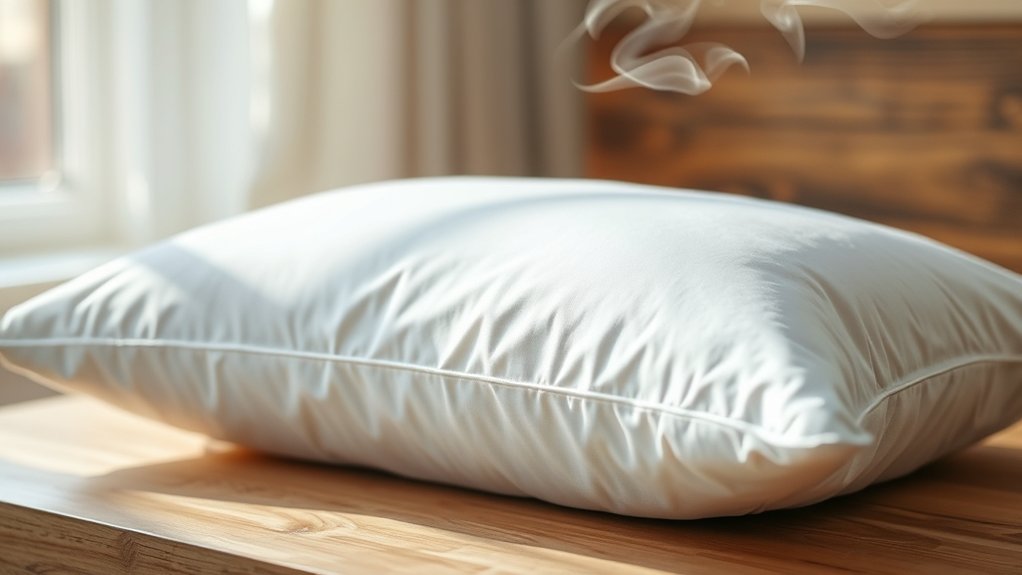
You should know that dry cleaning chemicals can leave behind harmful residues in your pillows. This can cause issues like skin irritation and allergic reactions.
On top of that, these solvents might release volatile organic compounds, which can affect the air quality inside your home and even impact your respiratory health.
Chemical Residue Concerns
Because dry cleaning uses solvents like perchloroethylene, your pillow can retain chemical residues that may cause skin irritation or allergic reactions. These dry cleaning chemicals often leave behind residual residues that can off-gas over time, negatively impacting indoor air quality.
Solvent residues in pillows may contribute to health risks, especially if you’re sensitive or exposed frequently.
Understanding these chemical residue concerns helps you make safer choices for pillow care.
- Imagine waking up with itchy, irritated skin caused by hidden chemicals.
- Consider the discomfort of breathing in off-gassed solvents during sleep.
- Think about the long-term exposure to potentially harmful solvent residues.
- Reflect on the peace of mind that comes with avoiding chemical risks altogether.
Choosing safer cleaning methods can protect your health and home environment.
Potential Health Hazards
How safe is your pillow after dry cleaning? Dry cleaning uses chemical solvents that can leave residual toxins in pillow fillings. These toxins might lead to skin irritation, allergic reactions, or respiratory issues from VOCs.
These health hazards especially affect those with asthma or sensitive skin. On top of that, these chemicals can weaken pillow materials, which shortens their lifespan. So, considering these risks, you might want to opt for safer home cleaning methods.
| Risk Factor | Cause | Impact |
|---|---|---|
| Skin Irritation | Residual toxins | Allergies, rashes |
| Respiratory Issues | VOCs from solvents | Breathing difficulties |
| Material Damage | Chemical solvents | Reduced pillow support |
| Allergic Reactions | Residual chemicals | Heightened sensitivities |
| Lifespan Reduction | Dry cleaning process | Frequent pillow replacement |
Stay informed to protect your health and pillow integrity.
When Dry Cleaning Pillows Is Acceptable
You should only think about dry cleaning pillows if they’re made from materials that can handle the solvents used in the process.
It’s always a good idea to check the manufacturer’s care label first to see if dry cleaning is recommended or even allowed.
If the label says not to, it’s best to stick with safer cleaning methods to keep your pillow in good shape.
Suitable Pillow Materials
When determining if dry cleaning is suitable for your pillow, you should first identify the materials involved. Suitable pillow materials for dry cleaning typically include synthetic fiber pillows like polyester or microfiber, which withstand cleaning solvents well.
Natural fiber pillows, such as cotton or linen, may also be dry cleaned if the care label confirms it’s safe.
Pay attention to the pillow filling, as some inner materials mightn’t tolerate dry cleaning. Pillows with satin or silk covers can often be cleaned separately, but always verify compatibility.
Consider these points before proceeding: synthetic fibers handle dry cleaning without damage. Natural fiber pillows require label confirmation. Memory foam and latex pillows are never dry cleaned. Pillow filling determines overall suitability for cleaning.
Always check your care label to avoid damage.
Manufacturer Care Guidelines
Although dry cleaning might seem like a convenient option, most pillow manufacturers recommend it only if the care label explicitly states “Dry Clean Only.” Ignoring these guidelines can lead to ineffective cleaning.
Dry cleaning solvents may not remove deep-seated bacteria or allergens and might leave harmful residues. So, it’s really best to always follow the manufacturer guidelines and cleaning instructions to keep your pillows in good shape and avoid damage.
| Pillow Type | Care Label Indication | Dry Cleaning Suitability |
|---|---|---|
| Memory Foam | Usually “Do Not Dry Clean” | Not recommended |
| Down/Feather | Check for “Dry Clean Only” | Acceptable if labeled |
| Synthetic Fiber | Varies | Follow specific care instructions |
| Shredded Foam | Usually “Do Not Dry Clean” | Avoid dry cleaning |
| All Pillows | Always read care instructions | Adhere to manufacturer guidelines |
Safe Home Cleaning Alternatives to Dry Cleaning
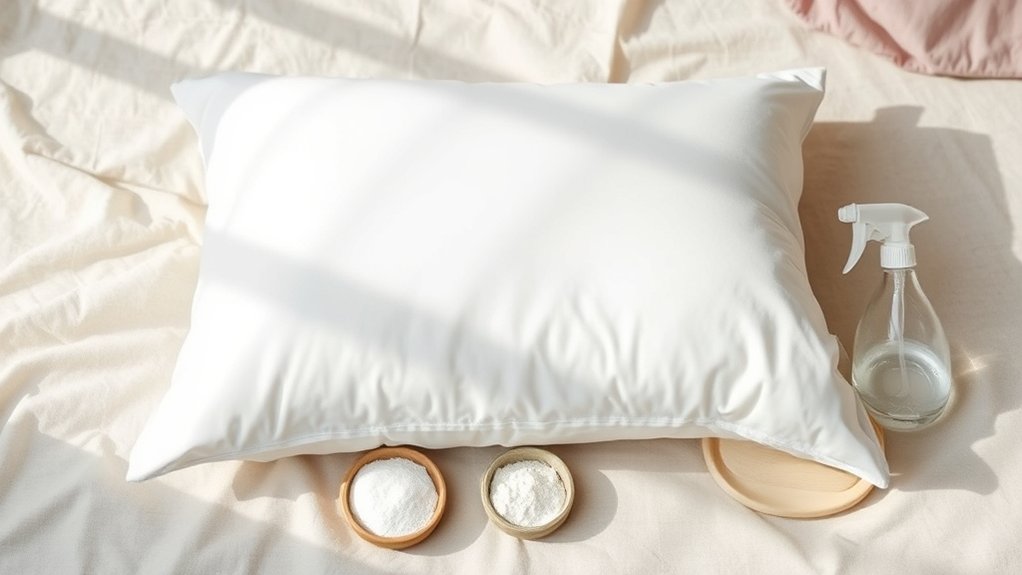
Since dry cleaning solvents often fail to eliminate bacteria, dust mites, and oils within pillow fillings, opting for home cleaning methods proves safer and more effective.
Dry cleaning solvents often miss bacteria and dust mites, making home cleaning safer and more effective for pillows.
You can maintain your pillow’s hygiene by following the care tag instructions and choosing appropriate methods like machine washing on a delicate cycle or spot cleaning stubborn stains with homemade cleaning solutions.
After washing, air drying thoroughly prevents moisture buildup and mold growth.
These alternatives not only protect your health but also extend your pillow’s lifespan.
Feel the freshness of a clean pillow every night. Avoid harsh chemicals that irritate your skin.
Protect your family from allergens and dust mites.
Enjoy peace of mind with simple, safe cleaning routines.
Best Washing Techniques for Pillow Types
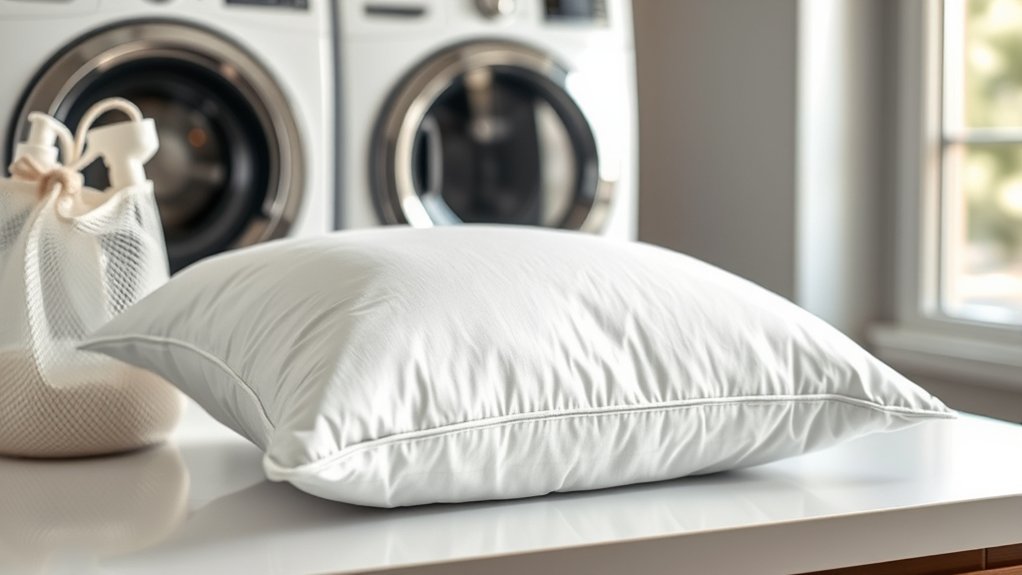
Understanding the best washing techniques for your pillow type guarantees effective cleaning while preserving its shape and comfort. For most pillows, using a gentle cycle with warm water works well, but always check the care label before washing pillows.
Down and feather pillows need delicate handling on gentle cycles to maintain loft and avoid damage. Memory foam pillows shouldn’t be machine washed. Instead, spot clean or hand wash to prevent shape deformation.
Synthetic and polyester pillows handle machine washing with mild detergent and can be air-dried or tumble dried on low heat.
Specialty pillows often require manufacturer-specific instructions to avoid damage.
While dry clean options exist, following proper pillow care and appropriate washing techniques guarantees your pillows stay fresh and intact without unnecessary risk. It’s always better to play it safe and keep your pillows comfy and clean!
How to Dry Pillows Safely After Washing
When drying pillows after washing, you’ll want to use low or medium heat in a tumble dryer along with dryer balls or clean towels. This helps maintain fluffiness and speeds up drying.
After the spin cycle, make sure your pillows are completely dry to avoid mold and odors.
Ensure pillows are fully dry after spinning to prevent mold growth and unpleasant odors.
If you have delicate pillows or those sensitive to heat, air dry them in a well-ventilated, shaded area.
Remember, some pillows may require longer drying times.
Feel the softness return as your pillows fluff up. Enjoy peace of mind knowing they’re completely dry.
Avoid the hassle of a dry cleaner with proper drying. Prevent unpleasant smells and bacteria growth.
These tips help you keep your pillows fresh and safe after washing.
Tips to Keep Pillows Fresh Without Dry Cleaning
Although dry cleaning might seem like a quick fix, you can keep your pillows fresh and clean without resorting to harsh chemicals. Start by regularly airing out your pillows to reduce moisture and prevent odors.
Use pillow protectors and pillowcases that you wash frequently to block dirt and allergens, extending your pillow’s freshness.
For minor stains, spot cleaning is effective and prevents buildup. You can also use disinfectant sprays with natural scents like lavender or eucalyptus to eliminate bacteria and odors between cleanings.
Sun-drying your pillows in the shade offers a natural way to disinfect and freshen them without damaging the fabric.
These simple steps maintain your pillows’ hygiene and comfort, avoiding the risks of dry cleaning solvents that can leave residues and may not effectively target dust mites or bacteria.
Frequently Asked Questions
How Often Should I Replace My Pillow for Optimal Hygiene?
You should replace your pillow every 1 to 2 years to keep up with good hygiene and support.
If you have allergies or asthma, it’s a good idea to swap it out more often—every 6 to 12 months.
Keep an eye out for signs like persistent odors, lumps, or if your pillow gets flat. These are clear hints that it’s time for a new one.
Changing your pillow regularly can help stop skin irritation, allergies, and breathing problems caused by dust mites and bacteria buildup.
It’s a simple step that makes a big difference!
Can Pillow Protectors Reduce the Need for Frequent Cleaning?
Yes, pillow protectors can considerably reduce the need for frequent cleaning. They act as a barrier against dirt, oils, sweat, and allergens, keeping your pillow cleaner for longer.
Since protectors are easier to wash regularly, they help maintain hygiene and prevent odor buildup.
Are There Eco-Friendly Pillow Cleaning Products Available?
Oh sure, because who wouldn’t want to add harsh chemicals to their pillows? Luckily, you don’t have to.
You’ll find plenty of eco-friendly pillow cleaning products made with natural ingredients like plant-based enzymes, essential oils, and biodegradable detergents.
These options avoid toxic chemicals and often carry certifications like EPA Safer Choice or Green Seal.
Plus, natural alternatives like baking soda and vinegar work wonders for deodorizing and disinfecting without harming the planet.
How Do Allergies Impact Pillow Cleaning Frequency?
Allergies increase how often you need to clean your pillows, typically every 2 to 3 months. You’ll want to remove dust mites, pollen, and pet dander that trigger symptoms.
Using allergen-proof pillow protectors can help reduce cleaning frequency while maintaining control.
Also, replacing pillows every 1 to 2 years prevents allergen buildup in the filling. This improves your sleep quality and reduces allergy-related issues.
Keeping up with these steps makes a big difference in managing allergies.
Can Pillows Be Safely Vacuumed to Remove Dust Mites?
Yes, you can safely vacuum pillows to remove dust mites and surface allergens. Use a HEPA filter vacuum with an upholstery attachment or soft brush to gently clean the entire pillow surface without damaging the fabric.
Avoid high suction on delicate or foam pillows, as it may cause damage.
Conclusion
Think of your pillow as a delicate sail on a ship. Dry cleaning can be like a storm that frays its fabric and compromises its integrity.
Instead, navigate gently with safe home cleaning methods and proper drying techniques. This way, you keep your pillow fresh and durable.
By steering clear of harsh chemicals and choosing suitable care, you make sure your pillow remains a restful harbor. It supports your health and comfort night after night.