How To Clean Dry Cat Pee From Carpet – Easy Guide
To clean dry cat pee from your carpet, first use a UV blacklight in a dark room to find hidden stains. Avoid harsh chemicals. Instead, apply an enzymatic cleaner that breaks down odor-causing uric acid crystals.
Lightly dampen the area with cold water before cleaning. Then let the cleaner sit for at least 15 minutes. Blot gently and dry thoroughly with fans or a dehumidifier to prevent odors and re-soiling.
Keep going to discover more tips on maintenance and prevention. You’ll find it easier to keep your carpet fresh and your home smelling great!
How To Find Dry Cat Pee Stains On Your Carpet
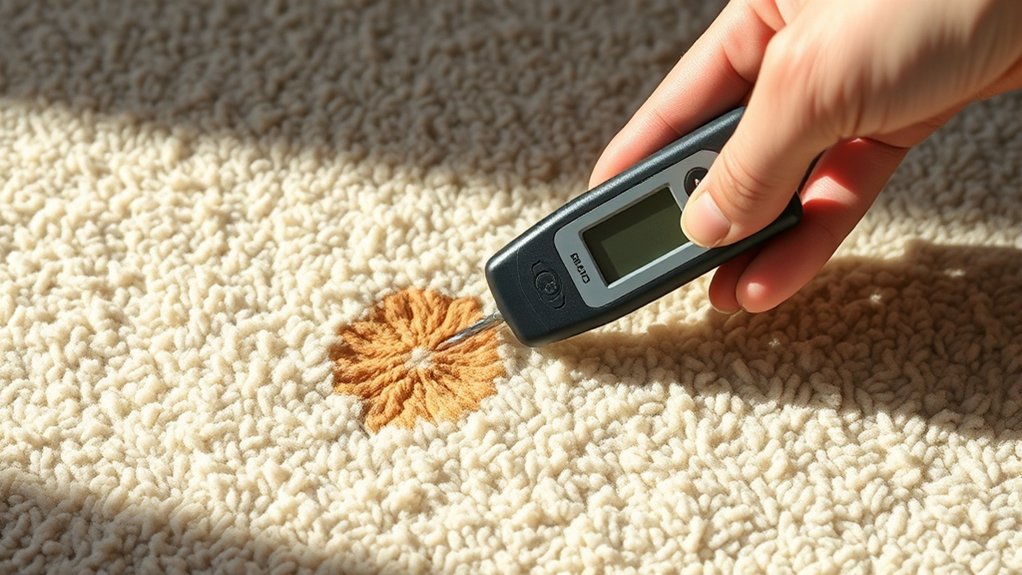
How can you spot dry cat pee stains on your carpet when they blend in so well? Dried cat urine often hides in carpet fibers, making stain detection tricky, especially on dark or patterned rugs.
The best tool you can use is a UV blacklight; it makes old urine stains fluoresce, revealing spots invisible to the naked eye.
In dim light or darkness, shine the blacklight over suspect areas and watch for that telltale glow. Sometimes, faint odors help you pinpoint dried urine spots if you can’t see them.
Bright daylight or a flashlight might also show subtle discoloration or residue.
Remember, old urine stains can crystallize beneath the carpet surface, so relying on UV blacklight and odor is your most practical approach to find every hidden spot.
It’s a bit of detective work, but totally worth it to keep your carpet clean and fresh.
Why Does Dry Cat Pee Smell So Strong And Keep Coming Back?
Although it might seem surprising, dry cat pee smells so strong and keeps coming back because the urine’s compounds become concentrated as the liquid evaporates. You’re dealing with uric acid crystals in dried urine that cause odor reactivation when moisture hits. Bacteria break down urea into ammonia, intensifying the urine smell.
Plus, dried urine seeps deep into carpet fibers, making deep cleaning essential. Your cat’s sensitive nose picks up even faint odors, encouraging repeated accidents.
| Factor | Cause | Effect |
|---|---|---|
| Urine smell | Ammonia concentration | Strong, pungent odor |
| Dried urine | Uric acid crystals | Odor reactivation |
| Bacteria | Urea breakdown | Persistent ammonia smell |
| Carpet layers | Deep seepage | Harder to remove odor |
| Cat behavior | Sensitive nose | Re-urination on spot |
Picking The Best Cleaner For Dry Cat Pee On Carpet
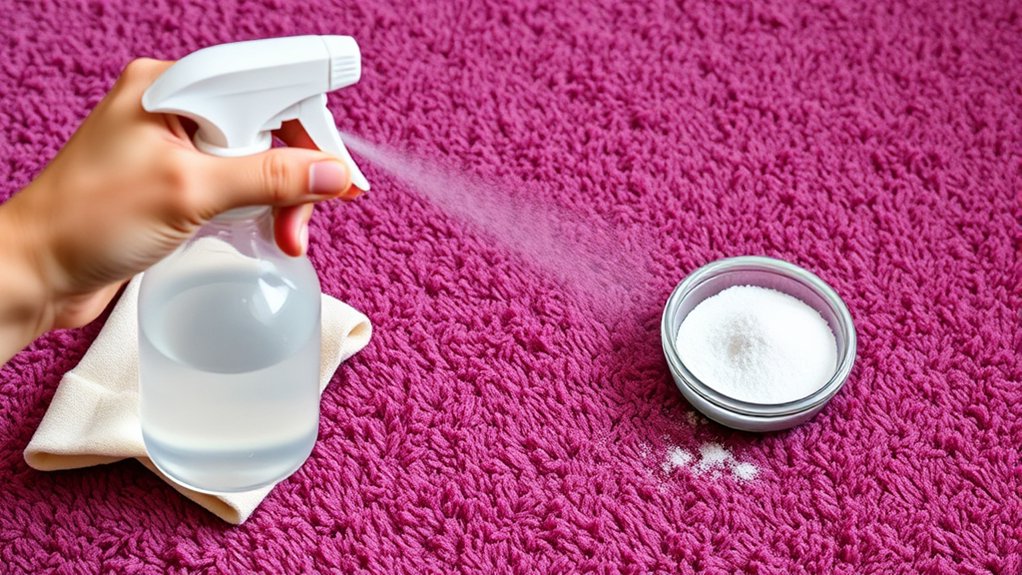
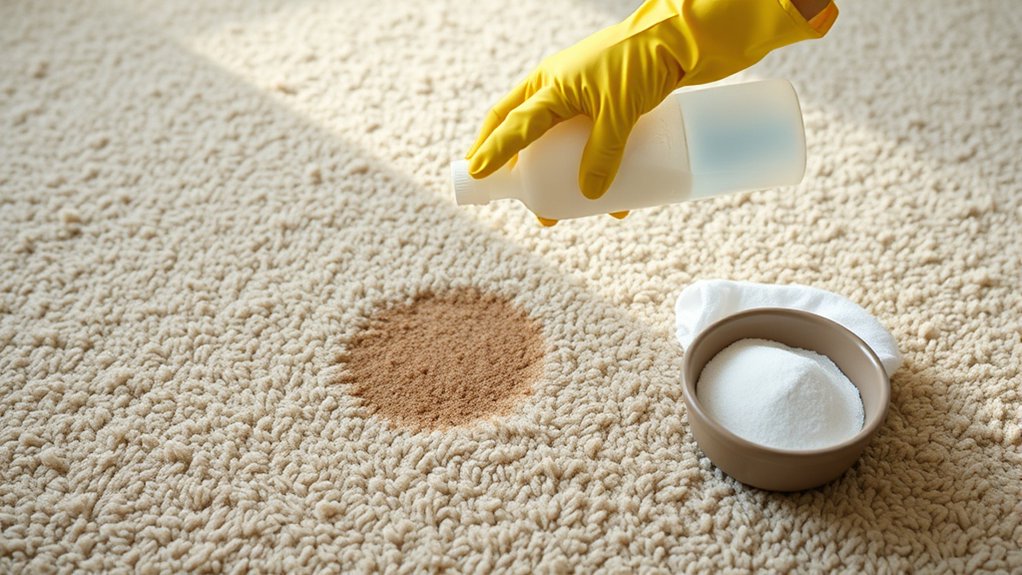
You’ll want to go for an enzymatic cleaner that’s made to break down uric acid. These are the best at tackling dry cat pee on your carpet.
Just steer clear of bleach or ammonia-based products because they can actually make the odors worse or even encourage your cat to mark the spot again.
Make sure to apply the cleaner thoroughly and let it sit for a while—that’s your best bet for getting rid of those stubborn stains and smells.
Enzymatic Cleaner Benefits
When tackling dry cat pee on your carpet, choosing an enzymatic cleaner can make all the difference. This enzyme cleaner breaks down uric acid crystals in cat urine stains, acting as a powerful urine destroyer and odor eliminator. Unlike regular cleaners, it targets the organic compounds in pet urine, ensuring thorough odor removal and reducing the chance your cat will re-mark the area.
Here’s a quick overview of enzymatic cleaner benefits:
| Benefit | Explanation |
|---|---|
| Targets uric acid | Breaks down stubborn urine crystals |
| Odor eliminator | Neutralizes odors instead of masking them |
| Prevents re-marking | Removes scent cues that attract your cat |
| Effective on dried pee | Works well on old, set-in cat urine stains |
Use it properly for best results and watch your carpet and nose thank you!
Avoid Harmful Ingredients
Since selecting the right cleaner can make or break your efforts, it’s crucial to avoid products with harmful ingredients like bleach or ammonia. These can worsen odors and damage your carpet.
When picking a cleaner, remember:
- Avoid bleach and ammonia. They can intensify the smell and cause permanent carpet damage.
- Choose enzymatic cleaners that break down uric acid. These effectively eliminate odors without harsh chemicals.
- Be cautious with natural cleaning solutions like vinegar and baking soda. Use them properly diluted to prevent discoloration.
- Steer clear of strong disinfectants. They might deteriorate your carpet fibers over time.
Just keep these tips in mind, and you’ll protect your carpet while keeping it fresh!
Preparing Your Carpet For Cleaning Without Damage
Although cleaning dry cat pee from your carpet is urgent, you should first prepare the area carefully to avoid damage. Start by vacuuming the spot to remove any loose debris or dried urine particles. This step prevents spreading dirt when you apply liquids.
Before using any cleaning solution, test it on a small, hidden patch to *verify* it won’t cause discoloration.
Always test cleaning solutions on a hidden area first to ensure they won’t discolor your carpet.
When you’re ready, lightly dampen the affected area with cold water. Hot water can set stains, so it’s best to avoid it.
Be careful not to over-wet the carpet, as excess moisture can seep into the padding and cause mold or structural issues.
After cleaning, speed up drying with fans or dehumidifiers to prevent residual moisture from encouraging mold growth. This will keep your carpet safe and fresh.
Step-By-Step Guide To Removing Dry Cat Pee From Carpet
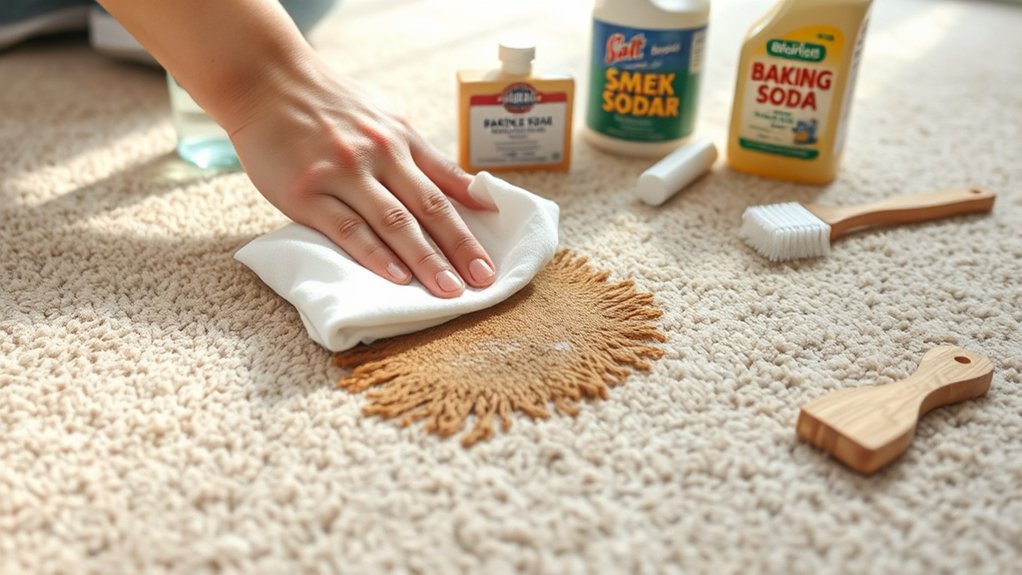
If you struggle to spot dried cat pee stains, try using a UV blacklight to reveal hidden or old deposits.
Removing cat urine from dry carpet requires careful steps to avoid spreading the stain or odor.
First, blot the stain gently with cold water and paper towels to absorb as much cat urine as possible without rubbing.
Then, apply an enzymatic cleaner designed for pet stains and let it sit for at least 15 minutes to break down uric acid crystals.
Next, use a vacuum or absorbent cloth to thoroughly remove the cleaning solution and urine residue.
You might need to repeat the process if necessary.
Just make sure the carpet dries completely to prevent lingering odor and discourage your cat from going there again.
These steps help you effectively remove the stain and odor, restoring your carpet.
With a little patience, your carpet will be fresh and clean again.
Neutralizing Dry Cat Pee Odors With Vinegar And Baking Soda
You can totally tackle dry cat pee odors by using vinegar and baking soda together. Vinegar works by breaking down the uric acid and neutralizing that strong ammonia smell.
Then, baking soda comes in to absorb any leftover odors and moisture. When you apply them properly, you’ll help make sure your carpet smells fresh again in no time.
Vinegar’s Odor Neutralizing Power
Because dried cat pee contains alkaline ammonia and stubborn uric acid crystals, vinegar’s acetic acid works wonders to neutralize these odors effectively.
When you use vinegar for cleaning, you’re tackling the root cause of that persistent cat urine smell.
Here’s why vinegar is your best friend: It breaks down uric acid crystals in dried stains. It balances the pH, reducing alkaline ammonia’s harsh odor. It soaks deep into carpet fibers to target hidden smells. Plus, it prepares the area for enhanced odor neutralizing when combined with baking soda.
Baking Soda Odor Absorption
How exactly does baking soda help eliminate those stubborn dry cat pee odors? Baking soda works by trapping odor molecules within its porous structure, providing excellent odor absorption.
When cleaning cat urine, start by applying vinegar to break down uric acid residues. This step enhances the process of neutralizing odors.
Next, generously sprinkle baking soda over the affected area. Leaving it for several hours, ideally overnight, maximizes its ability to absorb pet odor and tackle both stain and odor.
Afterward, vacuum up the baking soda to remove trapped odors, leaving your carpet smelling fresh.
This combination of vinegar and baking soda creates a chemical reaction that boosts your success in removing dry cat pee effectively. It helps you restore your home’s comfort while neutralizing odors thoroughly.
How To Dry And Finish Your Carpet After Cleaning
Although cleaning removes the stain, drying your carpet thoroughly is essential to prevent mold and odors from developing. To guarantee the area dries completely, follow these steps:
Thoroughly drying your carpet after cleaning is crucial to prevent mold and lingering odors.
- Use fans or a dehumidifier to speed up drying, especially in humid spaces.
- If you can, gently use a hairdryer on low heat to dry the carpet without harming its fibers.
- Allow the carpet to air dry for several hours or overnight to ensure all moisture evaporates fully.
- Once dry, vacuum the area to remove any residual baking soda or cleaning agents and restore the carpet’s texture.
Taking these steps helps you avoid lingering smells and protects your carpet. It also makes your home fresher and more comfortable.
When To Clean Again Or Call A Pro For Dry Cat Pee
If you notice the smell of cat urine lingering after cleaning, you may need to treat the area again or consider professional help. Sometimes, persistent smell and odor come back because urine residues remain deep within the carpet fibers.
For fresh stains, repeated cleaning with enzymatic products might do the trick. But when you’re dealing with an old urine stain or a deep stain, DIY methods often fall short.
That’s when it’s time to call a pro. Professional cleaning services have specialized equipment and solutions to tackle stubborn spots effectively.
If the odor keeps coming back despite your efforts, it’s a clear sign that professional cleaning is necessary to fully eliminate the problem and protect your carpet.
Don’t hesitate to seek expert help when you need it.
Tips To Prevent Future Cat Pee Accidents On Carpet
To prevent future cat pee accidents on your carpet, you’ll want to create a clean and stress-free environment for your feline friend. Understanding cat behavior is key to stopping urine stains and cat urine odors.
Here’s how you can prevent future accidents:
Scoop and clean the litter box daily, using fresh, odor-free litter to encourage proper use. Place multiple litter boxes in quiet, accessible areas, especially if you have more than one cat.
Spaying or neutering your cat can help reduce marking behaviors linked to territory. Also, consult your vet promptly for any medical or behavioral concerns to address issues early.
These steps not only aid odor removal but also help keep your carpet clean and your cat comfortable. It’s all about making life easier for both you and your furry friend!
Frequently Asked Questions
Can Dry Cat Pee Stain Hardwood Floors Too?
Yes, dry cat pee can stain hardwood floors. The uric acid crystals in dried urine can seep into the wood, causing stubborn stains and odors.
You’ll need to act gently but effectively. Using an enzymatic cleaner made for pet stains helps break down residues without damaging the finish.
Avoid harsh scrubbing or excess water, as they can make the damage worse.
Sometimes, you may need to clean and seal the area repeatedly to fully restore your hardwood.
It can take a bit of patience, but it’s worth it to keep your floors looking good.
Is It Safe to Use Bleach on Cat Pee Stains?
You wouldn’t want to pour acid on a cut, right? Using bleach on cat pee stains isn’t safe. It can damage your carpet fibers, especially delicate ones like wool.
And it won’t break down the stubborn uric acid causing that lingering smell.
Plus, bleach fumes can harm both you and your cat. Instead, choose pet-safe enzymatic cleaners. They gently neutralize odors and protect your home and furry friend.
How Long Does Enzymatic Cleaner Take to Work?
Enzymatic cleaners usually start working within 15 minutes. But for dried or old cat pee stains, you’ll want to let it sit anywhere from 30 minutes to a couple of hours.
Sometimes, you might need to apply the cleaner multiple times. Give each application enough time to break down the urine fully.
Patience is key here. You’re helping the enzymes digest the stain and odor completely, so don’t rush the process.
Will Carpet Cleaning Remove Cat Pee Stains Completely?
Carpet cleaning can remove cat pee stains completely if you act quickly and use the right methods. Enzymatic cleaners break down urine crystals, which makes stain and odor removal much easier.
But if the stain is old and has soaked deep into the padding or subfloor, cleaning mightn’t get rid of it fully. In those cases, you might need to replace the carpet or padding to eliminate persistent smells and stains.
Can Diet Affect My Cat’s Urination Habits?
Just like a Victorian gentleman carefully selects his attire, you should choose your cat’s diet with care, as it directly influences their urination habits. Diets high in magnesium or lacking essential nutrients can cause urinary crystals or infections, leading to frequent or inappropriate urination.
Feeding wet food boosts water intake, which helps dilute urine and promotes urinary health. It’s a simple way to support your cat’s wellbeing.
Also, try to avoid sudden diet changes. These can cause stress and discomfort, which might make your cat pee outside the litter box. Keeping things consistent really helps.
Conclusion
Just like tending a garden, cleaning dry cat pee from your carpet takes patience and care. You’ve learned to spot hidden stains, choose the right cleaners, and neutralize stubborn odors. It’s all about turning a tough mess into a fresh start.
Remember, persistence pays off. And sometimes, calling a pro is the wise choice.
With these steps, your carpet will feel like new. Your home can stay as comforting as a warm embrace.