How To Clean Dry Cat Vomit From Carpet – Easy Guide
To clean dry cat vomit from your carpet, start by gently scraping off the dried mess without damaging the fibers. Then, soften the residue using an enzymatic cleaner or a vinegar-water mix. Let it sit for about 10 to 15 minutes.
Next, blot the area carefully instead of rubbing it. After that, vacuum thoroughly once it’s completely dry. This method helps remove stains and odors while protecting your carpet.
Keep going to discover more effective cleaning tips and prevention strategies to keep your carpet fresh and clean. You’ll be surprised how simple it can be!
Why Is Dry Cat Vomit Hard to Remove From Carpet?
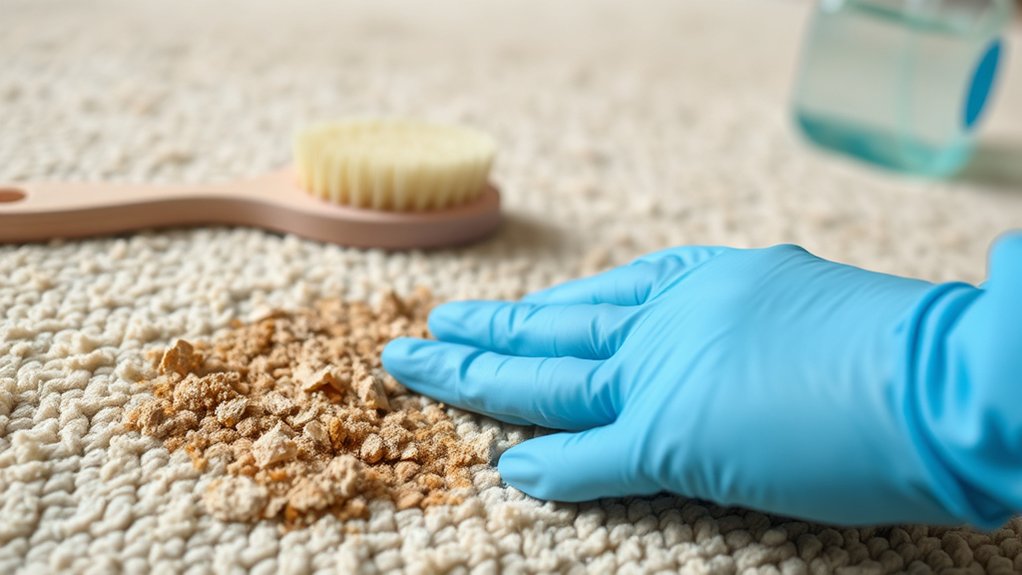
Why does dry cat vomit stick so stubbornly to your carpet? When cat vomit dries, its proteins and enzymes bond tightly with carpet fibers, making it tough to lift. Since maintaining your carpet’s cleanliness is essential for carpet maintenance, you need to act carefully.
Ignoring or scrubbing too hard can damage fibers or push stains deeper. Also, considering pet health, leftover residue may harbor bacteria or odors that affect your home environment and your cat’s comfort.
Dried vomit often contains stomach acids, which can discolor carpets if untreated. Understanding why dry vomit is hard to remove helps you approach cleaning effectively, preserving your carpet’s look and ensuring a safe space for your pet.
What Supplies Do You Need to Clean Dry Cat Vomit?
Before you start cleaning dry cat vomit from your carpet, gather the right supplies to make the process smoother and more effective. You’ll need disposable gloves to protect your hands and avoid direct contact with bacteria, keeping your pet’s health in mind.
Gather essential supplies like disposable gloves before cleaning dry cat vomit to protect yourself and your pet.
Grab a plastic scraper or spoon to gently lift the dried vomit without damaging the carpet fibers.
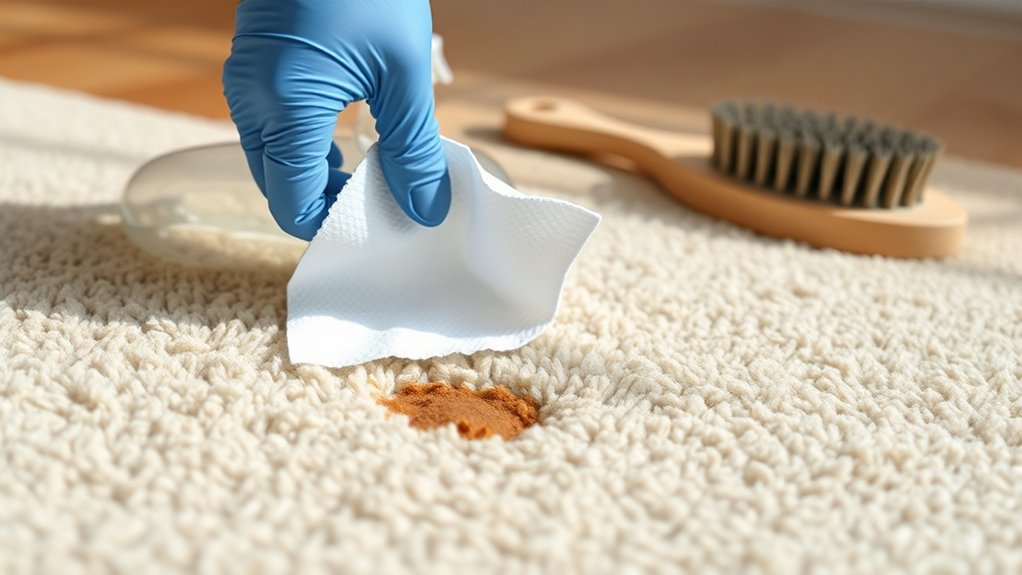
Have paper towels or clean cloths ready for blotting.
Use a carpet-safe enzymatic cleaner to break down organic stains without harsh chemicals that could harm your pet.
A spray bottle with water helps with spot treatment, and a vacuum cleaner will pick up any remaining residue once dry.
Having all these supplies on hand guarantees efficient carpet maintenance and reduces the risk of lingering odors or stains. It really makes the whole cleaning process easier and quicker.
How to Soften Dry Cat Vomit for Easy Removal
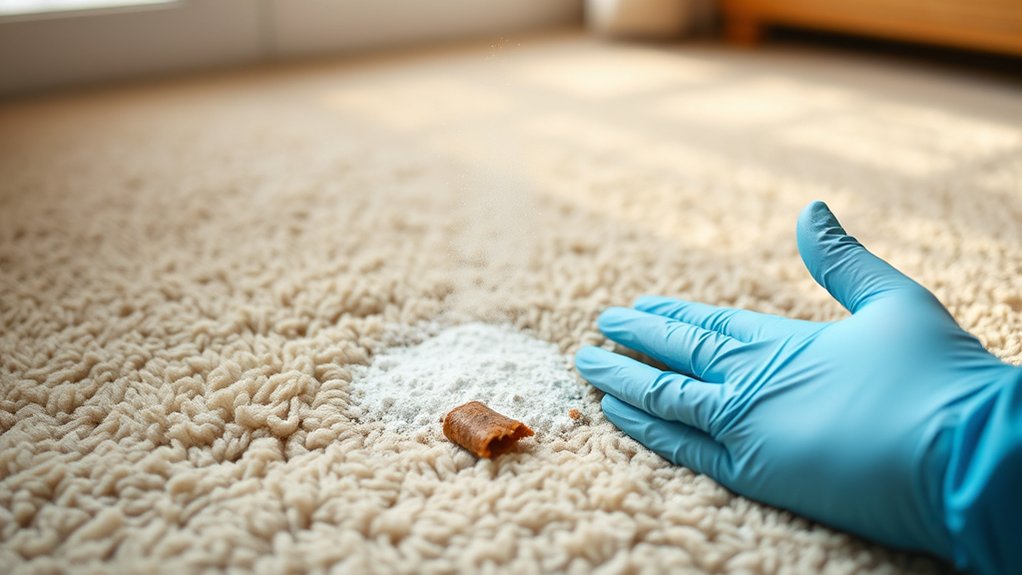
To soften dry cat vomit, you’ll want to pick the right solution. Something gentle, like a carpet cleaner or a simple mix of water and vinegar, works well.
Next, apply it carefully—try not to spread the mess around.
Then, give it some time to soak in and do its thing.
Being patient during this wait makes the whole removal process way easier and less messy.
Choosing Effective Softeners
Although dried cat vomit can be stubborn, choosing the right softener makes removal much easier. You want to focus on softener types that effectively break down the dried mess without damaging your carpet fibers. Common options include enzymatic cleaners, vinegar solutions, and commercial carpet softeners.
Each has its strengths depending on the stain’s age and severity. Think about what might work best for your situation before you start cleaning.
Consider these softener types and application methods:
- Enzymatic cleaners: Target proteins in vomit, ideal for deep cleaning.
- Vinegar solutions: Natural and safe, good for light softening.
- Commercial carpet softeners: Designed specifically to loosen dried debris.
Give one of these a try, and you’ll find the stain much easier to tackle!
Application Techniques
When you’re ready to soften dry cat vomit, applying your chosen solution carefully can make all the difference. Start by using a spray bottle or a clean cloth to gently apply the softener, ensuring even coverage without soaking the carpet.
Avoid harsh scrubbing, as it can push the vomit deeper. Instead, let the solution work its magic.
Use cleaning tools like a soft-bristled brush or a microfiber cloth to lightly agitate the area once softened, helping to lift the residue.
Patience and gentle application techniques prevent damage and make removal easier.
Waiting Time Tips
How long should you wait after applying a softening solution to dry cat vomit? Giving it enough time is essential for effective removal while protecting your carpet and supporting pet health.
Typically, waiting 10 to 15 minutes allows the solution to break down the dried mess without soaking too deep into carpet fibers.
Here are some waiting time tips to think about:
- Avoid rushing; softening first prevents aggressive scrubbing that can damage carpet fibers.
- Monitor the area to ensure the solution doesn’t dry out; reapply if necessary.
- Use this time to check on your pet’s behavior and health, as repeated vomiting may need vet attention.
Following these steps helps maintain your carpet’s integrity and supports your pet’s well-being.
How to Clean Dry Cat Vomit From Carpet Step-by-Step
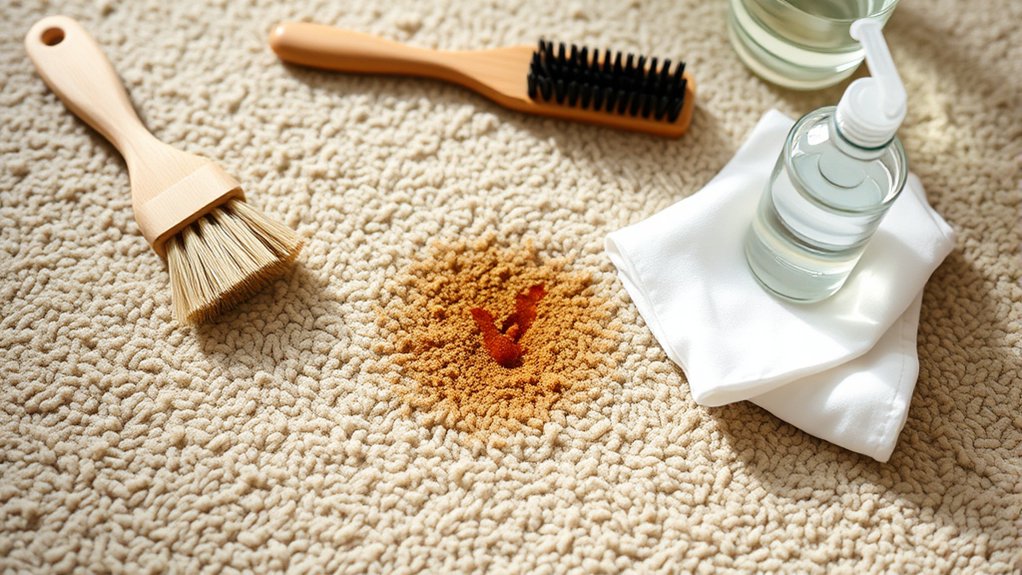
Since dried cat vomit can be stubborn, you’ll need to tackle it carefully to avoid damaging your carpet fibers. Start by gently scraping off the dry residue with a dull knife or spoon. Next, vacuum the area to remove loose particles.
Then, apply a pet-safe cleaning solution to protect pet health while maintaining carpet integrity. Blot the spot with a clean cloth, avoiding harsh rubbing. Finally, let the carpet air dry completely.
| Step | Action | Tip |
|---|---|---|
| 1 | Scrape off dry vomit | Use a dull tool to avoid damage |
| 2 | Vacuum residue | Prevents deeper dirt embedding |
| 3 | Apply cleaning solution | Choose pet-safe products |
| 4 | Blot with cloth | Avoid rubbing to protect fibers |
| 5 | Air dry | Ensures no moisture remains |
This method supports both pet health and carpet maintenance effectively.
How to Remove Stains and Odors After Cleaning Cat Vomit
Although you’ve removed the solid residue, stains and odors can still linger in your carpet fibers. To fully restore your carpet, focus on effective odor control and stain removal techniques.
Start by blotting the area with a mixture of white vinegar and water to neutralize odors.
Next, apply baking soda over the damp spot and let it sit for several hours. This helps absorb any lingering smells and moisture.
Afterward, vacuum thoroughly to remove the baking soda and any remaining particles.
These steps tackle both visible stains and hidden smells, which keeps your carpet from smelling unpleasant. Just remember to avoid rubbing the area, since that can spread stains and push them deeper into the fibers.
With consistent care, you’ll keep your carpet fresh and stain-free after cleaning dry cat vomit, making your home clean and odor-free.
Should You Use Commercial Cleaners or DIY for Cat Vomit?
Controlling stains and odors after cleaning cat vomit often leads to the question of whether you should rely on commercial cleaners or try DIY solutions. Commercial cleaners are formulated to break down stains and neutralize odors effectively, often protecting carpet fibers from damage. They’re also tested for pet health, ensuring they’re safe around your furry friend.
On the other hand, DIY methods use common household ingredients, which can be gentler and more affordable but mightn’t tackle tough stains or odors as thoroughly. When choosing, consider the severity of the stain and your cat’s sensitivity.
If you’re concerned about harsh chemicals affecting pet health or carpet fibers, it’s best to opt for pet-safe commercial products or mild DIY options. Balancing effectiveness and safety helps you keep a clean carpet and maintain a healthy home environment.
Tips to Prevent Cat Vomit From Damaging Your Carpet
If you want to keep your carpet looking fresh, taking steps to prevent cat vomit from causing damage is key. You can reduce incidents by addressing your cat’s health and environment.
Start by keeping the litter box clean and accessible. A dirty box can stress your cat, leading to vomiting.
Ensure the litter box is clean and easy to reach to reduce your cat’s stress and prevent vomiting.
Regular grooming helps too. It minimizes fur shedding and prevents hairballs that often cause vomit.
Finally, watch for dietary triggers or sudden changes that upset your cat’s stomach.
Here are three quick tips to protect your carpet:
- Maintain a clean, well-placed litter box to avoid stress-related vomiting
- Brush your cat frequently to reduce fur shedding and hairball formation
- Feed a consistent, high-quality diet to support digestive health and minimize upset
These efforts really go a long way in preventing carpet stains from cat vomit.
Frequently Asked Questions
Can Dry Cat Vomit Cause Allergies or Health Issues?
Yes, dry cat vomit can cause allergy symptoms and health risks if you don’t clean it promptly. You might experience sneezing, coughing, or itchy eyes from allergens trapped in the vomit.
Over time, bacteria and mold can grow, increasing health risks, especially for those with asthma or weakened immune systems.
How Often Do Cats Typically Vomit at Home?
Cats typically vomit occasionally, about once every few weeks. This often happens if they’re grooming themselves a lot and swallow hairballs.
If you notice frequent vomiting, it’s a good idea to check their litter box habits and grooming routine for any changes. Sometimes, dietary issues or stress can cause them to vomit more often.
Keep an eye on your cat’s behavior. And if vomiting happens more than once a week or you see other symptoms, it’s best to consult a vet.
Are Certain Carpet Materials More Resistant to Cat Vomit Stains?
Yes, certain carpet fibers are more resistant to cat vomit stains. When you choose carpets made from synthetic fibers like nylon or polyester, you’ll benefit from better stain resistance compared to natural fibers like wool.
These synthetic fibers repel moisture and are easier to clean, reducing the chances of permanent stains.
So, if you want a carpet that handles accidents well, focus on stain resistance and opt for durable carpet fibers designed to withstand messes. It’s all about picking the right material that can take a beating and still look good.
That way, you won’t have to stress as much when your cat has an upset stomach.
What Are Common Reasons Cats Vomit Frequently?
You notice your cat vomiting frequently due to hairballs from excessive grooming, dietary issues, or sudden changes in their diet.
You might also see frequent vomiting caused by allergies, infections, or other underlying health problems.
To help, consider making some dietary adjustments like switching to sensitive stomach food or offering smaller, more frequent meals.
Always keep a close eye on your cat, and if the vomiting doesn’t stop, it’s a good idea to visit the vet for a thorough check-up.
Can Diet Changes Reduce Cat Vomiting Incidents?
Yes, diet modifications can considerably help with vomit prevention in cats. When you adjust your cat’s food to include easily digestible ingredients and avoid allergens or irritants, you often reduce stomach upset.
Introducing high-quality, balanced meals and feeding smaller, frequent portions can also prevent vomiting.
Conclusion
Cleaning dry cat vomit from your carpet might seem tough, but with the right steps, you can tackle it effectively. Did you know that 60% of pet owners struggle with removing pet stains? This often leads to permanent carpet damage.
By softening the vomit first and using proper cleaning techniques, you’ll protect your carpet and keep your home fresh. Remember, quick action and the right supplies make all the difference in restoring your carpet’s look.
It’s easier than you think once you know what to do!