How Often Should You Clean Washing Machine Filter – Guide
You should clean your washing machine filter every three months to prevent blockages and guarantee peak performance. If you do heavy laundry, consider cleaning it monthly. Watch for signs like slow drainage, odors, or lint on clothes. These usually mean it’s time to clean.
Always unplug your machine before removing the filter. Rinse it thoroughly, then dry and securely reinstall it. This simple routine helps avoid costly repairs and keeps your machine running longer.
There’s even more to gain by exploring proper cleaning steps and troubleshooting tips. Taking a little time now can save you headaches later!
Reasons To Clean Your Washing Machine Filter Regularly
Because lint and debris can quickly accumulate, you should clean your washing machine filter regularly to guarantee efficient water drainage and prevent clogs. This maintenance step ensures your machine operates at its best by reducing mechanical strain and avoiding blockages that compromise performance.
A clean filter also prevents moisture retention, which can cause mold, mildew, and unpleasant odors. By removing trapped organic matter, you keep things hygienic and stop bacteria from growing.
Consistent cleaning extends your washing machine’s lifespan by minimizing stress on internal components and cutting down the risk of costly repairs. To keep things running smoothly and hygienically, make filter cleaning part of your regular routine.
Taking this proactive step maximizes water flow and helps protect your appliance’s functionality over time. It’s a simple habit that saves you headaches and keeps your washer working like new. Regular maintenance and systematic adjustments ensure long-term efficiency and prevent unexpected issues.
How Often Should You Clean Your Washing Machine Filter?
You should clean your washing machine filter every three months to keep things running smoothly and prevent any buildup.
But if you’re doing heavy laundry loads or using your machine a lot, it’s a good idea to clean it monthly. That way, you can avoid clogs before they become a problem.
Keep an eye out for signs like slow drainage or strange odors—these usually mean your filter needs some immediate attention.
Taking care of it regularly will help your washing machine perform at its best!
Regular maintenance and calibration can prevent issues and extend the life of your machine.
Recommended Cleaning Frequency
Although washing machine filters vary by model and usage, cleaning them every three months generally keeps things running smoothly.
For front-load washers, it’s usually every three to four months, depending on how often you use the machine.
If you do a lot of laundry regularly, it’s a good idea to check and clean the filter every month. This helps stop too much lint and debris from building up.
Regular cleaning makes sure your washer drains properly and avoids blockages that can slow it down.
Skipping this maintenance can cause drainage problems and put extra strain on your washer’s parts.
By sticking to these cleaning schedules, you’ll help your washing machine last longer and work its best.
Just set a reminder based on how often you use it so your filter stays clean and your appliance keeps running reliably.
Maintaining consistent performance through regular filter cleaning is key to preventing mechanical issues and ensuring efficiency.
Signs Filter Needs Cleaning
Keeping a regular cleaning schedule is important, but recognizing when your washing machine filter actually needs attention can prevent performance issues. You should check the filter if you notice slow drainage or your clothes remain wet after a cycle. Visible debris around the door seal also signals clogging.
Increased mold growth or unpleasant odors inside the washer typically indicate a blocked filter requiring immediate cleaning. Persistent detergent residue or lint on your laundry further confirms this.
To maintain peak performance, inspect your filter monthly for early signs of buildup. Addressing these indicators promptly ensures efficient washing cycles and prevents costly repairs.
Cleaning the filter every three months remains standard, but responding to these signs keeps your washer running smoothly between scheduled cleanings. Just like in espresso extraction where balancing variables is crucial for optimal results, maintaining proper flow resistance in your washing machine filter helps ensure consistent and effective operation.
How To Tell When Your Washing Machine Filter Needs Cleaning
Several clear indicators signal when your washing machine filter needs cleaning. You should watch for lint or debris on clothes, slow drainage, unpleasant odors, and unusual noises during cycles. These signs point to a clogged or dirty filter requiring inspection.
| Indicator | What You Observe | What It Means |
|---|---|---|
| Lint on Clothes | Clothes come out linty or dirty | Filter is not trapping debris |
| Slow Drainage | Water drains slowly or incompletely | Filter may be clogged |
| Unpleasant Odors | Musty or detergent smells linger | Residue buildup in filter |
| Unusual Noises/Delays | Washer sounds strange or cycles longer | Filter could be obstructed |
Keep an eye out for these signs regularly. That way, you’ll know exactly when your washing machine filter needs a good cleaning. It’s a simple step that can save you a lot of hassle down the road. Maintaining consistent measurement accuracy is crucial for reliable results in any routine maintenance task.
How To Safely Clean Your Washing Machine Filter
Before you start cleaning your washing machine filter, make sure to unplug the appliance. This step is really important to keep things safe.
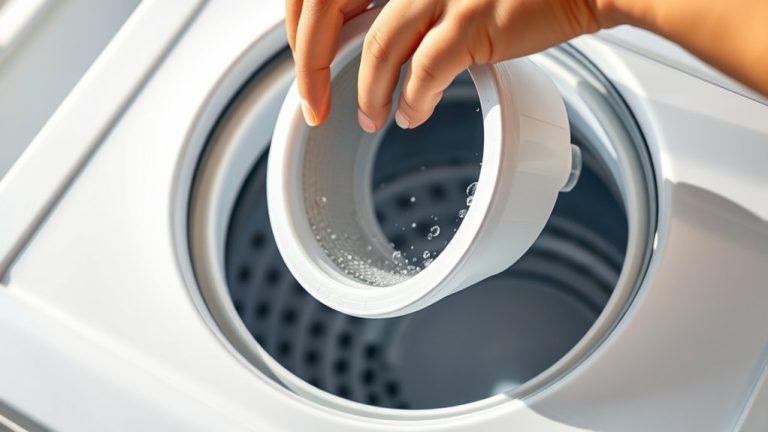
Next, find the filter and gently take it out. Take a good look at it to see if there’s any debris or damage.
After that, give it a thorough rinse under warm water.
Once it’s clean, pop it back in securely so you don’t have to worry about any leaks.
Maintaining consistent temperature control in your appliance can help prevent buildup and extend its lifespan.
Preparing For Filter Cleaning
Although cleaning your washing machine filter is a straightforward task, you have to take specific safety precautions to avoid injury or damage. First, unplug the machine and shut off the water supply to prevent electrical hazards and leaks.
Next, identify the filter access panel. It’s usually located at the bottom front or inside the agitator depending on your model. Position a shallow dish or towel beneath the panel to catch any residual water during filter removal.
Follow the manufacturer’s instructions carefully to remove the filter without applying too much force. This helps avoid damage to the components.
After removal, rinse the filter under warm water to get rid of debris and lint.
Then, dry it thoroughly before reinstalling. These preparatory steps help ensure a safe, efficient cleaning process while keeping your washing machine’s best performance.
Additionally, maintaining proper dosing in your coffee preparation similarly helps ensure consistent and optimal results by controlling key variables.
Removing And Inspecting Filter
Once you’ve prepared by unplugging the machine and positioning a tray beneath the filter access panel, you can proceed to remove the filter.
Locate the filter, typically found at the bottom front of the machine. Depending on your model, either unscrew or unlatch the filter carefully, following the manufacturer’s guidelines to avoid damage.
Expect some residual water to drain; the tray will catch it.
After removal, inspect the filter thoroughly. Look for accumulated debris, lint, or any signs of wear and tear. This examination is essential to maintain the washing machine’s efficiency and prevent blockages.
Handle the filter gently to avoid damaging any seals or components.
Proper inspection sets the stage for effective cleaning and guarantees your machine continues to operate smoothly.
Taking a little extra care here really makes a difference in the long run.
Cleaning And Reinstalling Filter
When you’ve removed the filter, rinse it thoroughly under warm running water to clear away lint, detergent residue, and debris. Use a soft brush if needed to dislodge stubborn buildup. Before removal, always unplug the machine and place a towel or container underneath to catch residual water.
Once clean, carefully reinstall the filter by aligning it properly and securing it according to the manufacturer’s instructions to prevent leaks.
| Step | Action | Tip |
|---|---|---|
| 1 | Unplug washing machine | Ensure safety |
| 2 | Remove filter | Follow manual instructions |
| 3 | Rinse filter under warm water | Use soft brush if needed |
| 4 | Dry filter | Prevent mold |
| 5 | Reinstall securely | Check for proper seal |
What Happens If You Skip Cleaning Your Washing Machine Filter?
If you skip cleaning your washing machine filter, lint and debris will build up, which leads to poor drainage and longer wash cycles. This blockage makes the pump work harder, and that can cause mechanical problems like pump breakdown or motor strain.
Plus, when moisture gets trapped with the debris, it creates a perfect spot for mold to grow. That means unpleasant smells and even possible health risks.
Neglected filters can also cause debris to end up back on your clothes, leaving lint, hair, or residue after washing.
Over time, all these issues add up, making your washing machine less efficient and more likely to break down early.
So, regular filter cleaning is really important. It keeps water flowing properly, helps avoid mechanical damage, and keeps things hygienic.
Doing this will extend your machine’s life and save you from expensive repairs down the road.
How To Keep Your Washing Machine Filter Cleaner Longer
Neglecting to clean your washing machine filter can cause significant issues, but keeping up with it properly will help it work efficiently for longer. Try to clean your filter every three months to stop buildup from getting out of hand and keep it cleaner.
After each cleaning, make sure to rinse the filter really well and dry it completely. This helps get rid of moisture that can lead to mold growth.
Use a gentle brush or cloth to clean the filter so you don’t accidentally damage any parts. Also, check that the area around the filter is dry and free from debris before you put it back in.
This way, you avoid any chance of recontamination.
For some extra protection, you can apply a sealant made for plastic parts. It helps keep the filter durable and clean for longer.
Following these steps will keep your filter performing well and extend its life effectively.
When To Call A Professional For Stubborn Filter Problems
Although regular cleaning usually keeps your washing machine filter functioning properly, persistent issues like clogging or damage often require professional intervention. If repeated cleanings don’t clear blockages or if the filter sustains damage, call a technician to diagnose potential mechanical faults.
Avoid forcing the filter if it’s hard to access or remove, especially when special tools or expertise are needed. Persistent drainage problems or foul odors after cleaning also signal internal issues that require expert attention.
Additionally, contact a professional if you notice water leaks or corrosion on internal parts during filter inspection.
Finally, schedule maintenance if routine cleaning fails to restore filter performance or if your washer malfunctions repeatedly despite proper care. This way, you’ll ensure safe and effective repairs.
Frequently Asked Questions
Can I Use Vinegar to Clean My Washing Machine Filter?
You can use vinegar to clean your washing machine filter, but do it sparingly. Dilute the vinegar with water before you use it to avoid any damage.
It’s a good idea not to overdo it. Too much vinegar might harm your filter. Always check your machine’s manual first to make sure vinegar is safe for the type of filter you have.
Does Cleaning the Filter Affect My Washing Machine’s Warranty?
Cleaning your washing machine filter won’t void your warranty. In fact, neglecting it might.
You need to follow the manufacturer’s instructions precisely. Regular filter maintenance is required to keep your warranty coverage valid and to prevent damage.
Are All Washing Machine Filters the Same Size?
No, washing machine filters vary in size depending on the brand, model, and type.
You’ll find front-loaders often have smaller filters, while top-loaders usually feature larger, more accessible ones inside the agitator.
It really depends on the design and how the manufacturer wants to make maintenance easier for you. So, it’s always good to check your specific machine’s manual before buying a replacement filter.
Can a Clogged Filter Cause My Clothes to Smell?
Yes, a clogged filter acts like a sponge, trapping moisture and debris. This blocks water flow and promotes mold growth. That’s what causes your clothes to smell musty.
You’ll want to clean it regularly to keep your laundry fresh and odor-free. It’s a simple step that makes a big difference!
Is It Necessary to Clean the Filter After Every Wash?
You don’t need to clean the washing machine filter after every wash. Instead, clean it every three months or when you notice drainage issues or lint buildup.
Doing this helps maintain peak performance. Plus, it prevents odors or malfunctions from developing.
Conclusion
Think of your washing machine filter as an essential checkpoint, making sure every cycle runs smoothly. Cleaning it regularly is like clearing debris from a river. This helps water flow freely and stops costly blockages from forming.
By taking care of this small but important part, you protect your machine’s efficiency and lifespan. Don’t let neglect turn your filter into a barrier.
Stay proactive, follow the steps, and keep your appliance performing at its best.