How Much Bleach To Clean Washing Machine – Proper Usage Guide
You should use ½ cup of bleach for standard washing machines and ¼ cup for high-efficiency (HE) models to clean effectively without causing excess suds. Always add bleach to the dispenser or when the drum is half full, and run the Basket Clean cycle or fill with hot water before adding bleach.
Keep the door open after the cycle to prevent mold and odors. Following these steps monthly guarantees freshness. And there’s more you can do to maintain your washer’s best performance.
How Much Bleach Should You Use?
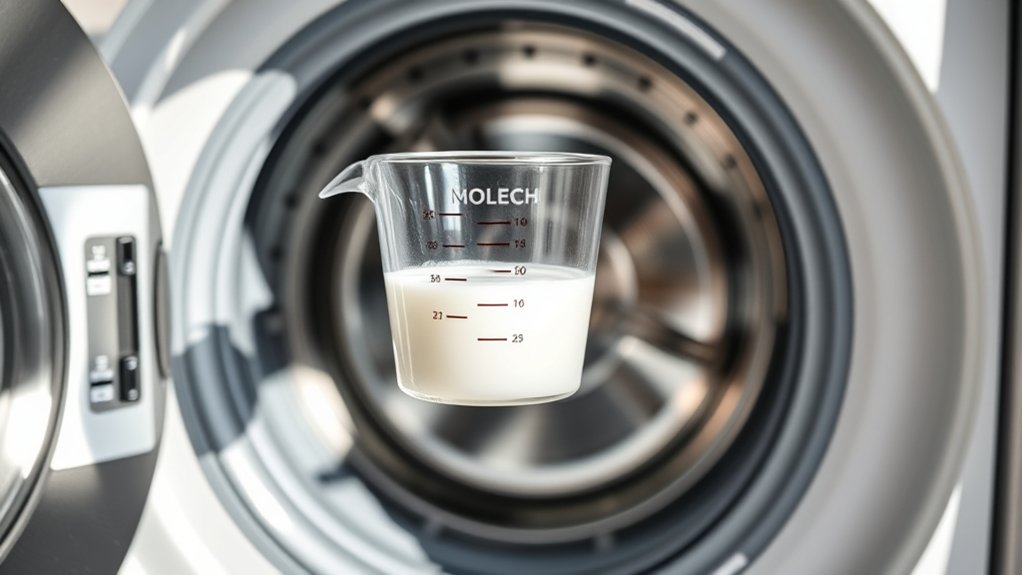
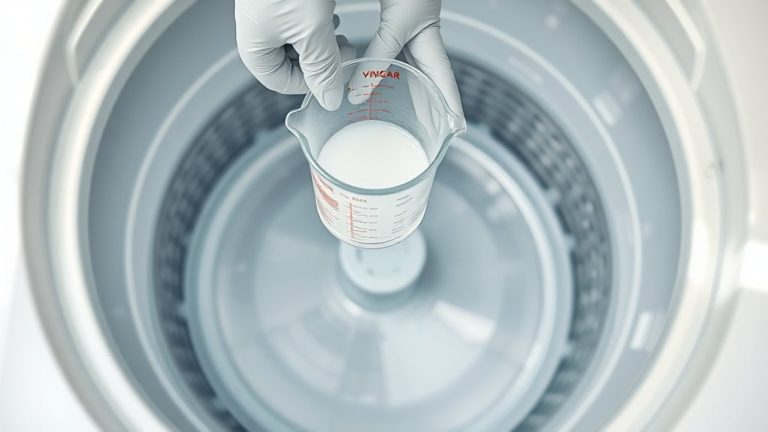
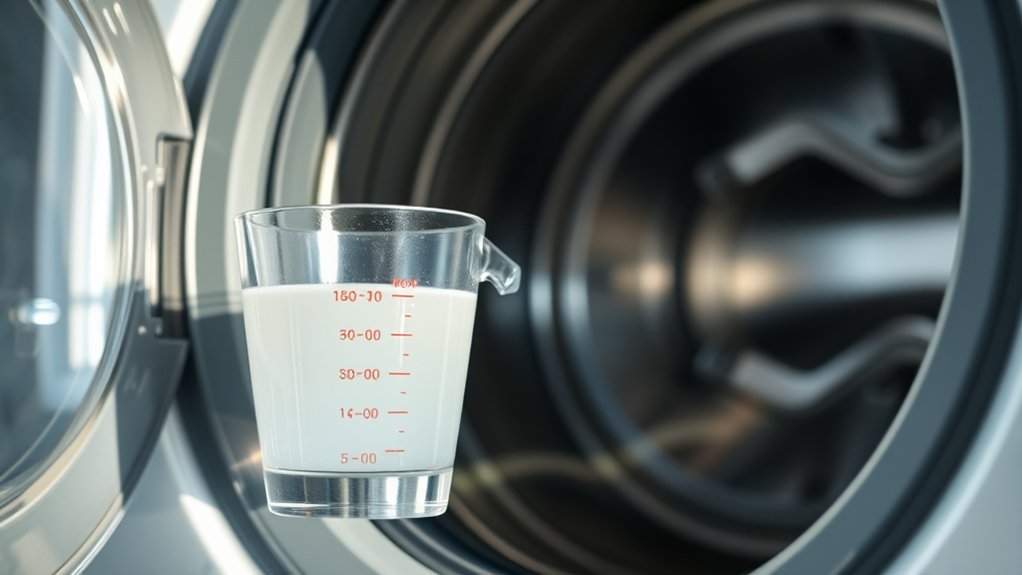
When cleaning your washing machine, using the right amount of bleach is essential for effective sanitation without causing damage. For standard washers, ½ cup of bleach is enough to clean and disinfect the drum. High-efficiency washers need less, about ¼ cup, to avoid excess suds.
Always add bleach to the bleach dispenser or pour it into the wash water when the drum is half full to protect your machine and fabrics.
If your machine has a deep cleaning cycle, you can use up to 1 cup of bleach, but only follow the manufacturer’s guidelines for those specific cycles.
Remember to guarantee proper ventilation and never mix bleach with other cleaners to keep the process safe and efficient. It’s simple but important for your safety and the health of your machine.
Running a Washing Machine Bleach Cleaning Cycle
Before you start the bleach cleaning cycle, make sure the washer basket is empty and ready for sanitization.
You’ll want to use the Basket Clean cycle with the recommended amount of bleach.
Once the cycle begins, try not to stop it—that way, it can do its job properly.
After it finishes, be sure to follow up with some regular maintenance to keep your machine fresh and clean.
Preparing For Bleach Cycle
Although it might seem simple, preparing your washing machine properly guarantees the bleach cleaning cycle works effectively. Before starting, make certain the washer is completely empty.
Use a full cup (250 ml) of Clorox bleach for a standard cycle, or follow your machine’s guidelines.
If your washer has a Basket Clean cycle, select it. Otherwise, fill the basket with hot water first, then add the bleach.
Avoid interrupting the cleaning cycle to confirm thorough sanitization of the drum and its components.
After the cycle finishes, leave the door open to help the interior dry and prevent mold or mildew growth.
- Confirm washer is empty
- Measure 1 cup of Clorox bleach
- Choose Basket Clean or fill with hot water
- Don’t stop the cleaning cycle
- Leave door open post-cycle
Starting The Basket Clean
Once you’ve prepared your washer by emptying it and measuring the bleach, it’s time to start the Basket Clean cycle.
Pour 1 cup (250 ml) of bleach into the washing machine’s basket to eliminate odors and buildup effectively.
Select the Basket Clean cleaning cycle on your washer and press Start.
Make sure not to interrupt the cycle once it has begun. Stopping halfway means you’ll need to run a full cycle again to guarantee thorough cleaning.
This cleaning cycle targets mold, mildew, and residue, helping your washing machine stay fresh and efficient.
For best results, perform the Basket Clean cycle monthly to maintain peak performance and prevent unpleasant smells from developing inside your machine.
Post-Cycle Maintenance Tips
After your washing machine finishes the bleach cleaning cycle, you should leave the door open to allow airflow and prevent mold and mildew buildup.
Proper post-cycle maintenance helps keep your washer fresh and functioning well.
Remember to follow the manufacturer’s instructions for bleach products and cleaning cycles.
Also, allow air to circulate by keeping the door open after each bleach solution cycle.
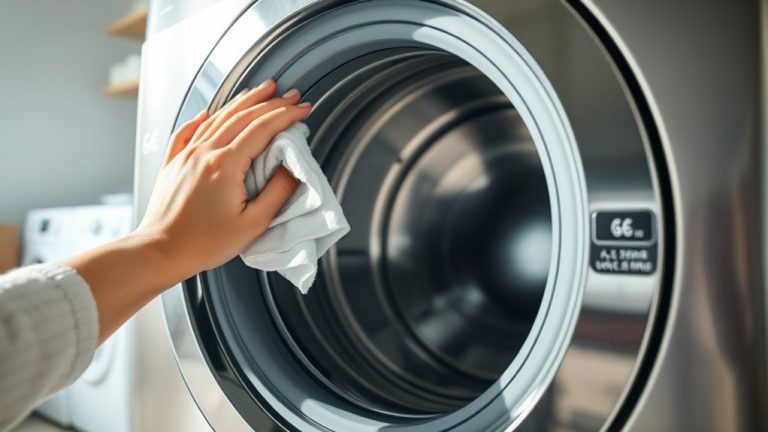
Wipe down the drum and rubber seals to prevent buildup.
Make sure to unplug the machine before any manual cleaning or maintenance.
If odors or buildup persist, you can repeat the bleach cleaning cycle.
Taking these steps will help your washer stay in great shape.
Adjusting Bleach Amounts for HE and Standard Washers
When you clean your washing machine with bleach, it’s important to adjust the amount based on whether you have a standard or high-efficiency (HE) washer. For standard washers, use ⅓ cup of bleach to guarantee effective cleaning and sanitizing.
High-efficiency washers require less, only ¼ cup, because they use less water.
Always follow usage instructions by adding bleach to the bleach dispenser if your machine has one. If not, dilute the bleach in water before adding it.
Avoid exceeding the recommended amount of bleach to prevent damage to your washer and fabrics.
Always check your washer’s manual for specific guidance on bleach compatibility and the proper amount of bleach to use. This helps you clean safely and maintain your machine’s performance.
Cleaning Without a Bleach Dispenser
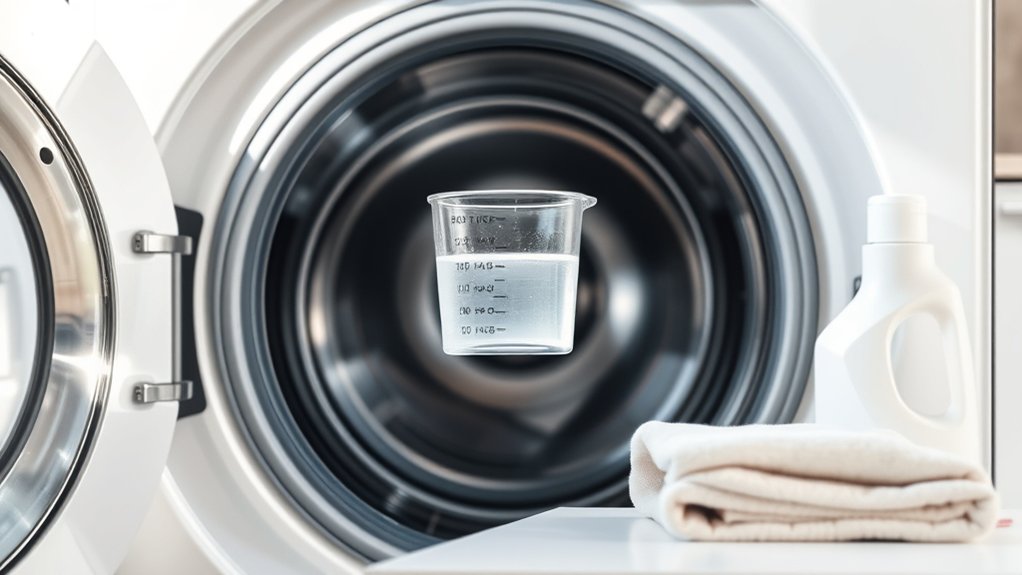
If your washing machine doesn’t have a bleach dispenser, don’t worry. Just start by filling the drum halfway with water before you add the bleach—this helps prevent any damage.
Use about half a cup of bleach for standard machines, or a quarter cup if you have a high-efficiency (HE) model.
Make sure to add the bleach once the drum is half full so it dilutes properly.
After that, run a full wash cycle without any clothes inside. This way, you can safely clean and sanitize your washer without any hassle.
Manual Bleach Addition
Since your washing machine lacks a bleach dispenser, you’ll need to add liquid bleach manually once the drum is halfway filled with water. This helps prevent damage and makes sure the bleach dilutes properly.
Here’s how to clean your washing machine effectively:
Use ½ cup (120 ml) of regular unscented bleach for standard machines, or ¼ cup (60 ml) for HE models. Pour the bleach directly into the water, not on your clothes, so you don’t risk discoloring the fabric.
Be sure to check your owner’s manual for specific bleach compatibility and dosage. Add the bleach manually after the drum is half-filled with water.
Then, run a complete wash cycle on hot to sanitize the washing machine and get rid of any odors.
Safe Cleaning Practices
Although your washing machine doesn’t have a bleach dispenser, you can still clean it effectively by adding bleach manually at the right time.
Start by filling the washer drum halfway with hot water to guarantee proper dilution. Then, add ½ cup of bleach to the water for effective sanitization.
Allow the cycle to agitate for a few minutes before pausing it. Let the bleach solution sit for about 30 minutes to enhance cleaning.
After soaking, resume the cycle to rinse the drum thoroughly, preventing bleach residue on future loads.
Always check your washer’s instructions before using bleach to avoid damage. Following these safe cleaning practices guarantees your machine stays fresh and hygienic without a bleach dispenser.
How to Use Bleach Safely in Your Washing Machine
When using bleach in your washing machine, you need to add the correct amount to avoid damaging your fabrics and the machine itself.
Follow these tips to use bleach safely during cleaning:
Use ⅓ cup of bleach per load for standard washers, and ¼ cup for HE machines. Always add bleach to the dispenser or when the drum is half full to protect your fabrics.
Use ⅓ cup bleach for standard washers, ¼ cup for HE, adding it to the dispenser or half-full drum.
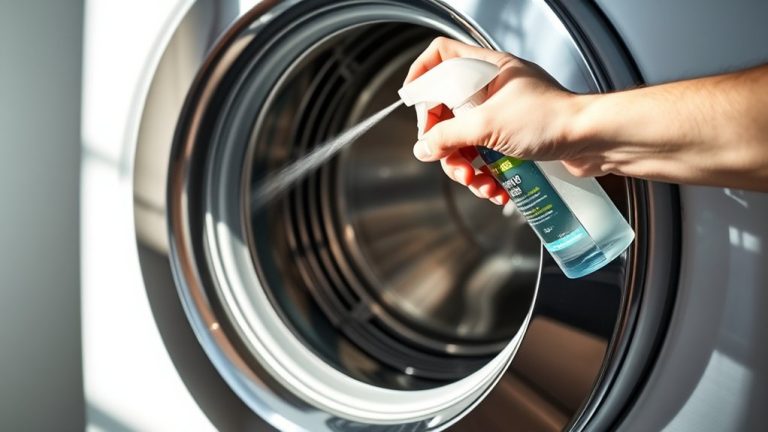
Never mix bleach with detergent or other cleaning products because that can create harmful vapors.
Make sure your laundry area is properly ventilated when running a bleach cycle.
It’s also a good idea to check your washer’s instructions for bleach compatibility and the recommended amounts. This way, you keep your clothes fresh and your machine in good shape.
Rinsing Your Washing Machine After a Bleach Cycle
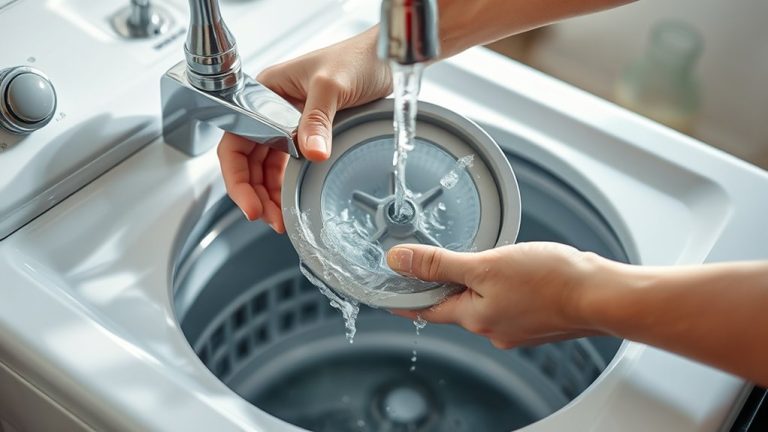
To protect your clothes and keep your washing machine in top condition, you should always run a thorough rinse cycle after using bleach. This step removes any residual bleach from the washer tub, preventing damage to future laundry and helping to remove stains effectively.
Use hot water during the rinse cycle, as it dissolves and flushes out leftover bleach more efficiently. Set the rinse cycle to the longest duration available to guarantee a complete clean. If your machine offers an extra rinse option, select it for added assurance that all bleach traces are gone.
Regularly rinsing after bleach cycles maintains your washer’s performance and prevents unpleasant odors.
Preventing Mold and Mildew Between Cleanings
After rinsing your washing machine thoroughly following a bleach cycle, you can take some extra steps to keep mold and mildew from developing between cleanings.
These simple habits will help keep your machine fresh and free from buildup.
Try to keep the washer door open after each use. This improves airflow and stops moisture from sticking around.
Also, be sure to use only the recommended amount of detergent. Too much can leave residue that encourages mold and mildew.
It’s a good idea to store your machine in a dry, well-ventilated spot. This helps cut down on humidity.
Don’t forget to regularly check and clean the rubber door gasket. It’s a common place for mold or mildew to hide.
Once a month, run a bleach cycle using 1 cup (250 ml) of bleach. This will sanitize your machine and get rid of any hidden mold.
Following these tips will help prevent mold and mildew growth and give you more time between deep cleanings.
How to Fix Common Bleach Cleaning Issues
Although bleach is effective for cleaning your washing machine, you might encounter some common issues that can reduce its effectiveness or cause unpleasant odors.
First, always start with an empty washer basket to prevent residue buildup during the cleaning cycle.
For top-load washers, use 1 cup of bleach during the Basket Clean cycle as per the manufacturer’s instructions. If your washer lacks this cycle, fill it with hot water and add ¾ cup of bleach or a water softening additive.
Repeat if odors persist.
Check and clean the drain hose regularly to prevent siphoning, which often causes a musty odor during bleach cleaning.
After the cycle, leave the washer door open to promote airflow and prevent mold or mildew growth.
Following these steps guarantees ideal bleach cleaning results. It’s a simple routine that really makes a difference!
Troubleshooting Washing Machine Odors and Residue
To tackle washing machine odors effectively, start by identifying common sources like mold in the door gasket or detergent buildup in dispensers.
These areas can easily trap moisture and grime, which leads to that unpleasant smell.
Next, you’ll want to check for any drainage blockages.
Take a look at the hoses and filters to see if there’s any clogging or debris stuck inside.
Clearing these out not only helps get rid of odors but also makes sure your machine runs smoothly.
Identifying Odor Sources
When you notice persistent odors in your washing machine, it’s often due to trapped grime in the drum, seals, or hoses that encourages mold and mildew growth.
To pinpoint the source of odor, focus on these common trouble spots:
- Rubber door gasket: Clean regularly to prevent mildew buildup.
- Drum interior: Residual detergent and moisture can harbor grime.
- Detergent dispenser: Soap scum buildup creates a breeding ground for odor.
- Hoses: Trapped debris encourages mold growth and unpleasant smells.
- Moisture retention: Poor ventilation keeps dampness, promoting mildew.
Make sure to address these areas during your cleaning routine with bleach.
This guarantees you eliminate odor-causing bacteria effectively.
Catching and treating these sources early stops mildew from developing and keeps your washing machine fresh and hygienic.
Clearing Drainage Blockages
If your washing machine smells musty or leaves residue on clothes, clogged drainage components might be the culprit. Start by inspecting the drain hose and pump filter for blockages caused by detergent buildup, lint, or debris.
Regular maintenance, including monthly cleaning of these areas, prevents odors and enhances drainage.
Flush the drain hose with water and a diluted bleach solution to kill mold and mildew. Be sure the drain hose isn’t inserted too far into the drain-stand pipe to avoid siphoning, which causes musty smells.
Promptly addressing drainage problems guarantees your machine runs effectively and stays fresh.
Incorporating bleach into your cleaning routine helps maintain a hygienic drainage system and keeps your washing machine odor-free and performing at its best. It’s a simple step that really makes a difference!
Tips for Maintaining a Fresh-Smelling Washing Machine
Although washing machines clean your clothes, they can develop unpleasant odors if not properly maintained. To keep your washing machine fresh and odor-free, it’s important to establish a regular cleaning routine.
You can maintain your washer effectively by following these tips:
- Clean your washing machine monthly using 1 cup of bleach during a Basket Clean cycle to eliminate odors and sanitize the machine.
- Keep the washer door open after each use to promote airflow and prevent mold buildup.
- Inspect and clean the rubber door gasket regularly to remove trapped moisture and grime.
Use high-efficiency detergent sparingly to avoid residue buildup.
Also, run a bleach clean-out cycle once a month to flush out detergent residue and prevent odor development.
These simple steps really help you maintain a fresh-smelling washing machine efficiently. Give them a try, and your washer will thank you!
Frequently Asked Questions
Can Bleach Damage Rubber Seals in My Washing Machine?
Yes, bleach can damage rubber seals in your washing machine if you use it too often or undiluted.
To protect your seals, practice rubber seal maintenance by following bleach safety guidelines and avoid excessive cleaning frequency with bleach.
Consider bleach alternatives to prevent mold and extend your machine’s life. Proper washing machine care guarantees mold prevention without compromising rubber parts.
How Often Should I Deep Clean My Washing Machine With Bleach?
For fabulous freshness, follow a monthly deep cleaning frequency to fight foul odors and mold.
Stick to bleach concentration tips by using 1 cup of bleach per clean cycle. Keep a consistent machine maintenance schedule to guarantee odor elimination techniques work best.
Don’t forget mold prevention methods like wiping the gasket regularly.
If bleach isn’t ideal, try alternative cleaning solutions such as water softeners to keep your washer spotless and safe.
It’s all about finding what works best for your machine and routine.
Can I Mix Bleach With Other Cleaning Agents for Better Results?
You shouldn’t mix bleach with other cleaning agents for better results. Doing so risks toxic fumes that harm your health and damage your machine.
Instead, stick to bleach alone or consider bleach alternatives to tackle mold prevention and odor removal safely.
Follow safety precautions and clean your washing machine regularly.
Adjust the cleaning frequency based on how often you use it. This approach guarantees effective machine maintenance without compromising safety or performance.
Is It Safe to Use Bleach in Portable or Mini Washing Machines?
Just like a knight trusts his sword, you can rely on bleach for cleaning portable machines, but use it carefully.
Bleach effectiveness hinges on proper dilution and cleaning frequency. You don’t want to damage delicate parts.
Prioritize user safety by ventilating well and wearing gloves.
If you prefer, alternative cleaners work but may not sanitize as well.
Follow manufacturer maintenance tips to keep your mini washer running smoothly and safely.
What Should I Do if Bleach Causes Discoloration on Clothes?
If bleach causes discoloration on your clothes, rinse the area with cold water right away to dilute it.
It’s important to act fast before the bleach sets in.
Always check fabric care labels to avoid damage.
Next time, consider using color-safe bleach or bleach alternatives—they’re much gentler on your clothes.
For stain removal, try gentle laundry tips like pre-testing on hidden spots first.
This helps you avoid surprises and keeps your fabrics safe.
To protect both your clothes and your washing machine, follow the recommended bleach amounts carefully.
Using the right products will keep your clothes vibrant and looking great longer.
Conclusion
Now that you know how much bleach to use, imagine your washing machine sparkling clean, free of mold and odors. By following these simple steps and using bleach properly, you’ll keep your washer fresh and efficient.
Just a little bleach goes a long way. Protect your clothes and machine by dosing carefully and cleaning regularly.
With these tips, your laundry routine will stay bright, fresh, and worry-free every time you wash.