How To Clean Washing Machine Without Affresh – Guide
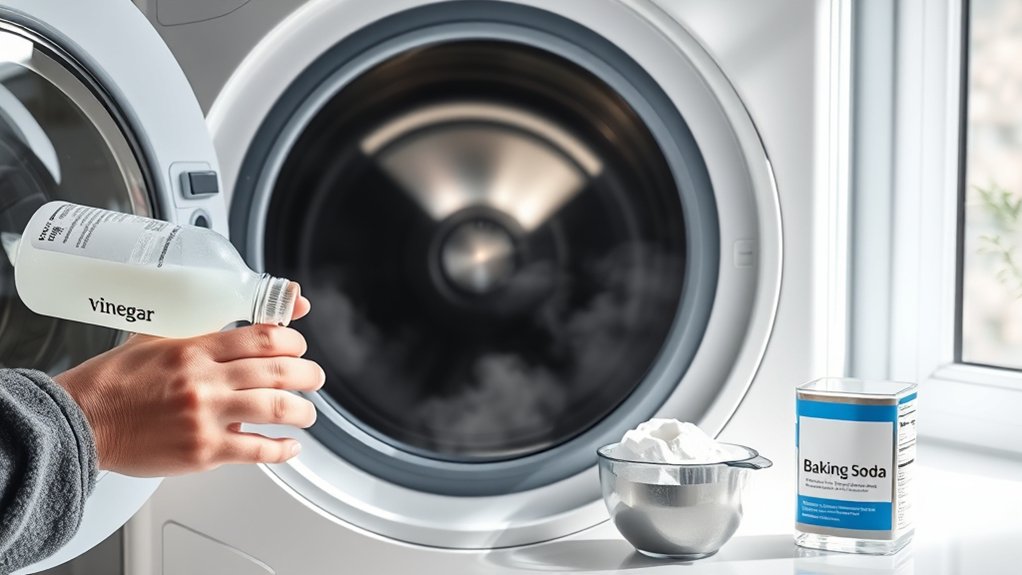
You can clean your washing machine without Affresh by using natural ingredients like vinegar and baking soda to remove residue, mold, and odors. Start by running a hot water cycle with a cup of white vinegar to dissolve buildup. Then follow with a baking soda cycle to neutralize smells.
Manually scrub gaskets, dispensers, and door seals using a vinegar solution and baking soda paste for stubborn grime. Leaving the door open after cleaning helps prevent moisture and mold.
Explore effective techniques to maintain freshness and optimize washer performance.
Why You Should Clean Your Washing Machine Regularly
Although it might seem like your washing machine cleans itself, you should clean it regularly to prevent residue, mold, and mildew buildup that cause odors and affect laundry freshness. Residue from soap, grease, and minerals accumulates in gaskets, dispensers, and drums, creating a breeding ground for germs that transfer musty smells and stains to your clothes.
Consistent cleaning and maintenance eliminate this buildup, ensuring efficient machine operation and preventing mechanical wear caused by grime. Regular upkeep not only preserves your washer’s lifespan but also optimizes water and energy use.
Why Does Your Washer Smell Like Mildew?
Why does your washer smell like mildew? The mildew smell usually comes from mold and mildew growing in damp, poorly ventilated spots like the gasket and detergent dispenser. Residue buildup from soap scum, body oils, and fabric softeners creates the perfect spot for those odors to hang around.
Mildew odors in washers stem from mold growth in damp, trapped spots like gaskets and detergent compartments.
Moisture left inside the machine after cycles, especially if the door stays closed, only makes things worse.
Here are four main reasons for the mildew smell:
- Residue buildup traps mold and mildew inside the drum and gasket.
- Moisture retention promotes bacterial growth between cycles.
- Infrequent cleaning cycles fail to remove accumulated deposits.
- Hard water deposits create mineral buildup that supports mold growth.
Using vinegar during your cleaning cycle can really help break down these residues and cut down on the odors effectively.
How To Get Your Washer Ready For Cleaning Without Affresh
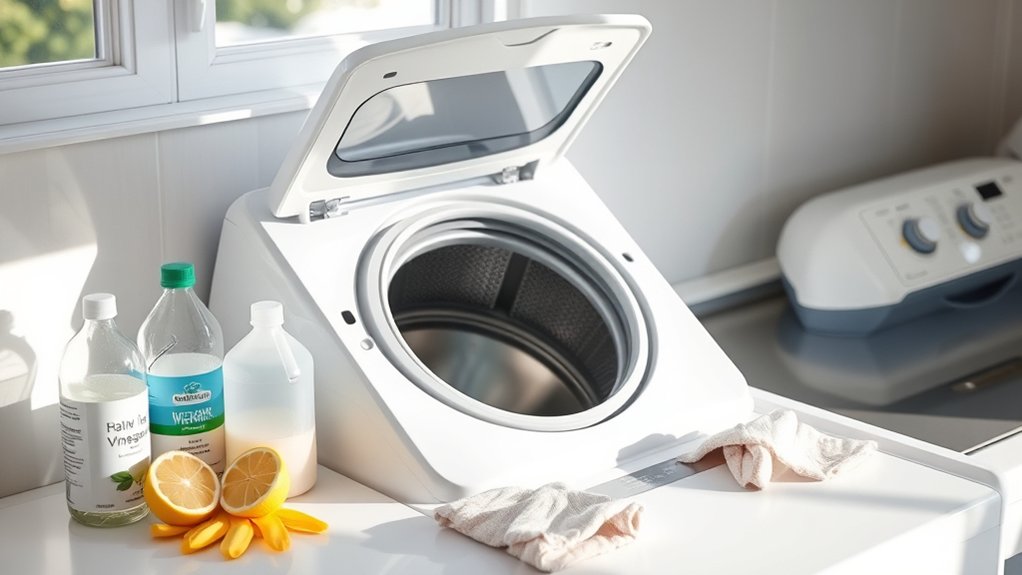
Before you start cleaning your washer without Affresh, make sure it’s empty and free of any debris. Begin by setting the machine to the hottest water setting and selecting a long or heavy cycle to enhance the deep clean process.
Before running the cycle, add one cup of white vinegar or half a cup of baking soda directly into the drum or detergent compartment. These natural cleaning agents help break down residues and odors.
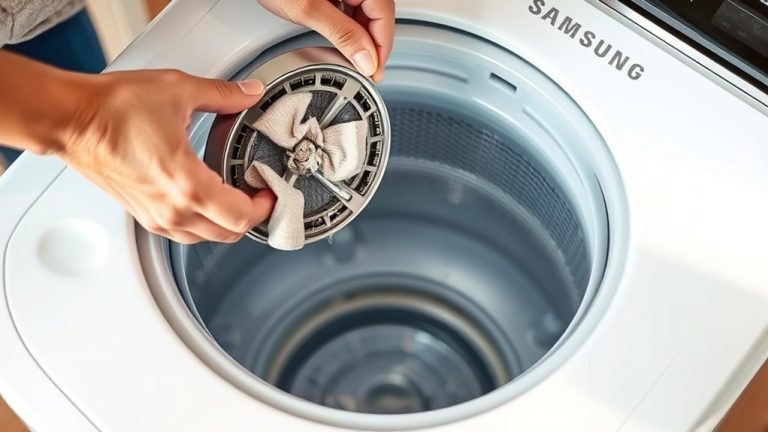
Don’t forget to manually wipe the rubber gasket, door seal, and detergent dispenser with a cloth soaked in vinegar or a mild solution. This will remove mold and buildup.
After completing the cycle, leave the washer door open to allow the interior to dry thoroughly. This helps prevent future mold growth and keeps your machine hygienic.
Using Vinegar And Baking Soda To Clean Your Washer
When you want to clean your washer effectively without commercial products, using vinegar and baking soda provides a powerful combination. Vinegar acts as a natural disinfectant, dissolving soap scum, mineral deposits, and mildew.
Vinegar and baking soda offer a natural, effective way to clean and refresh your washer without harsh chemicals.
Baking soda neutralizes odors and removes grime, helping with odor removal and fabric softening.
Follow these steps for regular cleaning:
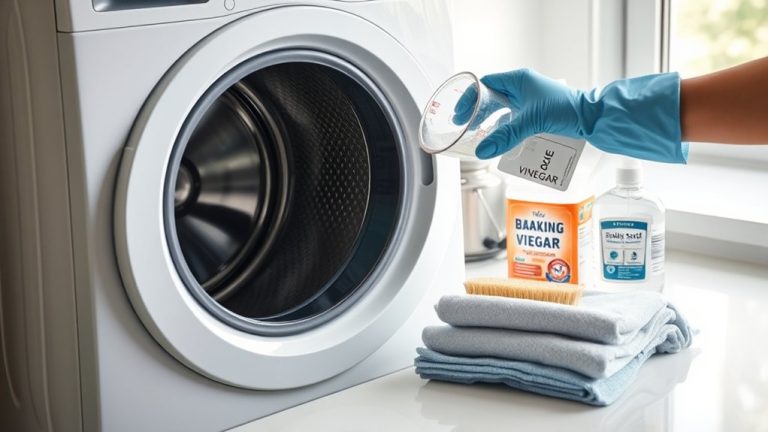
- Run a hot water cycle with two cups of white vinegar to disinfect and break down buildup.
- Run a second cycle adding half a cup of baking soda to neutralize odors and clean grime.
- For persistent residue, make a paste of vinegar and baking soda, apply it to affected areas, then scrub and rinse.
- Repeat this process regularly to maintain a clean washer free from mildew and mineral deposits.
It’s a simple routine that keeps your washer fresh and running well without any harsh chemicals. Give it a try and see the difference!
How To Scrub Residue From Gaskets And Dispensers
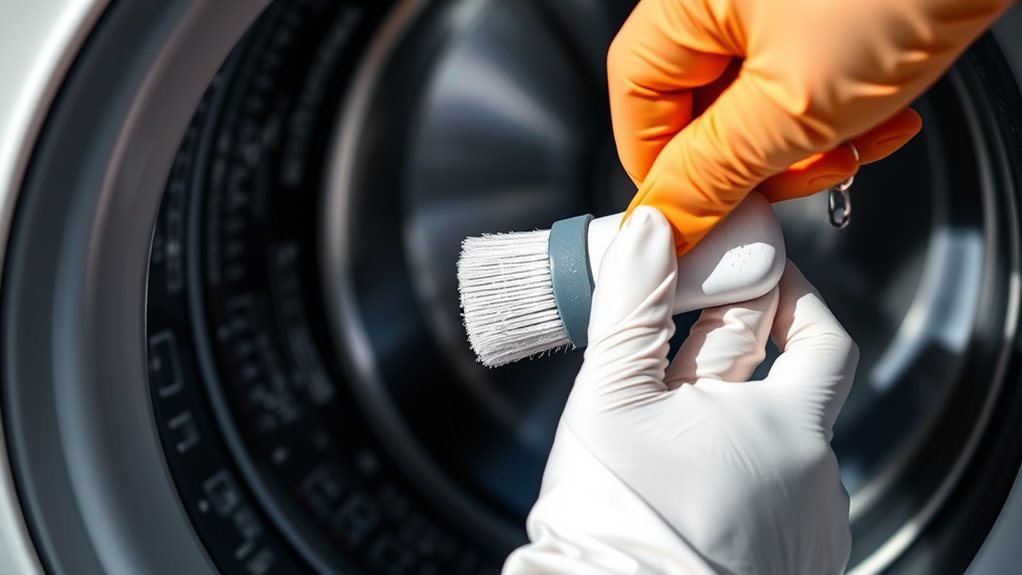
You’ll want to start by inspecting and cleaning the rubber gasket thoroughly. Focus on mold, mildew, and any residue buildup you see.
Grab a vinegar-and-water solution along with a soft brush, and gently scrub the gasket and dispenser areas. Make sure to pay close attention to those little crevices where grime tends to hide.
If you come across tougher spots, don’t worry. Just apply a baking soda paste, let it sit for a bit, and then scrub again.
This should help you remove stubborn debris more effectively.
Cleaning Rubber Gasket
How exactly do you tackle the stubborn residue clinging to your washing machine’s rubber gasket? Start by mixing equal parts white vinegar and water to create a vinegar solution. Spray it generously on the gasket to loosen mold and residue.
Then, follow these steps for effective mold removal and mildew prevention:
- Use a soft cloth or toothbrush dipped in the vinegar solution to scrub all folds and crevices of the rubber gasket.
- For stubborn buildup, apply a baking soda paste and scrub gently to remove soap scum and detergent residue.
- Wipe the gasket thoroughly with a clean, damp cloth to eliminate remaining debris and cleaning agents.
- Keep the gasket dry and leave the door open after each load to prevent future residue and mold growth.
This cleaning process ensures a clean, mildew-free rubber gasket. Give it a try and see the difference!
Removing Dispenser Grime
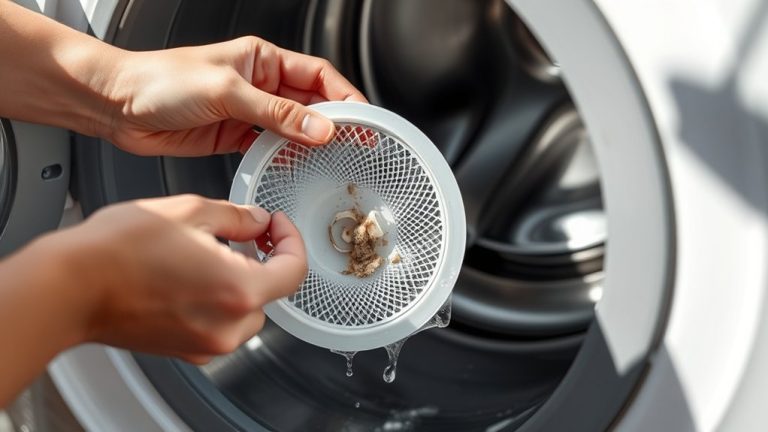
After thoroughly cleaning the rubber gasket, turn your attention to the dispenser area, where soap scum and mold often hide in little crevices. Remove the dispenser tray and soak it in a warm vinegar solution for 15-20 minutes. This helps loosen up all that grime.
Next, use a scrub brush or a soft-bristled toothbrush to gently clean the soap scum and mold buildup from the tray and dispenser slots. If you come across stubborn residue, no worries—just apply a baking soda paste, let it sit for a bit, then scrub it away.
Make sure to rinse all parts thoroughly and dry them completely before putting everything back. This step is key to preventing future residue buildup. Following this cleaning routine will keep your dispenser working smoothly and hygienic.
| Challenge | Solution |
|---|---|
| Stubborn soap scum | Vinegar solution soak |
| Hidden mold buildup | Detailed scrubbing |
| Residue removal | Baking soda paste + scrub |
Scrubbing Mold And Mildew
Although mold and mildew can be stubborn, scrubbing them from your washing machine’s gaskets and dispensers becomes manageable with the right approach. To effectively remove residue, follow these steps:
- Mix equal parts white vinegar and water, then apply with a soft brush or cloth to the gasket and dispenser areas.
- For stubborn mold or mildew, create a baking soda paste and scrub using a toothbrush or small brush.
- Wear gloves and verify proper ventilation to protect yourself from spores and irritants.
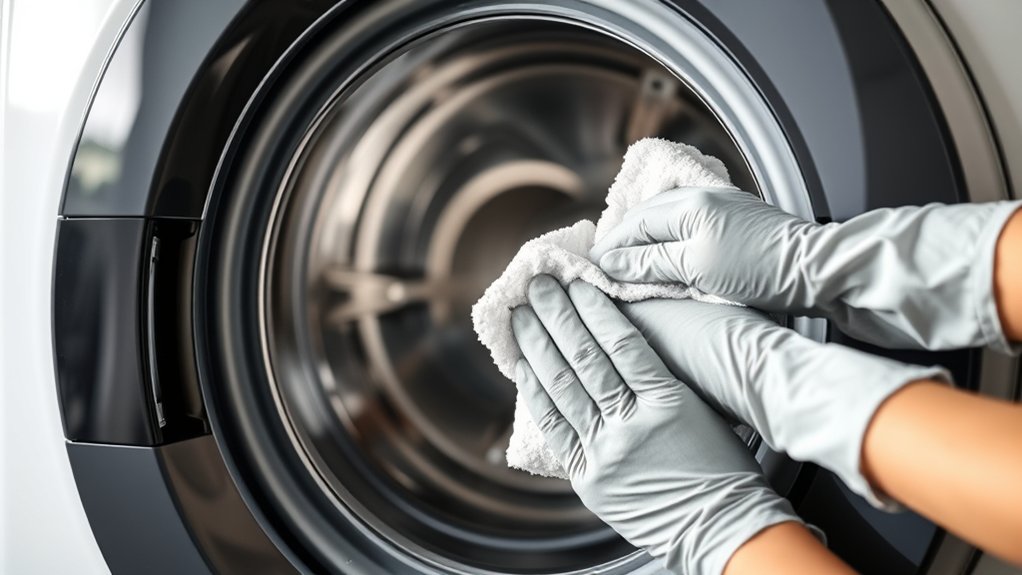
- Wipe the scrubbed areas with a damp cloth to remove loosened residue, then dry thoroughly with a microfiber towel.
Regular cleaning and disinfectant use prevent mold buildup, ensuring your washing machine stays hygienic and functional.
It’s really all about consistency. Keep at it, and your machine will thank you!
How To Clean The Washer Drum And Exterior Naturally
To clean the washer drum naturally, just run a hot cycle with two cups of white vinegar. This helps break down soap scum and gets rid of any mold lurking inside.
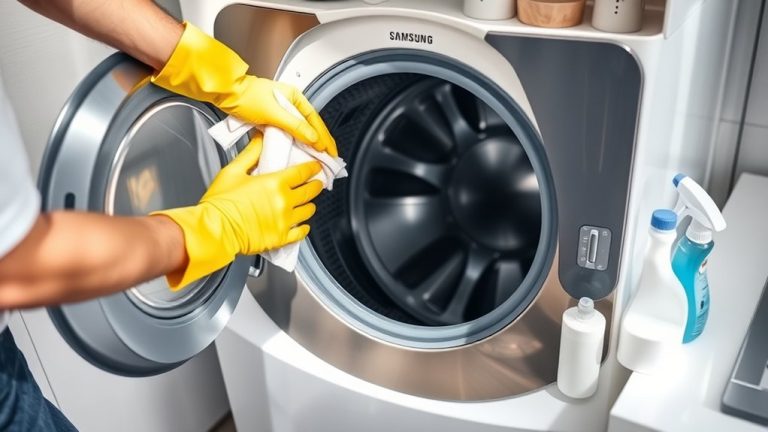
When it comes to the exterior, grab a microfiber cloth and dampen it with a vinegar-water solution. Wipe down the surfaces and the control panel to easily remove dirt and grime.
For those hard-to-reach spots, like the door seal and detergent dispenser, use a soft brush dipped in vinegar. This will give you a thorough clean without any harsh chemicals.
Easy and natural!
Natural Drum Cleaning
When you want to clean your washer drum naturally, start by running a hot cycle with two cups of white vinegar. This helps dissolve soap scum and eliminate mold spores. Vinegar’s acidity combined with hot water works really well to clean the drum.
Next, sprinkle half a cup of baking soda inside the drum and run another hot cycle. This will deodorize and remove any leftover residue.
After that, wipe the interior drum with a microfiber cloth soaked in a vinegar-water solution. This helps get rid of any remaining grime.
Use a soft brush dipped in vinegar to scrub the edges and hard-to-reach areas. This makes sure no buildup remains.
Finally, leave the door open after cleaning so the drum can air dry. This prevents moisture buildup and keeps your washer fresh.
This process cleans the drum thoroughly while deodorizing and eliminating grime naturally. It’s simple and effective!
Exterior Wipe Techniques
After thoroughly cleaning the drum, focus on the washing machine’s exterior to keep it looking good and hygienic. Use a microfiber cloth dampened with a vinegar solution. Mix water and white vinegar in equal parts to effectively remove grime and dirt from surfaces.
When you get to the control panels and tight corners, take your time. Use a soft brush or an old toothbrush dipped in the same vinegar solution to clean those tricky spots carefully. Make sure to pay special attention to the rubber gasket and door seal. Wipe them down with a vinegar-dampened cloth to get rid of mold, soap scum, and mildew buildup.
Avoid abrasive scrubbers on stainless steel or painted areas since they can cause scratches. Instead, gently polish those spots with a microfiber cloth. Following these steps will keep your washer’s exterior clean, help it last longer, and maintain its efficiency.
How To Prevent Mold And Odors Between Washes
Although washing machines handle your laundry, they need proper care to prevent mold and odors between uses.
Effective mold prevention and odor control depend on removing moisture and doing regular maintenance.
- Leave the door open after each wash to let moisture evaporate. This helps reduce mold growth on the door seal.
- Wipe rubber gaskets and door seals often to get rid of leftover moisture and stop mold from building up.
- Run a monthly hot water wash with vinegar to clean away odors and keep the washing cycle fresh.
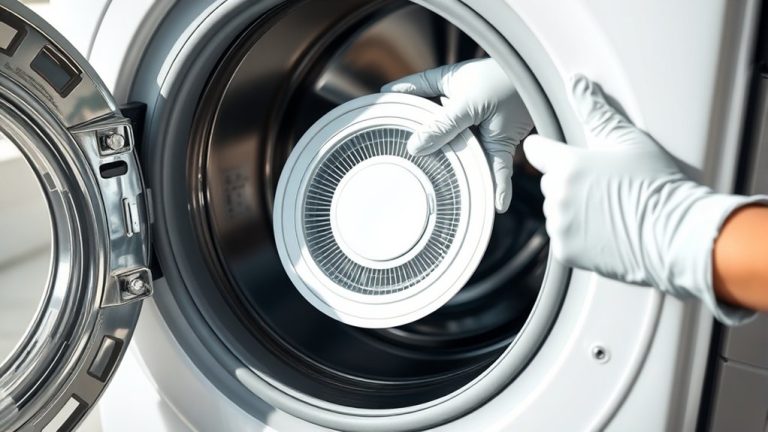
- Clean detergent dispensers and filters weekly to prevent residue buildup that can cause musty smells.
Following these steps will keep your machine smelling fresh and working well for longer. Plus, you don’t have to rely on commercial cleaners to do it!
How To Know When To Clean Again And Fix Stubborn Odors
Because washing machines accumulate residue and moisture over time, you should clean your machine every 4 to 6 weeks or after about 30 wash cycles to prevent odor buildup.
If you detect a persistent musty smell despite regular cleaning cycles, it signals mold and mildew growth, especially around gaskets, dispensers, and the drum.
To fix stubborn odors, perform deep cleaning using natural disinfectants like vinegar or baking soda to target bacteria and residue.
Also, check internal components such as filters and water lines for clogs that hinder odor removal.
Between uses, maintain proper ventilation by leaving the door open and wiping down surfaces to reduce moisture retention.
Sticking to this regular maintenance schedule helps you effectively prevent and eliminate odor buildup, keeping your washing machine fresh and hygienic.
Frequently Asked Questions
Can I Use Lemon Juice Alone to Clean My Washing Machine?
You can use lemon juice alone to clean your washing machine, but it won’t fully disinfect or remove heavy buildup. Its natural acids help break down soap scum and deodorize the drum.
For thorough cleaning, you should combine lemon juice with hot water and possibly baking soda or vinegar.
Using lemon juice regularly can prevent mold and mildew, especially in seals.
That said, relying on lemon juice alone isn’t enough for deep cleaning or sanitizing. It’s great for maintenance but not a complete solution.
Is It Safe to Mix Vinegar and Baking Soda in the Washer?
Mixing vinegar and baking soda in your washer is like lighting a small controlled fire. It’s effective but needs caution. You can safely use them, but avoid combining large amounts at once to prevent overflow or damage to rubber seals.
Add vinegar and baking soda separately in different cycles to let each work most effectively. This way, you break down grime without risking wear on hoses or seals. It helps keep your machine clean and running smoothly.
How Often Should I Run a Cleaning Cycle if I Use My Washer Daily?
If you use your washer daily, you should run a cleaning cycle at least once a month to prevent residue buildup and keep it running smoothly.
For more frequent use, think about cleaning it every two weeks. This helps avoid mold and odors caused by moisture and detergent residue.
Also, running a cleaning cycle every 30 to 40 loads is a good rule of thumb. It keeps your washer fresh, odor-free, and working efficiently over time.
Can Cleaning My Washing Machine Improve Its Energy Efficiency?
You’re killing two birds with one stone when you clean your washing machine regularly. It improves energy efficiency by removing residue and mold that make the machine work harder.
A clean drum and gasket guarantee maximum water flow and heating, reducing electricity use per cycle.
Plus, it lessens strain on the motor and pump, preventing energy-draining malfunctions.
Keeping your washer spotless helps it run smoothly and consume less power overall. So, a little cleaning goes a long way in saving energy and keeping your machine in top shape.
Are There Any Natural Alternatives to Vinegar for Cleaning Washers?
Yes, you can use several natural alternatives to vinegar for cleaning washers. Baking soda acts as a gentle abrasive and deodorizer. Hydrogen peroxide disinfects and removes mold without the strong odor. Lemon juice combined with baking soda breaks down soap scum effectively.
Furthermore, essential oils like tea tree or eucalyptus provide antimicrobial benefits. Natural enzyme-based cleaners derived from plants help break down residues without using vinegar. These options are easy to find and work well for keeping your washer fresh and clean.
Conclusion
You might think cleaning your washer without Affresh is less effective, but vinegar and baking soda work just as well to eliminate odors and buildup. By regularly scrubbing gaskets and dispensers and wiping down the drum, you keep your machine performing well and staying hygienic.
Staying consistent helps prevent mold growth and keeps your laundry smelling fresh. Don’t wait for stubborn smells to appear. Clean proactively to extend your life of your washer and make sure every load smells clean and fresh.