How To Clean Top Loading Washing Machine With Vinegar – Guide
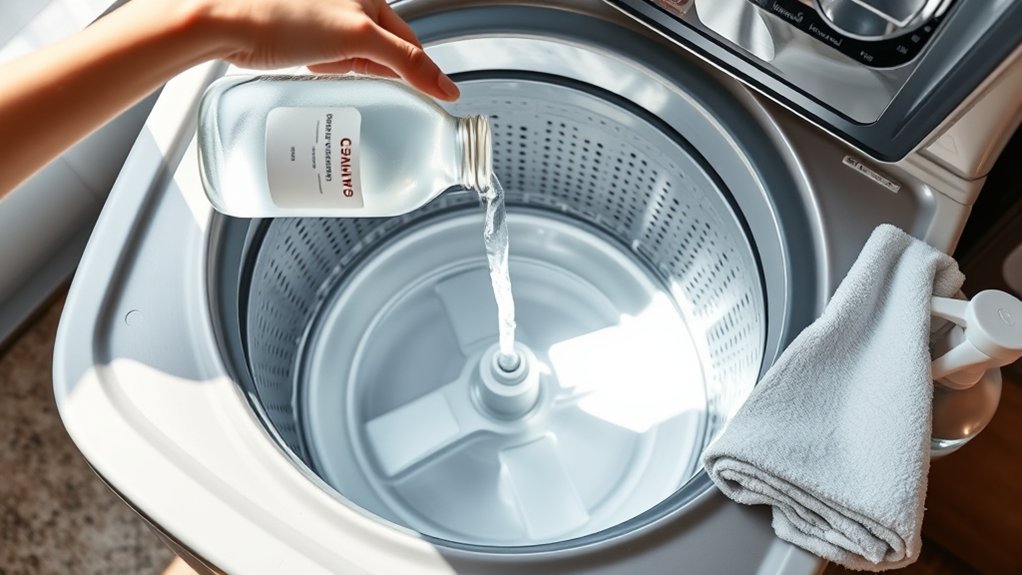
To clean your top-loading washing machine with vinegar, fill it with hot water on the largest load setting. Add 2-4 cups of distilled white vinegar directly into the drum, then run the hottest cycle.
Pause halfway through to let it soak, then wipe the interior. After that, add ½ cup of baking soda in a separate cycle to deodorize and remove any residue.
Always wear gloves and unplug the machine before you start. Also, avoid using vinegar on rubber parts to prevent damage.
Want to keep your washer running efficiently and lasting longer? This simple routine can help!
Why You Should Clean Your Top-Load Washer Regularly
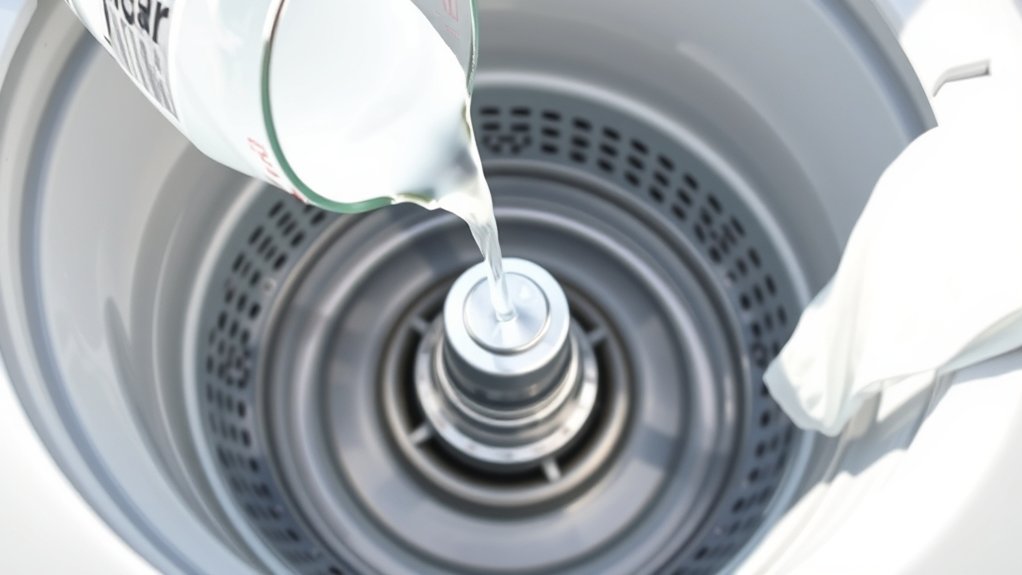
Even if your top-load washer looks clean on the outside, you should clean it regularly to prevent mold, mildew, and bacteria buildup inside. Consistent cleaning of your top load washer effectively eliminates musty odors that can transfer to your laundry.
Over time, soap scum and residue accumulate, reducing the washer’s efficiency and potentially causing mechanical issues. By incorporating vinegar into your cleaning routine, you guarantee thorough removal of these deposits, maintaining ideal performance.
Monthly cleaning with vinegar also prevents long-term grime accumulation, which can degrade internal components and shorten the appliance’s lifespan. Regular maintenance is a precise, preventive measure that keeps your top load washer functioning at peak capacity and safeguards your laundry’s cleanliness and hygiene.
Supplies and Safety Tips Before Cleaning With Vinegar
Before you start cleaning, make sure you have all the essential supplies ready, like distilled white vinegar and gloves to protect your skin.
It’s a good idea to unplug your washing machine first to avoid any electrical hazards.
Also, be careful not to pour vinegar directly into the drum. Instead, test a little vinegar on a small, hidden spot on rubber seals or hoses to make sure it won’t cause any damage.
This way, you can clean safely and effectively without any surprises.
Essential Cleaning Supplies
While cleaning your top-loading washing machine with vinegar, you should wear gloves and make sure there’s good ventilation. This helps protect your skin and respiratory system from irritation.
Before you start, unplug your top load washer to avoid any electrical hazards.
Use distilled white vinegar only because it’s the safest and most effective cleaning agent. Avoid flavored types since they might stain your washer.
It’s a good idea to test the vinegar on a hidden area first to make sure it won’t damage surfaces or rubber parts.
Keep your cleaning supplies, especially vinegar, in labeled, sealed containers. Store them out of reach of children and pets to stay safe.
Essential cleaning supplies include:
- Distilled white vinegar
- Rubber gloves
- Measuring cup
- Clean cloth or sponge
- Ventilation source (open window or fan)
Vinegar Safety Precautions
When handling vinegar for cleaning your top-loading washing machine, you should always wear gloves and eye protection to prevent irritation from its acidity.
Make sure the area is well ventilated because vinegar fumes can cause respiratory discomfort if you breathe them in too much.
Use only distilled white vinegar to avoid staining or residue from flavored or colored types.
And don’t pour vinegar directly into the washing machine drum. Instead, add it to the designated dispenser or directly into the water during a cycle for the best results.
Store vinegar in a cool, sealed container out of reach of children and pets to avoid accidental ingestion or spills.
Following these precautions will help you use vinegar safely and effectively while cleaning.
How to Run a Vinegar Hot Water Cycle Safely
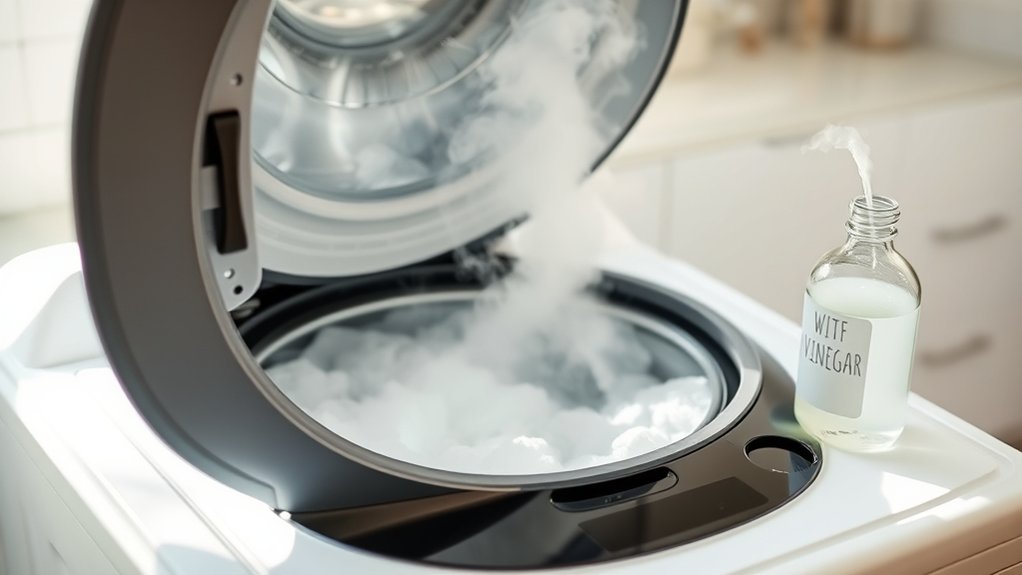
Although running a vinegar hot water cycle is straightforward, you need to follow specific steps to guarantee safety and effectiveness. Using hot water helps vinegar dissolve soap scum, mineral buildup, and mildew during the cleaning cycle.
To run this cycle safely, take these precautions:
- Fill the machine with hot water on the largest load setting for thorough coverage.
- Add 2 to 4 cups of white distilled vinegar directly into the drum without clothes.
- Start the hottest wash cycle to maximize cleaning efficiency.
Pause the cycle halfway, allowing the vinegar water to soak internal parts for 30 to 60 minutes. This soaking step really helps break down buildup.
Then, resume and complete the cycle. When it’s done, wipe the drum interior to remove any leftover grime.
Following these steps ensures a safe, efficient vinegar hot water cleaning cycle that keeps your washer running smoothly.
How to Clean the Agitator and Drum With Vinegar
First, you’ll want to mix up a vinegar and water solution. This is perfect for soaking any parts you can take out, making them easier to clean.
After that, grab a brush dipped in vinegar and give the agitator a good scrub to get rid of any gunk that’s built up.
Finally, pour some vinegar right into the drum and run a hot water cycle. This will help wash the inside thoroughly and leave it fresh.
Preparing Vinegar Solution
Since effective cleaning depends on proper solution preparation, mix 2 cups of white vinegar with hot water in a bucket or basin. This vinegar solution is essential for breaking down soap scum and mineral buildup inside your washing machine’s drum and agitator.
Use the mixture strategically to maximize cleaning efficiency.
Key steps for preparing and using the vinegar solution include:
- Combine 2 cups white vinegar with hot water thoroughly.
- Pour the solution directly into the drum.
- Dip a cloth in the vinegar solution for targeted wiping.
- Let the vinegar-soaked cloth rest 10-15 minutes on agitator and drum surfaces.
- Rinse all treated areas with clean water to remove residue.
Following these steps ensures a chemically effective cleaning process, enhancing your machine’s performance and longevity. It’s a simple way to keep your washer running smoothly!
Cleaning Agitator Surfaces
A thorough cleaning of the agitator surfaces is essential for maintaining your washing machine’s efficiency and hygiene. Start by removing any visible debris and detergent buildup around the agitator’s base and crevices.
Next, fill the washer with hot water and add 2 cups of vinegar. Run a full wash cycle to help loosen grime within the agitator surfaces.
About halfway through the cycle, pause and scrub the agitator carefully using a brush or sponge dipped in vinegar. This will help target any stubborn buildup.
Once the cycle finishes, run an additional rinse cycle with hot water to flush out any loosened residue and vinegar remnants.
Regularly cleaning the agitator with vinegar prevents mold, mildew, and soap scum buildup.
Doing this keeps your machine running smoothly and extends its lifespan. It’s a simple step that really makes a difference in your washing performance.
Washing Drum Interior
How exactly do you clean the washing drum interior and agitator effectively? Start by pouring 2 cups of white vinegar directly into the empty drum and run a hot water cycle. Pause the cycle after it begins and let the vinegar soak for about an hour. This soak loosens grime, soap scum, and mineral deposits inside the washing drum interior.
Next, use a microfiber cloth dampened with a vinegar-water solution to scrub the agitator, focusing on crevices and hidden spots. Resume and complete the cycle to rinse away residue.
Key steps to clean the washing drum interior and agitator with vinegar:
- Pour 2 cups vinegar into the drum
- Run hot water cycle without clothes
- Pause cycle for 1 hour soak
- Scrub agitator with vinegar-dampened cloth
- Finish cycle to rinse thoroughly
Repeat this process every few months to keep things fresh and clean.
How to Use Baking Soda to Deodorize and Remove Residue in Your Washer
When you add ½ cup of baking soda to your washing machine during a hot water cycle, it neutralizes odors and breaks down soap scum buildup effectively. Baking soda acts as a mild abrasive that removes residue from the drum and internal components without harming rubber seals.
To deodorize your washer efficiently, sprinkle the baking soda directly into the drum before starting the cycle. This method prevents musty smells and keeps your washer smelling fresh over time.
For an extra boost, you can combine baking soda with vinegar in a cleaning cycle. This helps dissolve lime deposits and amps up the deodorizing effects.
Using baking soda regularly makes sure your top-loading washer stays free from odor-causing buildup and residue. It keeps things hygienic and running smoothly, so your laundry routine just works better.
How to Wipe Down the Exterior and Lid Properly
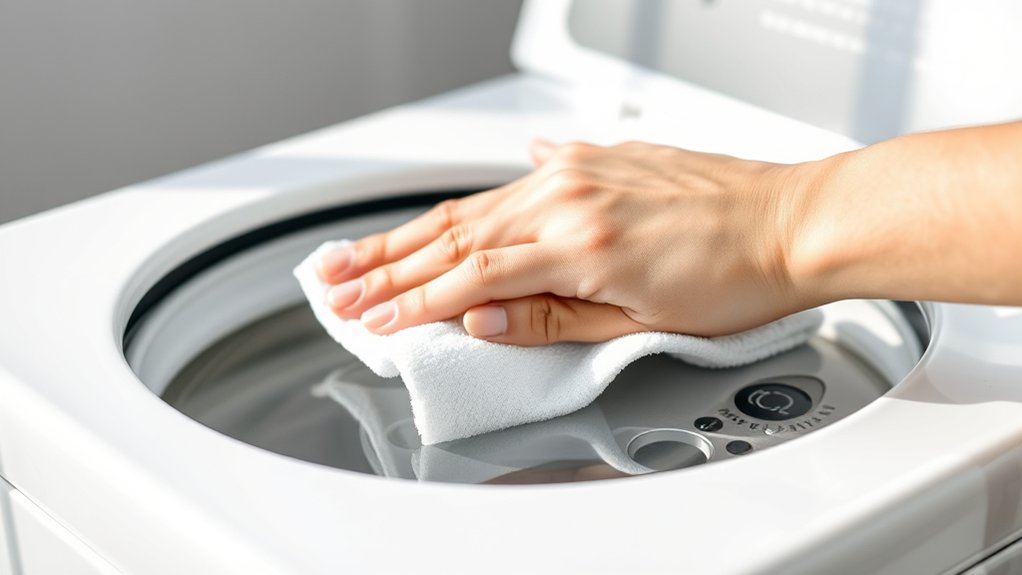
Why should you pay close attention to the exterior and lid of your top-loading washing machine? Maintaining these areas prevents buildup of dirt, soap scum, and grime. This helps preserve both the appearance and function of your machine.
Use a damp microfiber cloth soaked in a vinegar-water solution to clean all exterior surfaces, including the control panel and sides. Gently scrub the lid, focusing on edges and hinges, to remove residues without damaging the finish.
Keep these points in mind:
- Use a microfiber cloth for gentle, effective cleaning.
- Avoid abrasive cleaners or scrub brushes.
- Apply vinegar directly on the cloth for stubborn stains.
- Wipe all exterior surfaces thoroughly.
- Dry the exterior and lid with a clean cloth to prevent streaks and water spots.
This method guarantees your washing machine stays clean and well-maintained. It’s a simple routine that really makes a difference.
How Leaving the Lid Open Prevents Mold and Odors
Taking care to clean the exterior and lid of your top-loading washing machine sets the stage for proper maintenance inside the unit as well. Leaving the lid open after use allows air to circulate freely inside the drum, promoting thorough drying and reducing moisture buildup.
This airflow is critical to prevent mold by inhibiting the humid environment mold and mildew need to thrive. Keeping the lid open also helps evaporate residual moisture on seals, gaskets, and internal components, which is essential for effective odor control.
How Often Should You Clean Your Washer With Vinegar?
How often should you clean your top-loading washing machine with vinegar to keep it in perfect condition? The recommended cleaning frequency is once a month. This helps prevent mold, mildew, and odors while keeping your washer running smoothly.
If you notice a musty smell or some residue buildup, try cleaning it every two weeks instead. Just be careful not to overdo it with the vinegar, since too much can wear down rubber seals and hoses over time.
Regular vinegar cleaning keeps your top-loading washer fresh and efficient, which means you won’t have to do deep cleanings as often. It’s a simple way to prolong your washer’s lifespan and avoid bigger problems down the road.
- Clean once a month with vinegar for ideal maintenance
- Increase frequency if you notice odors or residue
- Avoid overuse to protect rubber components
- Monthly cleaning prolongs washer lifespan
- Consistent vinegar cleaning prevents deep buildup
When to Avoid Vinegar and Use Alternative Cleaners
While regular vinegar cleaning can keep your top-loading washer fresh, there are certain times you should avoid using it to protect your machine’s parts. Never pour vinegar directly into the drum or use it for internal cleaning. Its acidity can wear down rubber seals and internal hoses, which might lead to early damage and costly repairs.
Instead, use manufacturer-approved products like affresh® tablets that are made specifically for internal cleaning.
Try to avoid vinegar during cycles that involve rubber parts since it can cause deterioration.
Save vinegar for external cleaning or only if your washer’s manufacturer specifically says it’s okay. Following these tips helps you protect delicate components and keeps your washer running smoothly without risking damage from using vinegar the wrong way.
Frequently Asked Questions
Can Vinegar Damage Rubber Seals in My Washing Machine?
Yes, vinegar can damage rubber seals in your washing machine. Its acidity tends to degrade rubber over time, causing cracks and reducing elasticity. This weakens the seals, leading to leaks and costly repairs.
To protect your machine, avoid applying vinegar directly on rubber parts. Instead, use it carefully on other surfaces.
Also, make sure to follow the manufacturer’s guidelines to keep your washing machine’s seals durable and functional.
Is It Safe to Mix Vinegar With Laundry Detergent?
You shouldn’t mix vinegar with laundry detergent because their chemical interaction can reduce cleaning effectiveness and produce harmful fumes. Vinegar’s acidity can break down detergent components, causing residue buildup and potential machine damage.
Many manufacturers advise against this combination to protect your washer’s internal parts. Instead, add vinegar separately during the rinse cycle to avoid foaming or overflowing.
This way, you ensure safe and efficient cleaning without compromising your machine.
How Long Does the Vinegar Cleaning Cycle Take?
The vinegar cleaning cycle in a top-loading washing machine typically takes about 1 to 1.5 hours. This includes filling with hot water, soaking, and rinsing.
If you pause the cycle to scrub or allow extra soaking time, expect it to approach 90 minutes. The exact duration depends on your washer’s cycle settings and whether you add manual steps like extra scrubbing or rinsing to enhance the cleaning process.
Can I Use Vinegar Cleaning Method for Front-Loading Washers?
Yes, you can use vinegar to clean front-loading washers, but you need to be careful. Pour the vinegar into the fabric softener dispenser or add it during the rinse cycle instead of putting it directly into the drum. This way, you avoid damaging the rubber seals and gaskets.
Also, skip hot cycles with undiluted vinegar if your washer’s manual says not to use them. Using vinegar regularly helps get rid of soap scum and mold buildup.
That said, it’s a good idea to combine vinegar with cleaners approved by the manufacturer. This will help keep your machine running smoothly for a long time.
Will Vinegar Remove Hard Water Stains From My Washer?
Indeed, vinegar will remove hard water stains from your washer, much like a Victorian chemist would use acetic acid to dissolve mineral buildup. The acetic acid reacts with calcium and magnesium deposits, loosening them effectively.
However, while it’s great for surface stains, you might need some scrubbing for deeper, ingrained deposits.
Running a hot water cycle with vinegar followed by manual cleaning yields the best, most thorough results.
Conclusion
By regularly cleaning your top-loading washer with vinegar, you not only prevent mold and odors but also extend your machine’s lifespan. Vinegar effortlessly tackles grime and residue inside the drum and agitator.
Leaving the lid open after cycles helps maintain freshness. Coincidentally, this simple routine keeps your laundry space hygienic and your clothes cleaner.
Stick to these steps, and you’ll guarantee ideal washer performance with every load.