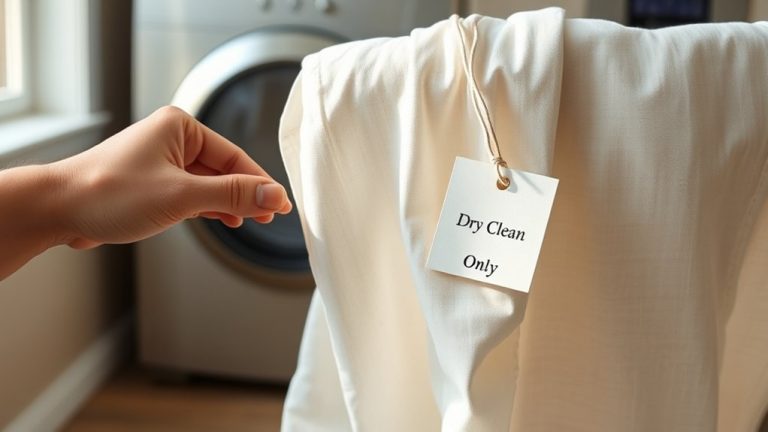
What Is Dry Clean In Laundry – Explained
Dry cleaning uses specialized solvents instead of water to safely clean delicate fabrics that water washing can damage. You start by inspecting clothes for stains and fabric type, then pretreat spots before placing them in a machine where solvents dissolve oils and dirt. This helps preserve fabric texture and color.
This method excels at removing oil-based stains while protecting garment quality. Understanding how solvents work and garment labels can help you choose the best cleaning approach. It also lets you uncover more about this process.
What Is Dry Cleaning and How Does It Work
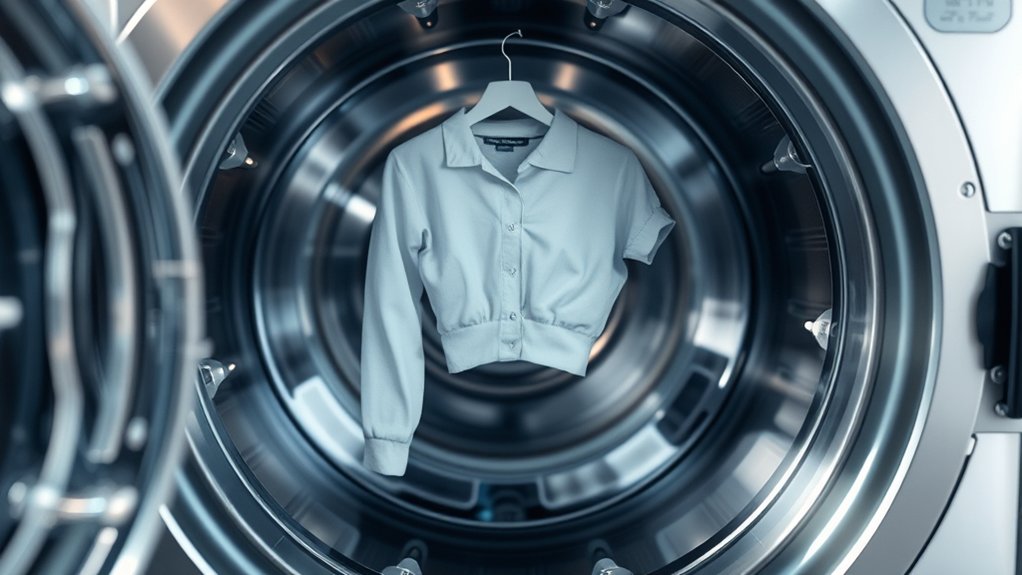
Although you might assume dry cleaning involves no liquids, it actually uses specialized non-water-based solvents like perchloroethylene to clean garments gently and effectively.
The dry cleaning process begins with professional dry cleaners inspecting each garment for stains and fabric type. They pre-treat stains before placing garments into dry cleaning machines, where the solvent circulates, dissolving oils and dirt without immersing fabrics in water.
This method prevents shrinkage, color fading, and fabric damage. The solvent is continuously filtered and recycled to minimize environmental impact.
Finally, garments undergo finishing steps such as pressing or steaming to restore their appearance.
Why Dry Cleaning Beats Regular Washing
You’ll find that dry cleaning is great for preserving delicate fabrics because it uses specialized solvents. This means your clothes are less likely to shrink or lose their color.
Plus, it’s especially good at tackling oil-based stains that regular washing often can’t get out. So, not only does dry cleaning protect your garments, but it also gives them a deeper, more effective clean.
Fabric Care Advantages
When you choose dry cleaning over regular washing, you protect your garments from shrinkage and distortion because dry cleaning uses solvents that don’t involve water. This method excels in fabric preservation, especially for delicate fabrics like silk, wool, and lace. It maintains fabric textures and colors, preventing fabric damage common with traditional laundering.
Dry cleaning also safeguards fabric finishes and embellishments, ensuring garment longevity for your high-end garments.
Key fabric care advantages include:
- Preventing fabric distortion and shrinkage
- Preserving delicate fabrics and their original texture
- Maintaining fabric finish and trims
- Reducing overall fabric damage, extending garment longevity
Relying on dry cleaning guarantees your clothes retain their quality and appearance far better than regular washing. It’s a smart choice if you want your favorite pieces to look great for a long time.
Stain Removal Efficiency
How does dry cleaning achieve superior stain removal compared to regular washing? Dry cleaning solvents excel at dissolving oil-based stains that water and detergents often fail to remove. Their chemical solvents penetrate deeply into fabric fibers, ensuring thorough stain removal without harsh agitation.
This approach effectively targets stubborn stains like ink, grease, and wine while preserving delicate fabrics. Unlike water-based methods, dry cleaning’s controlled environment prevents stain setting and minimizes soil re-deposition, which really boosts stain removal efficiency.
Preparing Clothes for Dry Cleaning: Inspection and Pre-Treatment
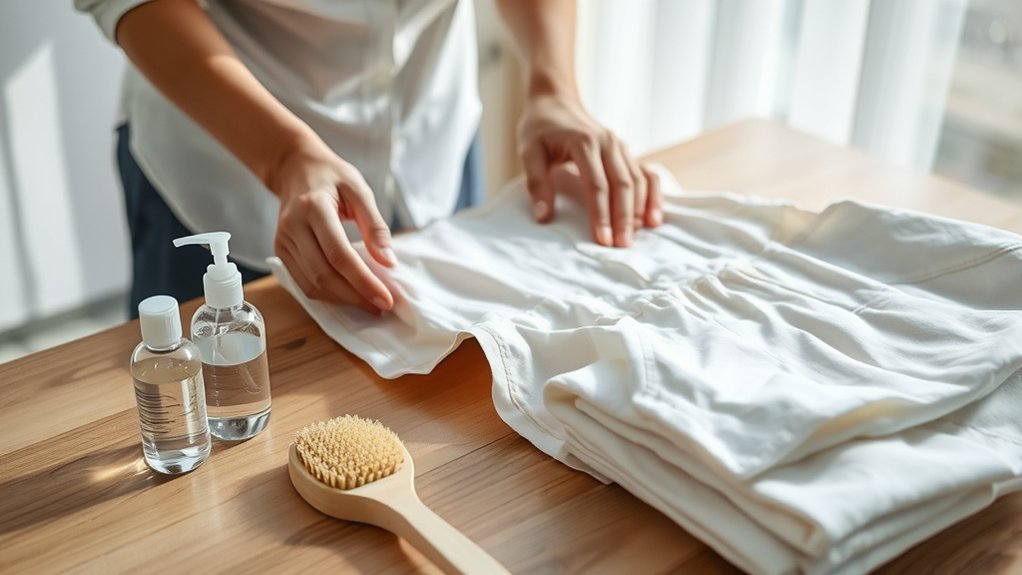
Although dry cleaning seems straightforward, preparing your clothes through thorough inspection and pre-treatment is essential to preserving their quality and appearance. You start by examining garments for stains, fabric type, tears, and missing buttons.
Each garment gets tagged for accurate tracking throughout the process. Spotting stain types during inspection helps you choose the right pre-treatment methods, making soil removal more effective.
Key steps include:
- Inspecting fabric type to tailor fabric care and avoid damage
- Detecting and marking stains for targeted spot treatment
- Applying pre-treatment chemicals or heat to loosen soils
- Tagging garments to maintain process accountability
This careful approach protects your garments, improves stain removal, and keeps fabric integrity intact during dry cleaning. It really makes a difference in how your clothes look and last.
Inside a Dry Cleaning Machine: The Cleaning Cycle Explained
When you start the cleaning cycle, the machine begins to circulate solvent continuously through the rotating drum. This helps to dissolve stains effectively.
As the drum agitates, it makes sure that all the garments get even exposure to the solvent—without using any water.
This combination of solvent flow and controlled agitation really boosts cleaning efficiency while keeping delicate fabrics safe.
Solvent Circulation Process
Because dry cleaning relies on solvents rather than water, the solvent circulation process inside the machine plays a crucial role in effectively removing stains from garments. During the cleaning cycle, the solvent circulates through the fabric, dissolving and loosening soils.
The solvent then passes through a sophisticated filter system that removes impurities. After filtration, purification continues via distillation, which separates contaminants and prepares the solvent for reuse. This continuous cycle ensures ideal cleaning efficiency while maintaining solvent quality.
Key elements of the solvent circulation process include agitation to help the solvent penetrate fibers, a filter system that removes dirt and soil particles, distillation for impurity removal and solvent purification, and residue extraction to minimize how much solvent stays in the garments.
This process guarantees thorough cleaning and solvent reuse without compromising garment care. It’s a smart way to keep clothes clean and the solvent fresh at the same time.
Garment Agitation Mechanics
As the drum inside a dry cleaning machine rotates, it gently agitates the garments to guarantee even solvent distribution and effective stain removal. The perforated drum’s rotating motion enables gentle agitation, loosening dirt and stains without compromising fabric care. This controlled movement mimics a gentle washing action, ensuring the solvent penetrates evenly throughout the cleaning cycle.
Solvent circulation continuously filters impurities, maintaining cleaning efficacy. After agitation, spinning extracts residual solvent, preparing garments for drying.
| Feature | Purpose | Benefit |
|---|---|---|
| Perforated Drum | Holds garments securely | Allows solvent flow |
| Rotating Drum | Provides gentle agitation | Protects fabric fibers |
| Solvent Circulation | Removes soil and impurities | Maintains cleaning power |
| Gentle Agitation | Loosens stains softly | Prevents fabric damage |
| Spinning Cycle | Extracts solvent | Speeds drying process |
How Dry Cleaning Removes Different Types of Stains
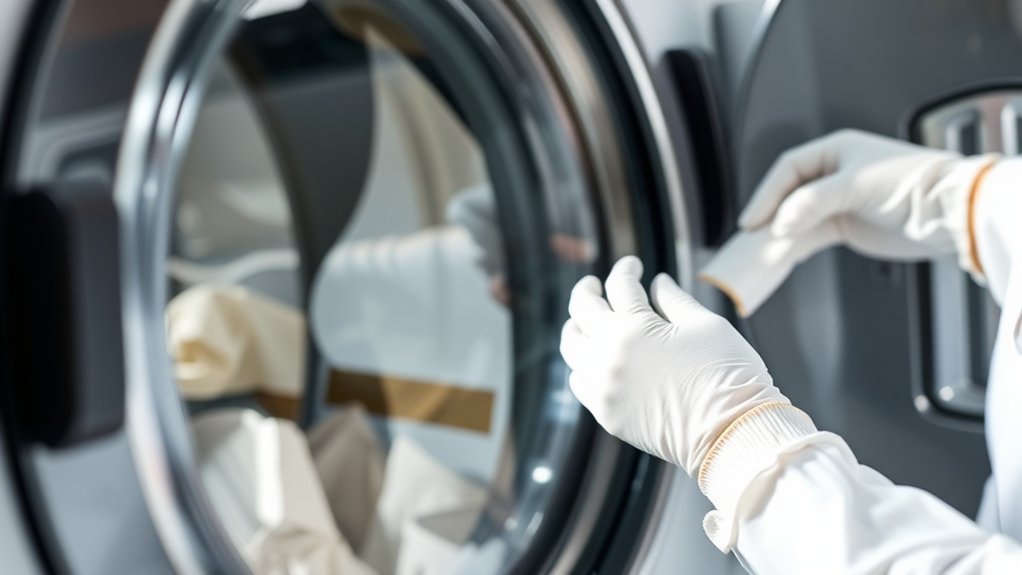
Dry cleaning removes stains by using specialized solvents like perchloroethylene. These solvents effectively dissolve non-polar substances such as oil, grease, and ink without using water.
Dry cleaning uses specialized solvents like perchloroethylene to dissolve oil, grease, and ink without water.
You’ll notice that pre-treatment plays a vital role, especially for oily stains. Specific chemicals enhance stain removal before the main cleaning process.
The solvent properties, including polarity and KB value, determine how well different stains respond. The cleaning process also relies on agitation and filtration to lift and extract stubborn residues.
Key aspects of stain removal in dry cleaning include targeting non-polar stains like oil and grease with effective solvents. Applying pre-treatment to enhance removal of oily stains is important.
Utilizing solvent properties to match stain types helps too. Plus, combining agitation and filtration guarantees thorough cleaning.
This precise method guarantees effective stain removal without water.
Dry Cleaning Solvents and Their Alternatives
What solvents power the cleaning process behind your garments’ spotless finish? Dry cleaning solvents like Perchloroethylene (Perc) remain the industry standard because they’re really effective at removing stains. But Perc is classified as probably carcinogenic, which is a big concern for many.
Hydrocarbon solvents, such as DF-2000, offer a petroleum-based alternative. They’ve lower flammability, which makes them a bit safer, but their stain removal power isn’t quite as strong as Perc’s.
Liquid silicone (D5 or GreenEarth) is another option. It’s recyclable and eco-friendly, which sounds great, although there are some worries about how long it lingers in the environment.
Emerging alternatives include liquid carbon dioxide. This one’s popular for its sustainability and the fact that it can be reused, but it requires special equipment and mightn’t clean as thoroughly.
Other solvents like glycol ethers and brominated compounds are also used, but they’re facing more regulations because of safety and environmental issues.
Knowing about these dry cleaning solvents and alternatives helps you see the balance between getting your clothes clean and taking care of the planet.
What Dry Cleaning Solvents Mean for the Environment
You need to understand how traditional dry cleaning solvents impact the environment. These solvents can release toxic emissions and cause long-term pollution risks.
Because of these concerns, regulatory restrictions are getting tighter. So, the industry is being pushed toward safer practices.
Luckily, there are emerging green alternatives that offer promising solutions. They help reduce environmental harm without sacrificing cleaning effectiveness.
Solvent Environmental Impact
Although many solvents used in dry cleaning effectively remove stains, they carry significant environmental consequences you should consider. Perchloroethylene, the most common chemical solvent, poses environmental risks due to its persistence and probable carcinogenicity.
Hydrocarbon solvents used for eco-friendlier dry cleaning contribute to VOC emissions, affecting air quality.
Emerging biodegradable solvents reduce solvent impact but face challenges in adoption. You should be aware of ongoing efforts to balance cleaning efficacy with environmental responsibility.
Perchloroethylene’s persistence leads to soil and water contamination. VOC emissions from hydrocarbons degrade air quality.
Siloxane breaks down naturally but may harm aquatic life. Liquid carbon dioxide offers sustainability but requires costly equipment.
Choosing environmentally friendly solvents is key amid increasing regulatory restrictions.
Regulatory Restrictions Overview
How do regulatory restrictions shape the use of solvents in dry cleaning? Regulatory restrictions mandate strict controls on dry cleaning solvents to mitigate environmental and health risks. Perchloroethylene (PERC), classified as probably carcinogenic, faces stringent limits.
The EU plans to ban siloxane D5 by 2026 due to its aquatic toxicity. Hydrocarbon solvents are regulated to reduce volatile organic compounds (VOC) emissions. These environmental regulations push the industry toward eco-friendly solvents and sustainable practices.
| Solvent Type | Regulatory Focus |
|---|---|
| Perchloroethylene | Carcinogenic risk, strict limits |
| Siloxane D5 | Environmental persistence, ban |
| Hydrocarbon Solvents | VOC emissions, flammability |
| Liquid CO2 | Equipment use, recycling rules |
| Eco-friendly Solvents | Biodegradability, toxicity |
You have to navigate these industry regulations to guarantee compliance and environmental responsibility.
Emerging Green Alternatives
Addressing environmental concerns, the dry cleaning industry is increasingly adopting emerging green alternatives that reduce chemical hazards and ecological impact. You’ll find these eco-friendly solvents and sustainable dry cleaning methods are transforming traditional practices.
Liquid carbon dioxide offers a non-toxic, reusable option, though its cost limits widespread use. Biodegradable cleaning via wet cleaning methods minimizes harmful chemical solvents and aligns with stricter regulatory restrictions. Green cleaning technology advances continue to prioritize environmentally friendly solutions.
Key emerging alternatives include:
- Eco-friendly solvents like siloxane that degrade harmlessly
- Biodegradable cleaning through water-based wet cleaning methods
- Liquid carbon dioxide for non-toxic, reusable cleaning
- Regulatory restrictions promoting sustainable dry cleaning practices
These innovations help you choose safer, greener options that protect both health and the environment. It’s great to see how these changes make a real difference.
How to Read Garment Labels for Dry Cleaning
When you check your garment labels, what symbols should you look for to determine if dry cleaning is suitable? Look for a plain circle symbol, which indicates that dry clean is recommended.
Circles containing letters like “P” or “F” specify the solvent type for dry cleaning, guiding proper fabric care.
Avoid dry cleaning if the circle is crossed out, as this symbol prohibits the process to prevent damage.
Care labels often include additional cleaning instructions, such as “dry flat” or “do not tumble dry,” which you need to follow alongside dry cleaning symbols.
Accurate label interpretation guarantees you select the appropriate method and helps preserve garment quality.
Getting familiar with these dry cleaning symbols on care labels is key for effective fabric care and sticking to professional cleaning advice.
Other Dry Cleaning Options You Might Not Know About
Have you considered alternatives to traditional dry cleaning solvents like perchloroethylene? Sustainable dry cleaning now includes several environmentally safe options that reduce chemical impact.
Siloxane, a silicone-based solvent, is marketed as an eco-friendly solvent but faces regulatory restrictions due to health concerns.
Liquid carbon dioxide cleaning uses non-toxic, reusable CO₂ in specialized equipment. It offers green cleaning with minimal environmental footprint.
Wet cleaning employs water with controlled temperature and spin cycles, making it suitable for delicate fabrics.
Moreover, biodegradable solvents derived from plant-based sources provide safer, sustainable dry cleaning alternatives.
Key other dry cleaning options include:
- Siloxane (D5) as a green cleaning solvent
- Liquid carbon dioxide for sustainable dry cleaning
- Wet cleaning as a water-based alternative
- Biodegradable, plant-based solvents reducing environmental impact
Tips to Get the Best Results From Your Dry Cleaner
Although dry cleaning is a specialized service, you can enhance its effectiveness by providing your cleaner with detailed information about your garments. Always check the care label to confirm suitability for dry cleaning and inform your cleaner of any stains or fabric sensitivities. This helps them target stain removal and give your garment the best care during cleaning.
Avoid home dry cleaning kits on “Dry Clean Only” items. Professional dry cleaning uses specific solvents that achieve superior results, especially for delicate fabrics.
Make sure to communicate any special instructions clearly. This ensures the solvent used and cleaning methods match your garment’s needs.
After the service, inspect your garments for any residual odors or stains. If you notice anything, don’t hesitate to ask for re-treatment to keep your fabric looking great.
Frequently Asked Questions
How Much Does Dry Cleaning Typically Cost per Garment?
You’ll typically pay between $3 and $15 per garment for dry cleaning, depending on the item and your location.
Specialty pieces like suits or dresses usually cost $10 to $20, while delicate fabrics such as silk or cashmere may run $15 to $25.
Keep in mind, extra services like stain removal or pressing often add to the price.
Urban areas tend to have higher rates than rural ones.
Can Dry Cleaning Remove Odors From Smoke or Mildew?
Yes, dry cleaning can remove smoke and mildew odors effectively. The solvents used dissolve odor-causing particles, while specialized deodorizing treatments neutralize persistent smells.
Depending on the fabric and odor severity, you might need multiple sessions.
Professional cleaners also use advanced methods like ozone treatments to tackle stubborn odors. So, if your garment smells smoky or mildewed, dry cleaning offers a reliable solution to restore freshness without damaging delicate fabrics.
How Long Does the Dry Cleaning Process Usually Take?
Much like a telegram delivered with urgency, the dry cleaning process usually takes between 30 minutes and a few hours. You can expect a standard cycle to last about 45 minutes to 2 hours.
If your garment needs extra stain treatment, pressing, or special finishing, it might take longer. Some services offer same-day cleaning, but heavily soiled items could require up to a full day for proper care and inspection.
Is It Safe to Dry Clean Clothes With Embellishments or Beads?
Yes, you can safely dry clean clothes with embellishments or beads, but you need to handle them carefully. Always let your dry cleaner know about these details so they can take the right precautions. They might cover or remove delicate decorations to protect them.
Some solvents and techniques are gentle enough to preserve your garment. However, if handled improperly, the beads might loosen or fall off.
Picking a professional who understands these risks will help keep your clothes intact and looking beautiful. It’s all about making sure your special pieces get the care they deserve.
Can Dry Cleaning Cause Clothes to Shrink or Lose Color?
Dry cleaning can sometimes be a double-edged sword. While it usually preserves your clothes’ shape and color, improper handling may cause shrinkage or fading. You’ll want to avoid excessive heat or harsh chemicals, especially with delicate fabrics like wool or silk.
Conclusion
Think of dry cleaning like a skilled surgeon carefully treating a delicate patient, your clothes. Just as a surgeon uses precise tools to heal without harm, dry cleaning uses specialized solvents to refresh fabrics without water damage. Studies show dry cleaning extends garment life by up to 30%, preserving both texture and color.
By understanding this careful process, you’ll guarantee your wardrobe stays sharp and lasting. It makes each wear a confident statement.